Quick Answer
Yes and no.
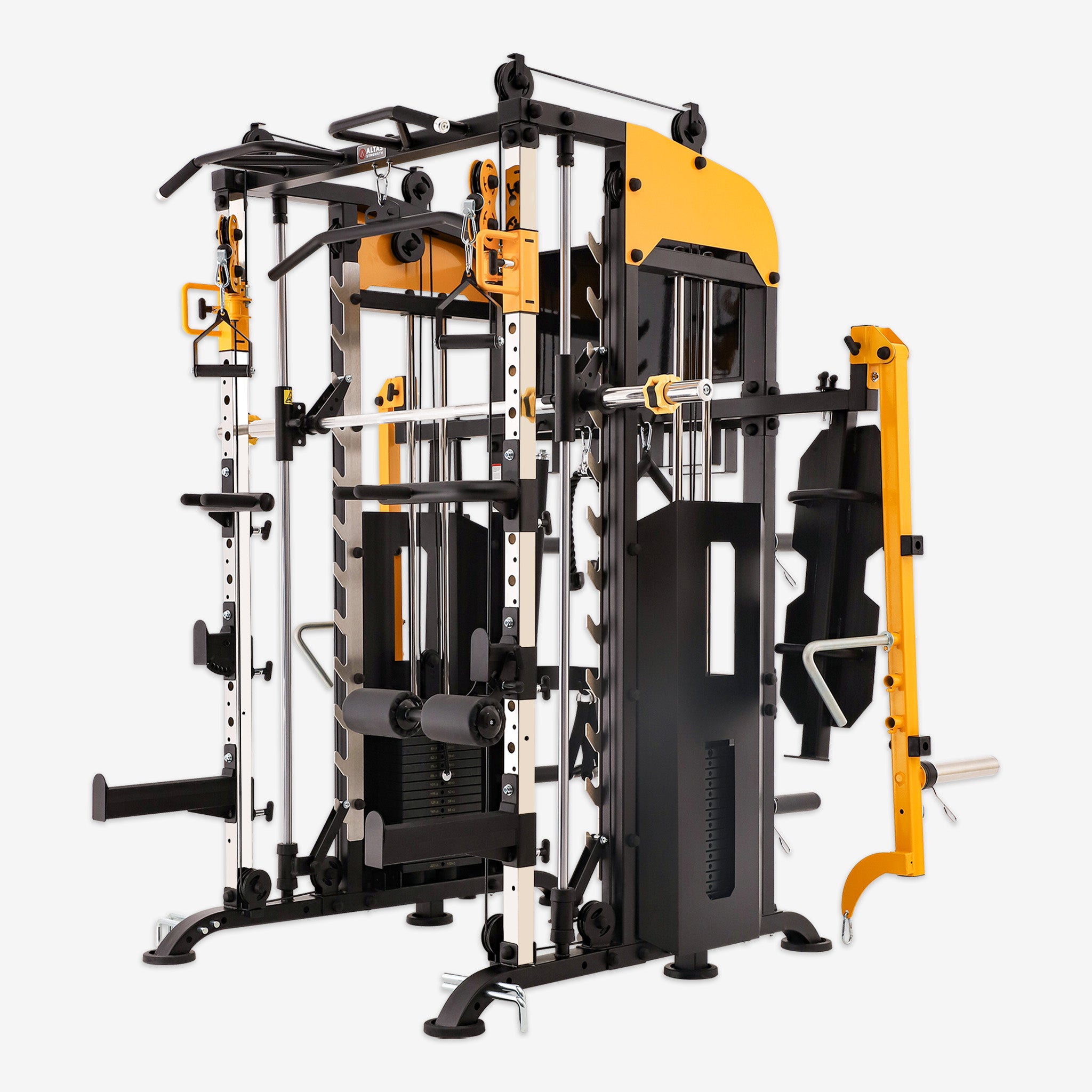
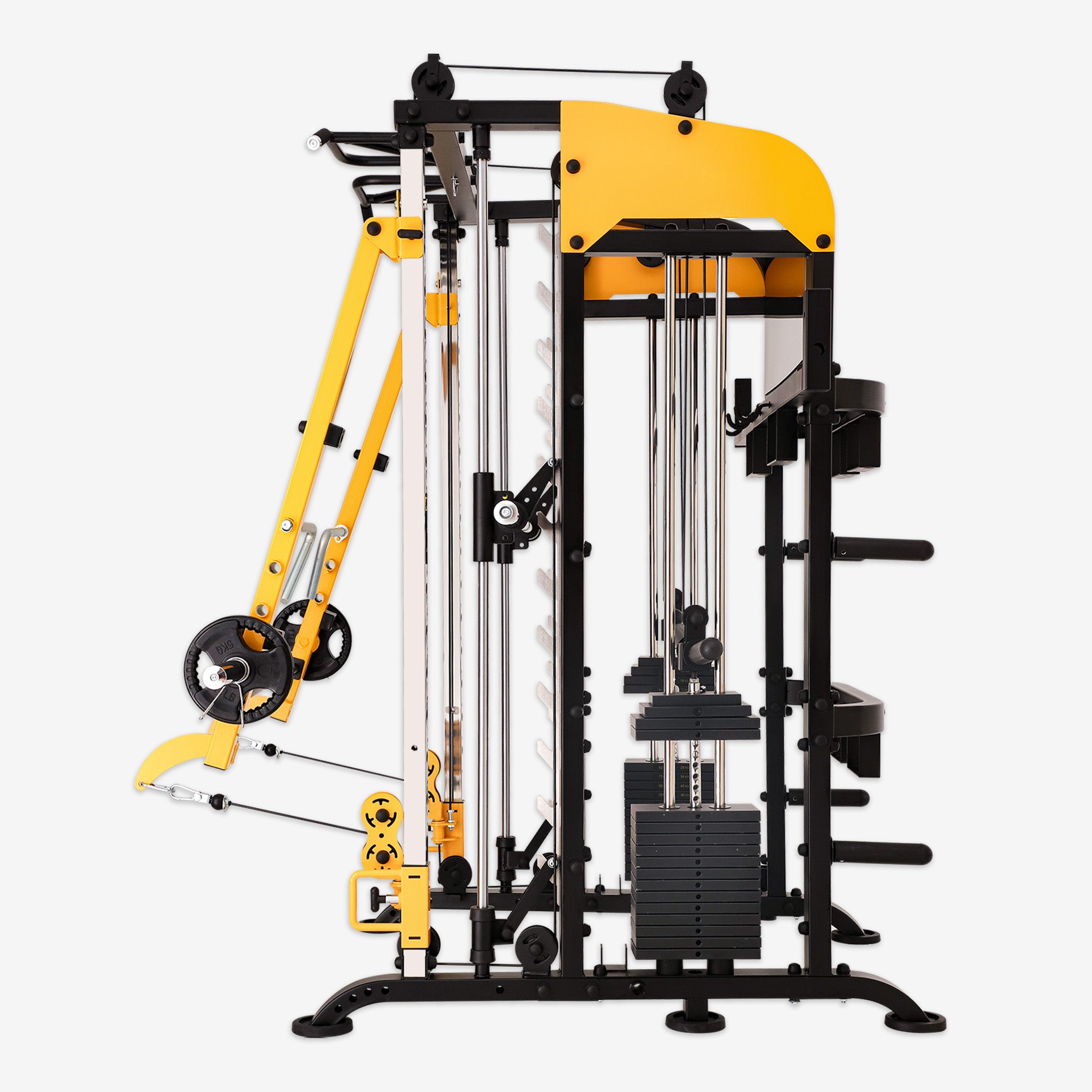
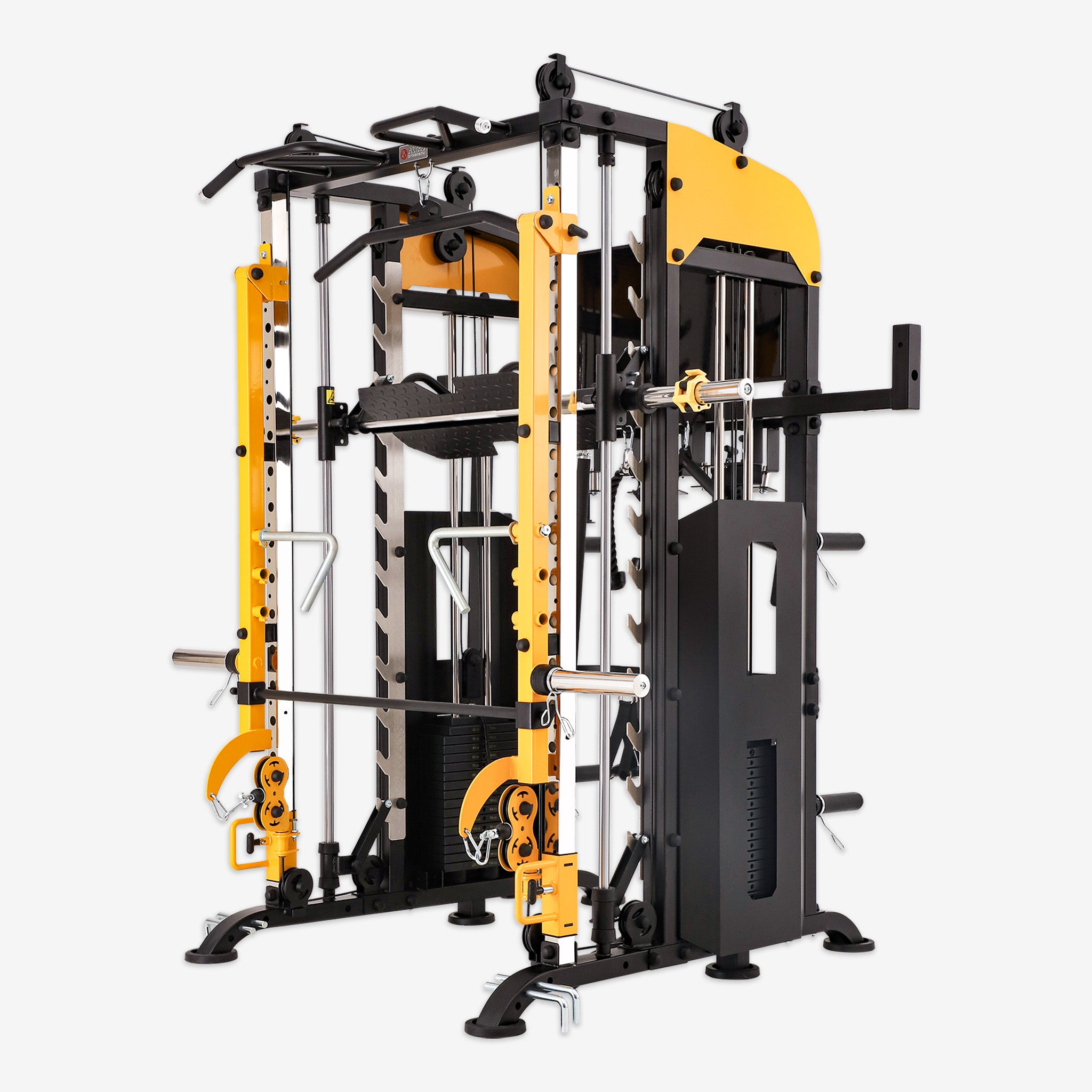
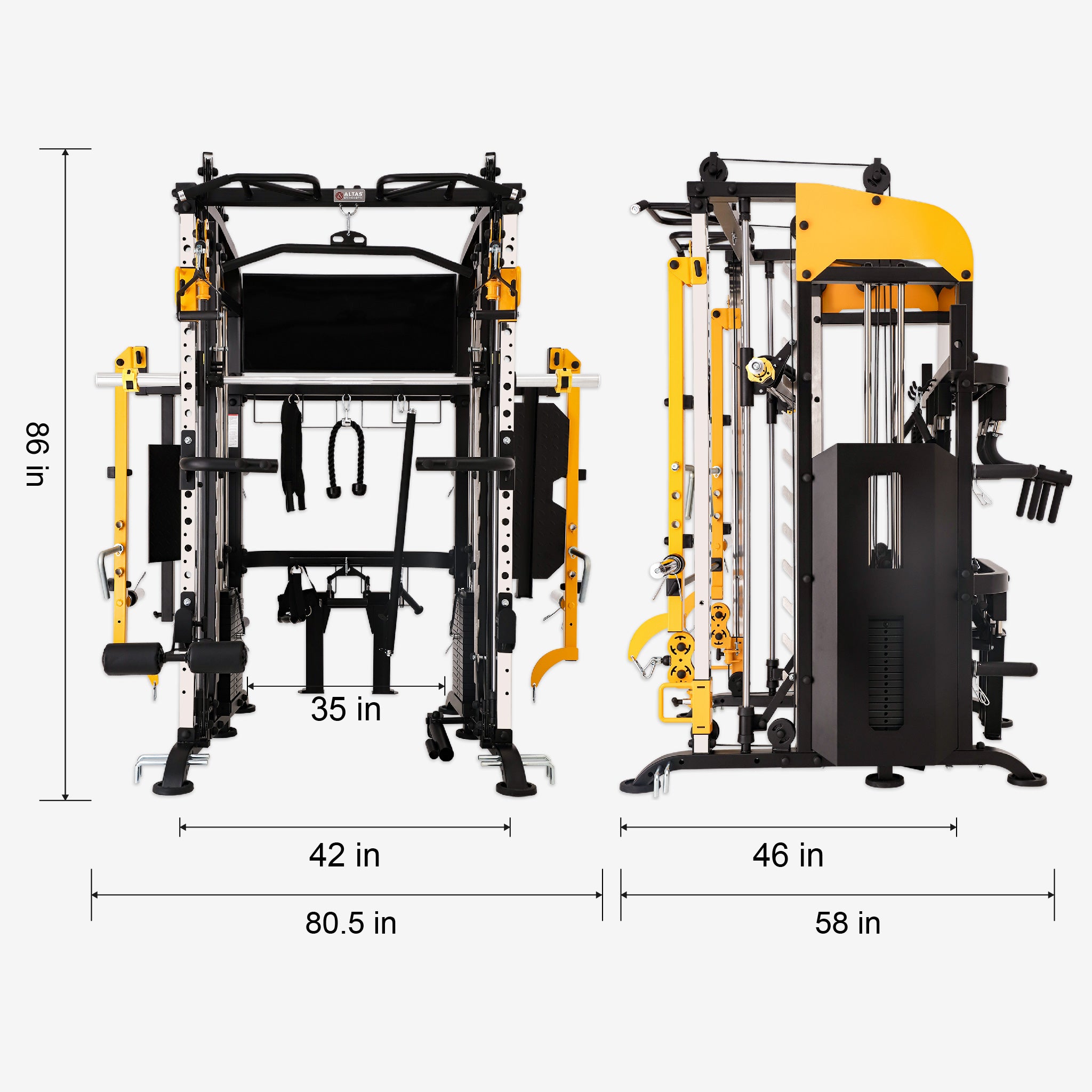
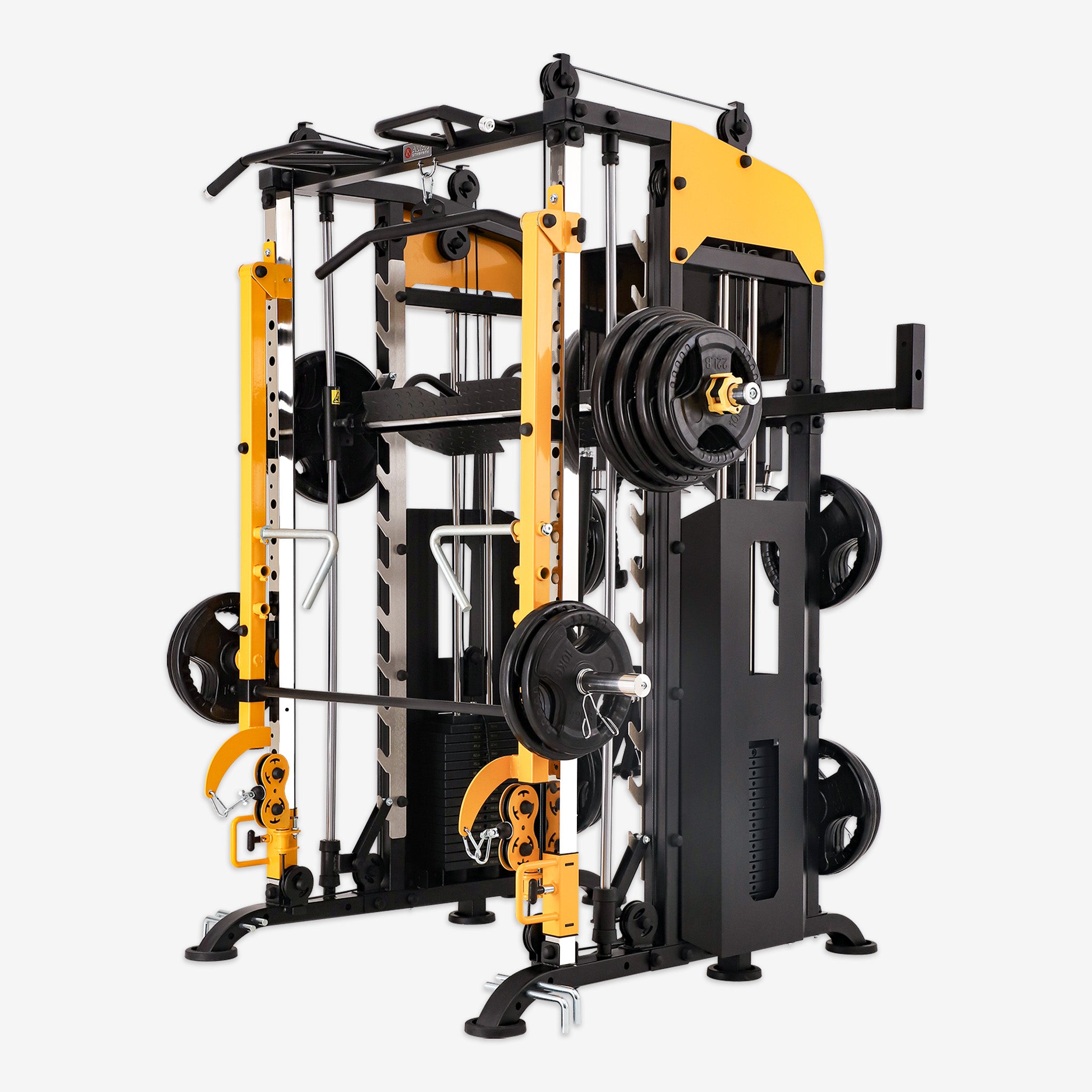
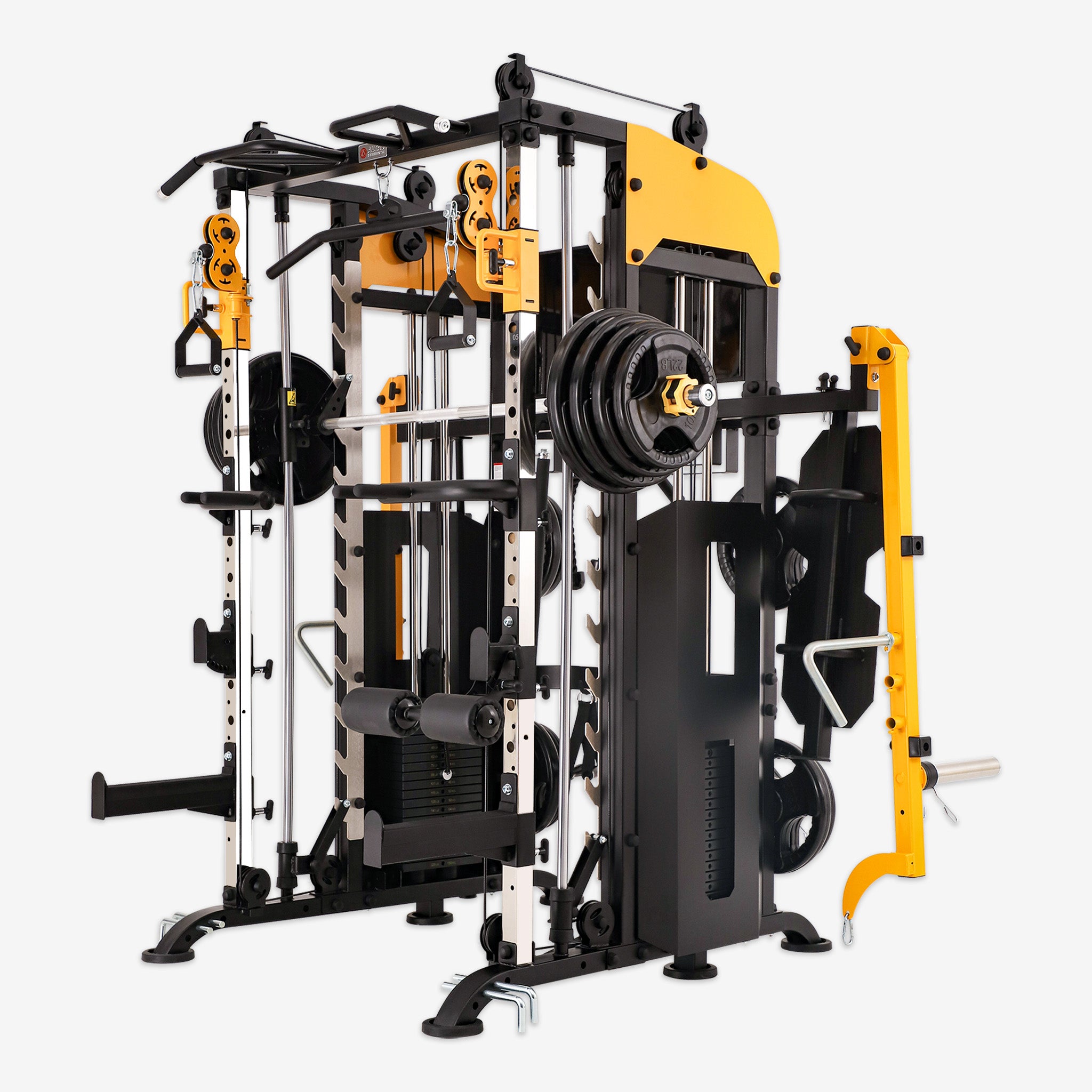
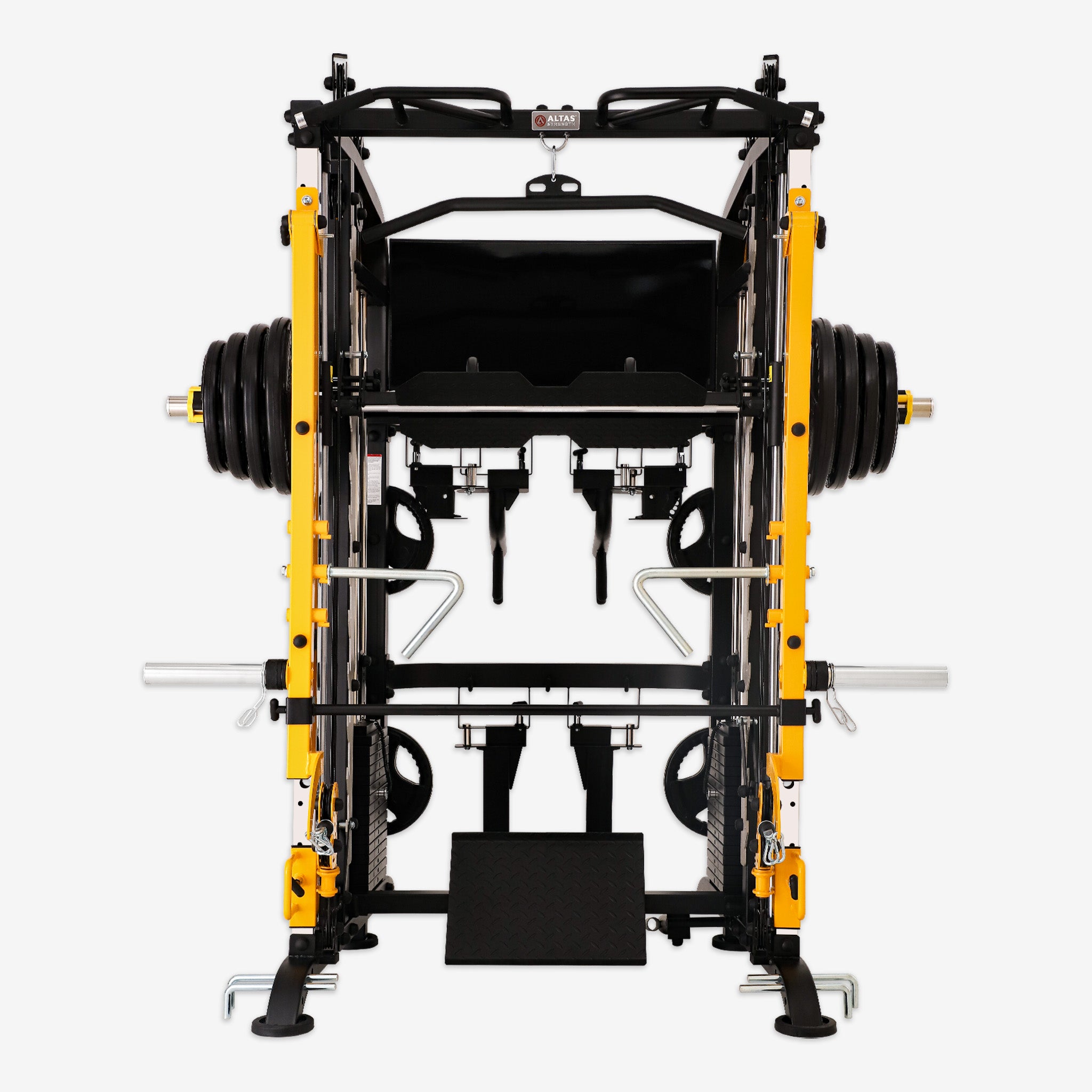
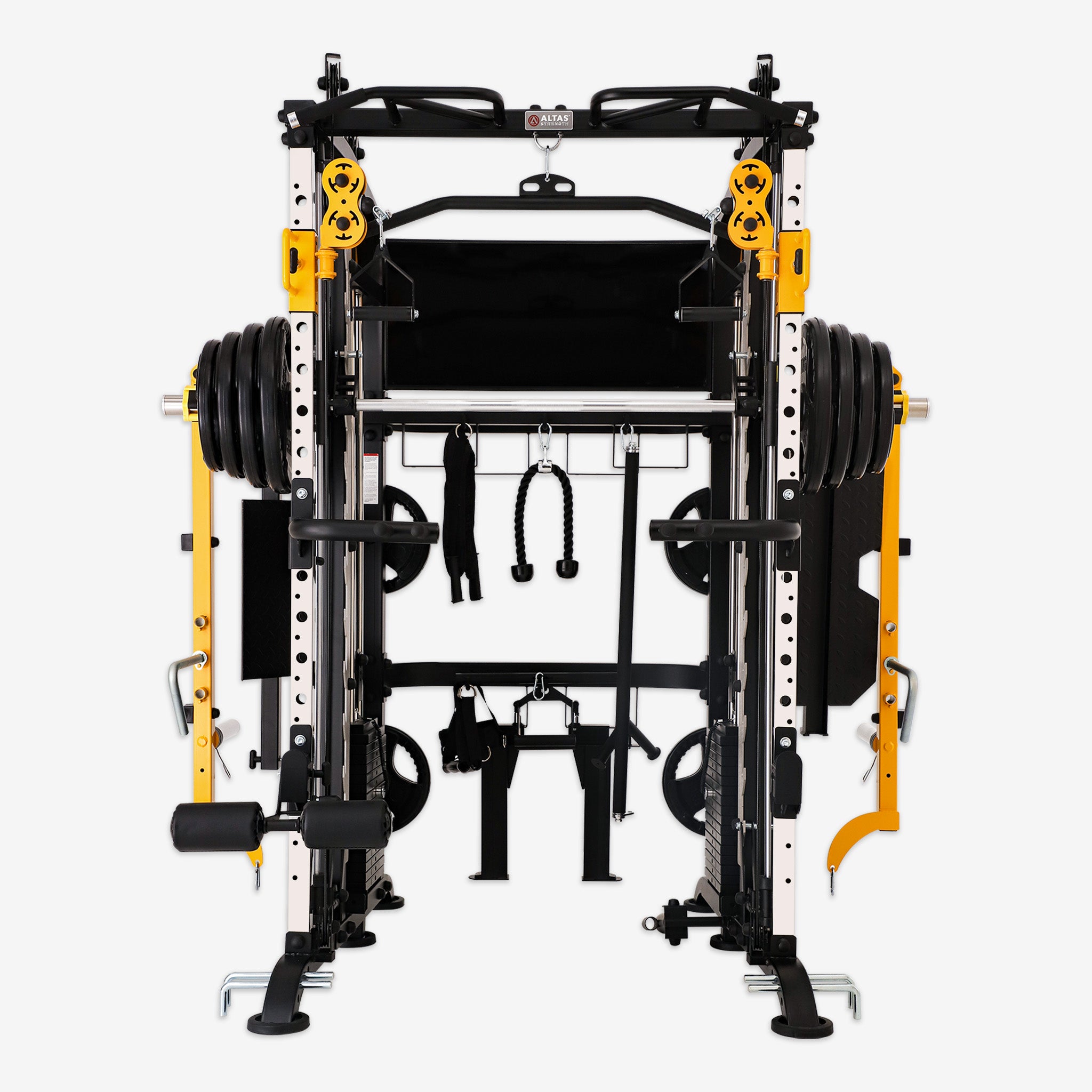
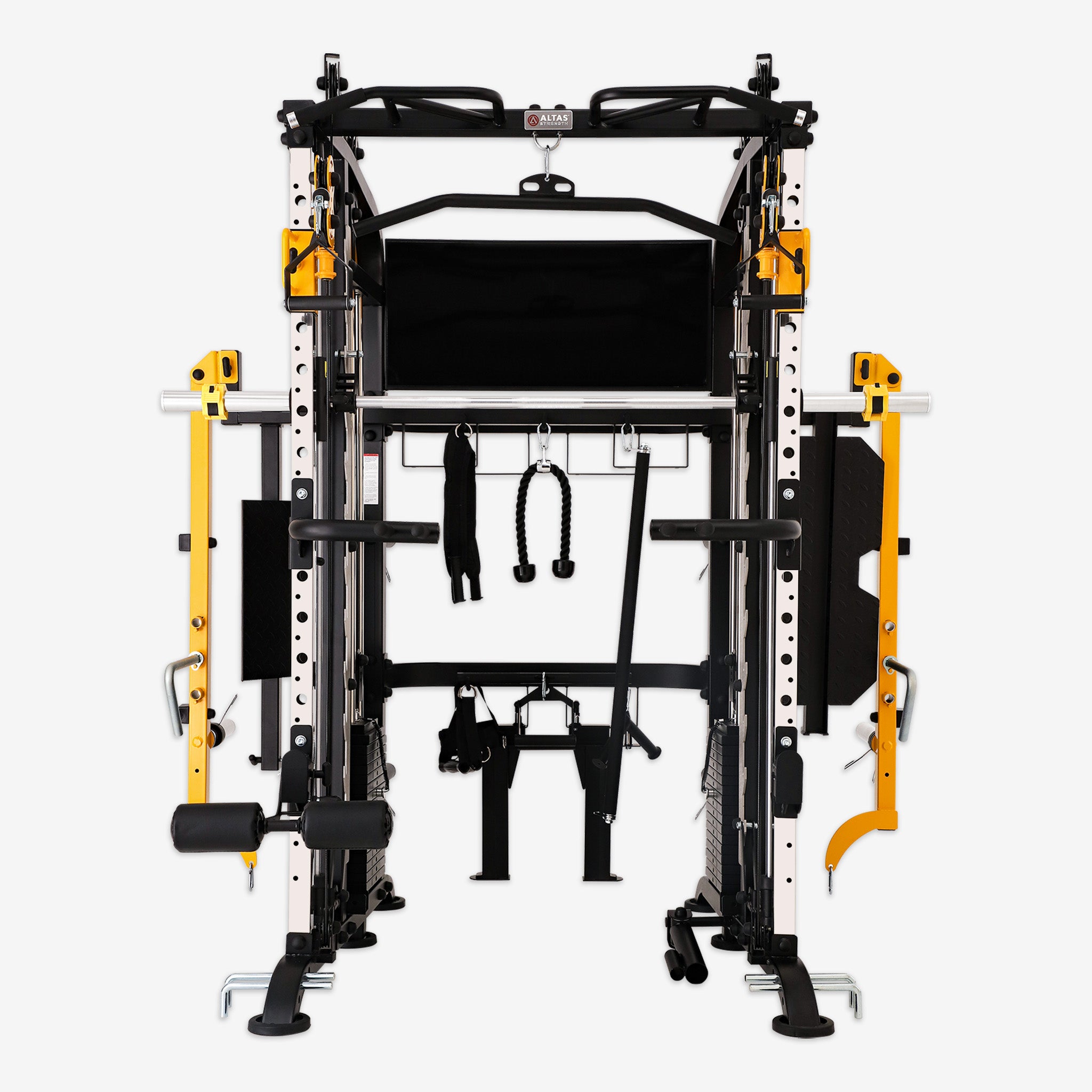
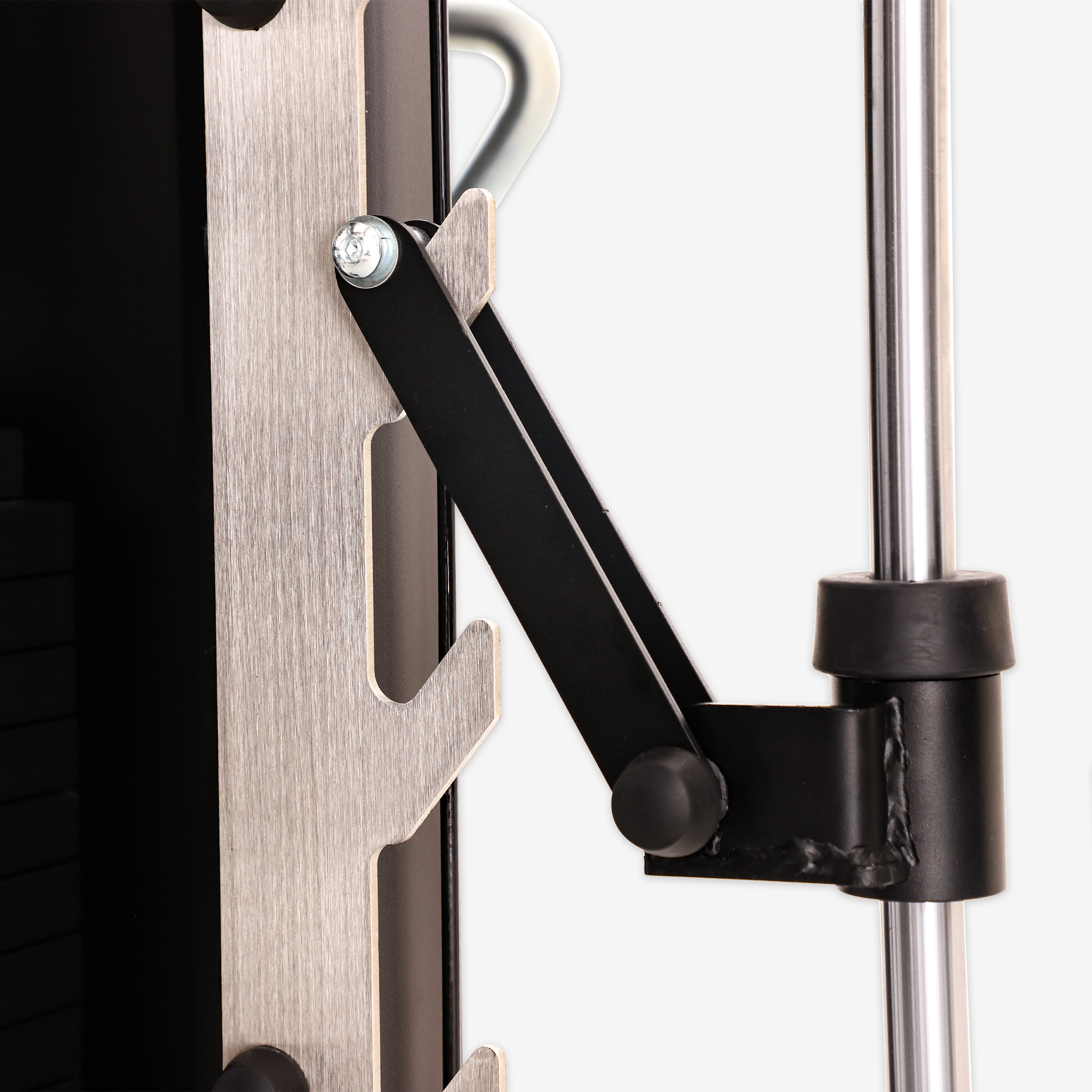
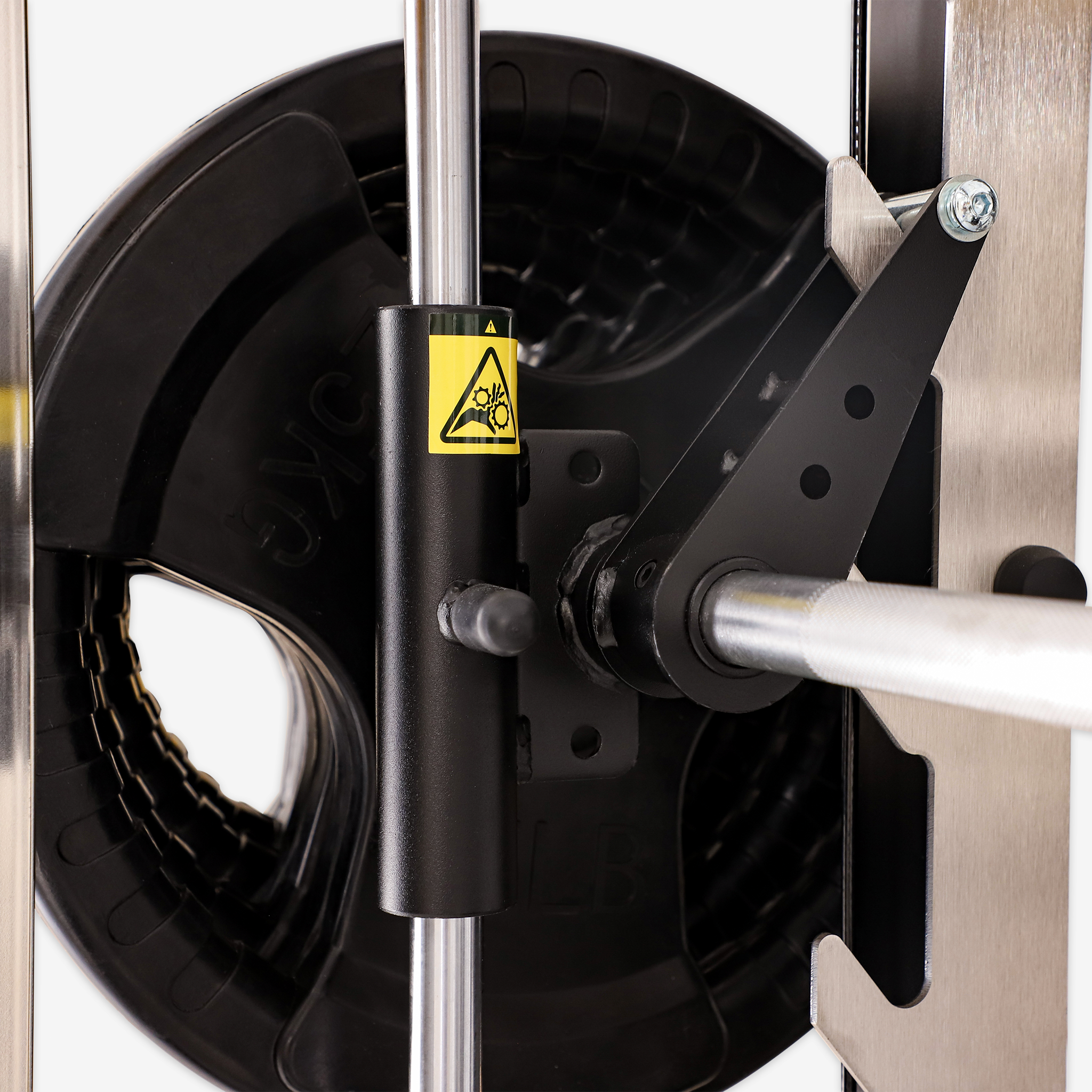
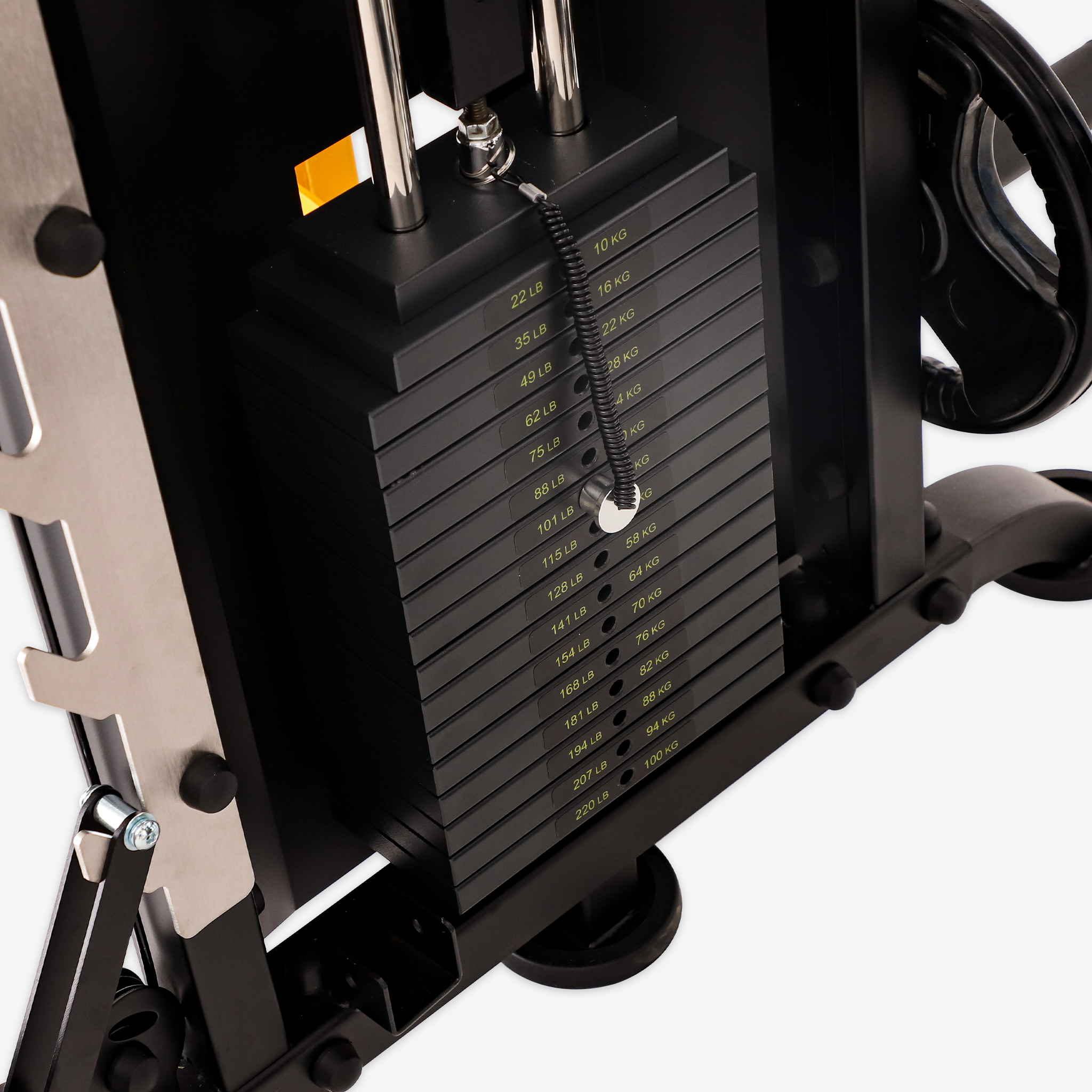
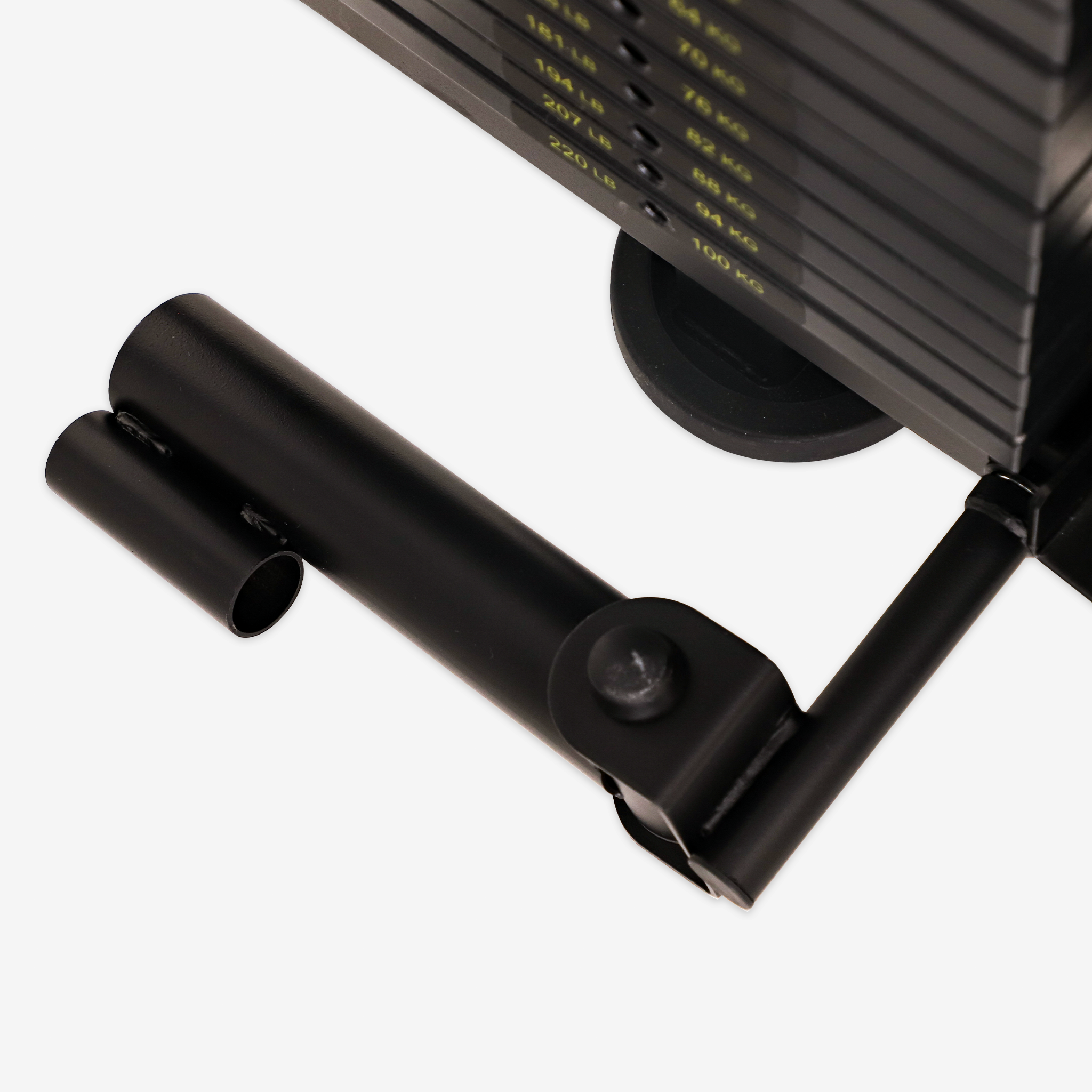
A Smith machine does not physically reduce the weight plates you load onto the bar. However, most Smith machines make the weight feel lighter because the guided rails reduce stabilization requirements and many machines use counterbalance systems that offset part of the bar weight.
As a result, lifters can often handle 10%–25% more weight on a Smith machine compared to free-weight exercises.
Why Does a Smith Machine Feel Lighter?
Many gym-goers notice they can squat, bench press, or shoulder press more weight on a Smith machine than with a traditional barbell.
There are three main reasons.
1. The Bar Moves on Fixed Rails
With free weights, your body must control the bar in multiple directions.
Your:
- Core
- Shoulders
- Upper back
- Forearms
- Stabilizer muscles
all work together to balance the load.
A Smith machine removes most of this balancing requirement.
Since the machine stabilizes the bar for you, more of your strength can be directed toward moving the weight itself.
2. Counterbalanced Bars Reduce Starting Weight
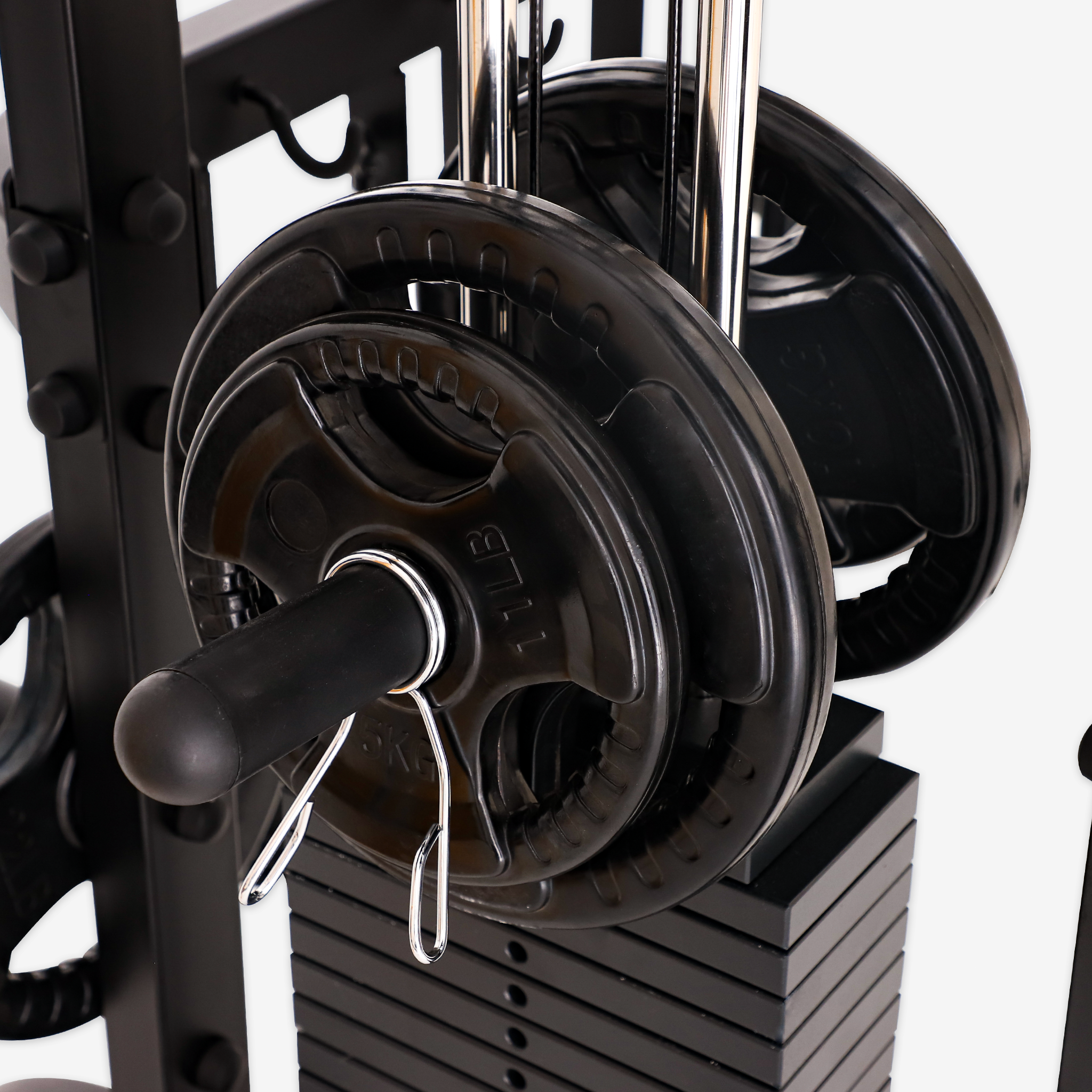
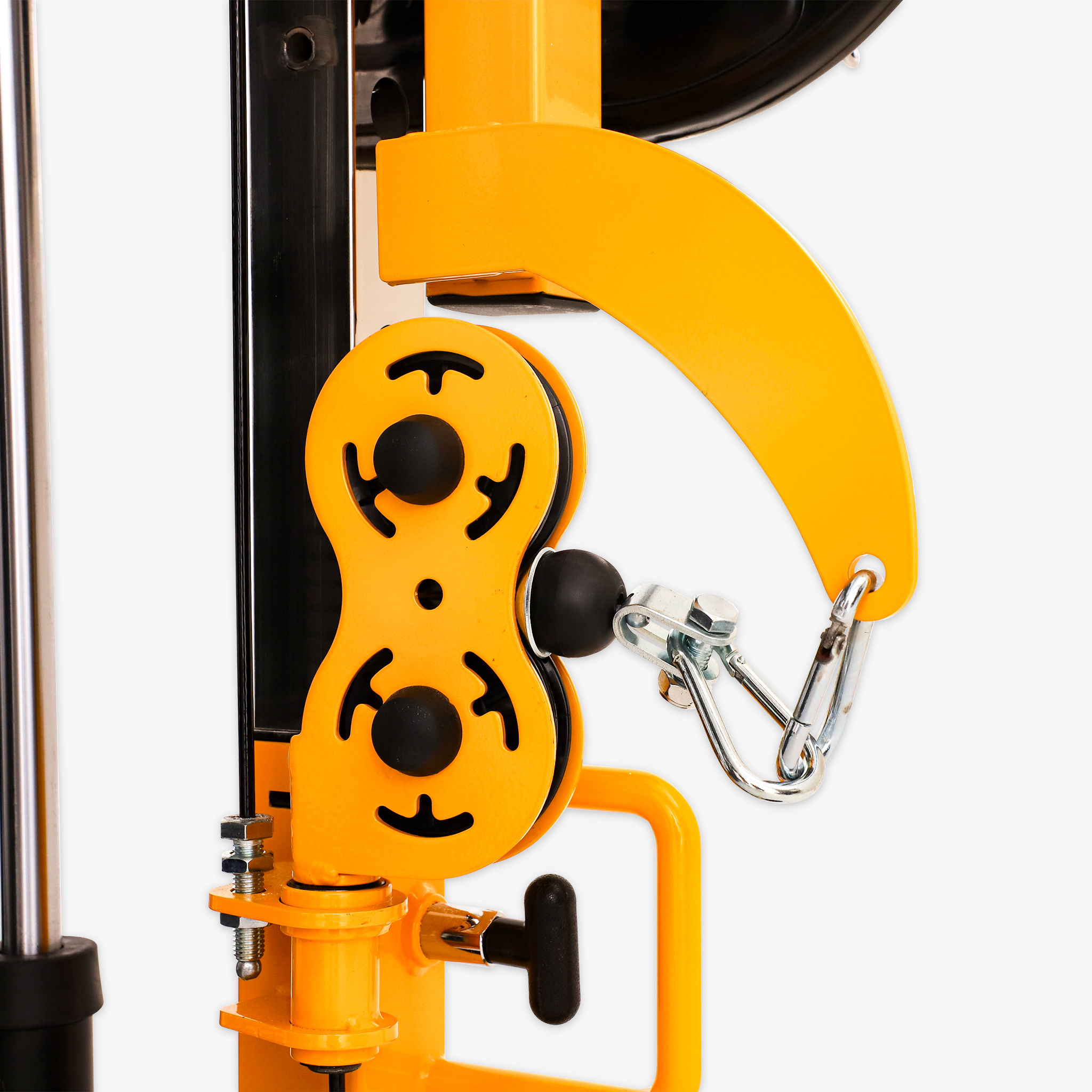
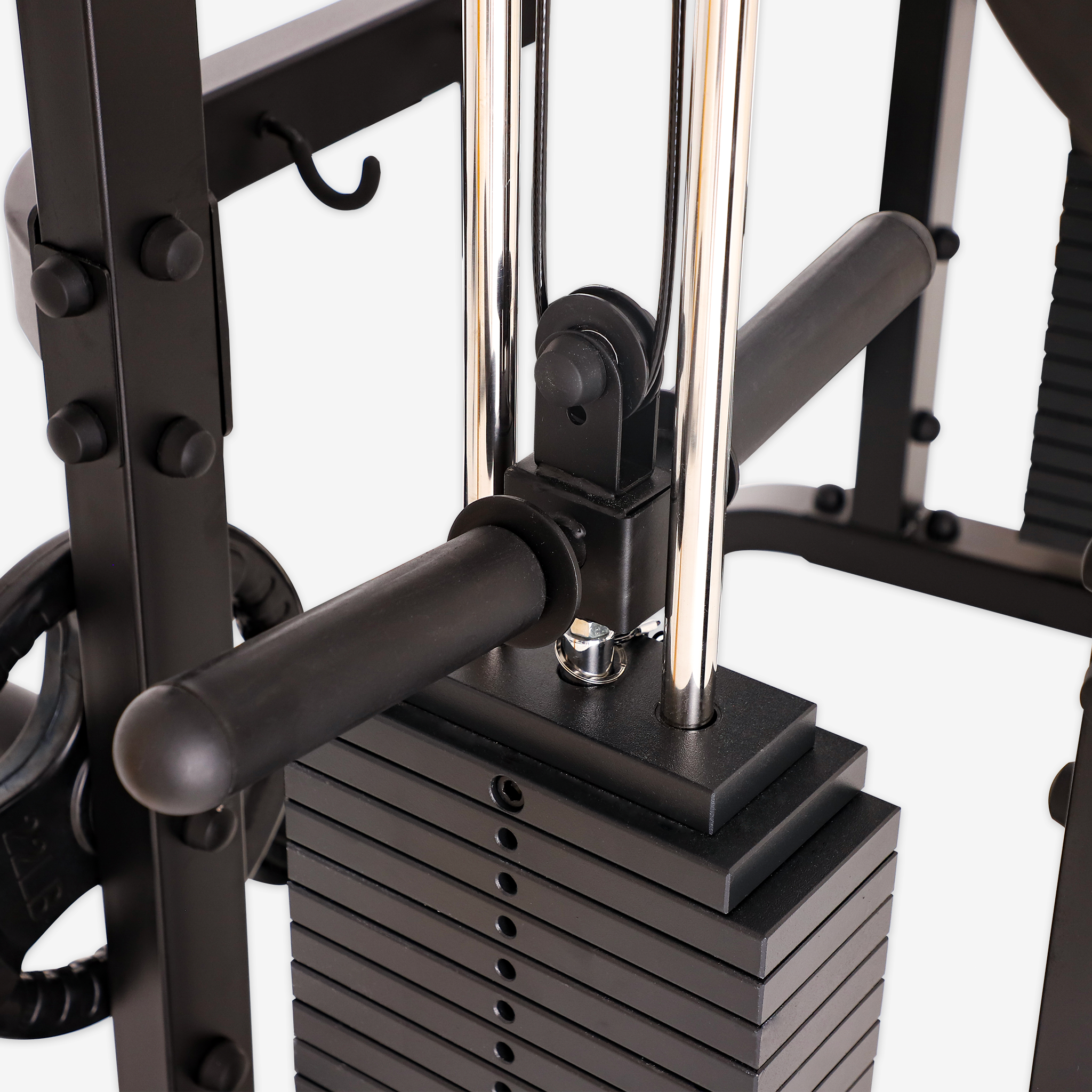
Many commercial Smith machines include a counterweight system.
A standard Olympic barbell weighs:
45 lbs (20.4 kg)
Most Smith machine bars have an effective starting weight of:
15–25 lbs (6.8–11.3 kg)
Some heavily counterbalanced models feel even lighter.
This means you may start with 20–30 lbs less resistance before adding any plates.
3. Reduced Friction and Controlled Movement
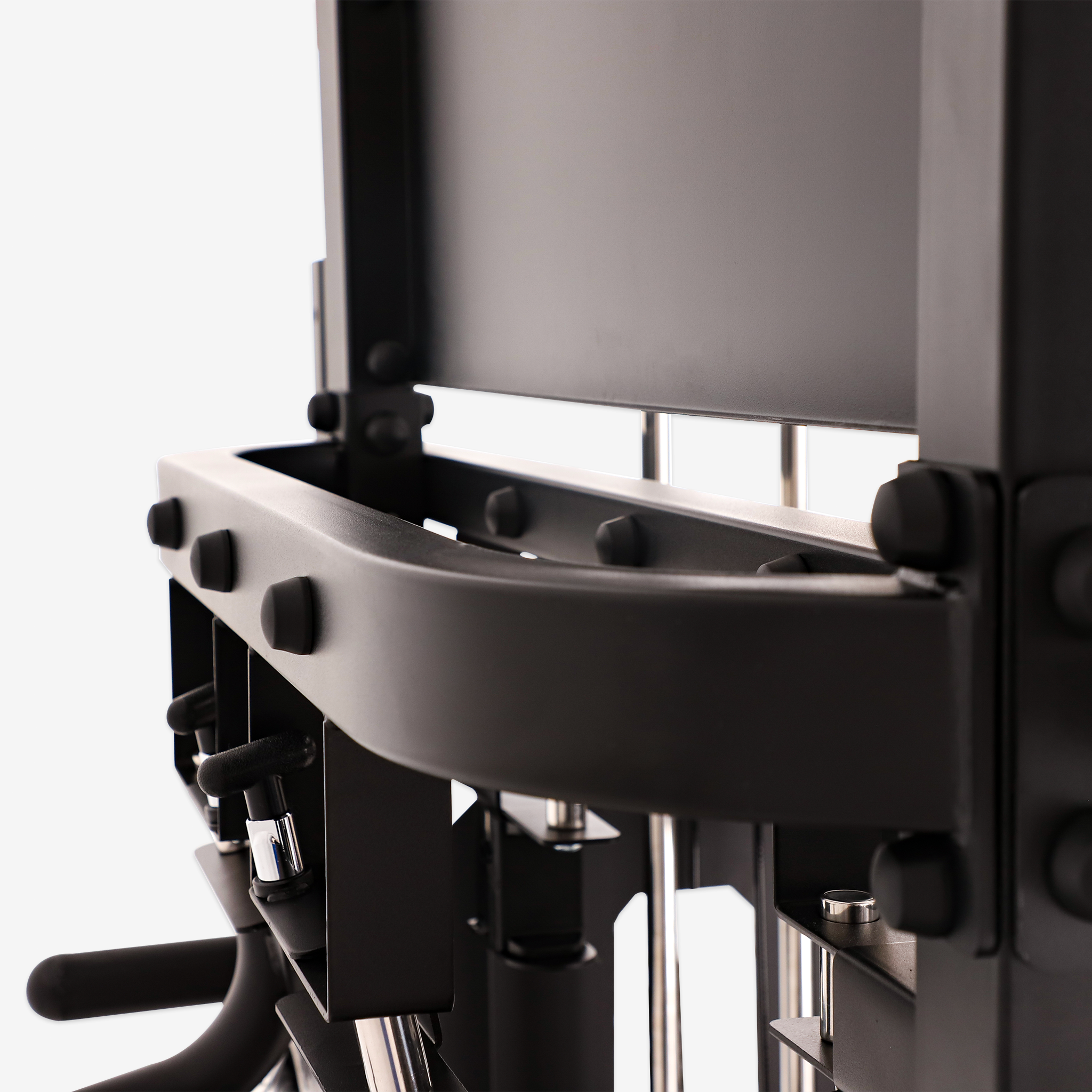
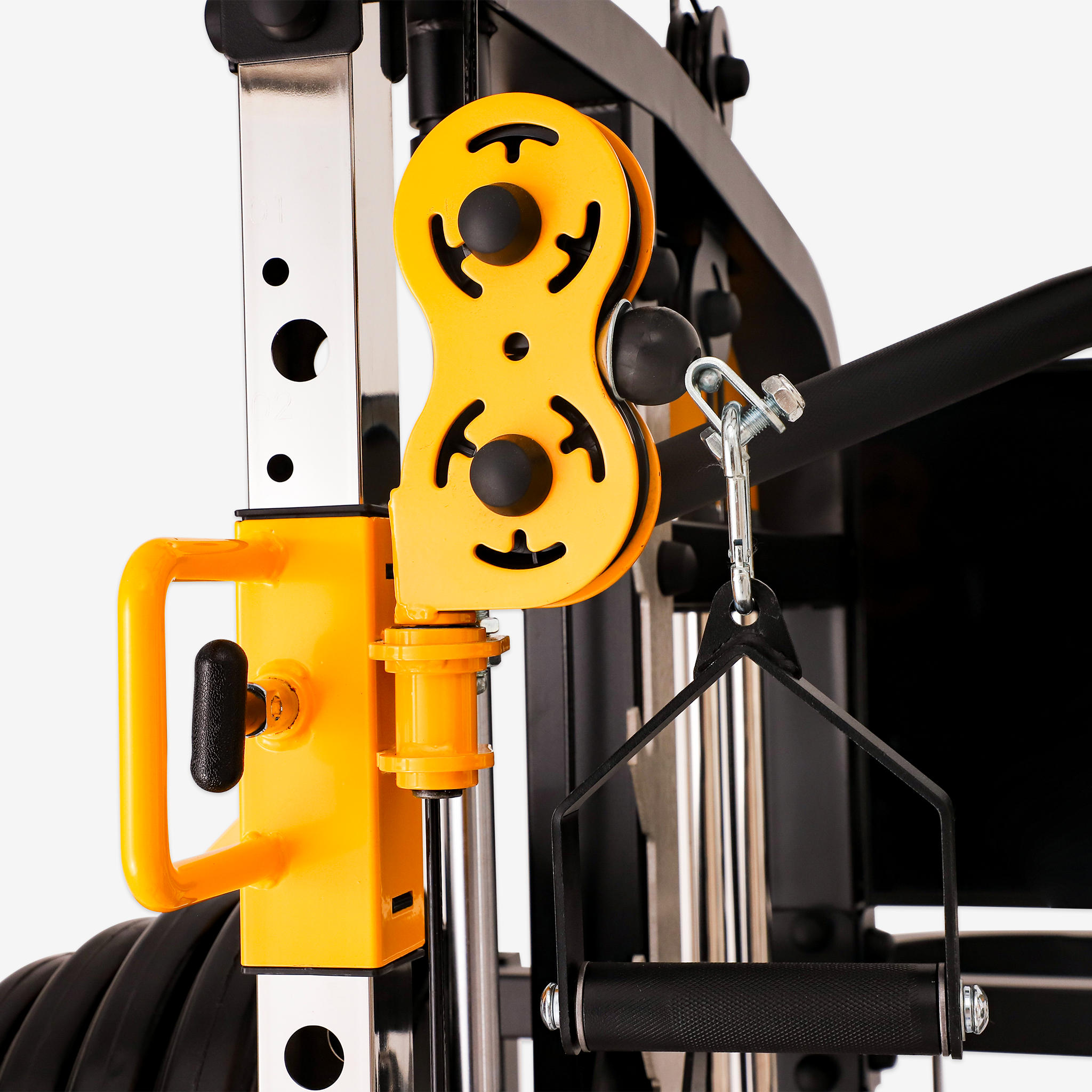
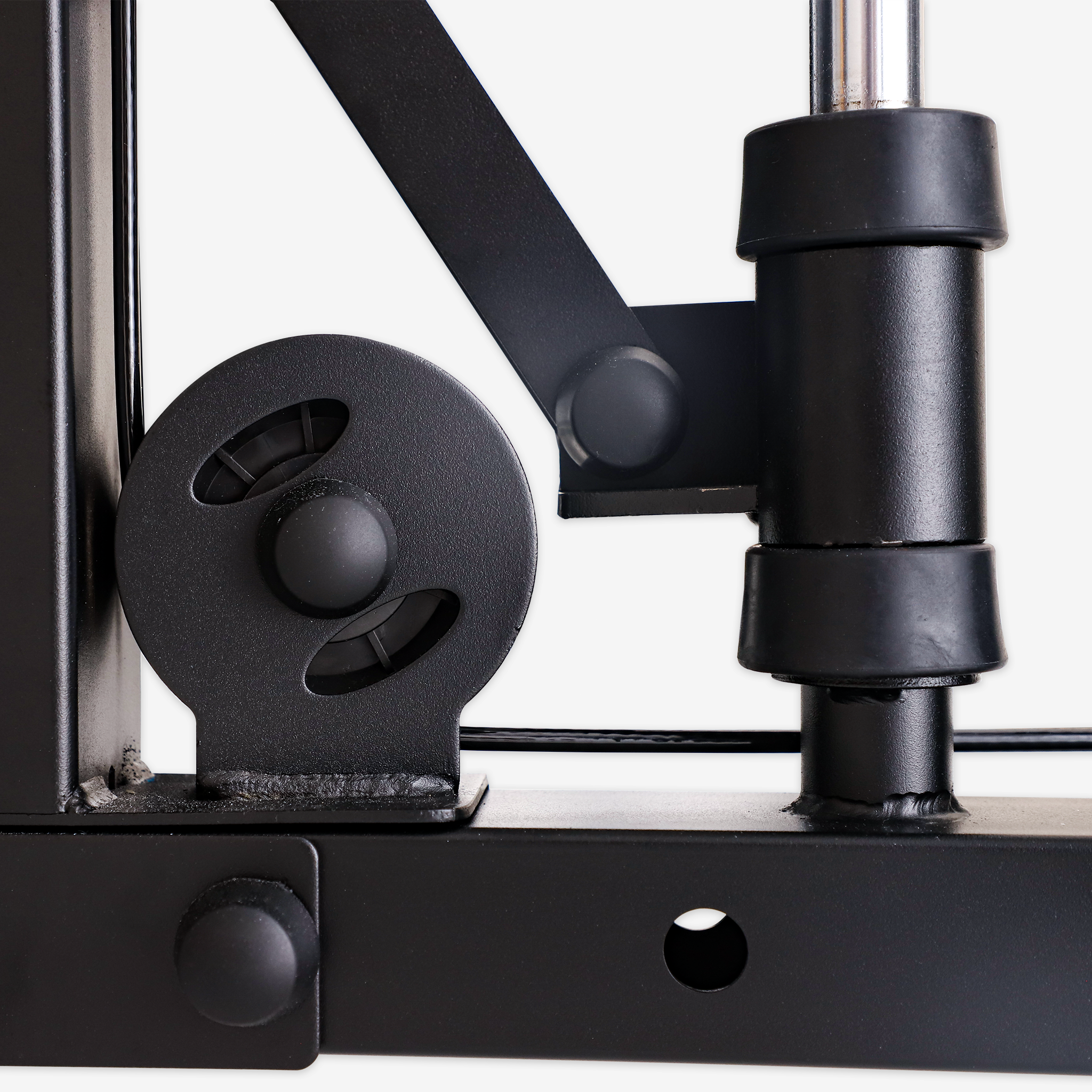
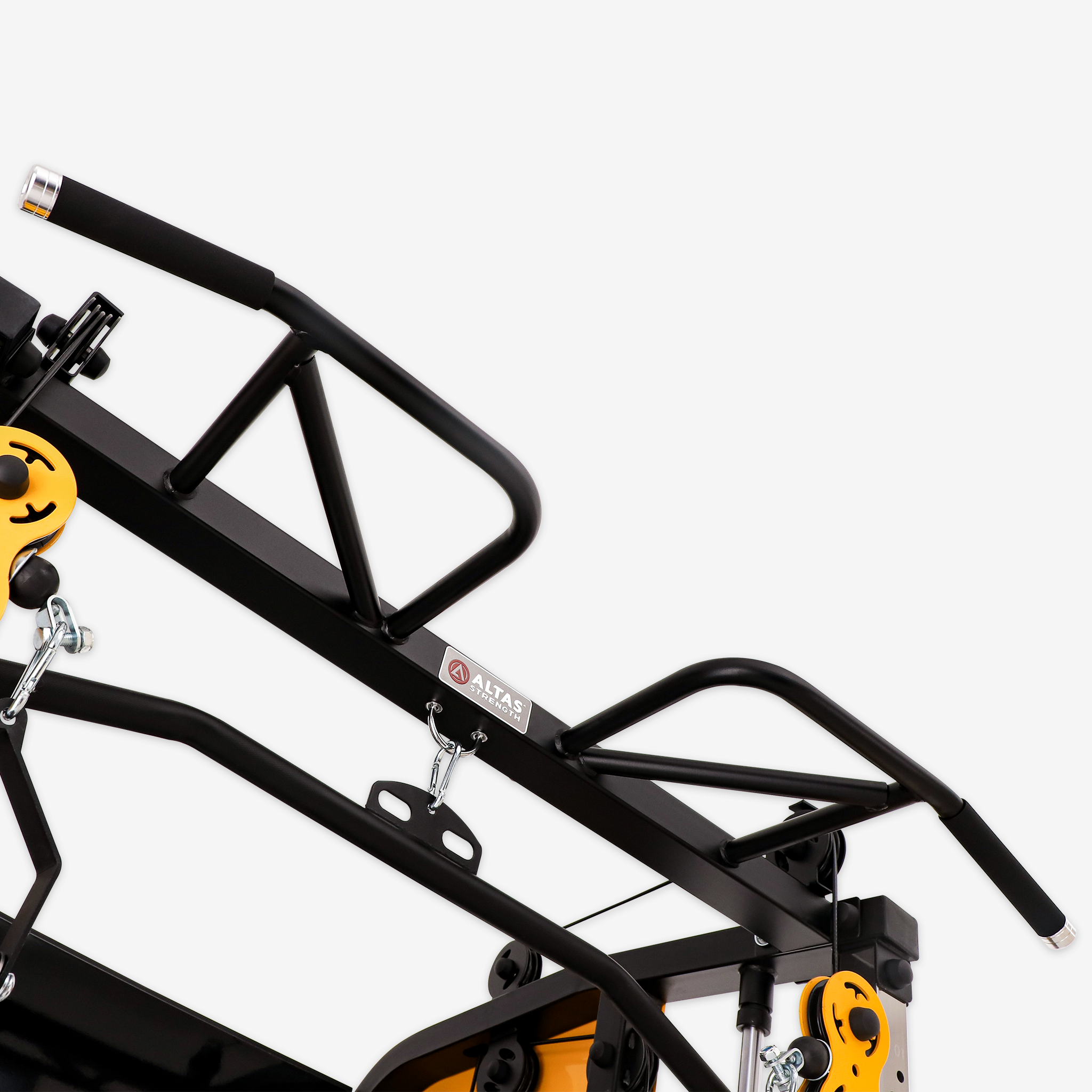
Modern Smith machines use bearings and guide rods that create a smooth movement path.
Because the bar cannot sway or drift:
- Less energy is wasted
- Movement becomes more efficient
- Heavy lifts feel easier
This contributes to the perception that the machine makes the weight lighter.
How Much Lighter Is a Smith Machine?
The exact difference depends on the machine design.
| Machine Type | Typical Difference |
|---|---|
| Counterbalanced Smith Machine | 10%–25% lighter |
| Non-Counterbalanced Smith Machine | 5%–15% lighter |
| Angled Smith Machine | 8%–20% lighter |
| Vertical Smith Machine | 10%–25% lighter |
Example
If you bench press:
200 lbs on a Smith machine
your equivalent free-weight bench press might be:
160–180 lbs
depending on the machine.
Does Every Smith Machine Feel the Same?
No.
Different manufacturers use different designs.
Factors include:
- Counterweight systems
- Rail angle
- Bearing quality
- Bar weight
- Cable assistance systems
For example:
Home Smith Machines
Most home gym Smith machines have:
- 15–25 lb starting bar weight
- Moderate counterbalance
- Compact designs
Commercial Smith Machines
Many gym models have:
- 15–20 lb effective bar weight
- Smoother bearings
- Greater counterbalance assistance
These often feel easier than entry-level home models.
Smith Machine vs Free Weights
Smith Machine Advantages
- Safer for solo training
- Built-in safety catches
- Easier to learn technique
- Better for hypertrophy-focused training
- Reduced injury risk for beginners
Free Weight Advantages
- Builds stabilizer muscles
- Improves athletic performance
- Develops functional strength
- Better carryover to sports and daily activities
Many experienced lifters use both.
Should You Count Smith Machine Weight Differently?
Yes.
When tracking workouts:
Formula
Total Weight = Bar Weight + Weight Plates
Example:
Smith bar weight = 20 lbs
Two 45 lb plates per side:
20 + 45 + 45 + 45 + 45
Total = 200 lbs
However, remember that 200 lbs on a Smith machine may not equal 200 lbs with a free barbell.
Is the Smith Machine Good for Building Muscle?
Absolutely.
Muscles respond to:
- Mechanical tension
- Progressive overload
- Training volume
They do not know whether the resistance comes from:
- A Smith machine
- Dumbbells
- Barbells
- Cables
Many bodybuilders regularly use Smith machines because they allow:
- Better focus on target muscles
- Higher training volume
- Safer training near failure
Common Exercises That Feel Easier on a Smith Machine
The weight difference is most noticeable during:
Smith Machine Squats
The machine removes balance demands and helps maintain a consistent movement path.
Smith Machine Bench Press
Less shoulder stabilization is required, allowing many lifters to press more weight.
Smith Machine Shoulder Press
The fixed path improves stability and often increases lifting confidence.
Smith Machine Lunges
Balance becomes much easier, allowing greater focus on the legs and glutes.
Tips for Accurate Strength Tracking
To compare Smith machine lifts with free weights:
- Know your machine's bar weight.
- Record total loaded weight.
- Note whether the machine is counterbalanced.
- Avoid comparing raw numbers directly to free-weight lifts.
- Track progress using consistent equipment.
Consistency matters more than exact conversion formulas.
Frequently Asked Questions
Does Smith machine make weight lighter?
Yes. The weight plates remain the same, but the guided rails and counterbalance systems make lifts feel 10%–25% easier than free-weight versions.
How much does a Smith machine bar weigh?
Most Smith machine bars have an effective weight between 15 and 30 pounds, depending on the manufacturer and counterbalance system.
Can I lift more on a Smith machine?
Most people can lift more weight on a Smith machine because stabilizer muscles are less involved and the movement path is controlled.
Is Smith machine strength real strength?
Yes. Smith machine training builds muscle and strength. However, it develops less stabilization and functional strength compared to free-weight training.
Should beginners use a Smith machine?
Yes. A Smith machine provides a safer environment for learning squats, bench presses, lunges, and shoulder presses before progressing to free weights.
Final Thoughts
So, does Smith machine make weight lighter?
The answer is yes in terms of perceived difficulty, but no in terms of actual plate weight. Guided rails, reduced stabilization demands, smoother movement, and counterbalance systems all contribute to making the same load feel easier than free-weight lifting.
For home gym users and commercial gym members alike, understanding this difference helps you track progress accurately, choose appropriate training loads, and set realistic strength goals. Whether your goal is muscle growth, fat loss, or general fitness, a Smith machine remains one of the safest and most effective tools for consistent strength training.