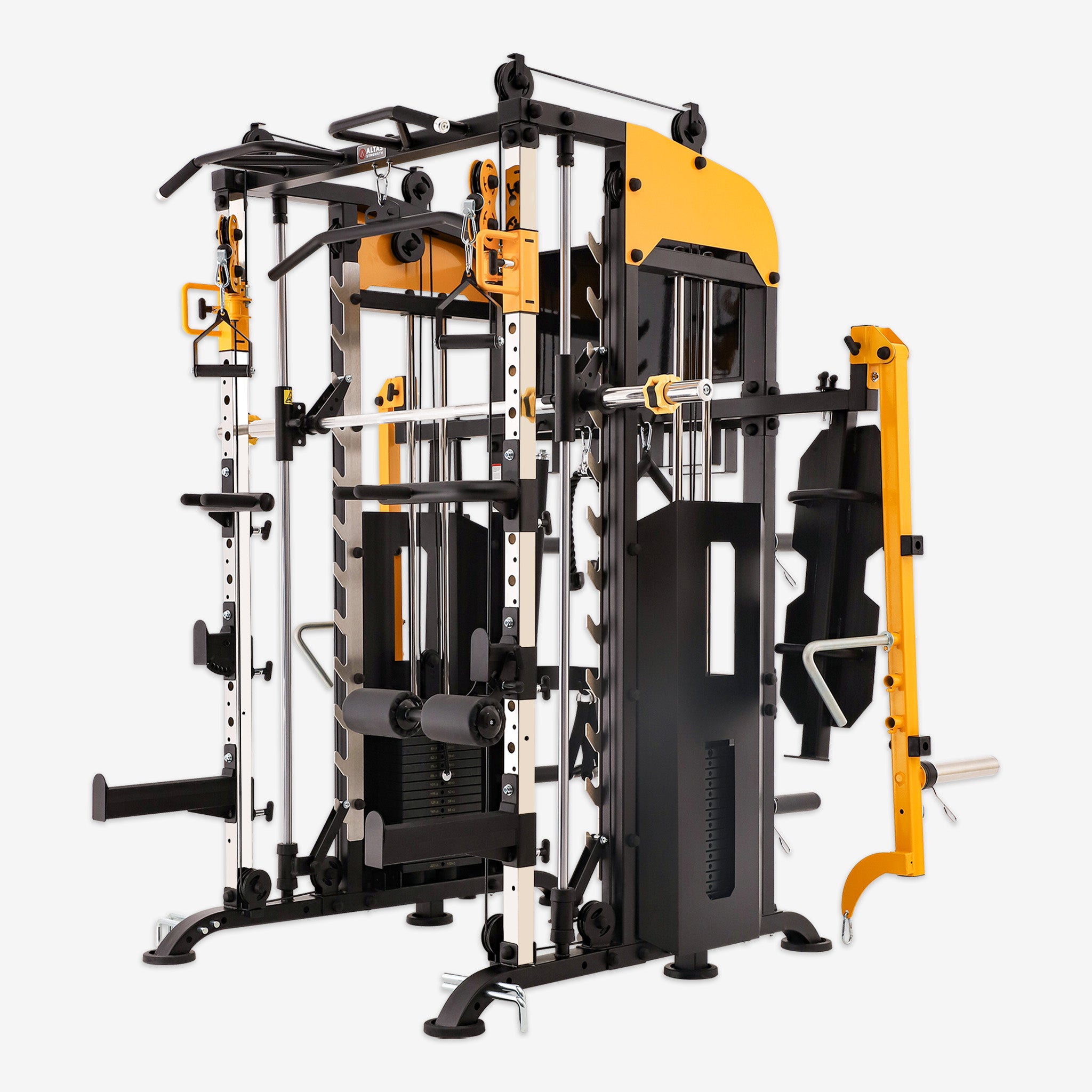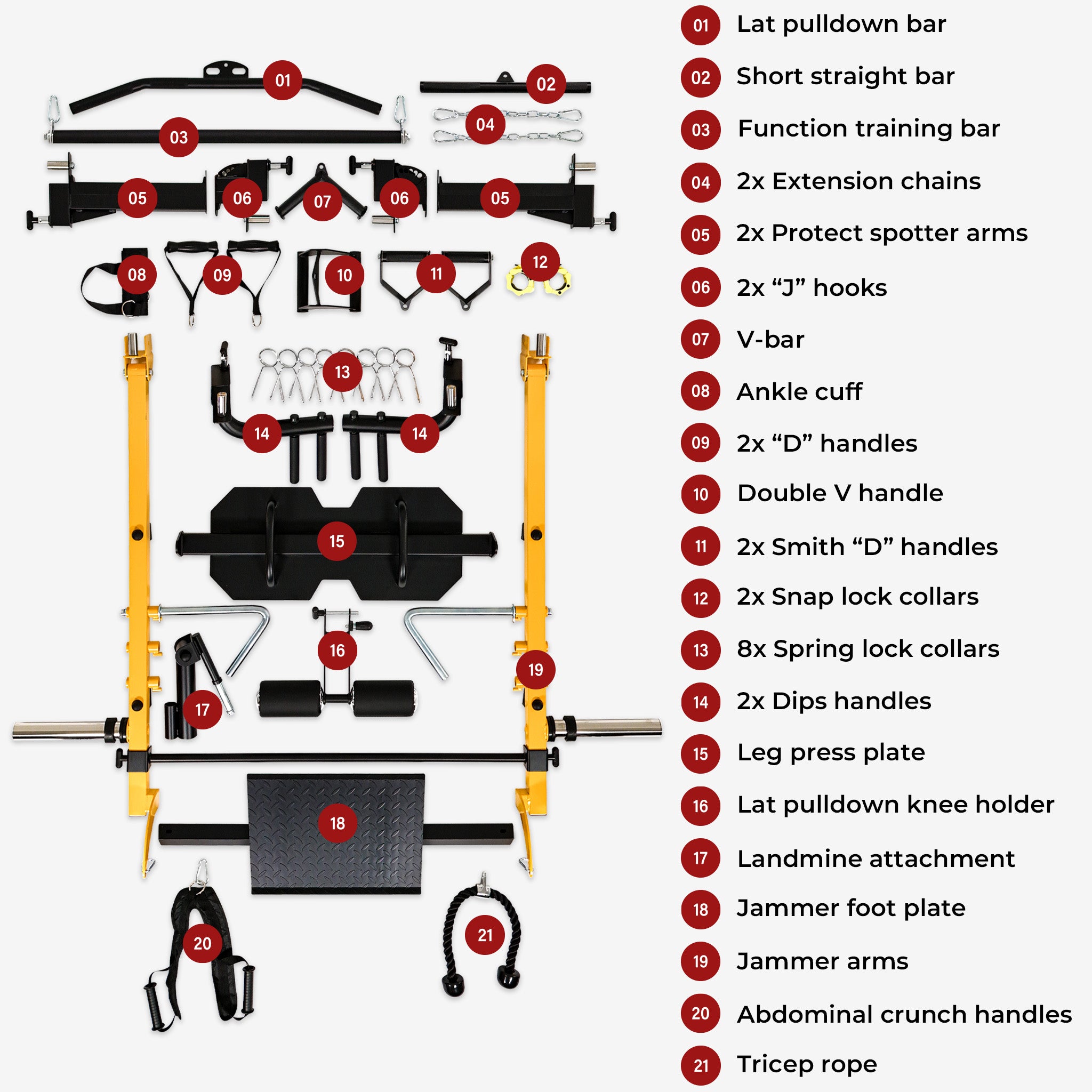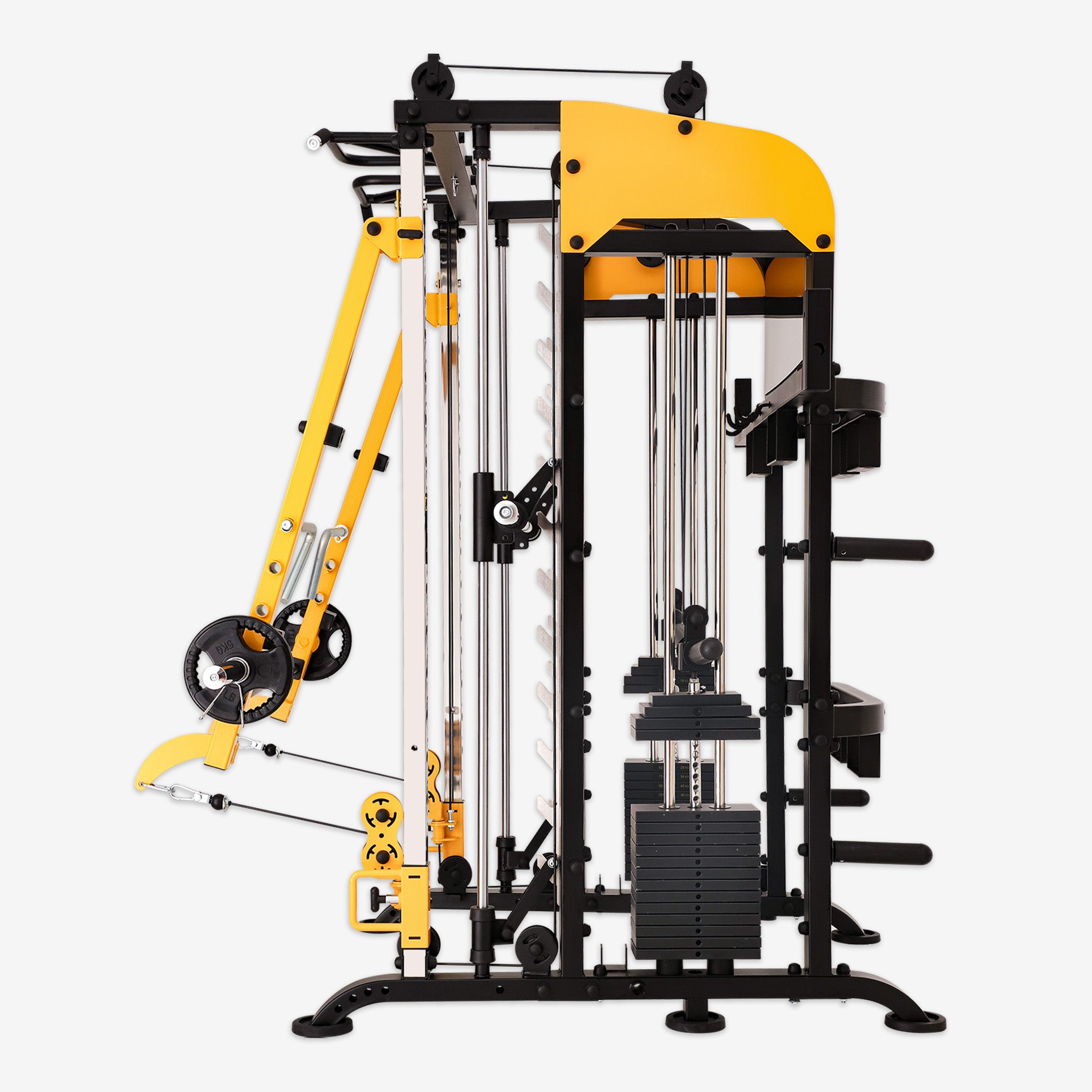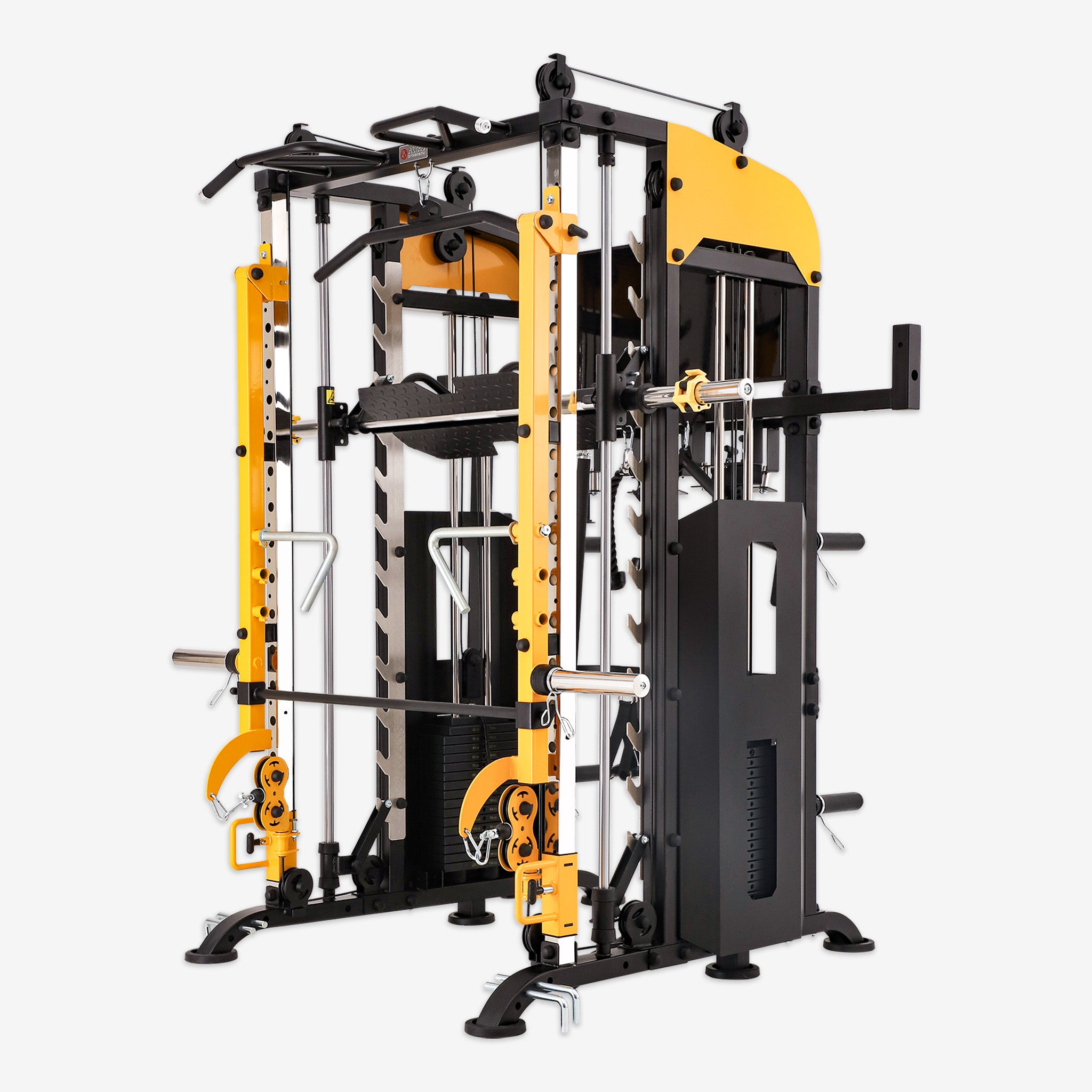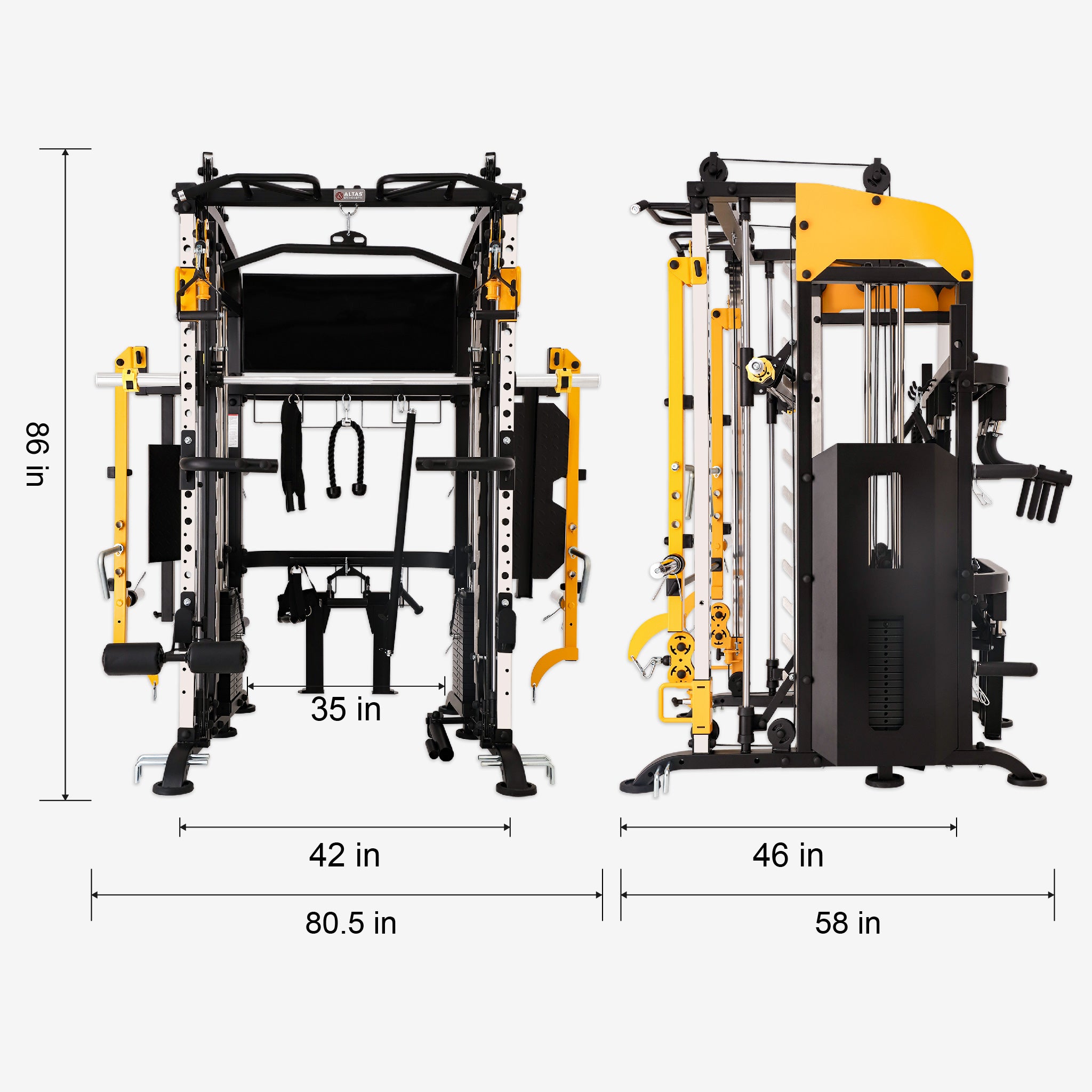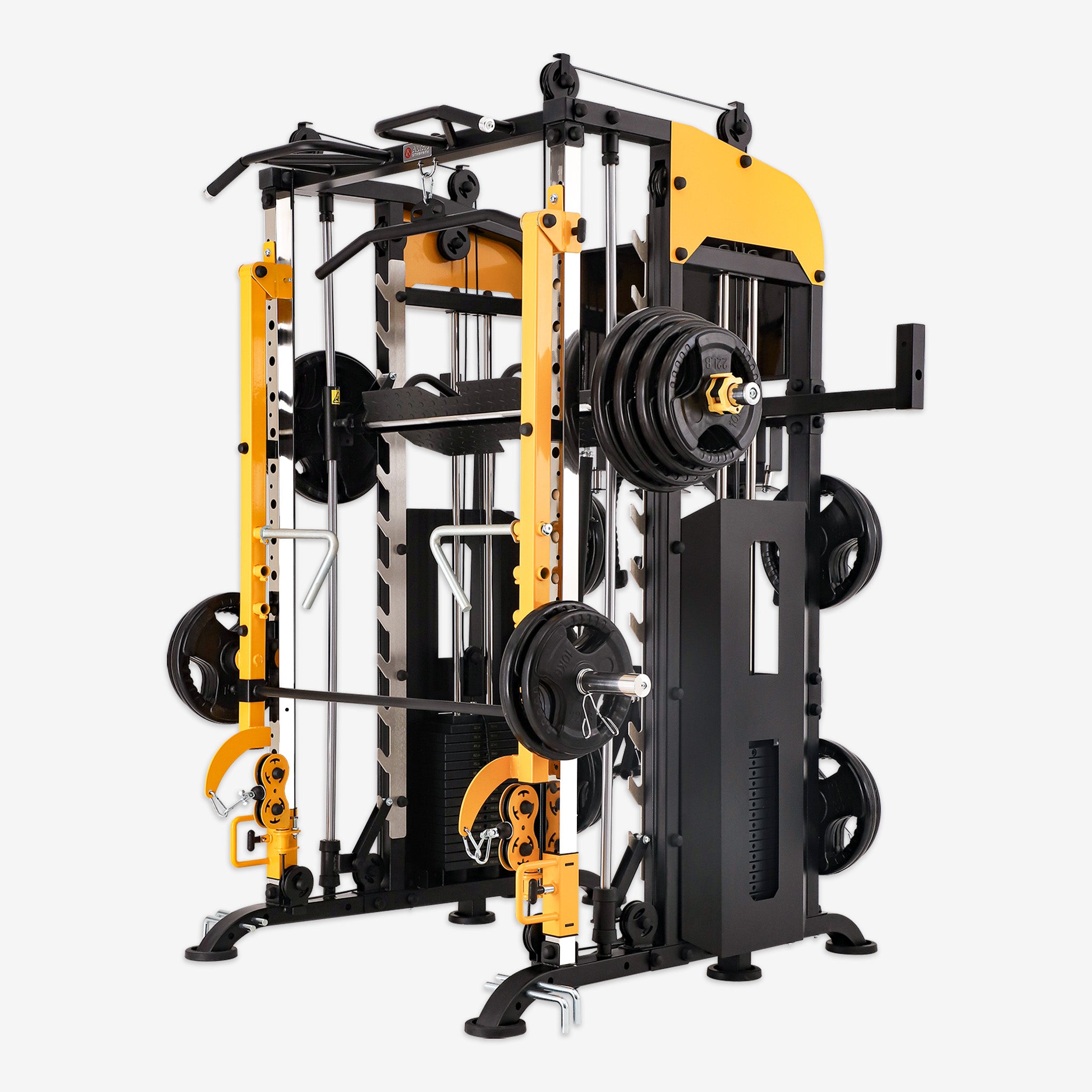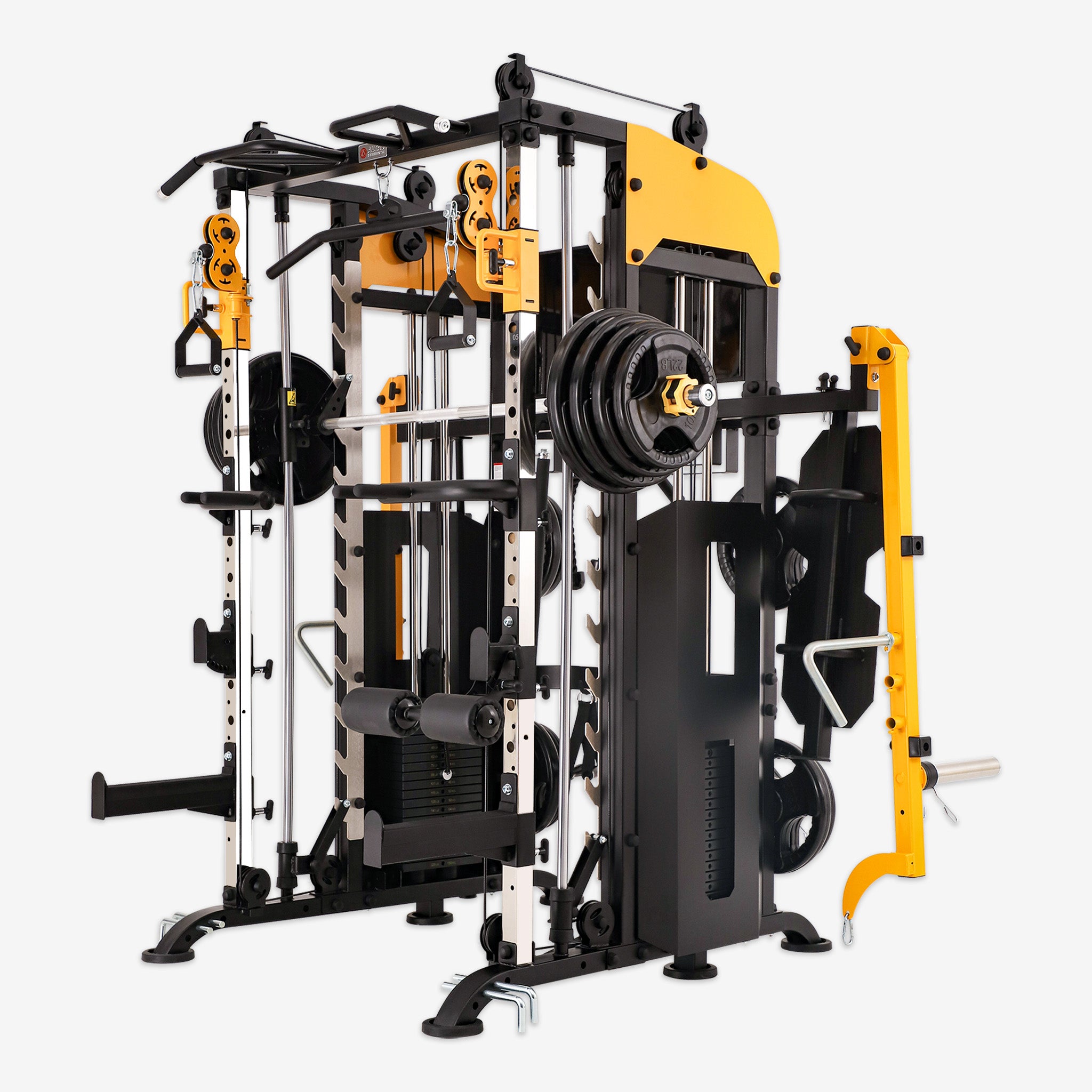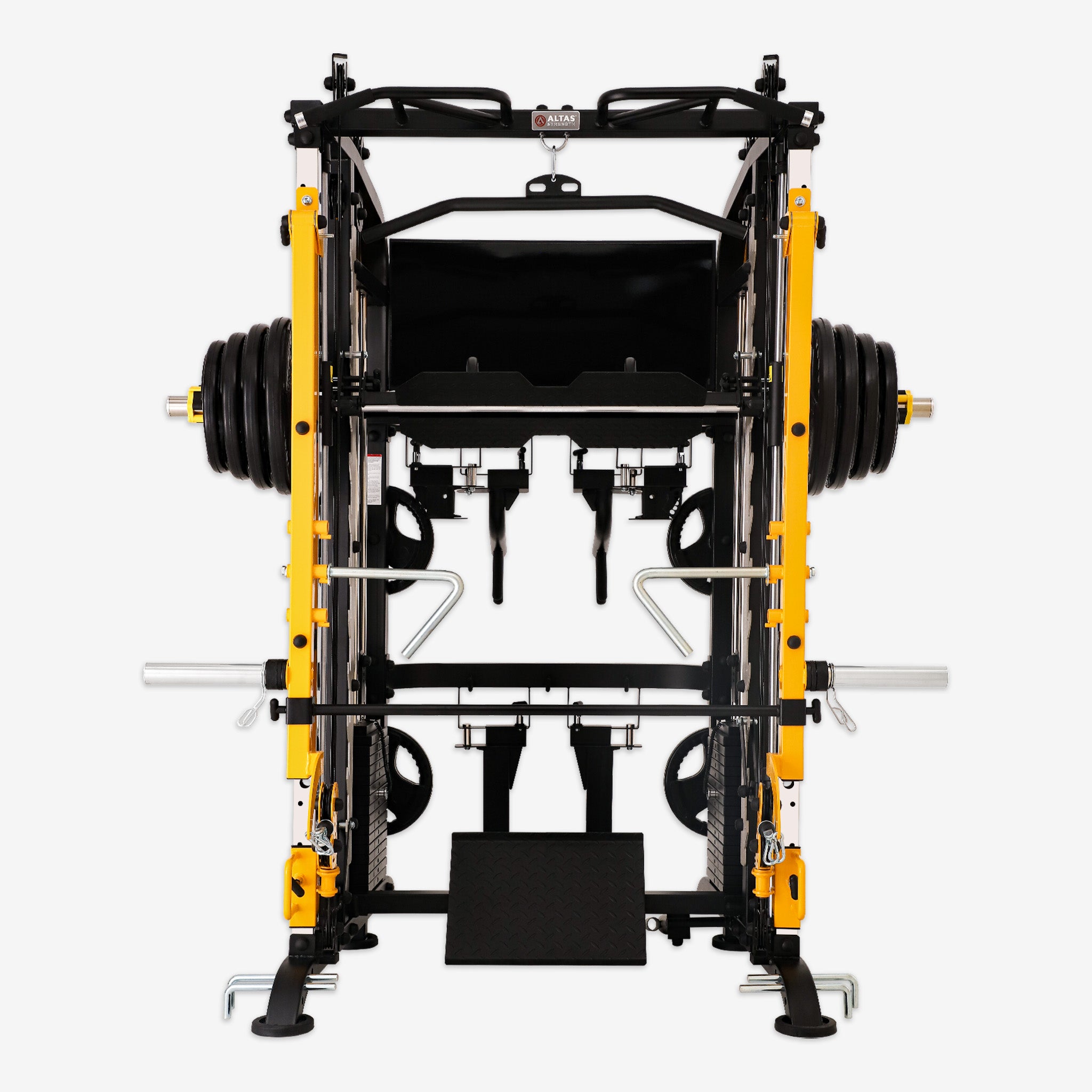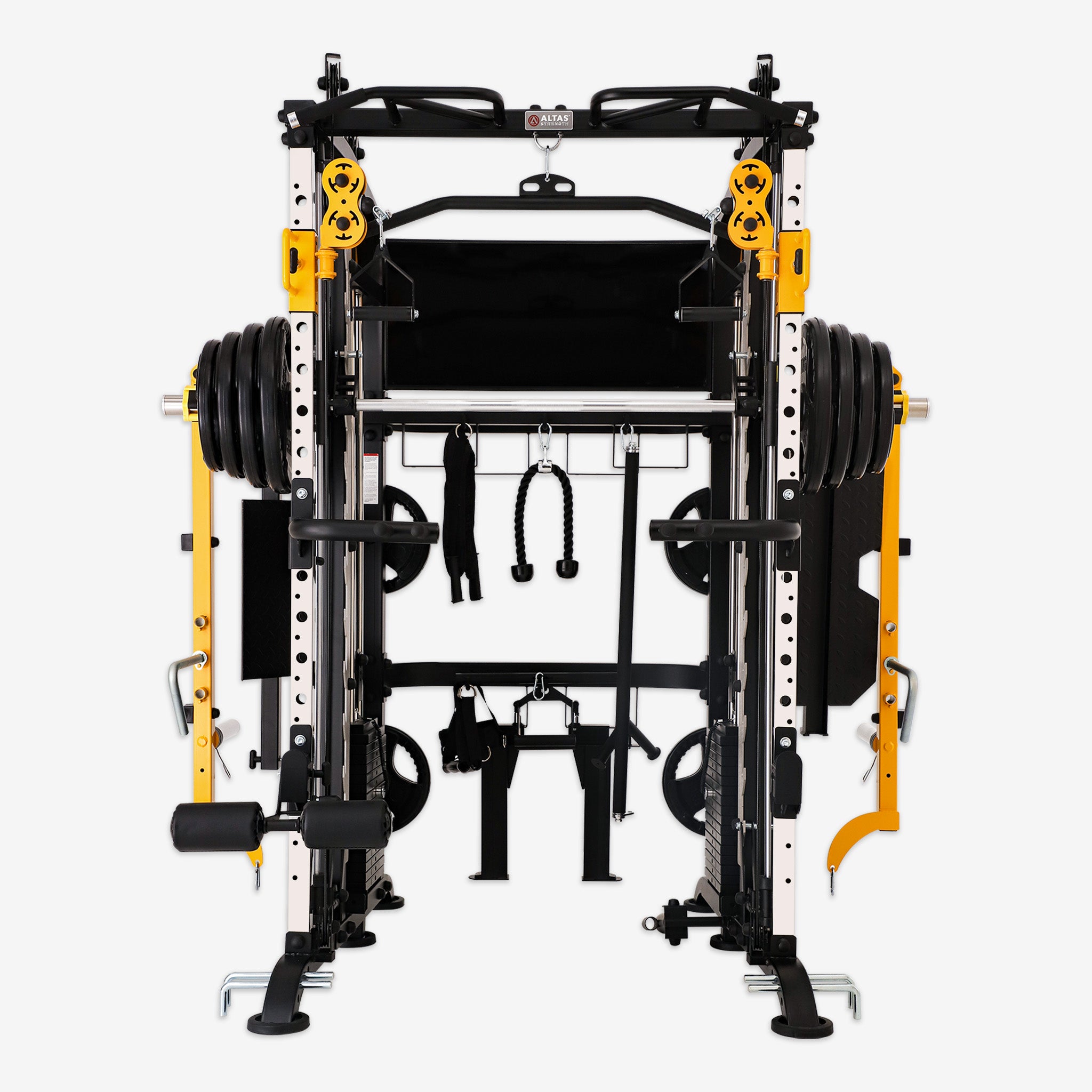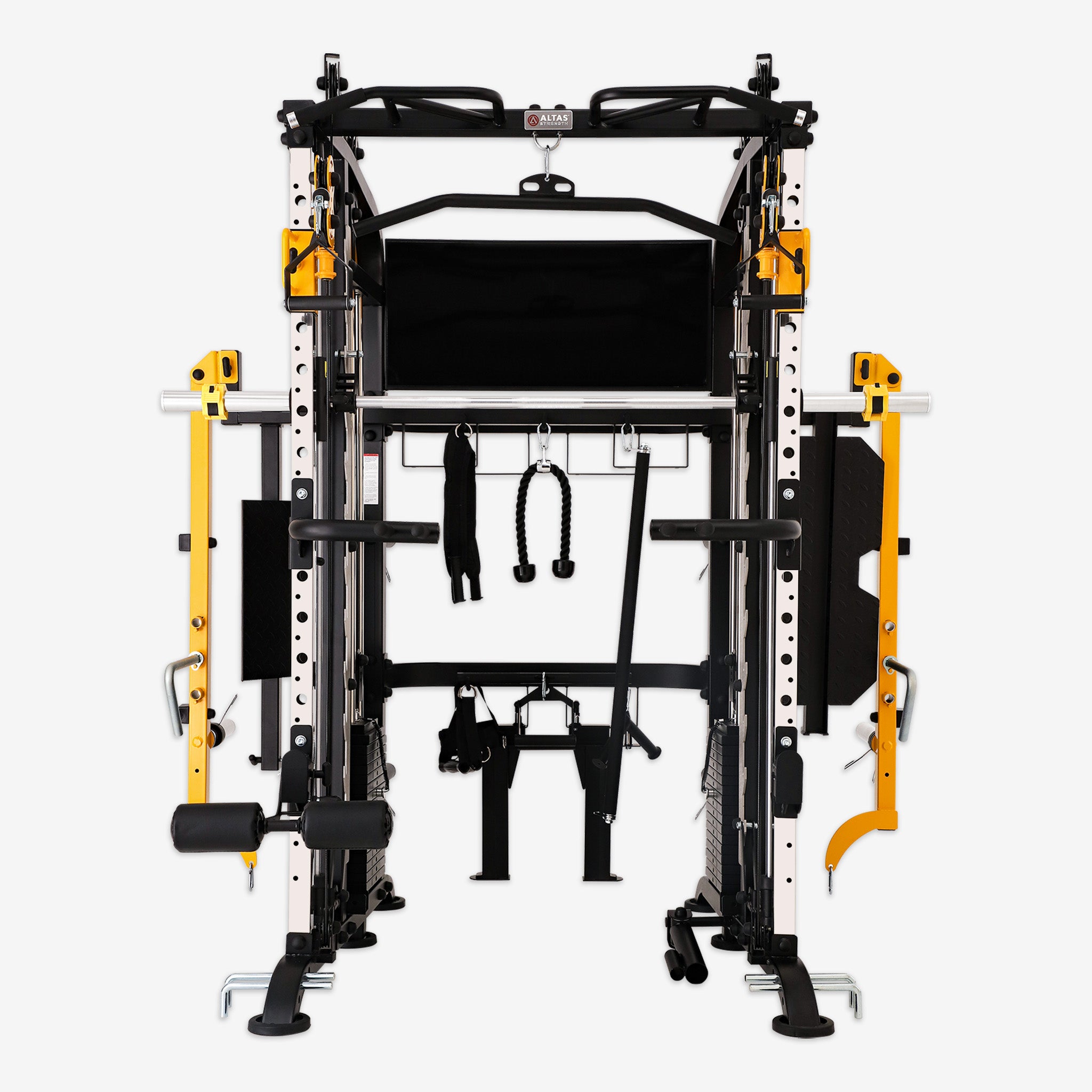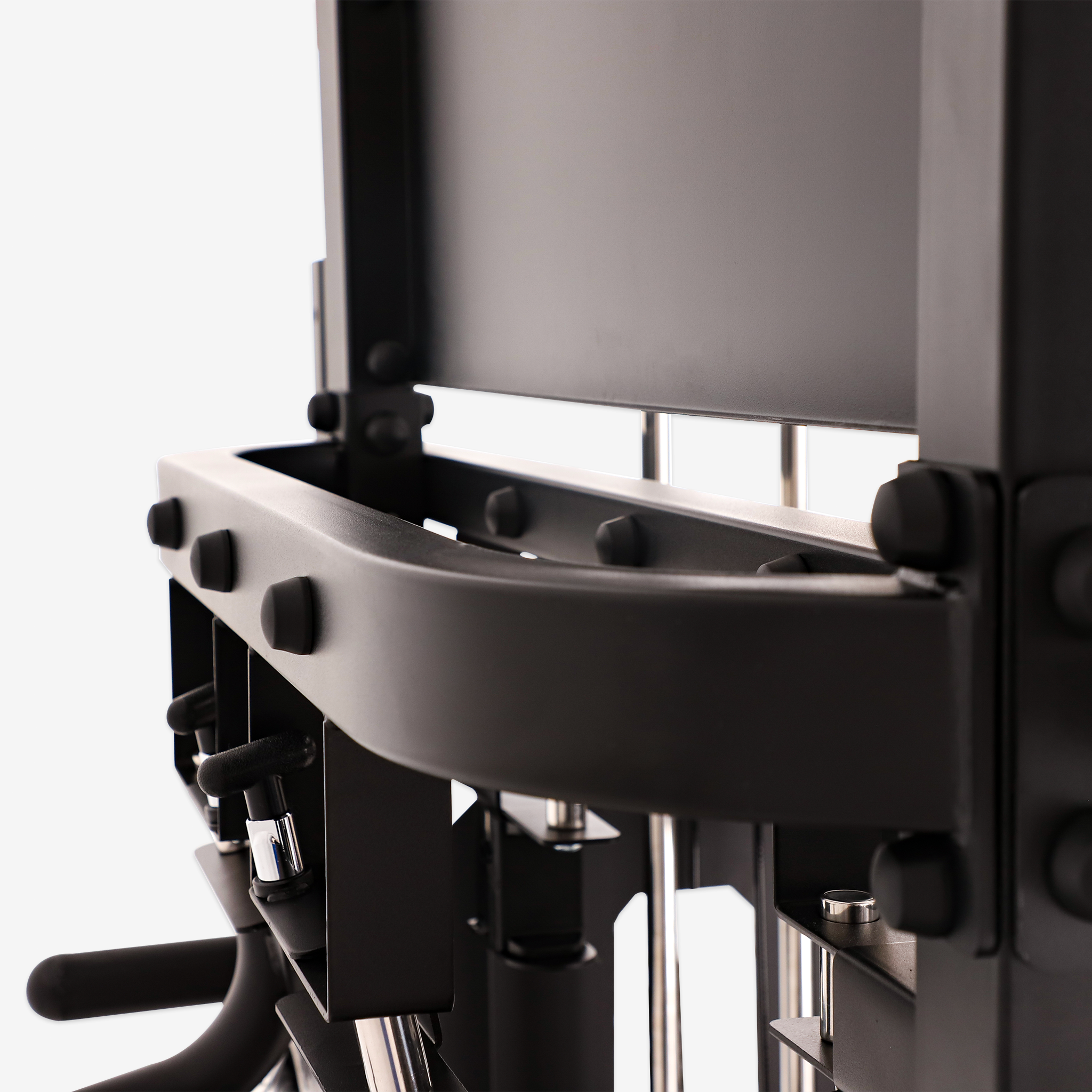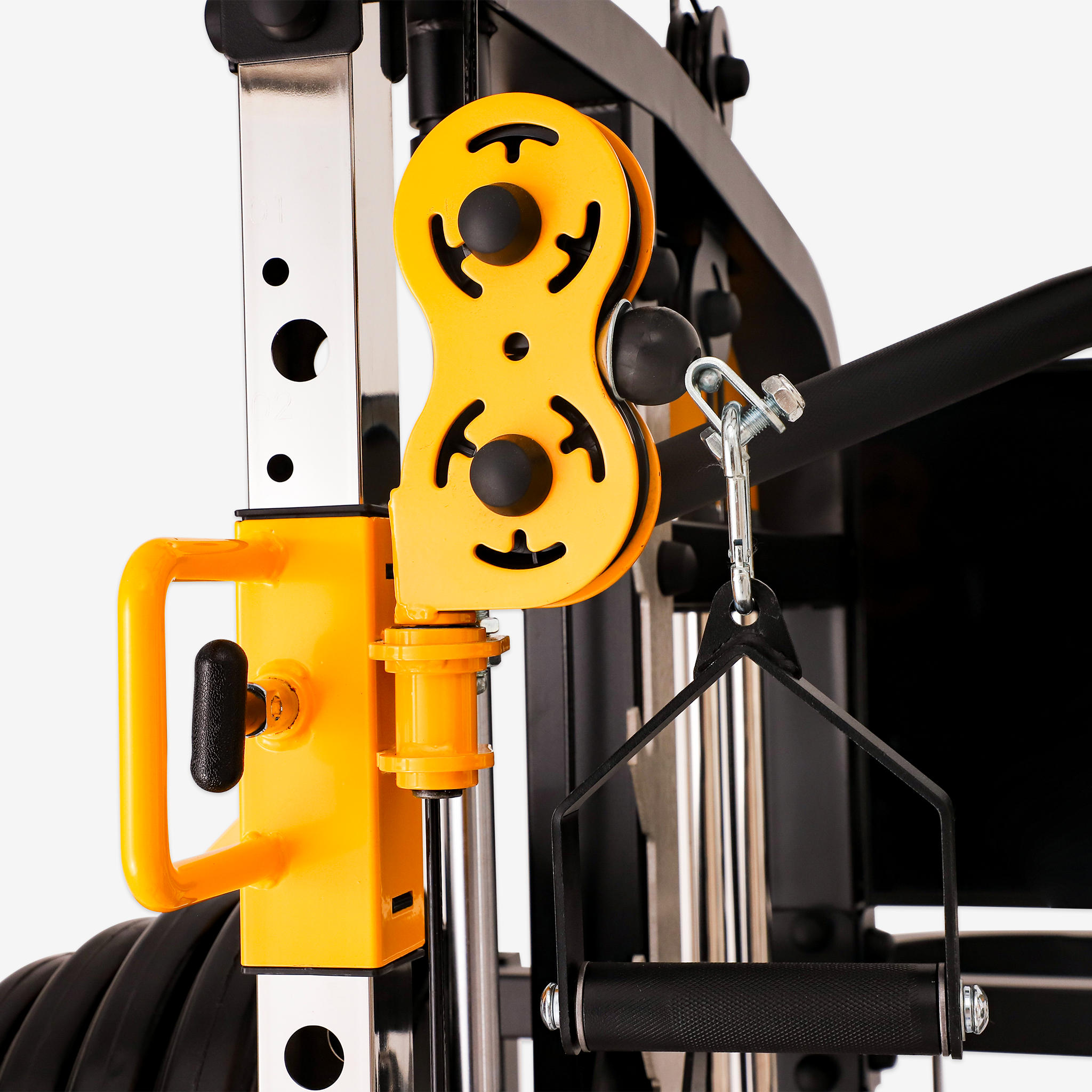
If you’ve ever trained on a Smith machine, you’ve probably wondered: how much weight does the Smith machine take off?
This is important because the machine’s counterbalance system changes the actual load you are lifting, which directly affects strength tracking, progression, and workout planning.
Unlike a standard Olympic barbell (which weighs about 20 kg / 45 lbs), a Smith machine uses a guided rail system that reduces the effective weight of the bar.
Quick Answer: Smith Machine Weight Offset
Most Smith machines reduce the effective load by:
- 10–20 lbs (4.5–9 kg) on commercial gym machines
- 15–25 lbs (7–11 kg) on many home Smith machines
- Some models may feel almost partially counterbalanced, making the bar feel very light at the start
So when you ask how much weight does the Smith machine take off, the realistic answer is:
You are often lifting 5–12 kg less than the actual bar weight feels like on a free barbell.
Why Does the Smith Machine Feel Lighter?
The difference comes from three main design factors:
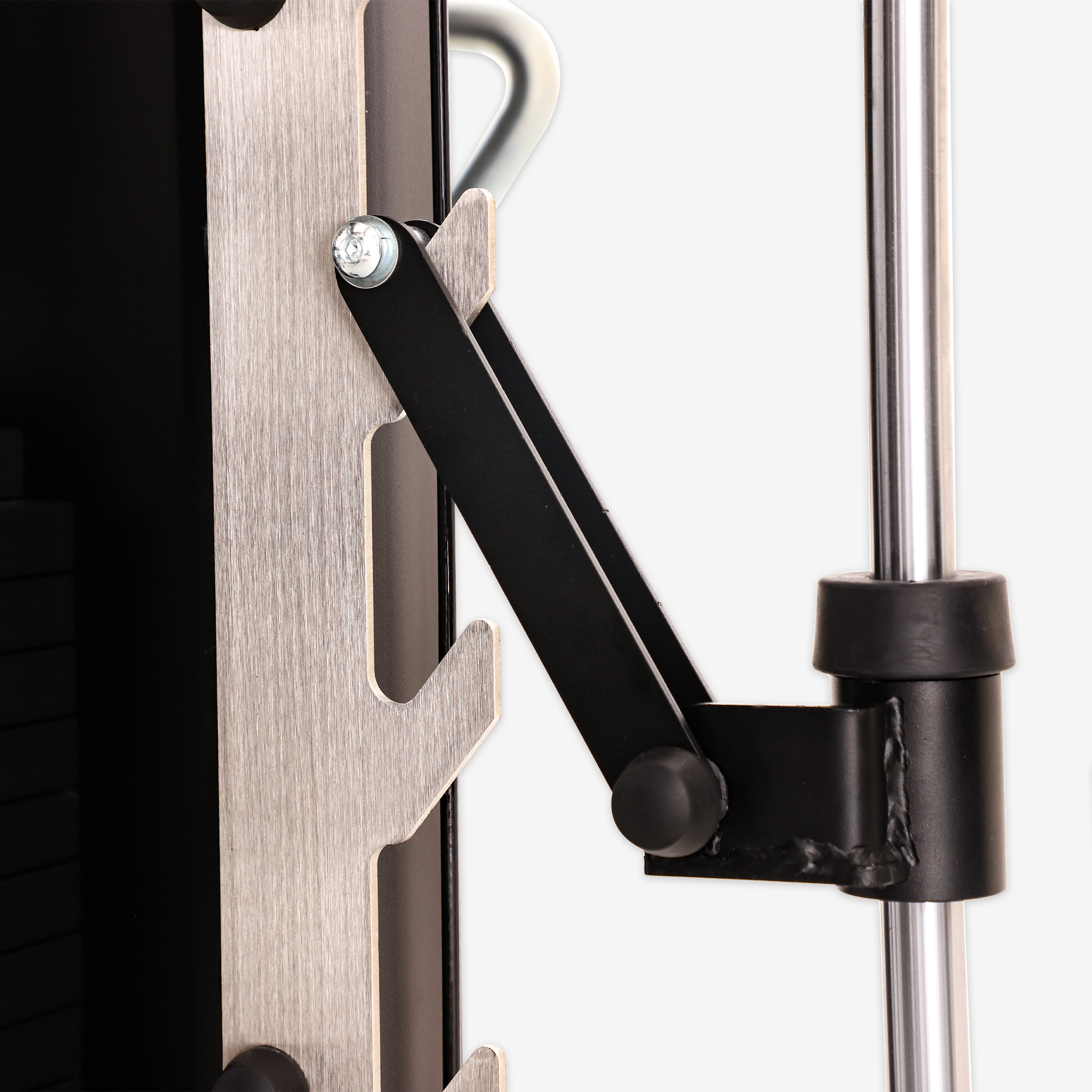
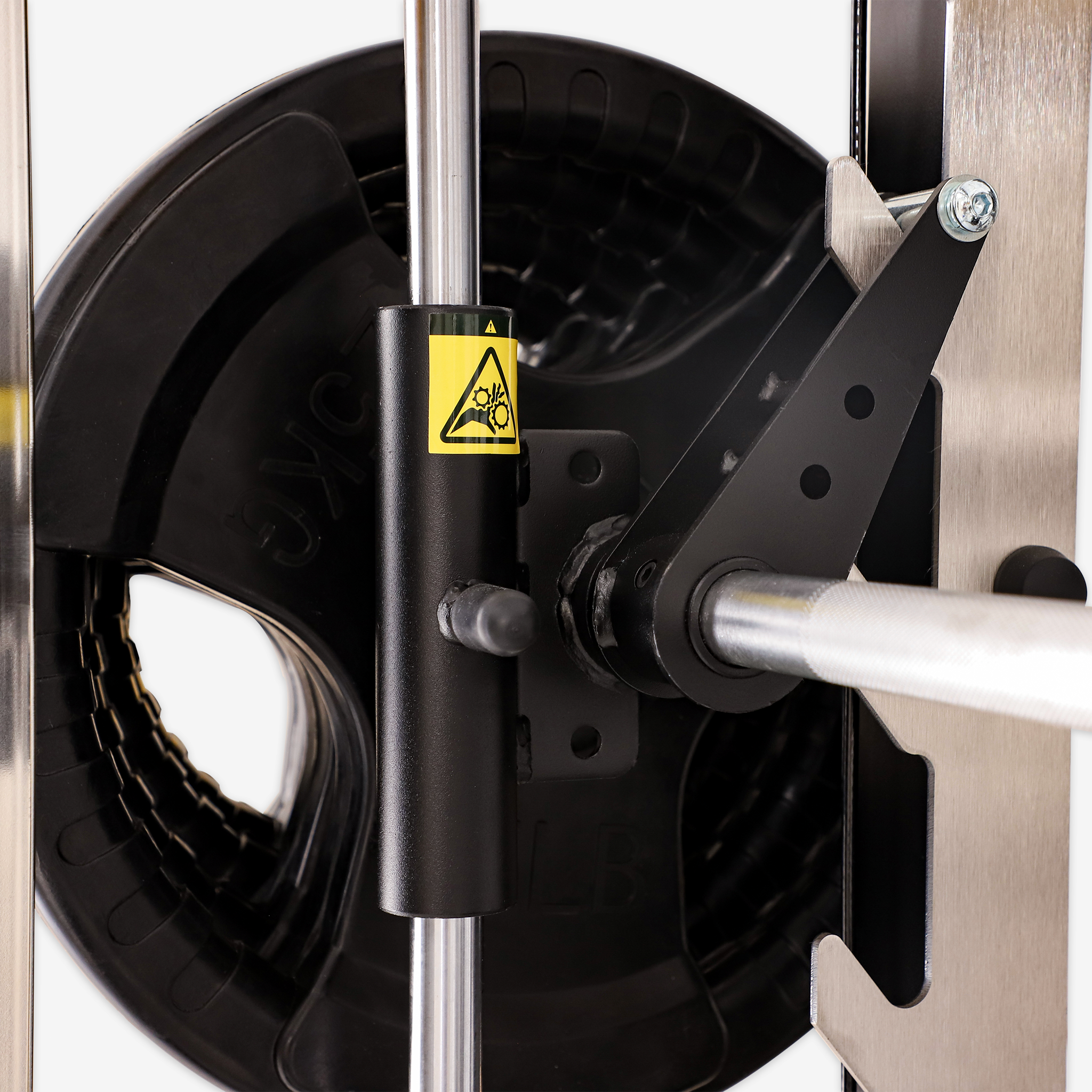
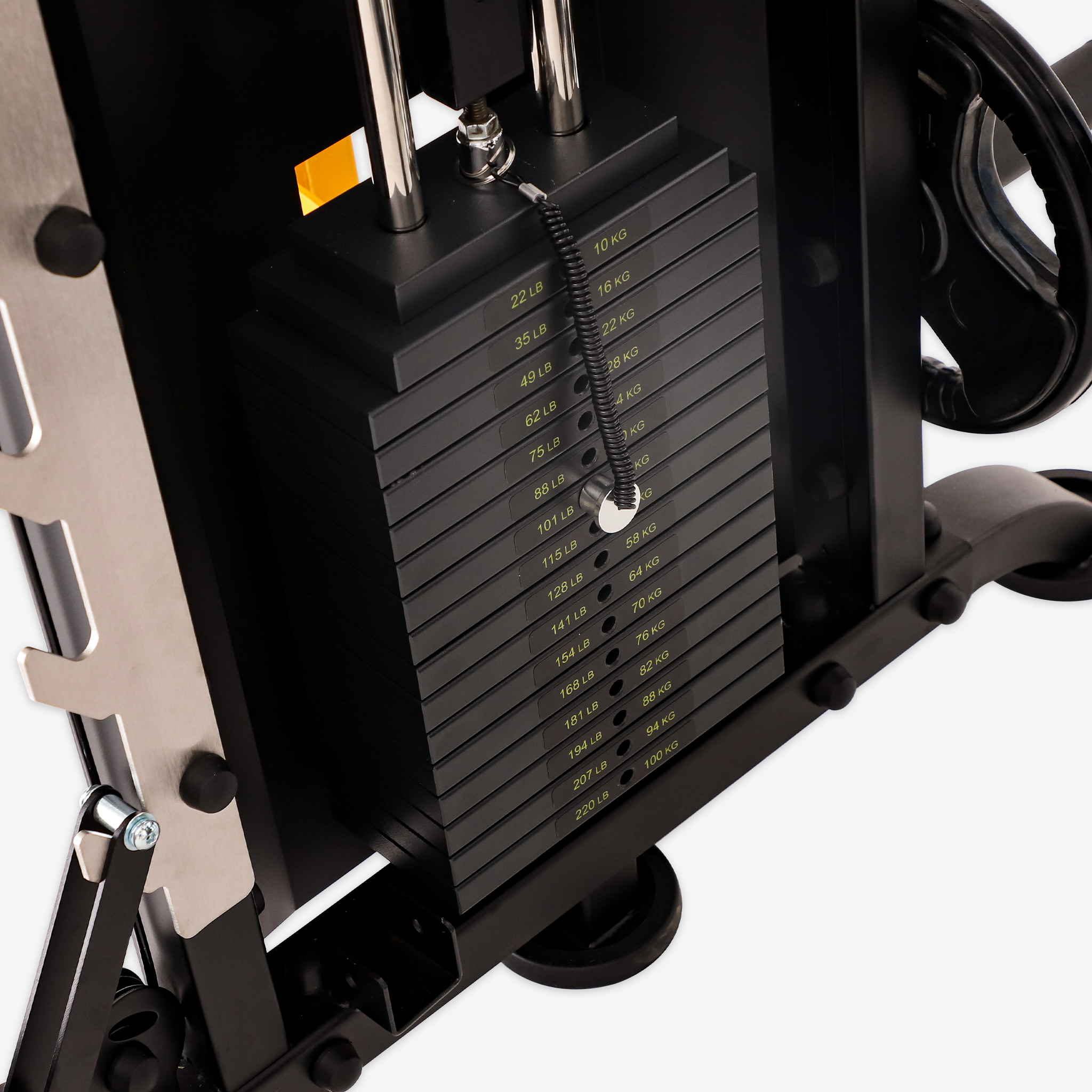
1. Counterbalance System
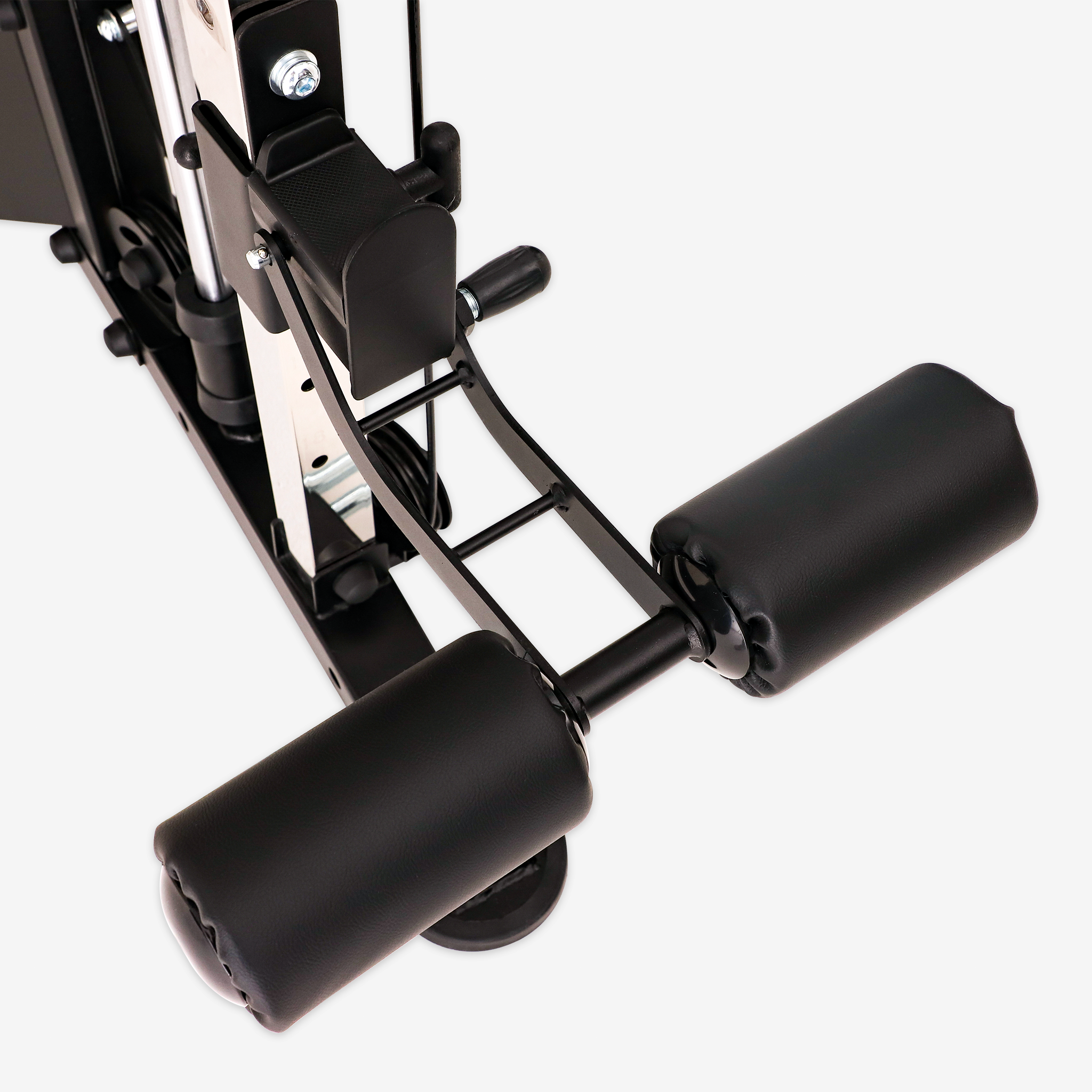
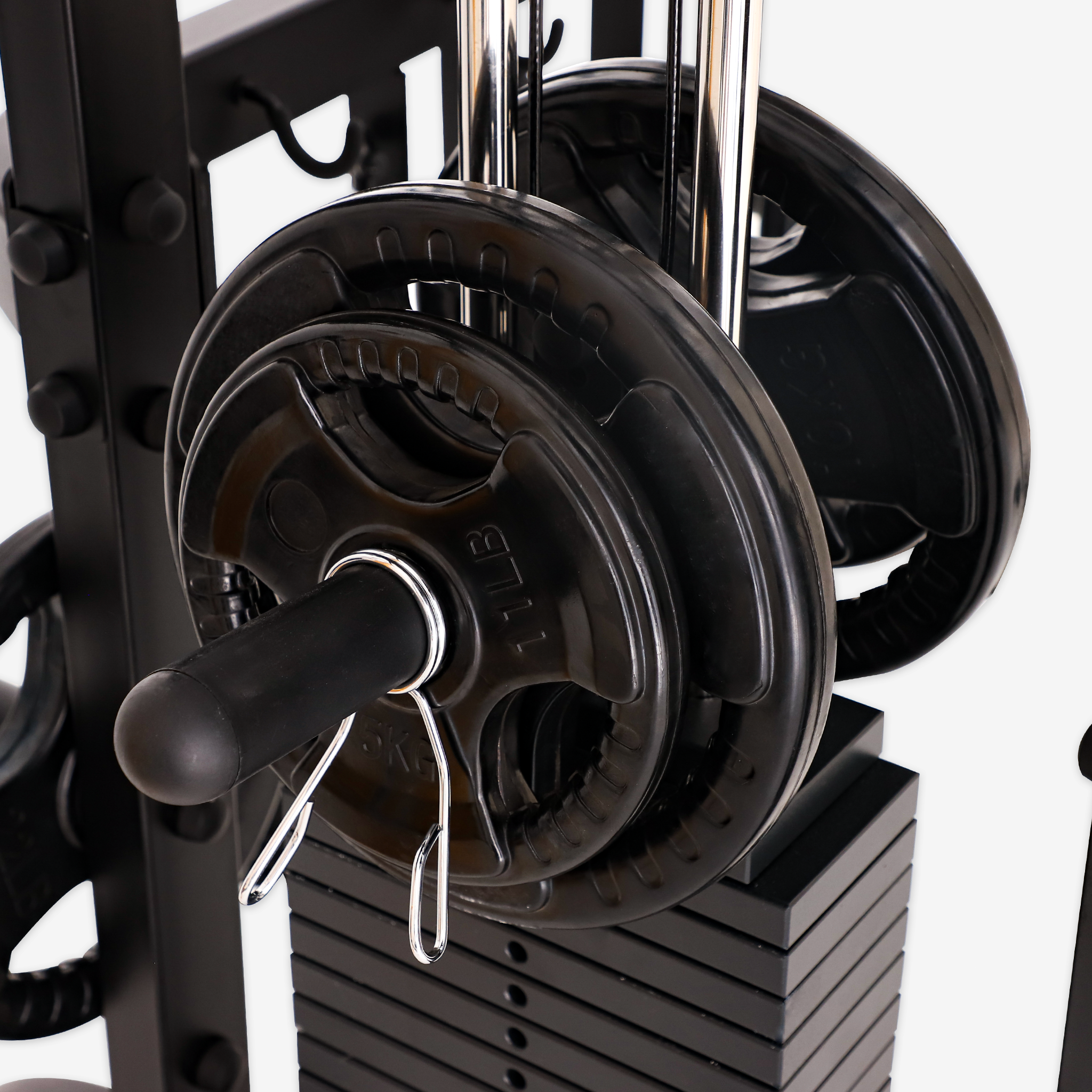
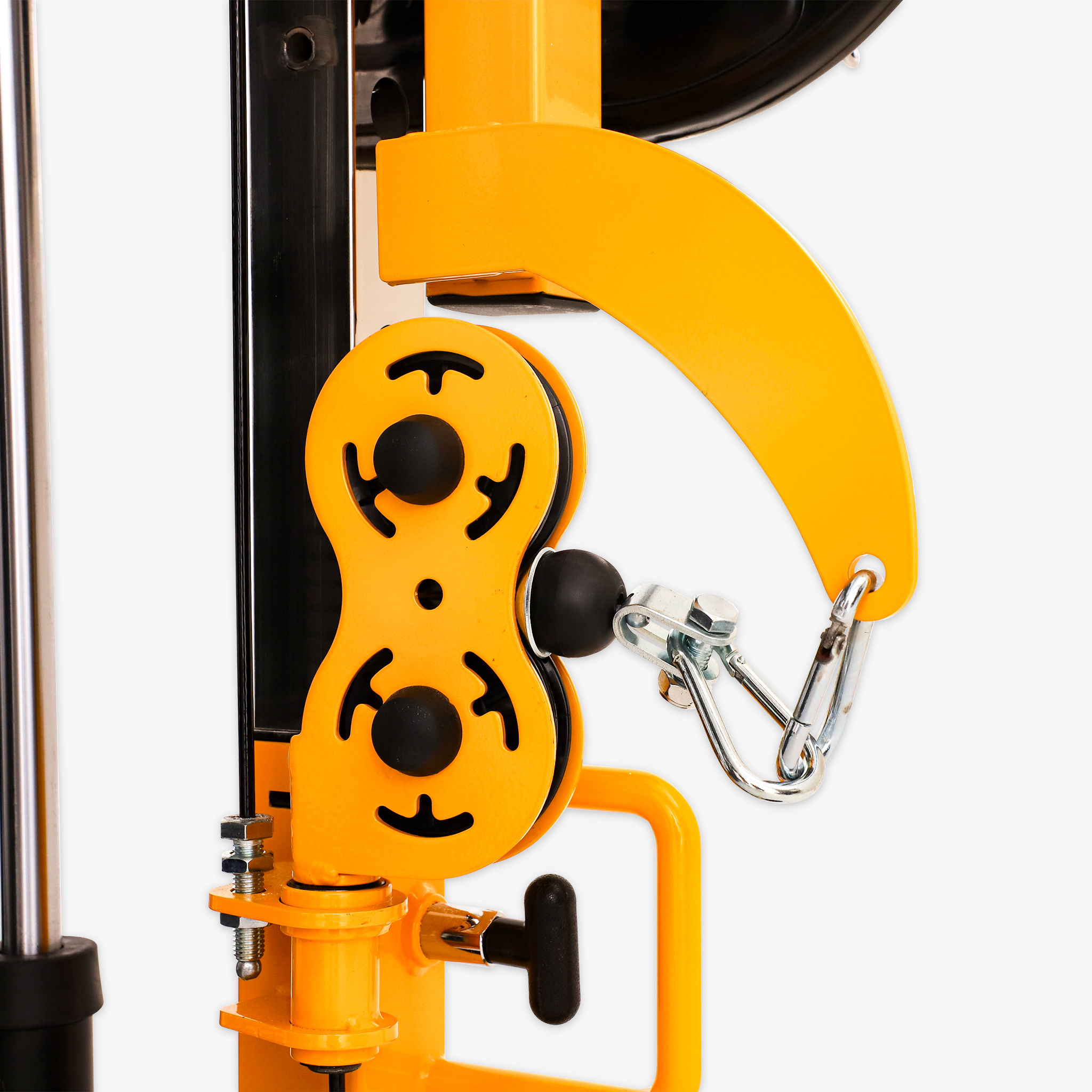
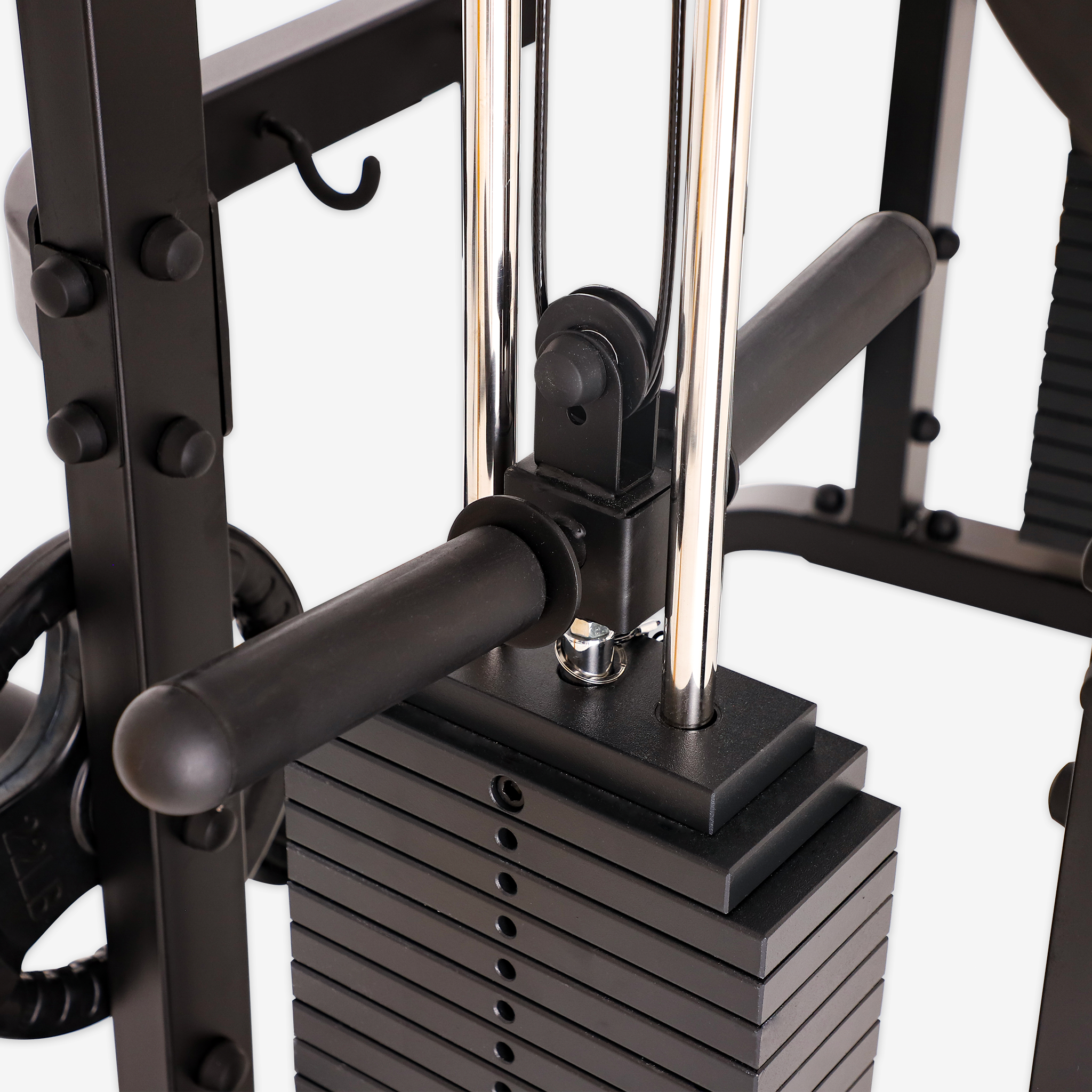
Many Smith machines use built-in counterweights to make the bar easier to control and safer for solo training.
2. Rail Friction
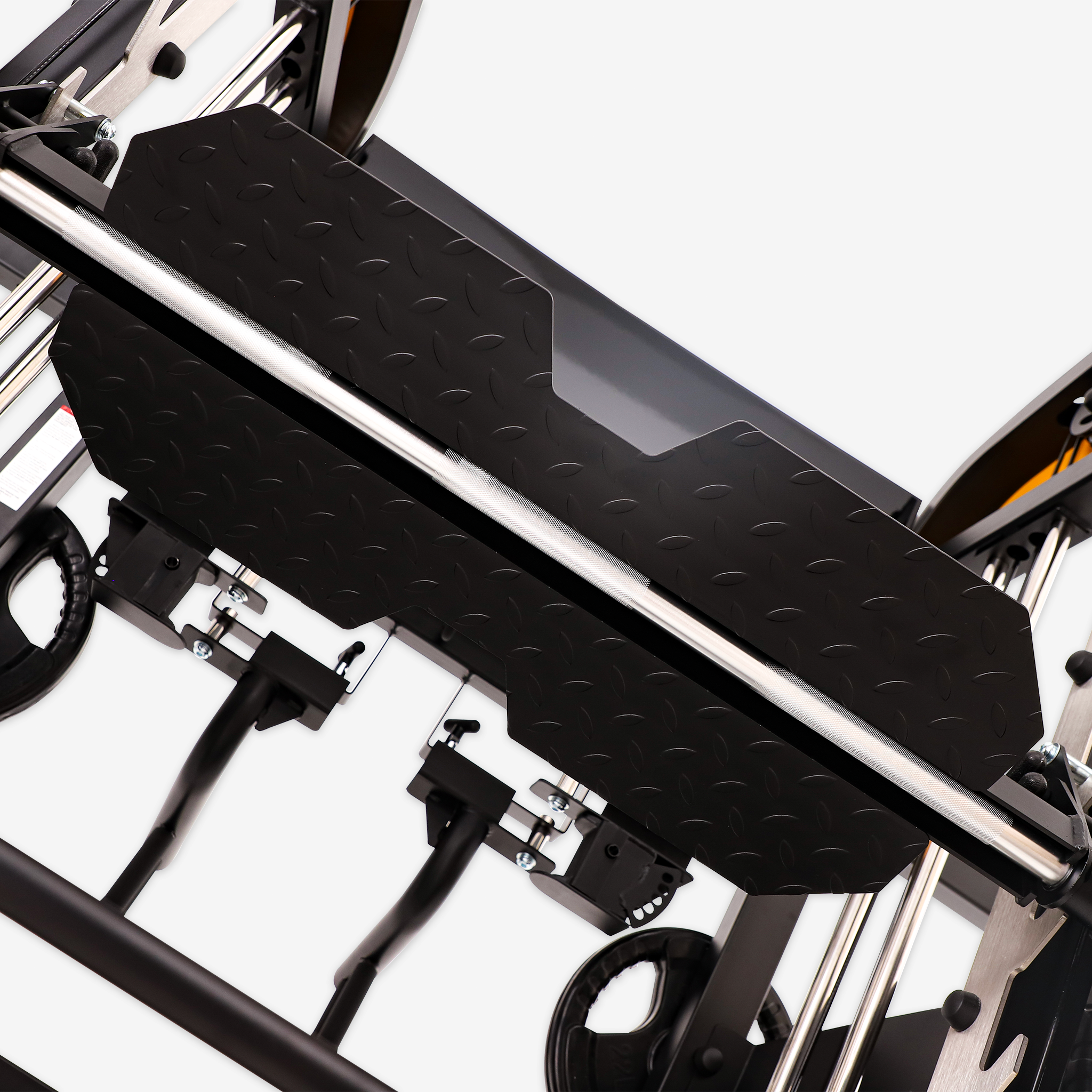
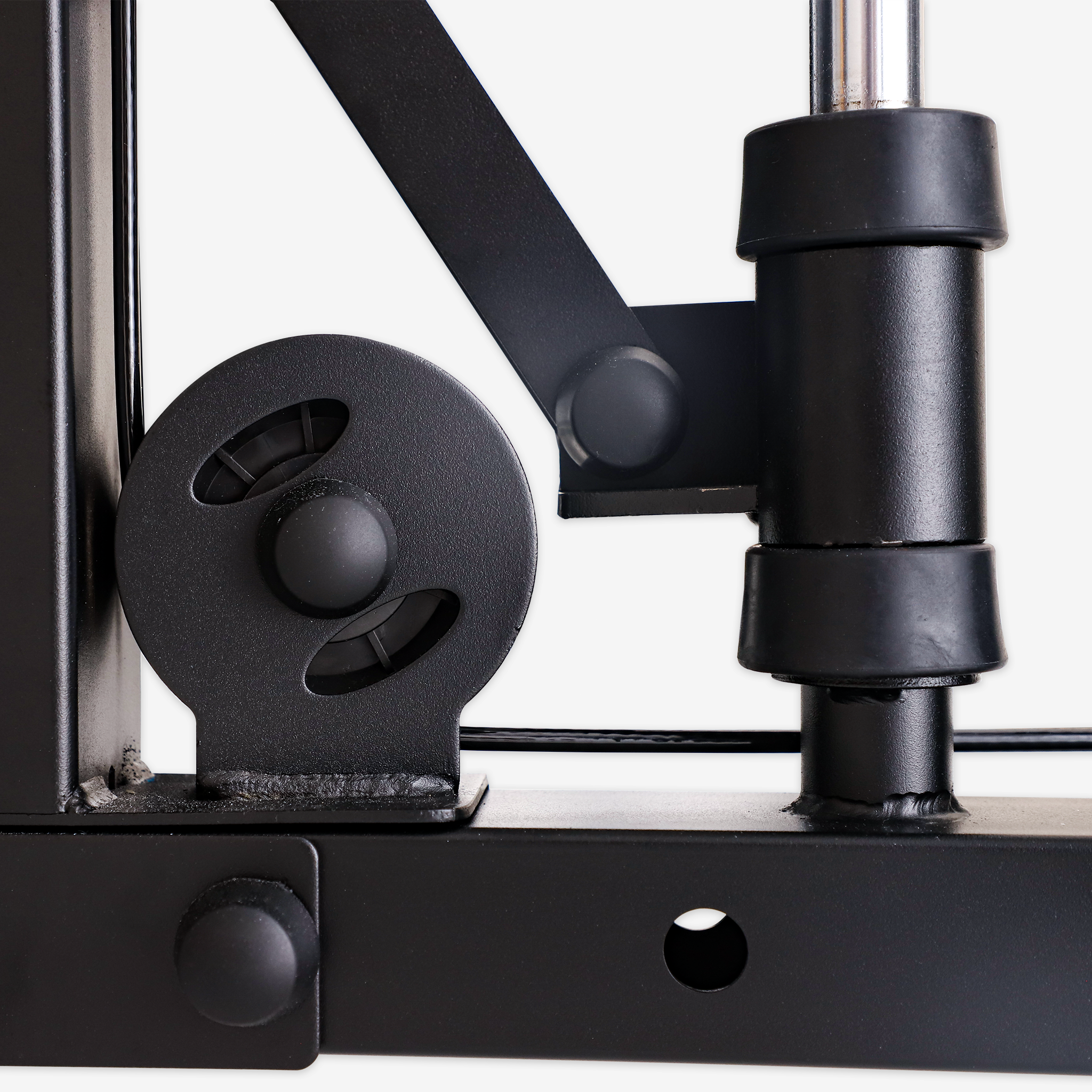
The guided vertical or angled rails reduce instability, which also lowers the perceived load.
3. Machine Design Differences
Not all Smith machines are equal:
- Commercial gym machines → more balanced, smaller offset
- Home gym machines → often lighter and more assisted
- Angled Smith machines → slightly different resistance feel
Why This Matters for Your Training
Knowing how much weight the Smith machine takes off helps you:
- Track real strength progress accurately
- Compare Smith machine lifts to free-weight lifts
- Avoid overestimating your strength
- Set safer starting weights (especially for beginners)
- Plan progressive overload correctly
Without accounting for the offset, your training log can easily be misleading.
Simple Calculation Rule
To estimate your true lifting weight:
Actual Load = Plates + Bar Weight − Machine Offset
Example:
- Plates: 40 kg
- Bar: 15 kg
- Machine offset: ~10 kg
👉 Real effective load ≈ 45 kg
Common Mistake Lifters Make
Many people assume:
“Smith machine bar = 20 kg like a normal barbell”
This is incorrect.
Because of the counterbalance system, the Smith machine almost always feels lighter than a free barbell, especially at the bottom of the movement.
Final Thoughts
Understanding how much weight does the Smith machine take off is a small detail that makes a big difference in training accuracy. Most machines reduce the load by 10–25 lbs (4.5–11 kg) depending on design.
Once you account for this, your:
- strength tracking becomes more accurate
- progressive overload becomes more consistent
- and your transition to free weights becomes much smoother
If you train regularly on a Smith machine, always confirm the exact offset of your specific model—because there is no universal standard.