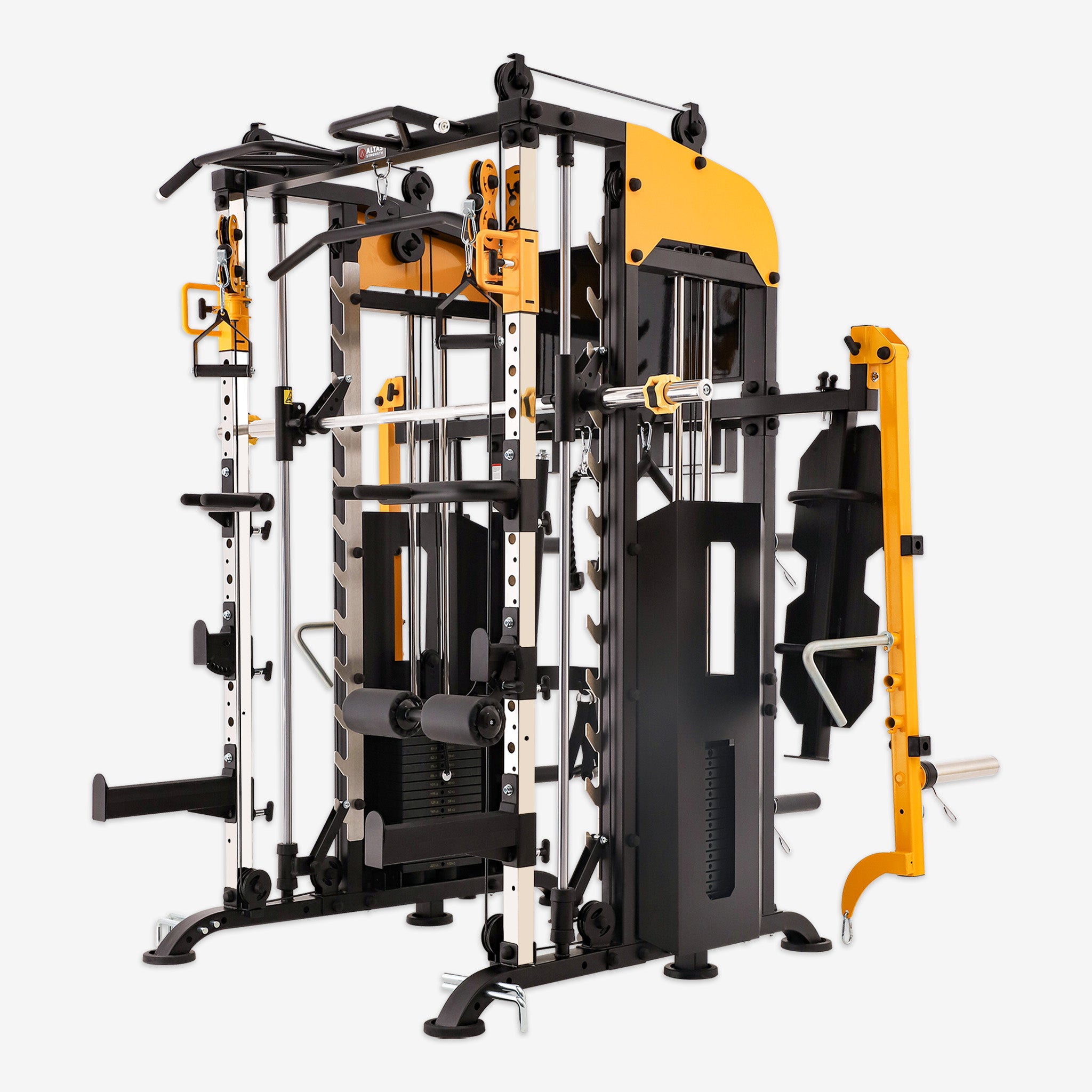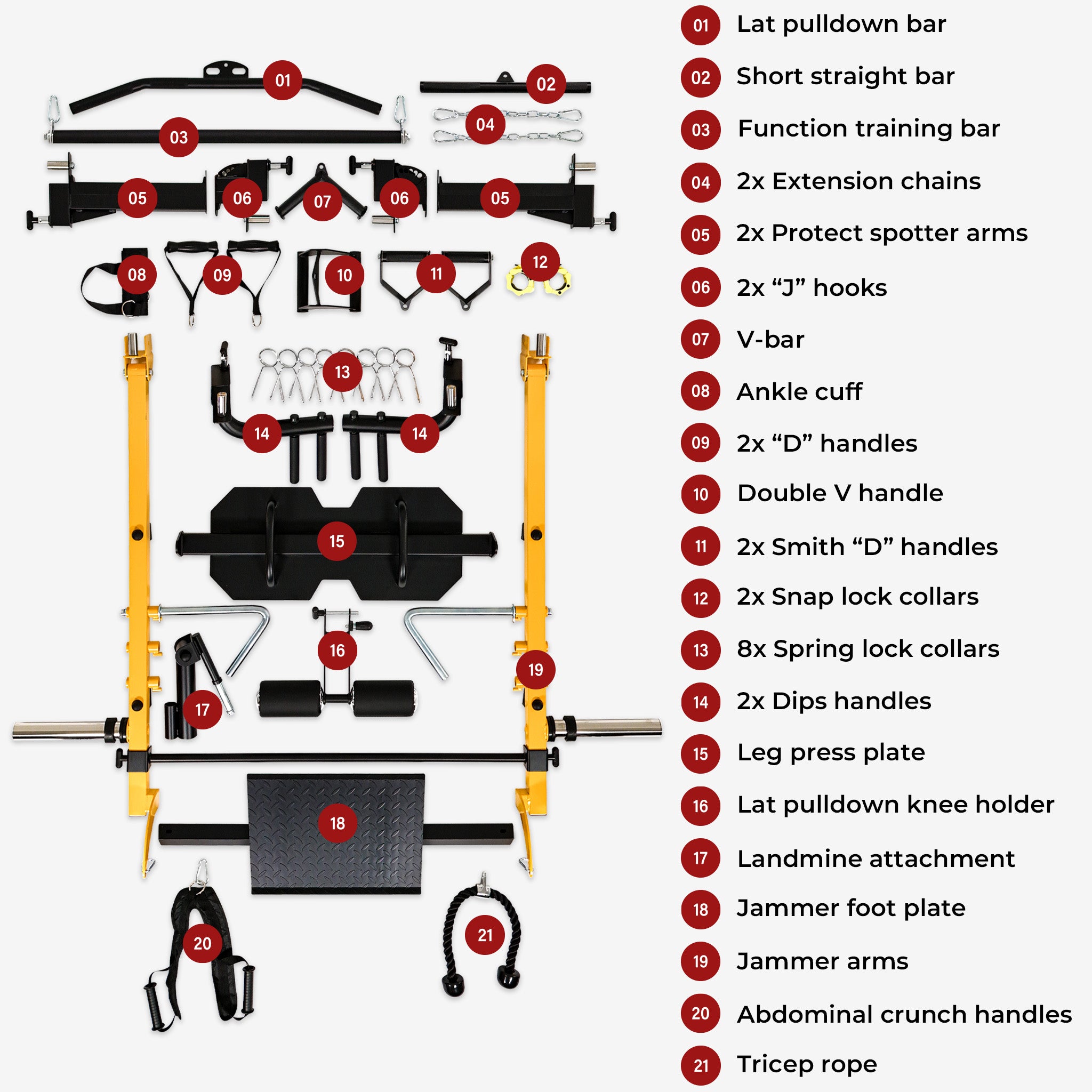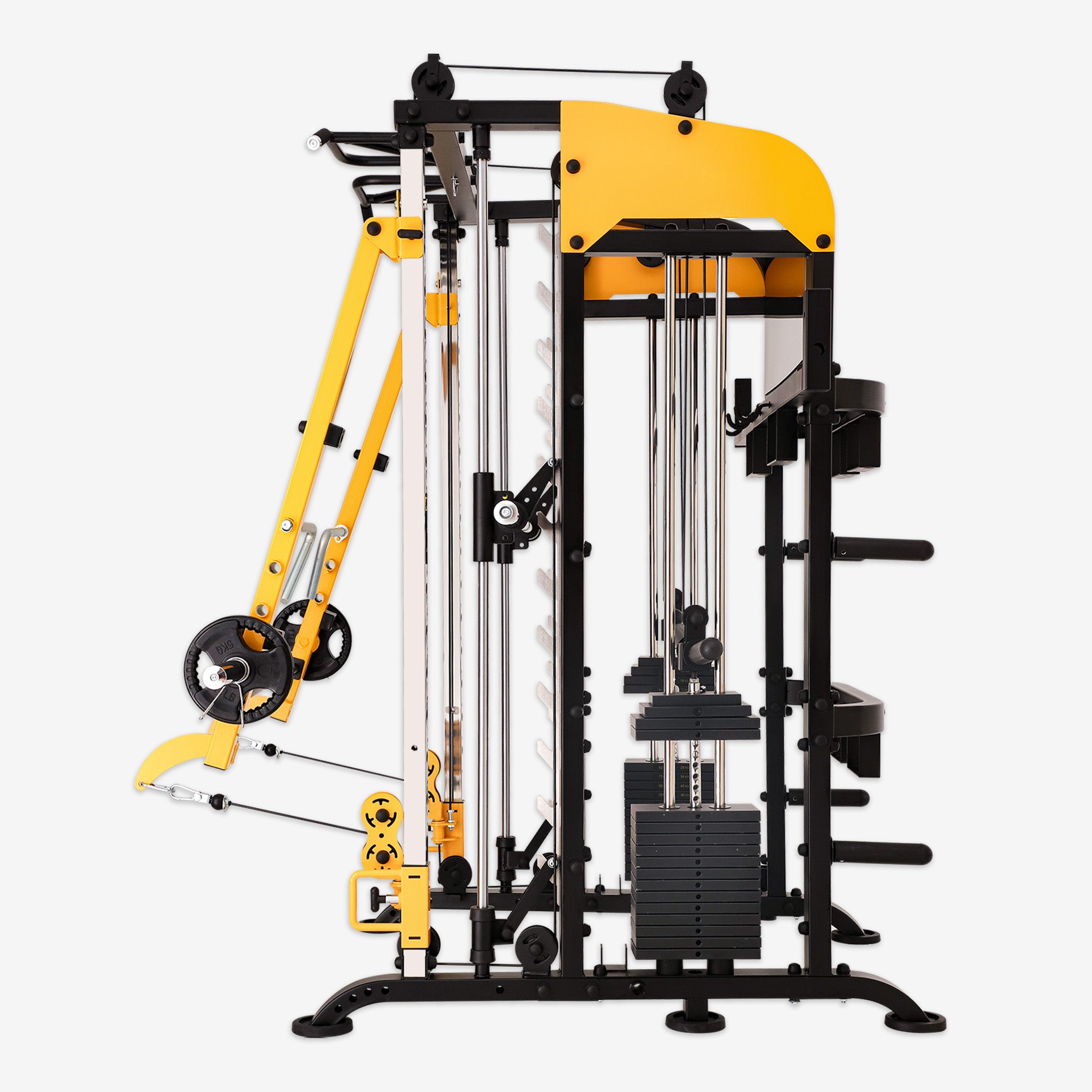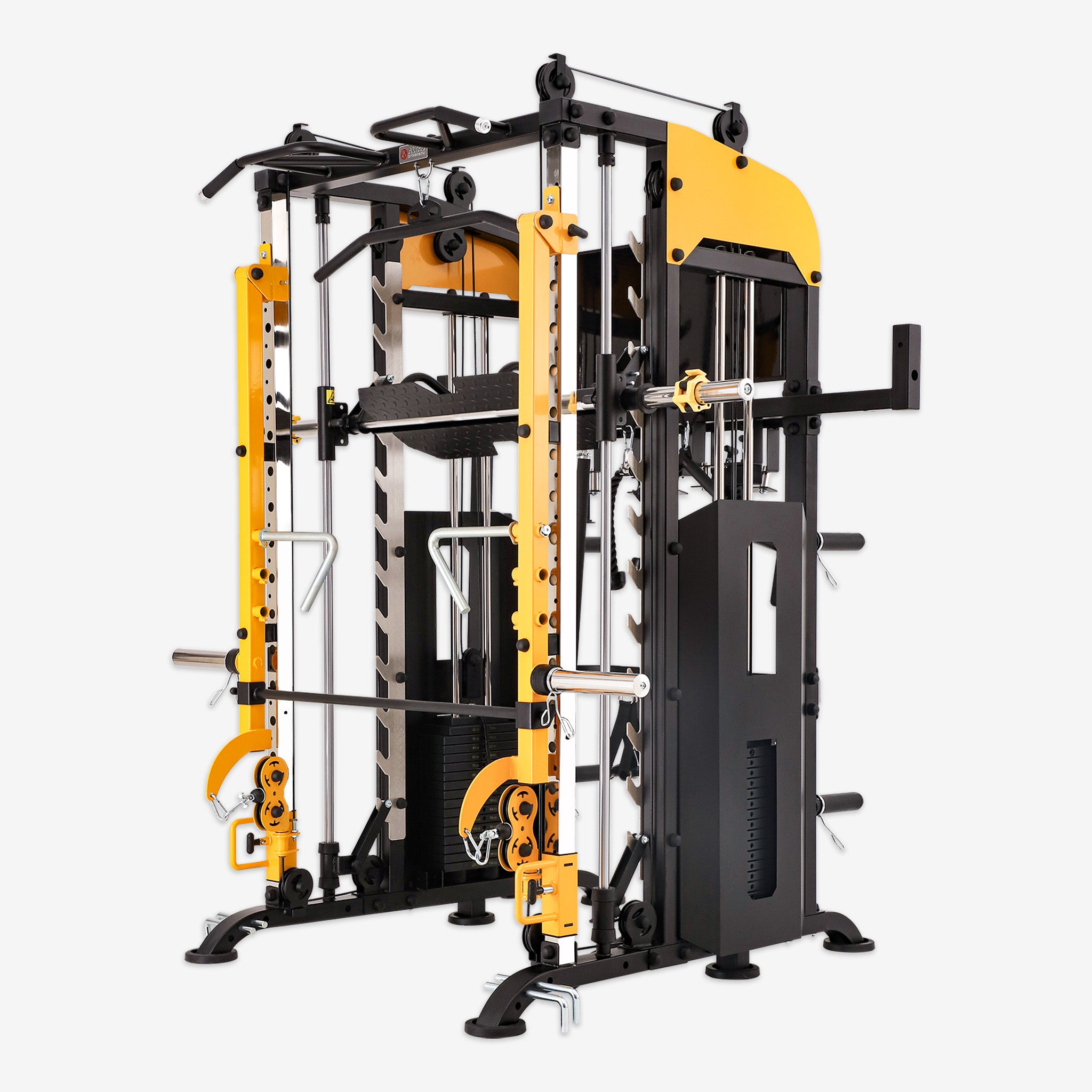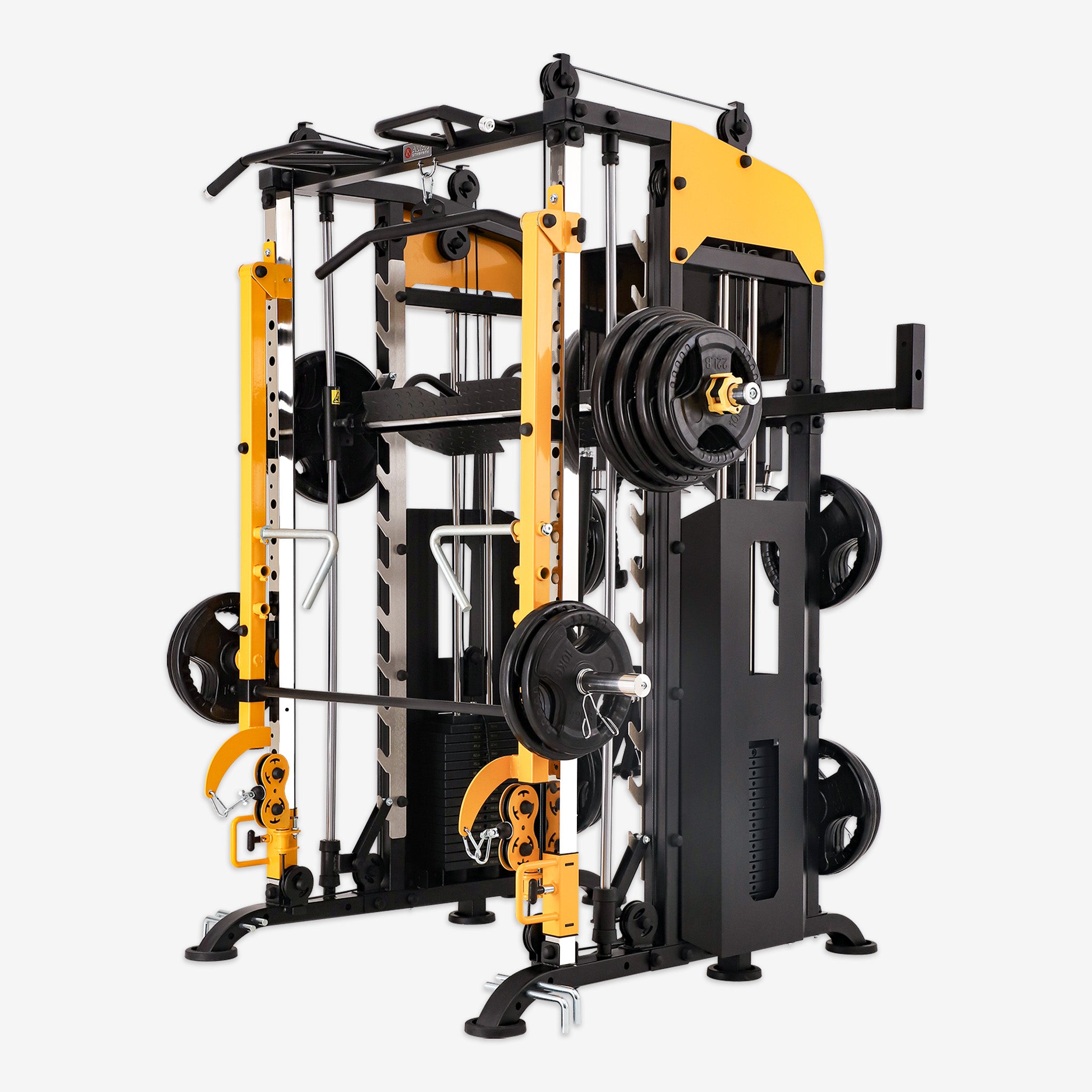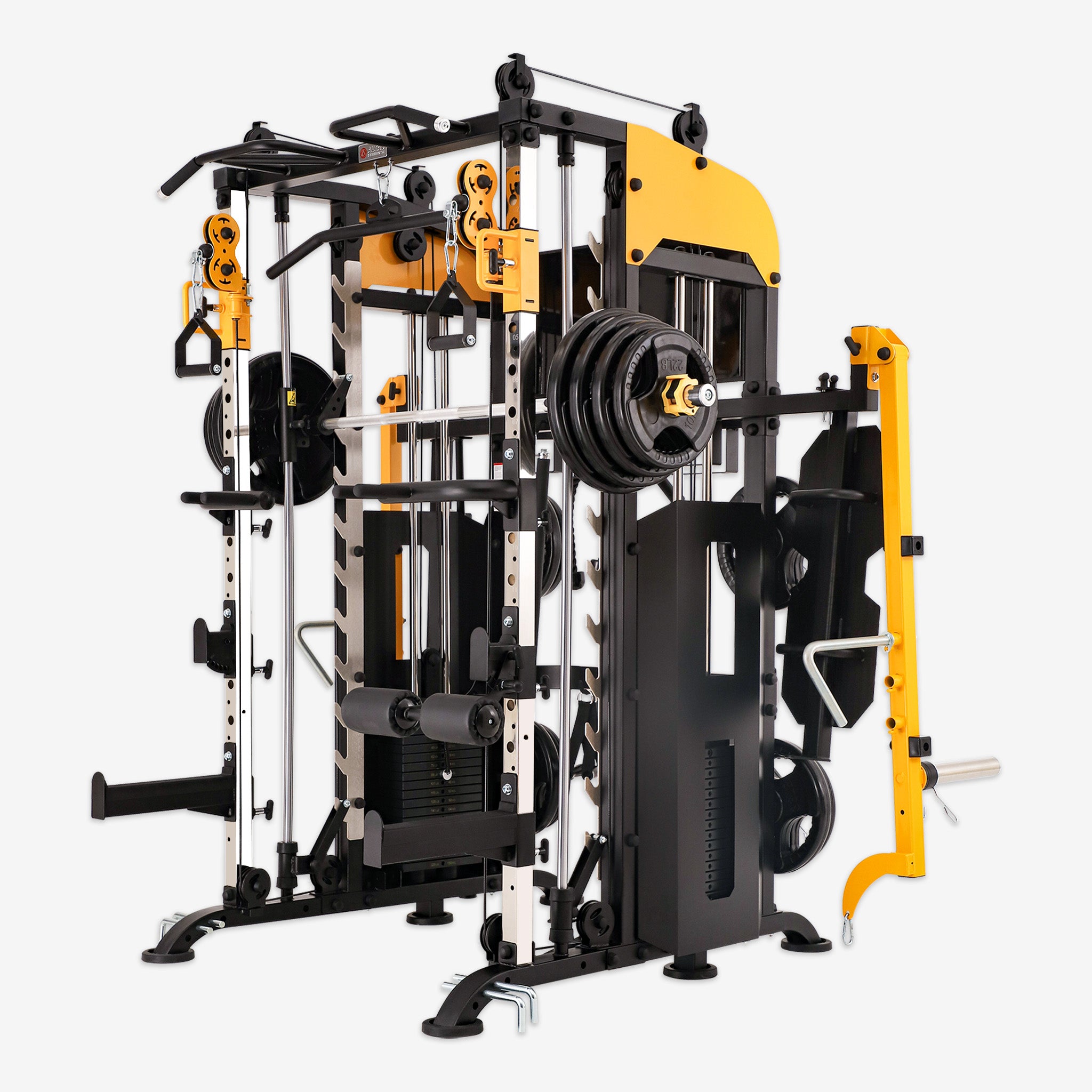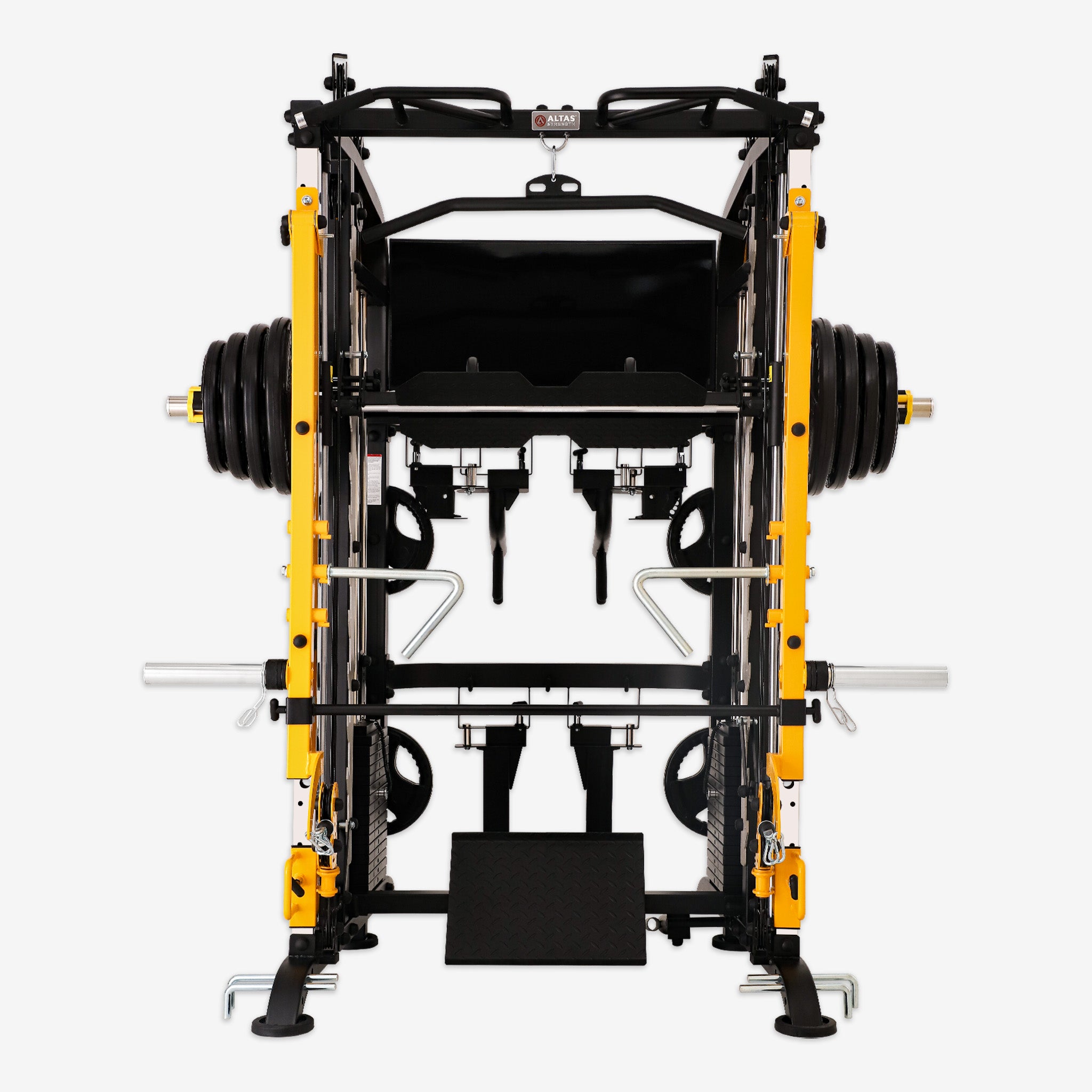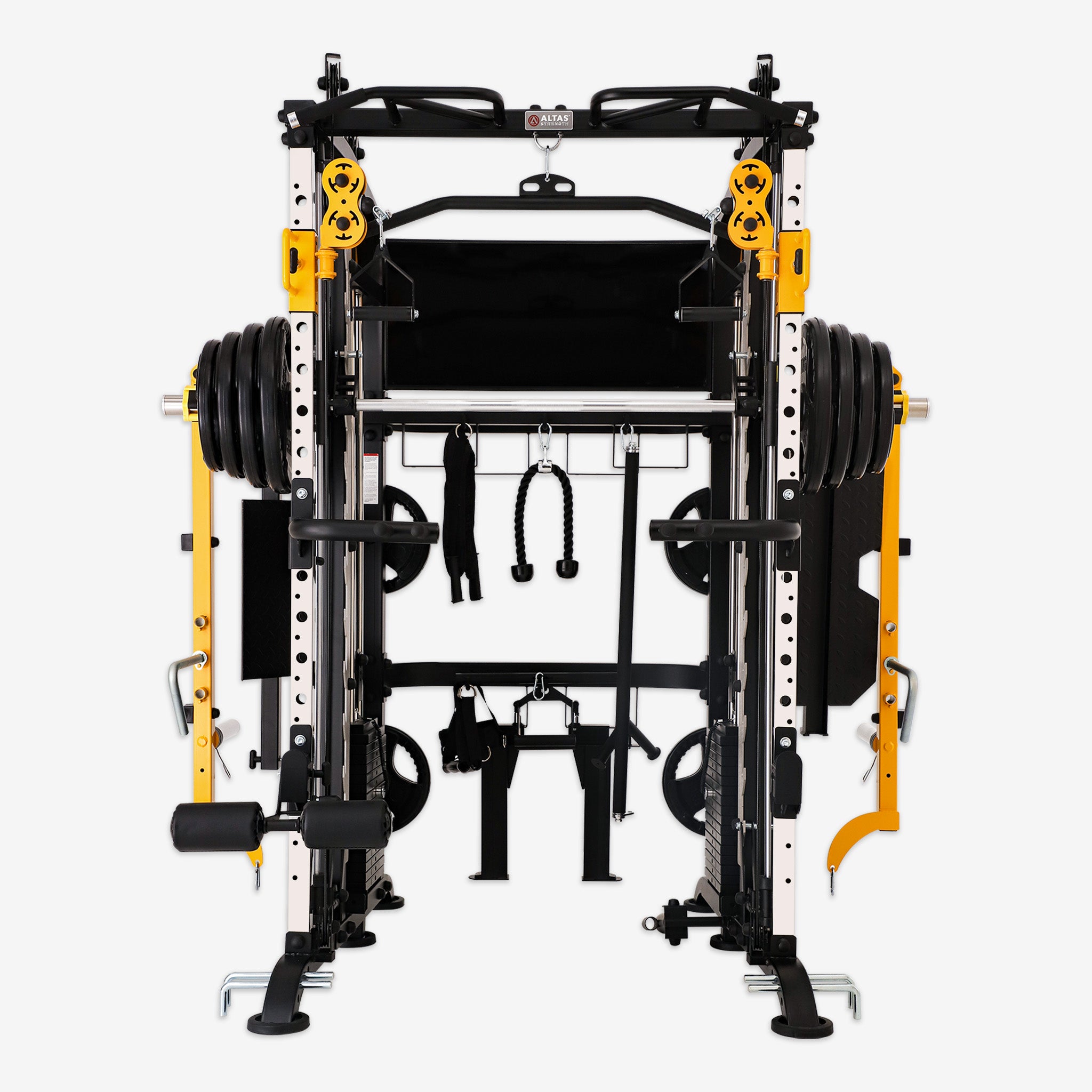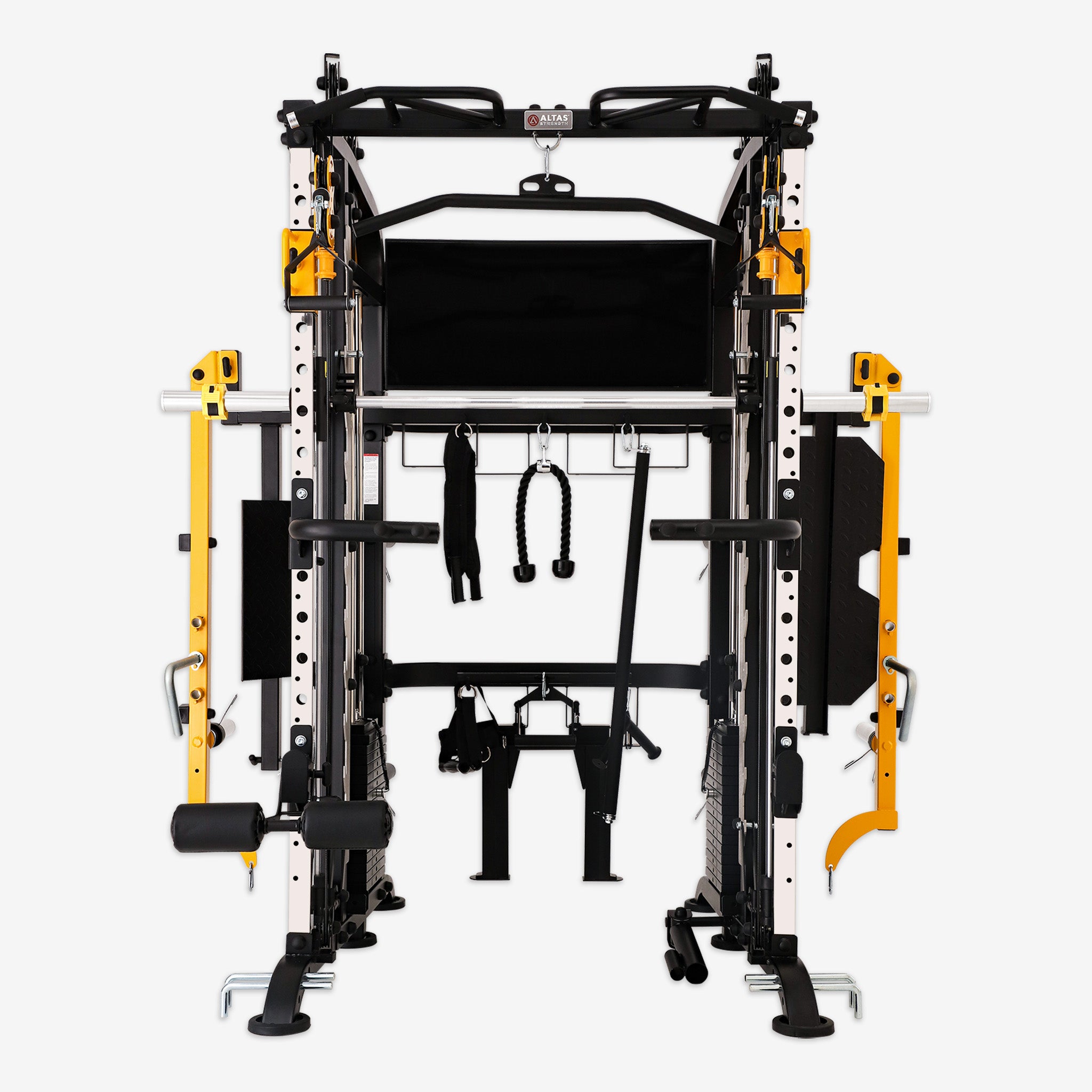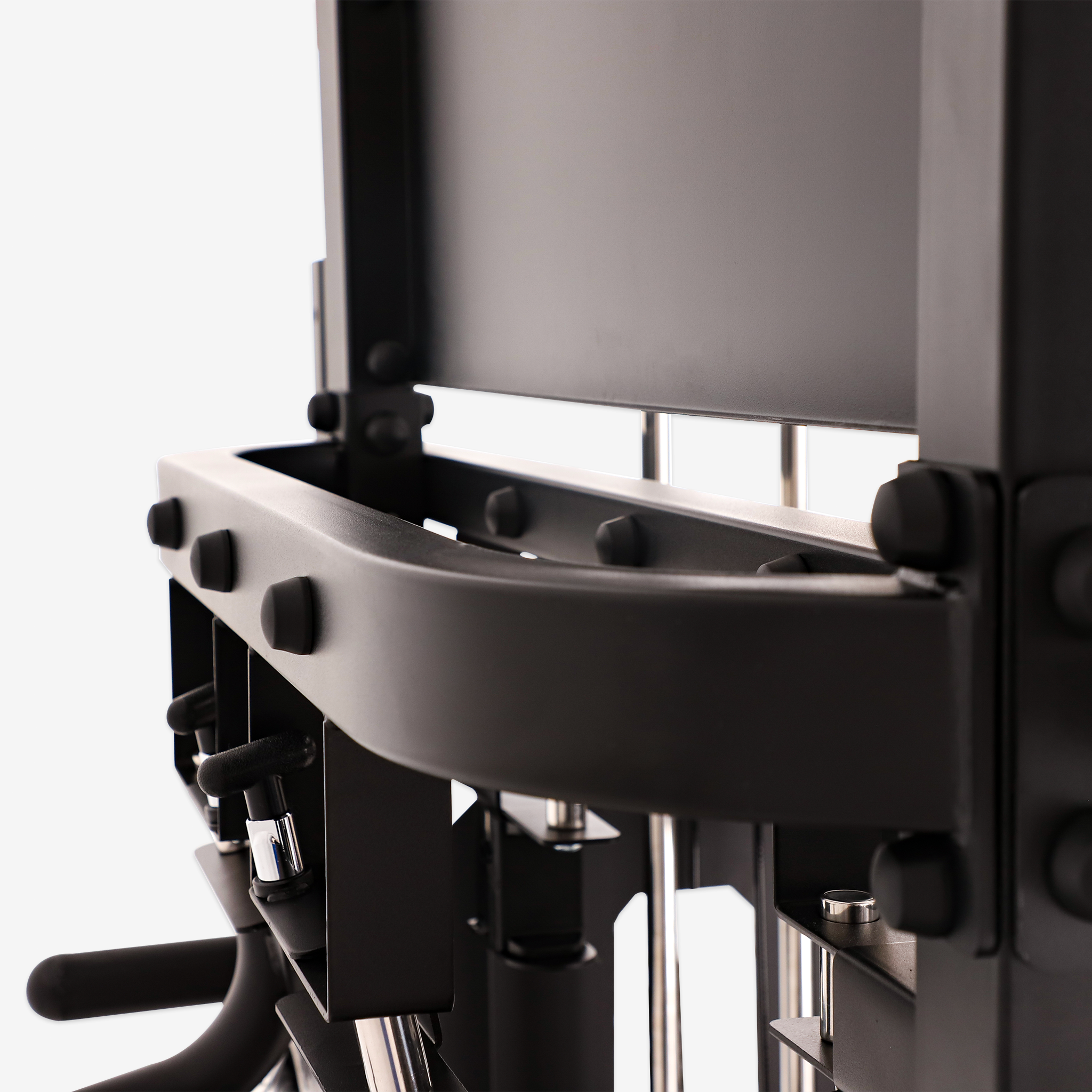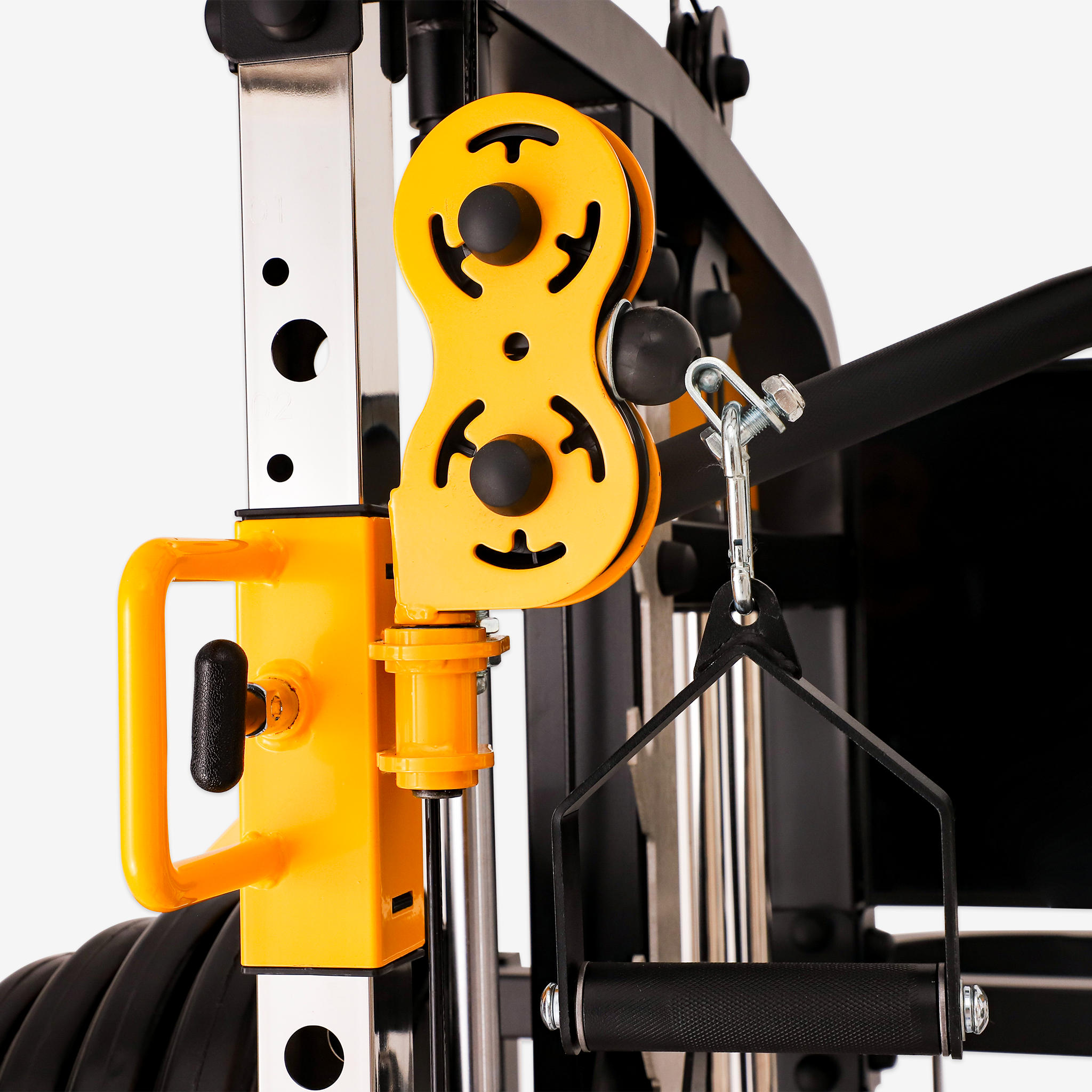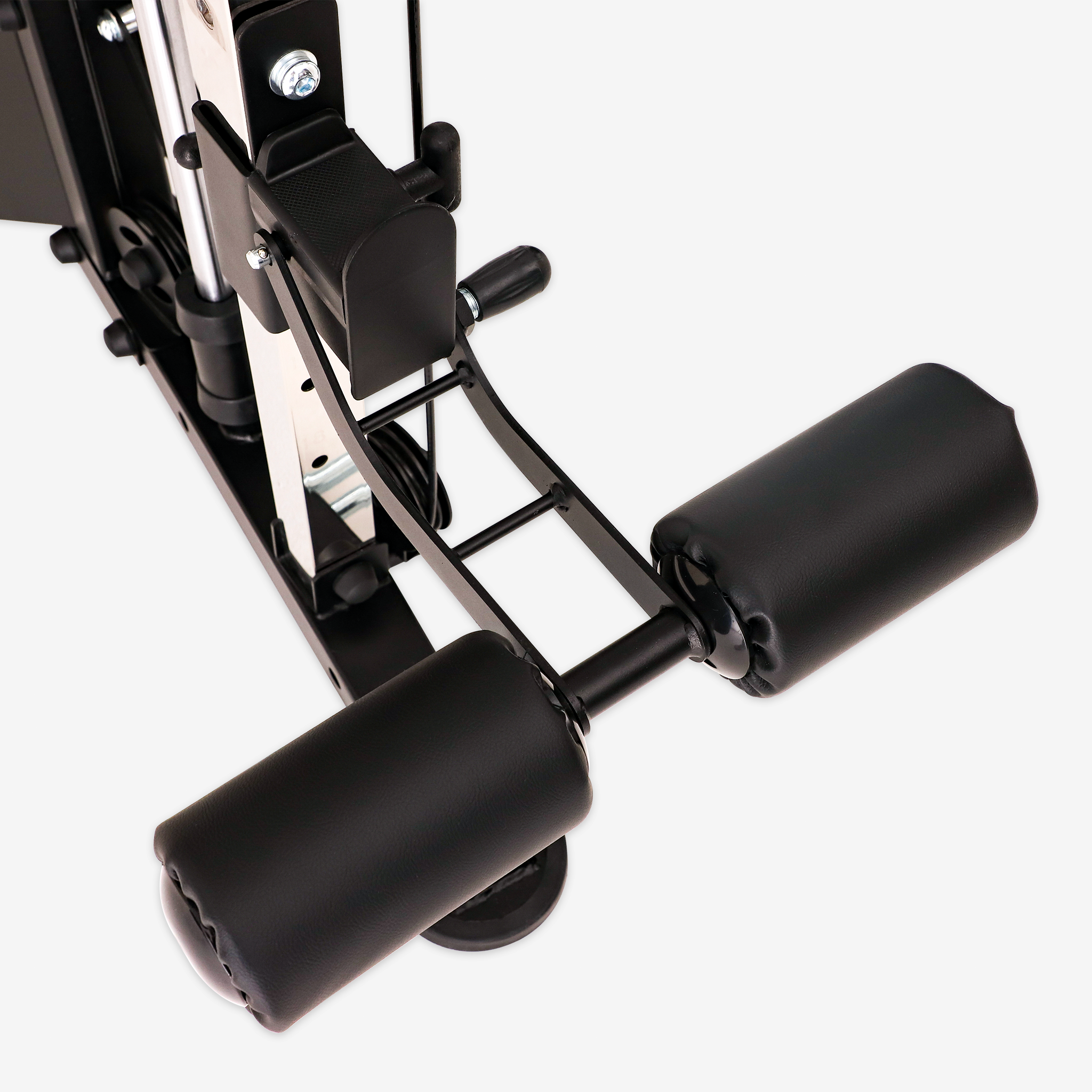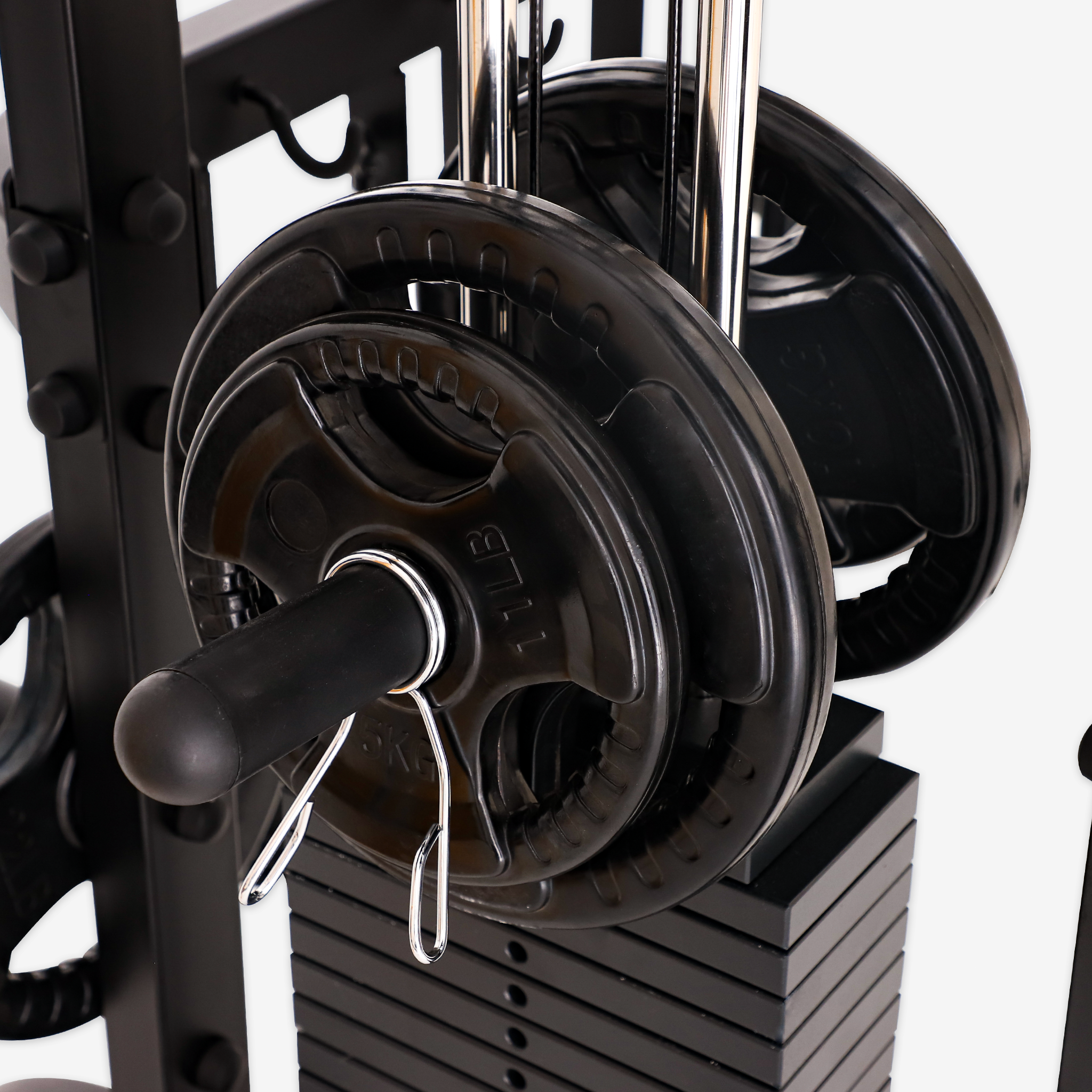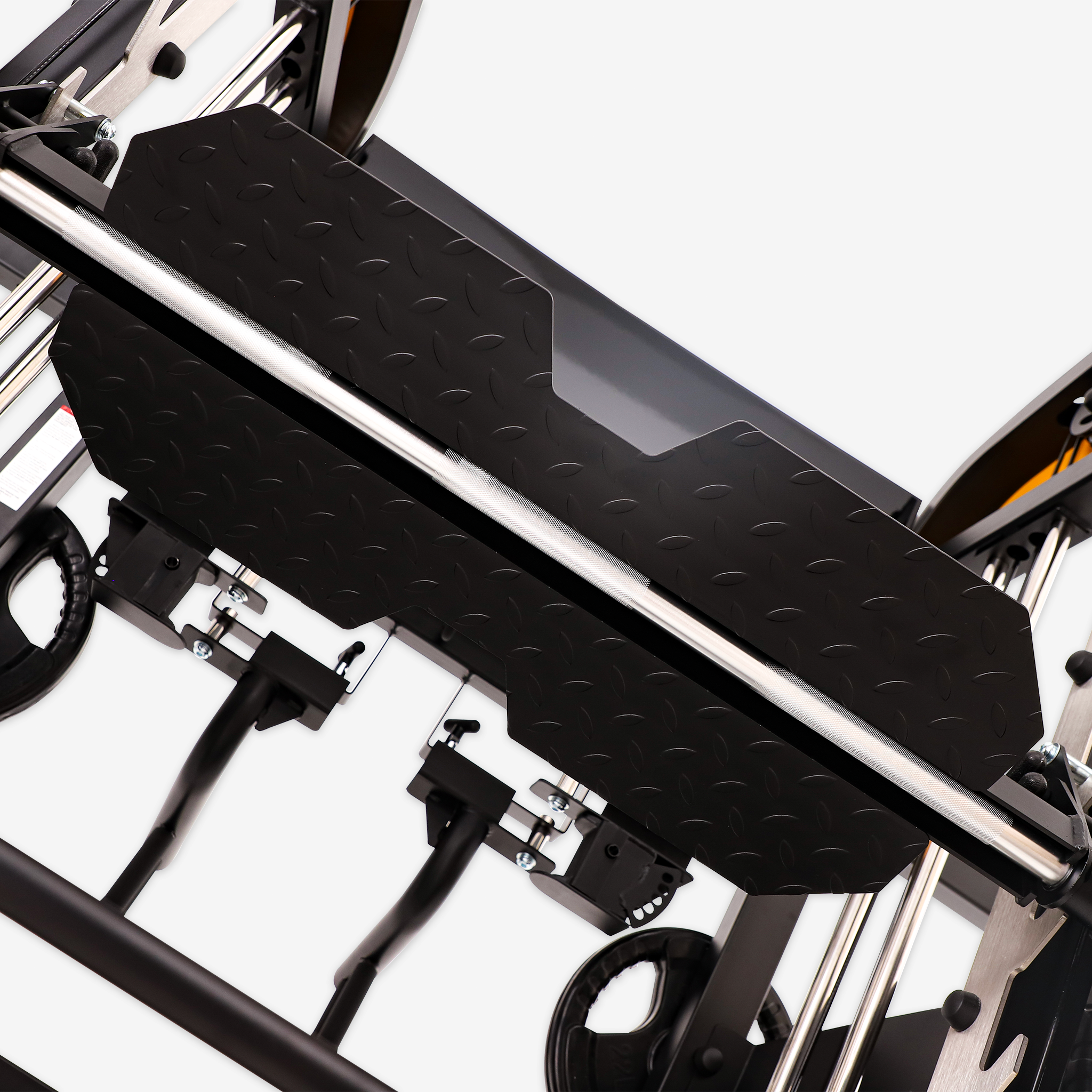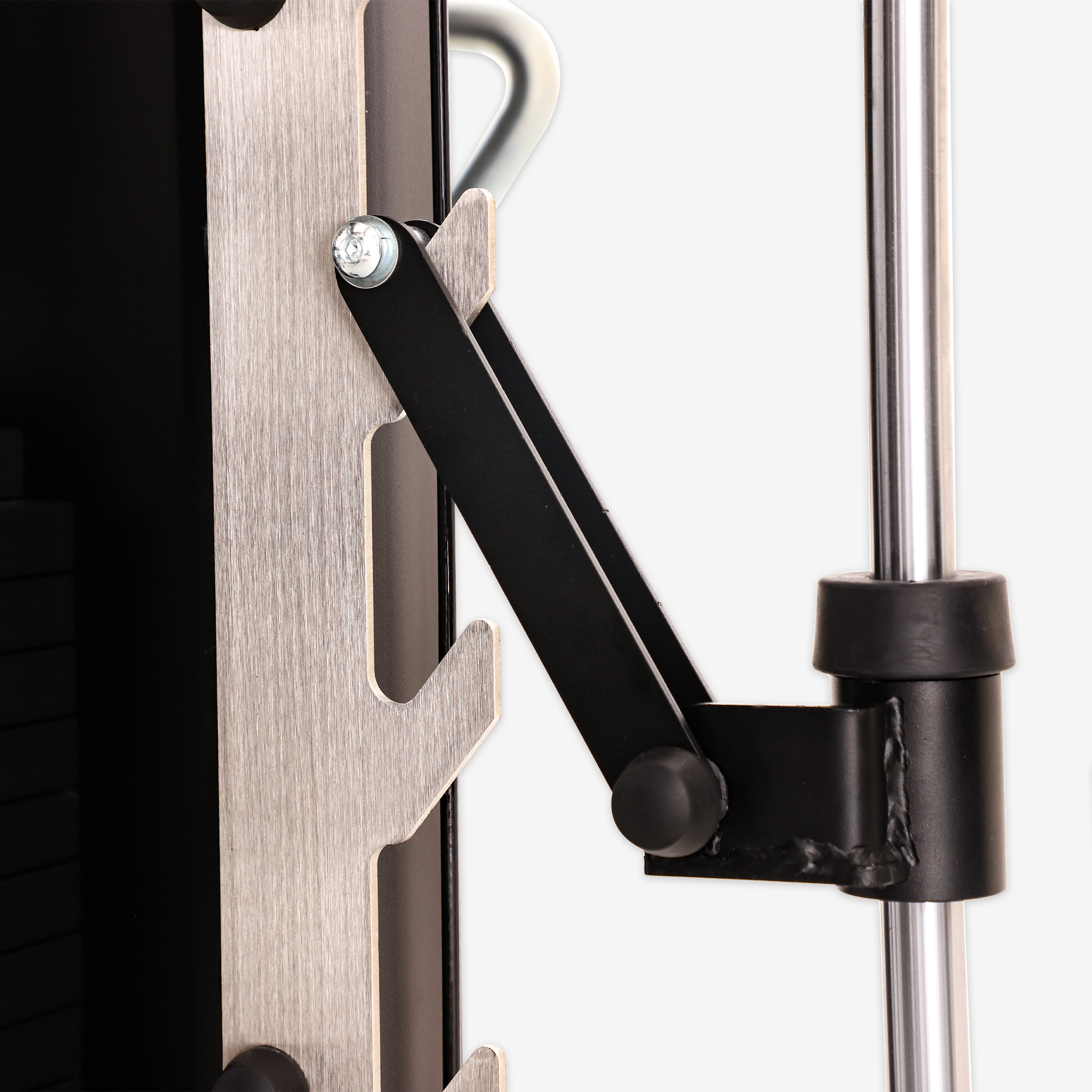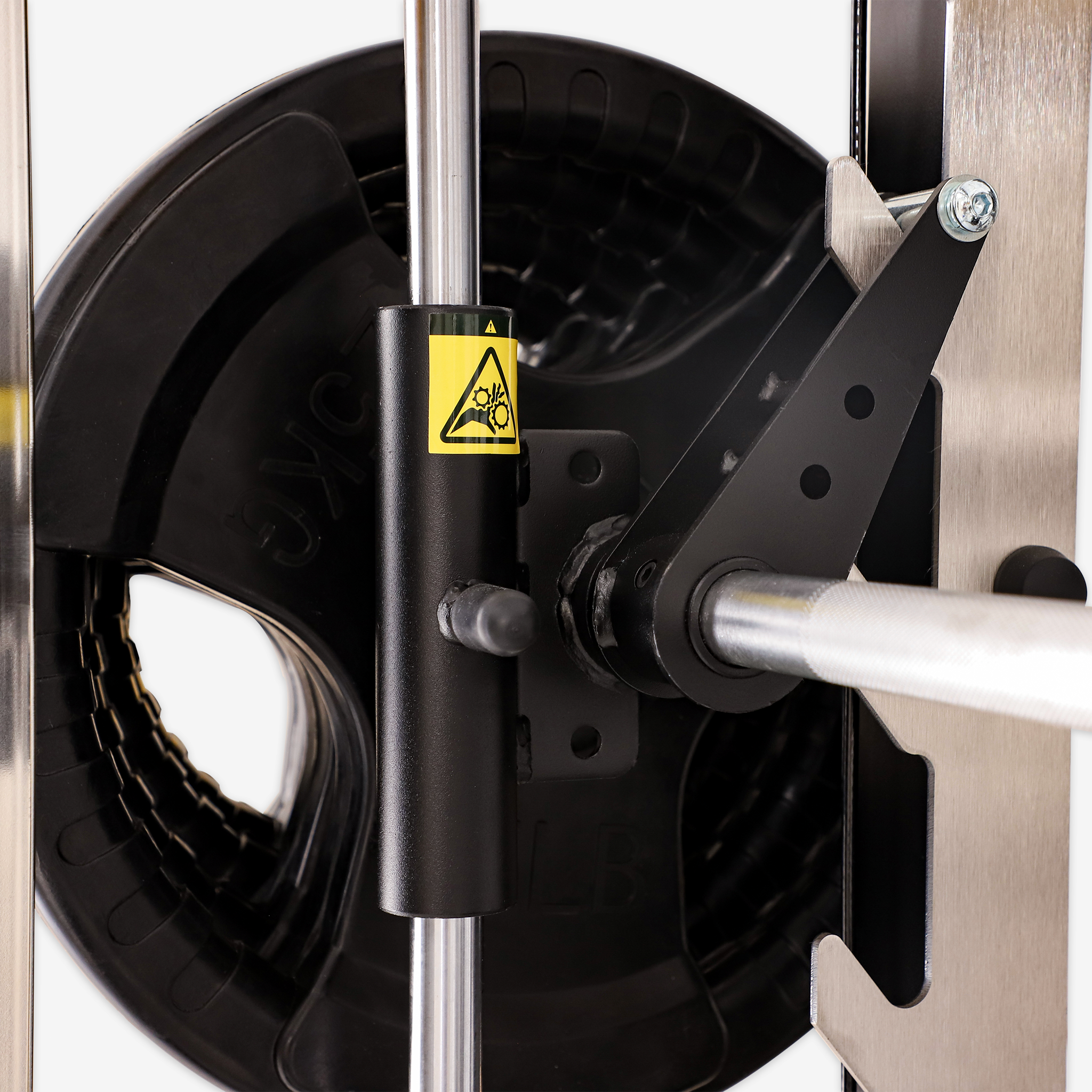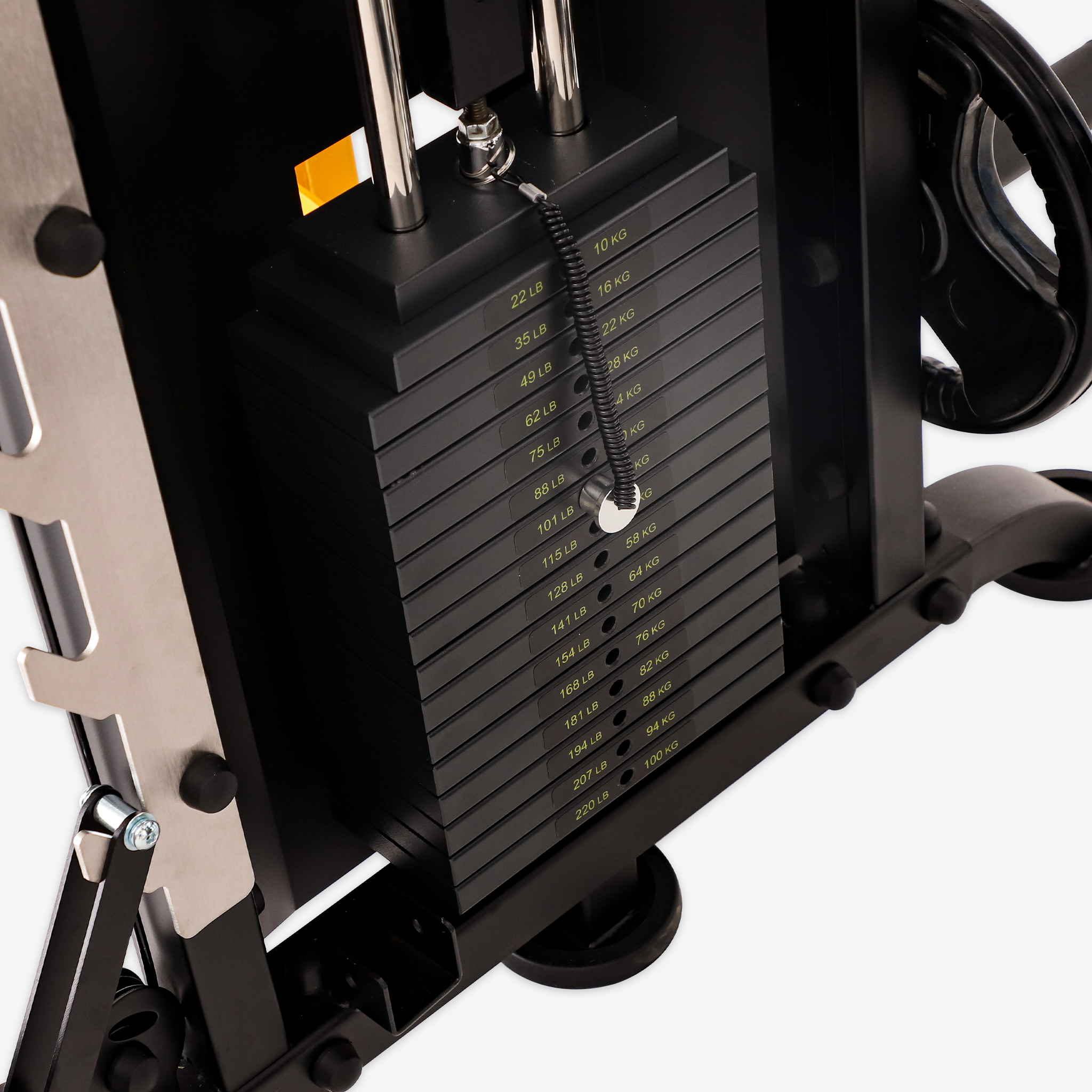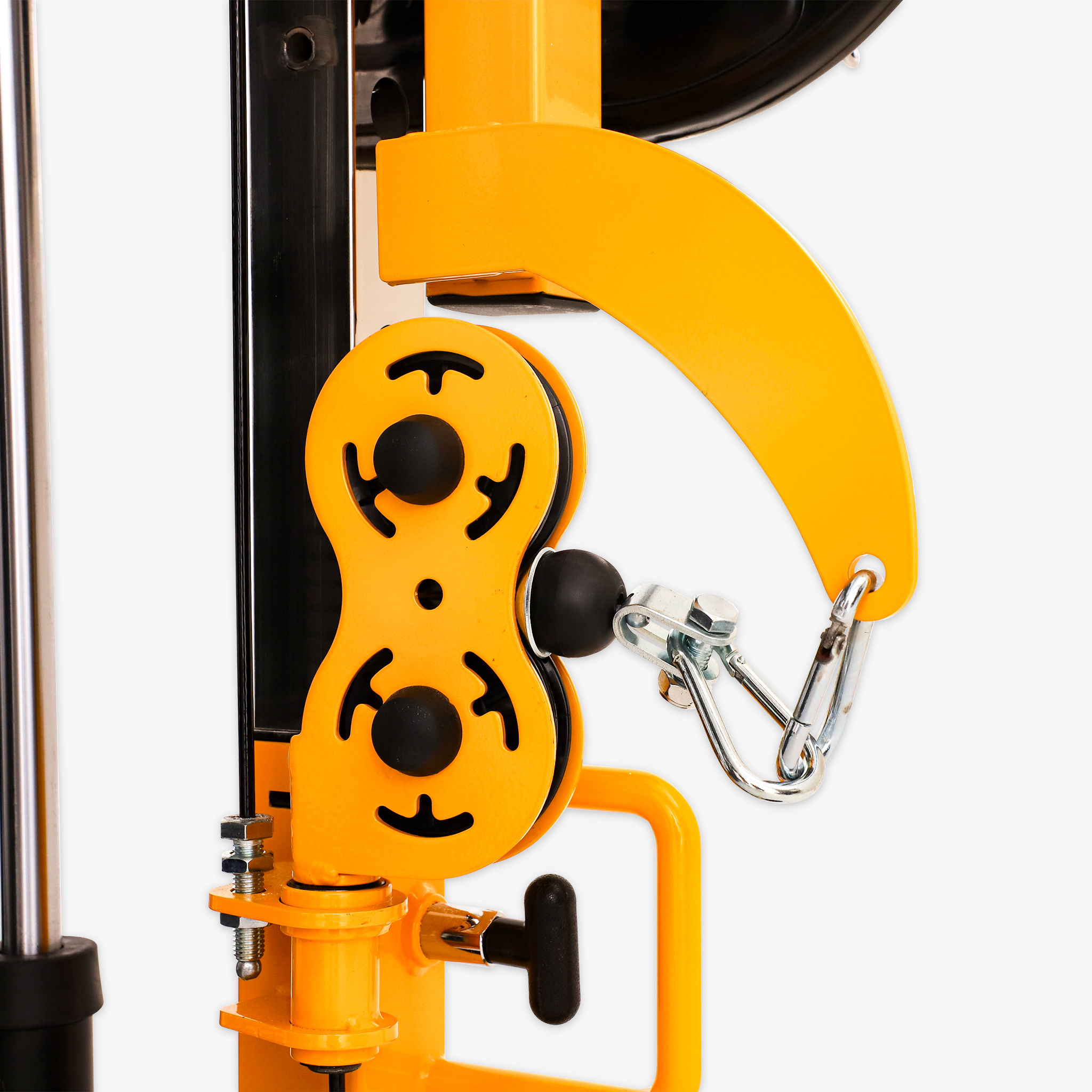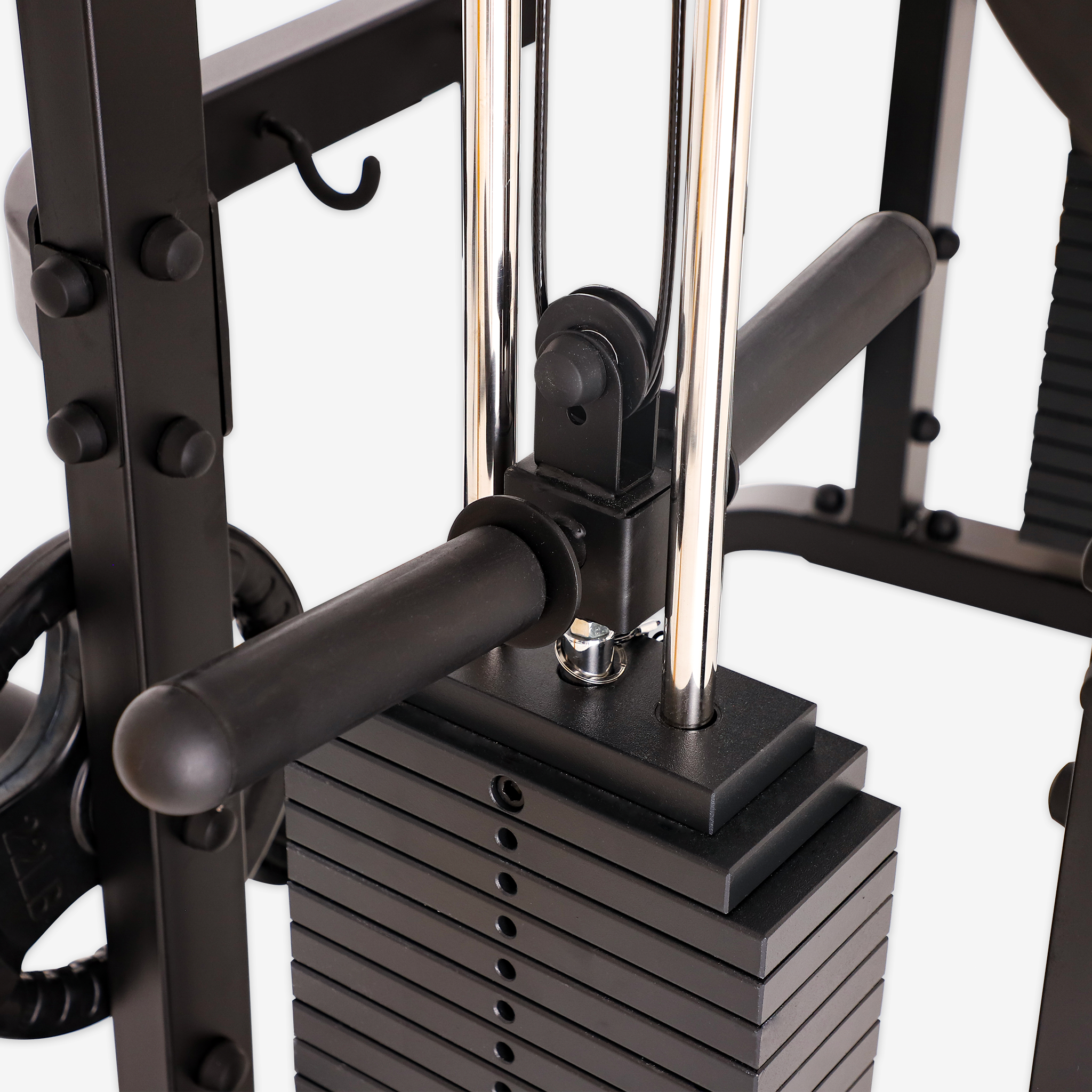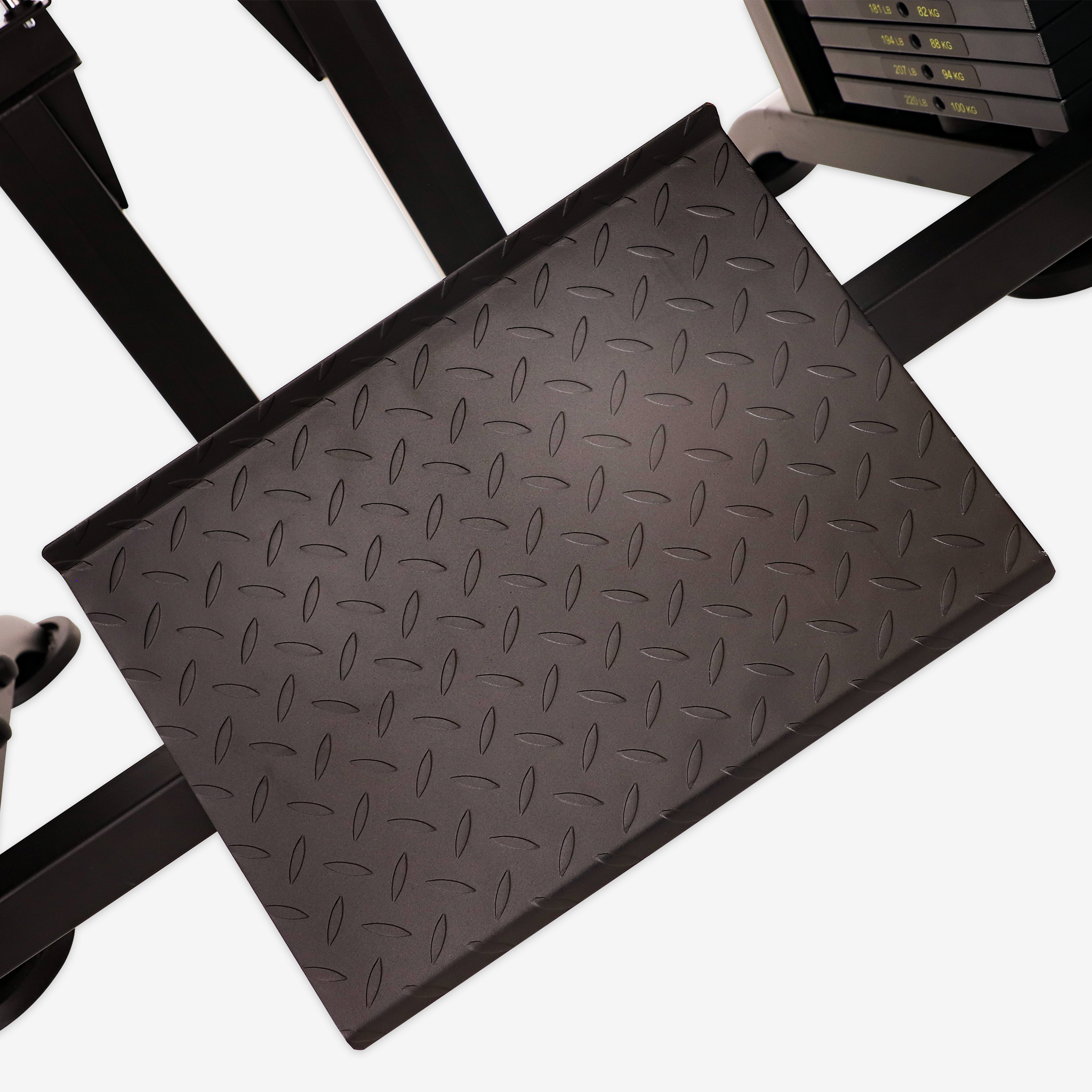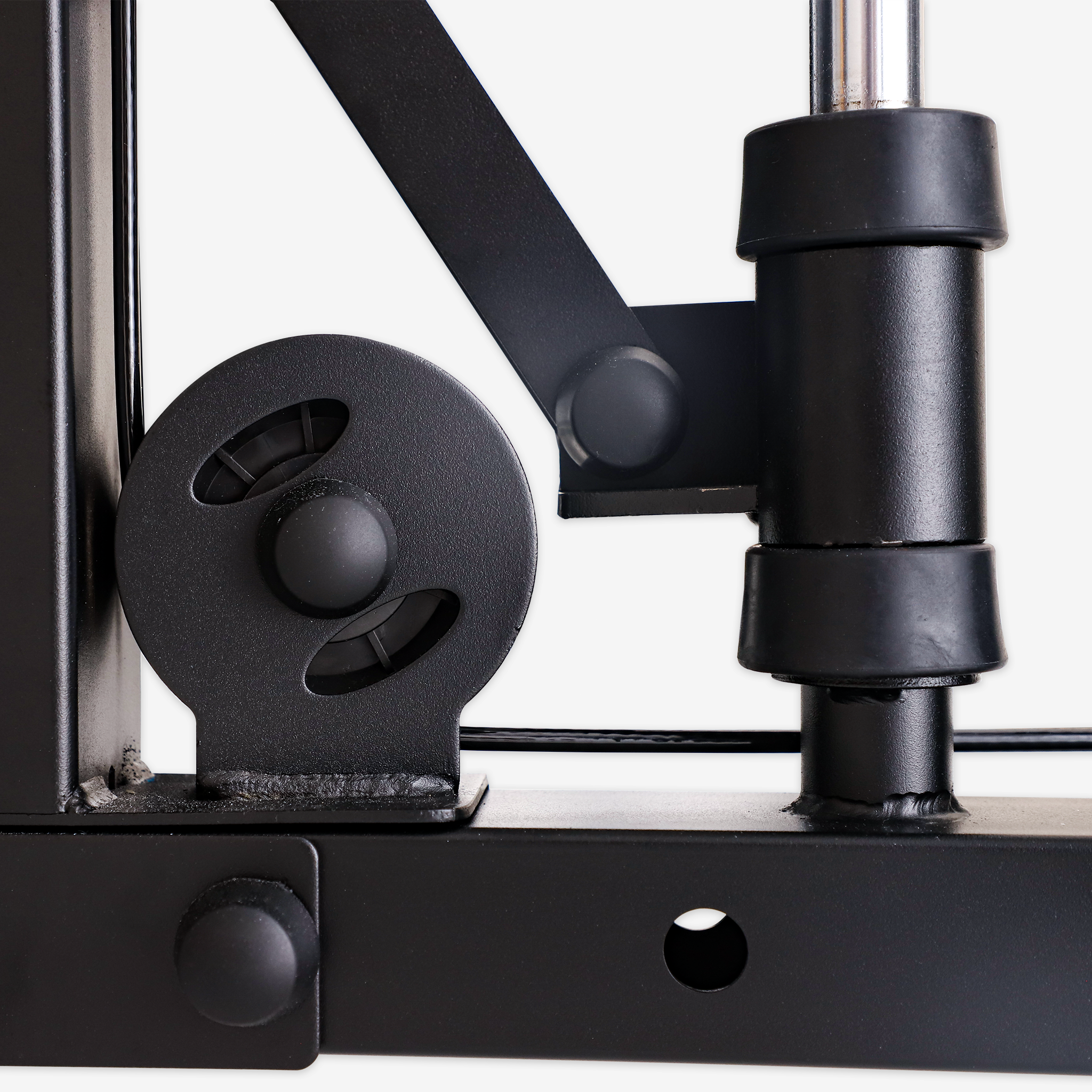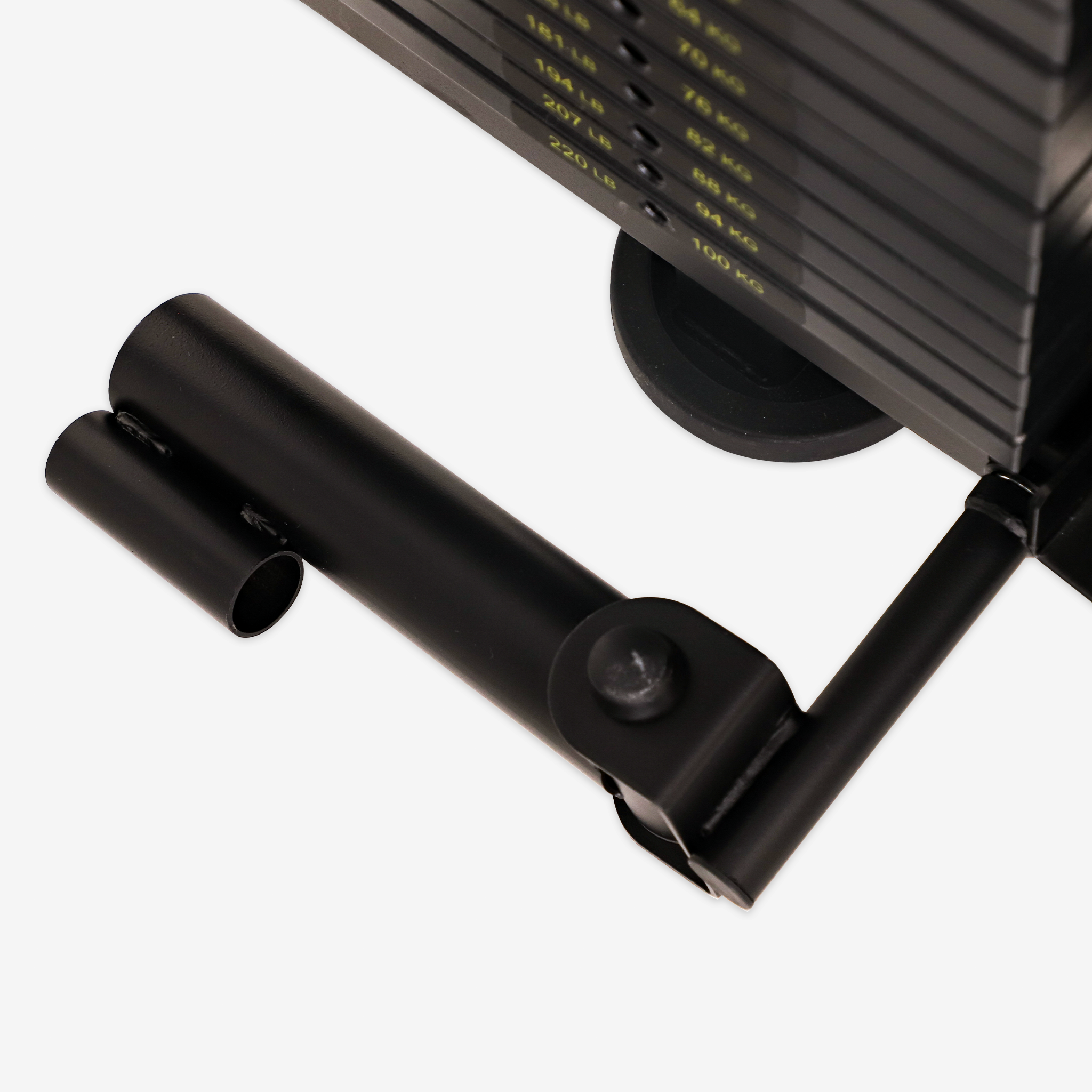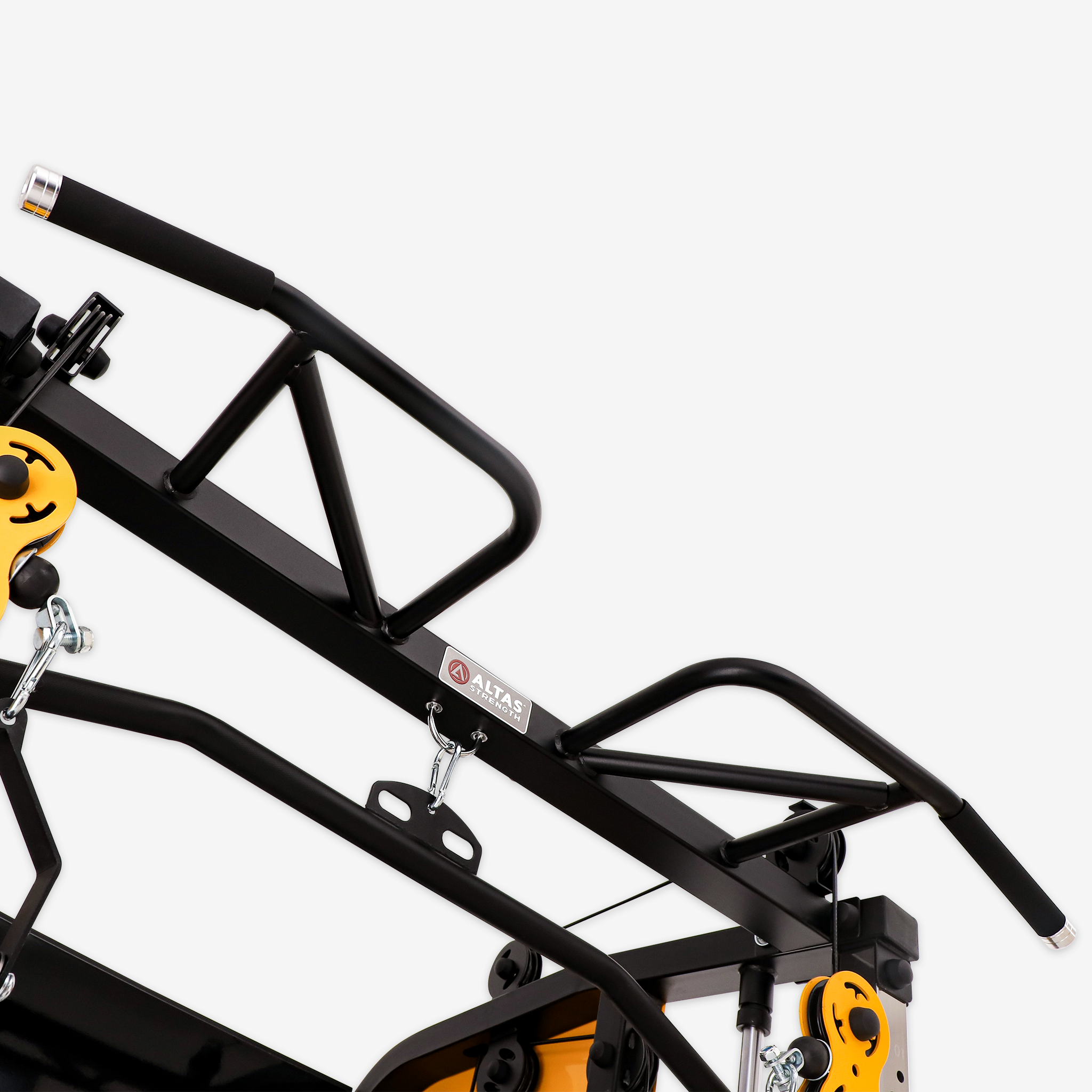
A hack squat machine is a lower-body strength machine designed to provide a guided squat movement while supporting the user's torso and shoulders.
For many home gym buyers, the real question is not simply:
“What is a hack squat machine?”
It is:
“Is a hack squat machine a better choice for my leg training than barbell squats, Smith machine squats, or a leg press?”
The answer depends on your training priorities.
A hack squat machine can provide a stable, guided environment for training the quadriceps, glutes, and hamstrings, while reducing the balance and stabilization demands associated with free-weight squats.
However, that does not make it a universal replacement for barbell squats or other lower-body equipment.
The right choice depends on your goals, available space, preferred training style, budget, and whether you prioritize squat-specific movement, muscle-focused training, or overall exercise versatility.
What Problem Does a Hack Squat Machine Solve?
The primary problem a hack squat machine addresses is the difficulty of combining heavy lower-body training with a supported and repeatable movement setup.
A traditional barbell squat requires the lifter to control the bar, stabilize the torso, maintain balance, and coordinate movement throughout the entire exercise.
A hack squat machine changes that equation.
The machine supports the user's upper body while guiding the movement along a defined path.
This can allow the lifter to concentrate more on the lower-body movement itself rather than managing the balance of a free barbell.
For home gym users, the main use cases include:
- Quadriceps-focused strength training
- Glute and hamstring training
- High-volume leg workouts
- Squat-pattern training with guided resistance
- Lower-body accessory work
- Adding a dedicated leg-training station to a home gym
What Muscles Does a Hack Squat Machine Train?
A hack squat primarily trains the muscles responsible for lower-body extension.
Quadriceps
The quadriceps are heavily involved in extending the knee and are one of the main muscle groups targeted during hack squats.
Glutes
The glutes contribute to hip extension, particularly as the lifter drives upward from the deeper portion of the movement.
Hamstrings
The hamstrings contribute to the overall lower-body movement, although the exact emphasis depends on machine geometry, stance, depth, and individual technique.
Core
Unlike a free-weight squat, the machine supports the torso, so the stabilization demands on the core are different.
This distinction is important when comparing a hack squat with a barbell squat.
Hack Squat vs. Barbell Squat
The most important comparison for many buyers is the hack squat machine vs. barbell squat.
| Factor | Hack Squat | Barbell Squat |
|---|---|---|
| Movement | Guided | Free-weight |
| Balance requirement | Lower | Higher |
| Torso support | Yes | No |
| Stabilization demand | Lower | Higher |
| Lower-body focus | High | High |
| Exercise versatility | Moderate | Very high |
| Competition specificity | Lower | Higher |
| Home gym footprint | Larger | Smaller with rack |
A hack squat does not replace the barbell squat for athletes who specifically need to practice free-weight squatting.
Instead, the two exercises can serve different purposes.
Barbell squats prioritize free-weight movement and stabilization.
Hack squats prioritize supported, repeatable lower-body loading.
Hack Squat vs. Smith Machine Squat
A Smith machine also provides a guided bar path, making it another common alternative.
The major difference is the equipment configuration.
A Smith machine typically supports a wider range of exercises, including:
- Squats
- Bench presses
- Shoulder presses
- Rows
- Other bar-based movements
A hack squat machine is more specialized around lower-body training.
Choose a Smith machine when:
You want one machine to support a broad range of full-body exercises.
Consider a hack squat when:
Dedicated lower-body training is a higher priority and you prefer a purpose-built squat platform.
Hack Squat vs. Leg Press
The hack squat and leg press are often compared because both allow substantial lower-body loading with a supported body position.
However, the movement patterns are different.
A hack squat more closely resembles a supported squat pattern, while a leg press uses a seated or reclined position with the user pushing a platform.
| Feature | Hack Squat | Leg Press |
|---|---|---|
| Squat pattern | Yes | No |
| Torso support | Yes | Yes |
| Lower-body loading | High | High |
| Movement path | Guided | Guided |
| Exercise specificity | Squat-focused | Press-focused |
| Full-body stabilization | Lower than free squat | Lower than free squat |
If your goal is specifically to add a machine-based squat movement, a hack squat has a more direct fit.
If your priority is simply high-volume leg pressing, a leg press may be more appropriate.
Key Features to Look for in a Hack Squat Machine
1. Stable Frame
A hack squat machine should remain stable during normal training.
Look for:
- Heavy-duty frame construction
- Wide base
- Secure foot platform
- Stable carriage
- Durable pivot or guide components
- Secure safety mechanisms
Stability becomes increasingly important as training loads increase.
2. Smooth Movement
The carriage should move consistently throughout its intended range.
Important design considerations can include:
- Guide rails
- Bearings or rollers
- Pivot construction
- Alignment
- Mechanical tolerances
A smooth movement path makes it easier to maintain a consistent training rhythm.
3. Foot Platform
The foot platform determines how the user interacts with the machine.
Look for:
- Adequate platform size
- Secure traction
- Appropriate angle
- Sufficient room for different stances
A larger, stable platform can make stance adjustments easier.
4. Safety Stops
A hack squat should provide an appropriate safety mechanism for the machine's intended movement.
This is particularly important because users may train with substantial resistance.
Before purchasing, understand:
- Safety-stop positions
- Locking mechanism
- Starting position
- Emergency release procedure
5. Loading Capacity
Not all hack squat machines are designed for the same resistance.
Check the manufacturer's specifications for:
- Maximum loading
- Plate compatibility
- Starting resistance
- Weight-sleeve dimensions
- Intended commercial or residential use
Do not assume that a machine's advertised “heavy-duty” construction means unlimited loading.
Why Consider an Altas Strength Hack Squat Machine?
The strongest positioning for an Altas Strength hack squat machine should focus on supported lower-body training and home-gym equipment value, rather than making medical or absolute safety claims.
A useful product definition is:
A heavy-duty guided squat machine designed to provide stable, repeatable lower-body training with a stronger emphasis on leg-focused work than a general-purpose barbell station.
The main value proposition can be summarized as:
Guided Squat Movement + Stable Support + Lower-Body Focus + Home Gym Capability
This makes it particularly relevant to users who want a dedicated leg-training machine rather than another general-purpose station.
Common User Concerns
A balanced buying guide should also explain where a hack squat machine may not be ideal.
Large Footprint
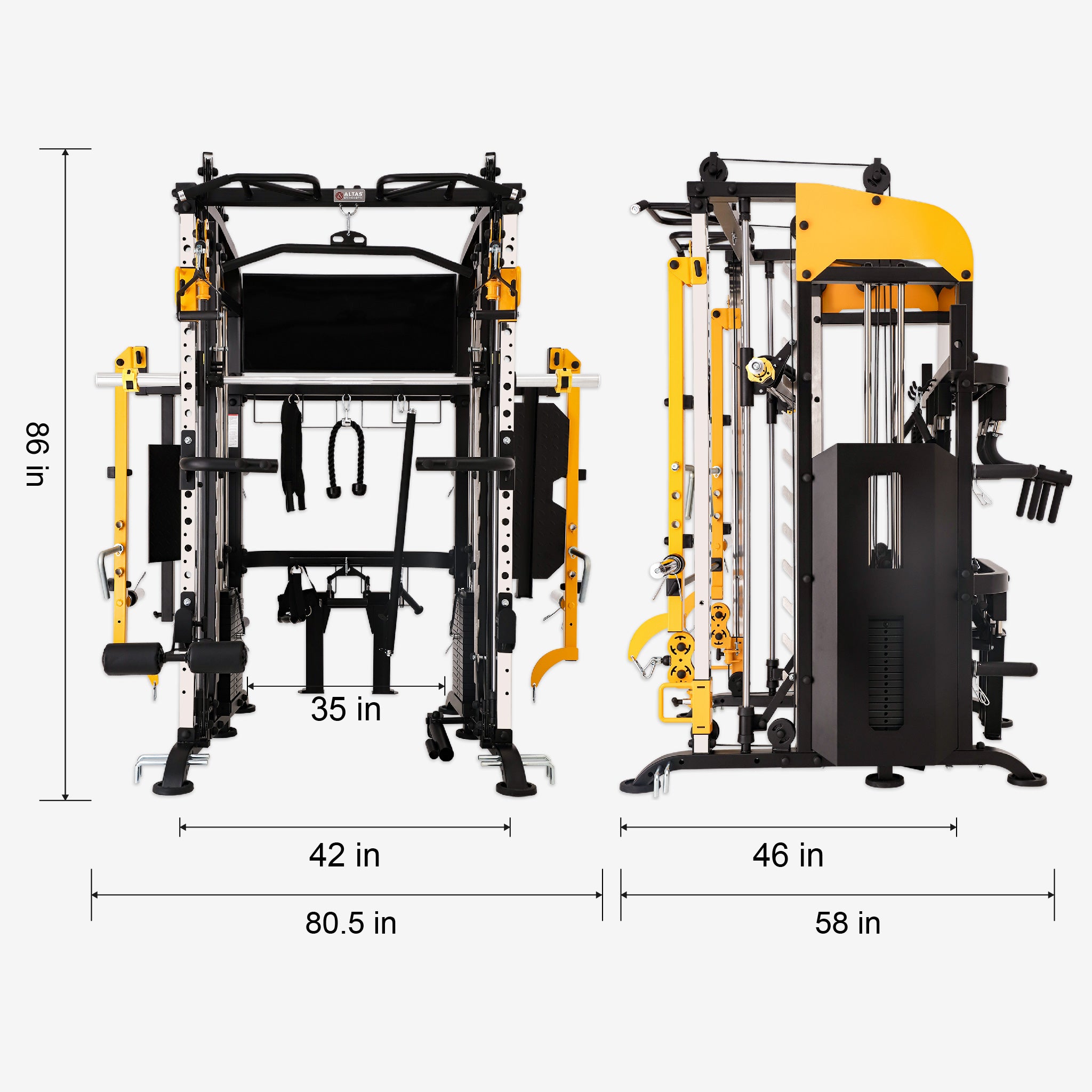
Hack squat machines generally require more floor space than a barbell and rack.
Before buying, measure:
- Machine footprint
- Entry and exit clearance
- Plate-loading area
- User movement space
- Ceiling clearance if applicable
This is especially important for basement and garage gyms.
Assembly
Heavy-duty machines can contain many frame sections, hardware components, and moving parts.
Assembly may require more time than setting up a basic bench or rack.
Consider:
- Number of components
- Required tools
- Installation instructions
- Available help during assembly
Fixed Movement Path
The guided path is an advantage for some users but a limitation for others.
The machine does not reproduce the exact stabilization demands of a free-weight squat.
For competitive powerlifters or athletes whose sport requires free squatting, hack squats should generally be viewed as an accessory rather than a complete replacement for competition-specific training.
Less Overall Versatility
A hack squat is highly useful for lower-body training, but it does not provide the exercise variety of a Smith machine or functional trainer.
If you have room and budget for only one major strength-training machine, this should be part of the purchase decision.
Common User Comparison Set
When people search for a hack squat machine, they commonly compare several alternatives.
Barbell + Power Rack
Best for free-weight squat training and broad strength-training versatility.
Smith Machine
Best for users wanting guided barbell-style movements combined with multiple upper- and lower-body exercises.
Leg Press
Best for users prioritizing supported leg pressing and high-volume lower-body training.
Commercial Hack Squat
Best for users who prioritize commercial-grade construction and have a larger budget and dedicated training space.
Multifunctional Leg Trainer
Best for users who want several lower-body exercises from one machine and are willing to trade some specialization for versatility.
What Do Buyers Ultimately Compare?
The decision can be simplified into five categories:
| Option | Main Advantage | Main Limitation |
|---|---|---|
| Hack Squat | Supported squat-focused leg training | Large and specialized |
| Barbell Squat | Free-weight strength and stabilization | Higher technical demand |
| Smith Machine | Guided movement + versatility | Less squat-specific |
| Leg Press | Supported high-volume leg training | Different movement pattern |
| Multifunctional Trainer | Broad exercise variety | May sacrifice specialization |
There is no universal winner.
The best choice depends on what you want the equipment to accomplish.
Why Do Users Choose a Hack Squat Machine?
After comparing alternatives, the purchase decision usually comes down to several factors.
1. Supported Squat Training
The machine provides a defined movement path and upper-body support.
This can make it attractive to users who want a squat-pattern exercise without managing a free barbell.
2. Lower-Body Training Focus
Compared with a general-purpose Smith machine or rack, a hack squat is designed primarily around lower-body training.
For users who already have upper-body equipment, that specialization can be valuable.
3. Repeatable Setup
The machine provides a consistent starting position and movement path.
This can make it easier for users to repeat the same exercise setup from workout to workout.
4. Heavy-Duty Home Gym Capability
For serious home gym owners, machine stability and construction quality can matter more than simply buying the cheapest available option.
The goal is not just to purchase a squat machine.
It is to purchase equipment that fits the user's expected training volume and long-term gym setup.
Is a Hack Squat Machine Good for Beginners?
It can be an attractive option for beginners who prefer a supported machine environment.
The guided movement can reduce some of the balance and coordination requirements associated with free-weight squatting.
However, beginners should still learn:
- Appropriate depth
- Foot positioning
- Bracing
- Controlled movement
- Safe loading
- Machine-specific safety procedures
A guided machine does not eliminate the need for proper technique.
Is a Hack Squat Machine Good for Advanced Lifters?
It can be.
Advanced lifters may use hack squats as an accessory movement after or alongside free-weight exercises.
Potential uses include:
- Additional quad volume
- Lower-body hypertrophy work
- Training variation
- Higher-repetition leg work
- Supported leg training
However, competitive powerlifters should continue practicing the specific free-weight squat movement required by their sport.
Who Should Buy a Hack Squat Machine?
A hack squat machine is particularly relevant for:
Home Gym Owners Focused on Leg Training
Users who want a dedicated lower-body machine rather than another general-purpose station.
Intermediate Lifters
People who already understand basic strength-training movements and want more specialized leg-training options.
Users Who Prefer Guided Training
Lifters who enjoy supported movement patterns and consistent exercise setup.
Users Building a Dedicated Home Gym
People with enough space and budget to add specialized lower-body equipment.
Hypertrophy-Focused Lifters
Users who want additional quad, glute, and hamstring training beyond their primary compound exercises.
Who May Want a Different Product?
A hack squat machine may not be the best choice for:
Competitive Powerlifters
If competition-specific free squatting is your main objective, you need equipment that allows you to practice the actual competition movement.
Users With Very Limited Space
A power rack or adjustable bench may provide more training possibilities per square foot.
Budget-Only Buyers
A hack squat is specialized equipment. If you are building your first home gym, basic equipment may provide more exercises for the same budget.
Users Wanting One Machine for Full-Body Training
A Smith machine or functional trainer may provide better overall versatility.
Users Who Already Own Extensive Leg Equipment
If you already have a leg press, squat rack, and several lower-body stations, the additional value of a hack squat may be limited.
Is a Hack Squat Machine Worth It?
The answer depends on your priorities.
It is worth considering if you:
- Want dedicated squat-focused leg training
- Prefer a guided movement
- Have enough floor space
- Train legs frequently
- Want to add lower-body volume
- Already have basic home gym equipment
- Value machine stability and repeatable positioning
It may not be necessary if you:
- Have very limited space
- Primarily train for powerlifting competition
- Need a single machine for many different exercises
- Are building a basic gym on a very limited budget
- Rarely perform dedicated lower-body training
The important question is not:
“Is a hack squat better than a barbell squat?”
It is:
“Does a dedicated, supported squat machine fit the way I want to train?”
The Altas Strength Hack Squat Decision Framework
Before purchasing, evaluate five factors.
1. Training Goal
Are you primarily training for:
- Strength?
- Hypertrophy?
- General fitness?
- Competition?
Your answer determines whether a hack squat should be your primary squat movement or an accessory.
2. Space
Can your gym accommodate the machine plus the required loading and movement clearance?
3. Exercise Variety
Do you already own equipment for upper-body and other lower-body movements?
4. Resistance Requirements
Does the machine's rated capacity match your current and expected training needs?
5. Movement Preference
Do you prefer a guided squat pattern or the freedom and stabilization demands of a barbell squat?
These questions provide a stronger purchasing framework than simply comparing machines by maximum load.
Final Verdict
A hack squat machine is a specialized lower-body training station that combines a squat-pattern movement with guided resistance and upper-body support.
Its primary advantage is not that it makes every other squat variation unnecessary.
Instead, it gives home gym users another way to train the quadriceps, glutes, and hamstrings with a consistent, supported movement pattern.
Compared with a barbell squat, it reduces the need for free-weight stabilization.
Compared with a Smith machine, it provides a more specialized lower-body setup.
Compared with a leg press, it offers a more direct squat-pattern movement.
Compared with a commercial hack squat, an appropriately specified home-gym model can offer a more practical solution for users who want dedicated leg equipment without building a full commercial facility.
For home gym owners who prioritize lower-body training and have sufficient space, an Altas Strength hack squat machine can be a valuable addition to a broader strength-training system.
The simple decision rule is:
Choose a hack squat machine when you want dedicated, supported squat-pattern leg training and have enough space for specialized equipment.
Before purchasing, verify the specific model's dimensions, loading capacity, safety mechanism, movement path, plate compatibility, and intended use rather than assuming every hack squat machine provides the same training experience.