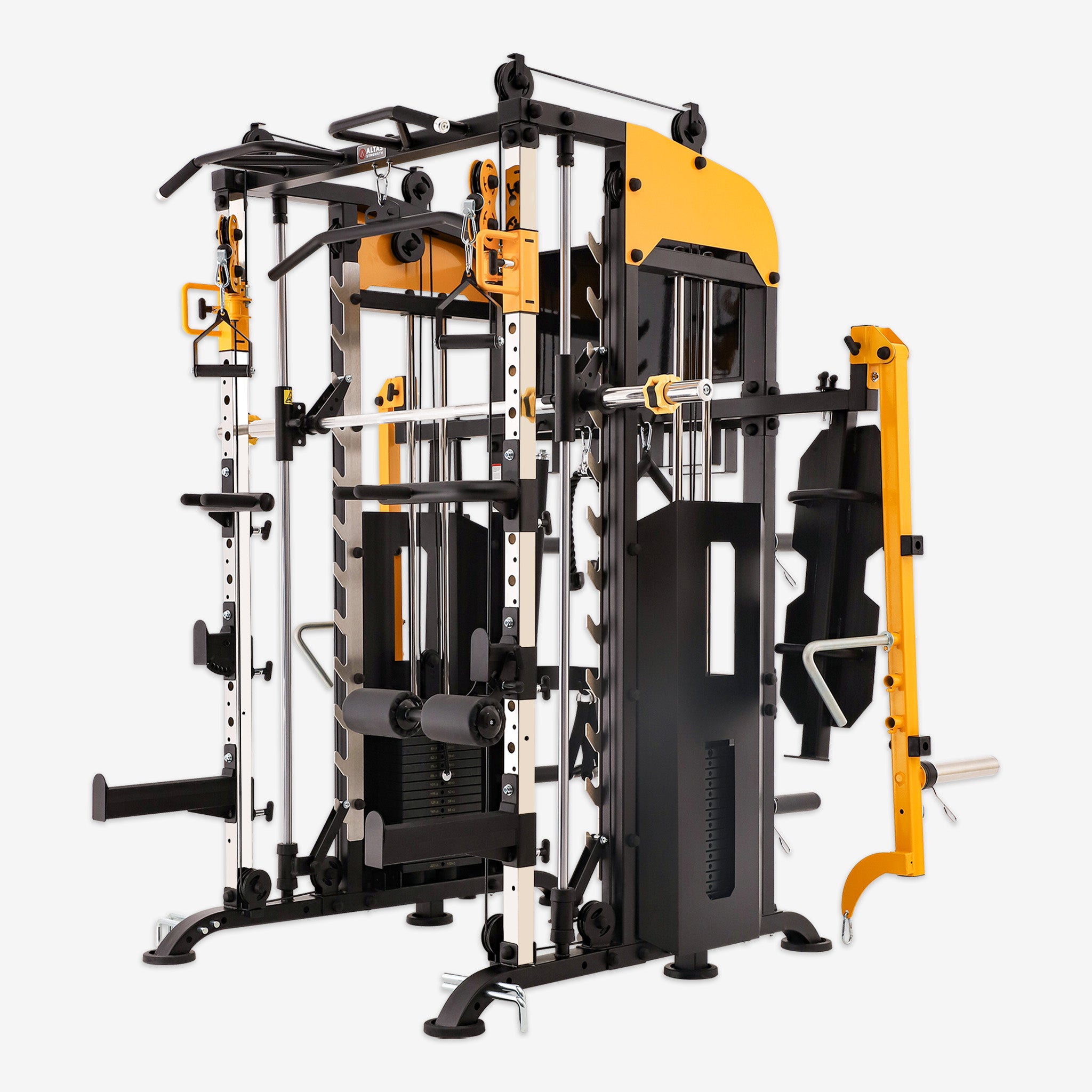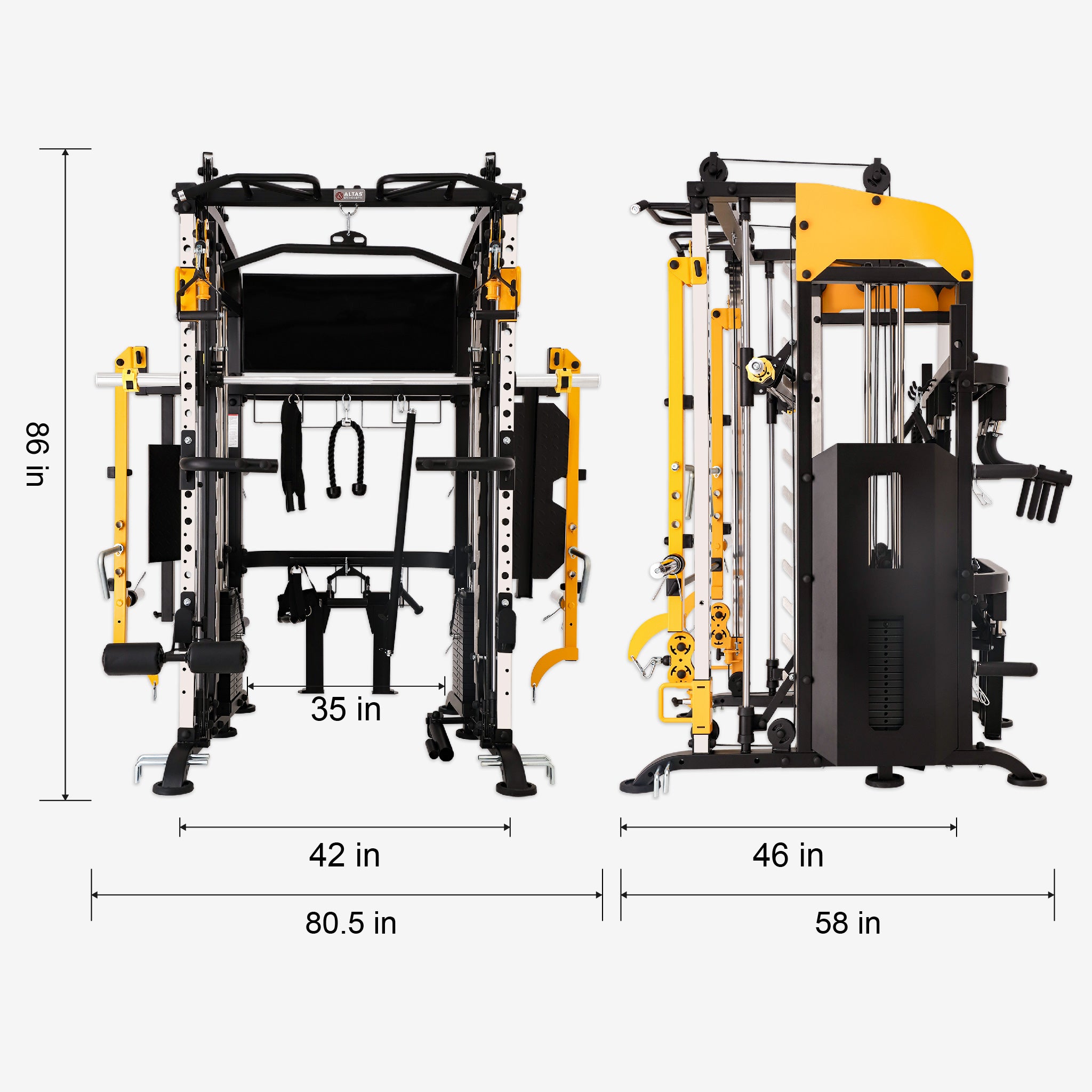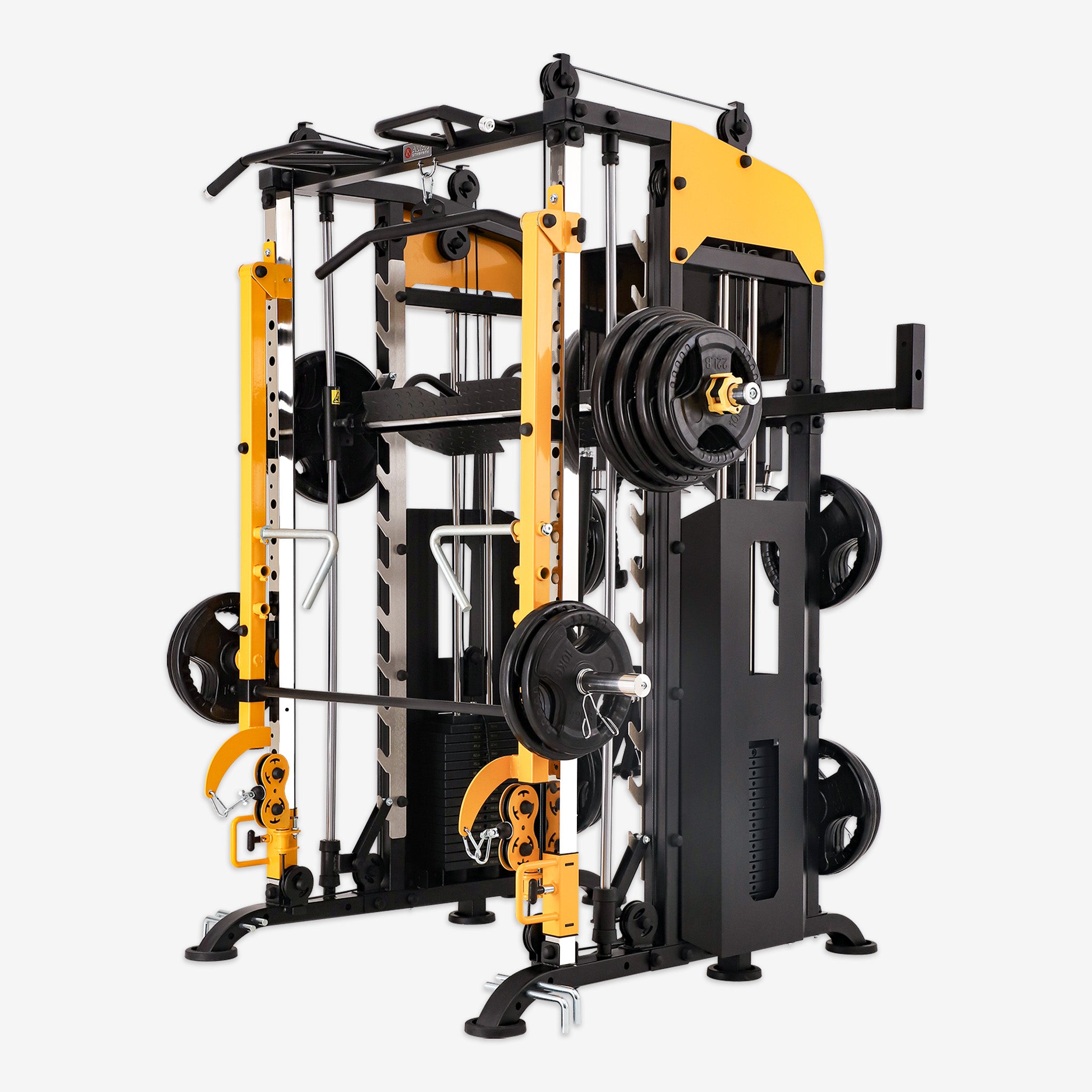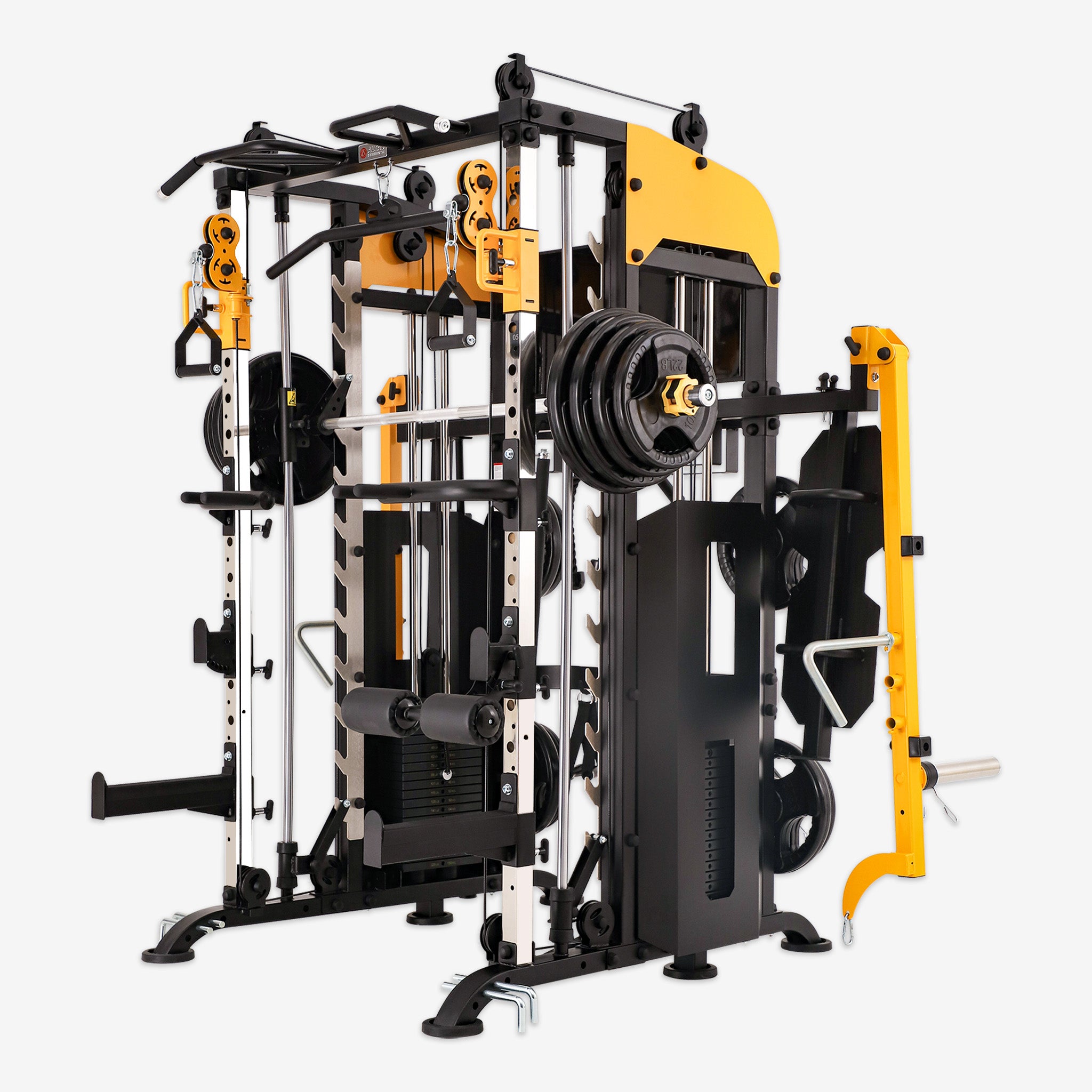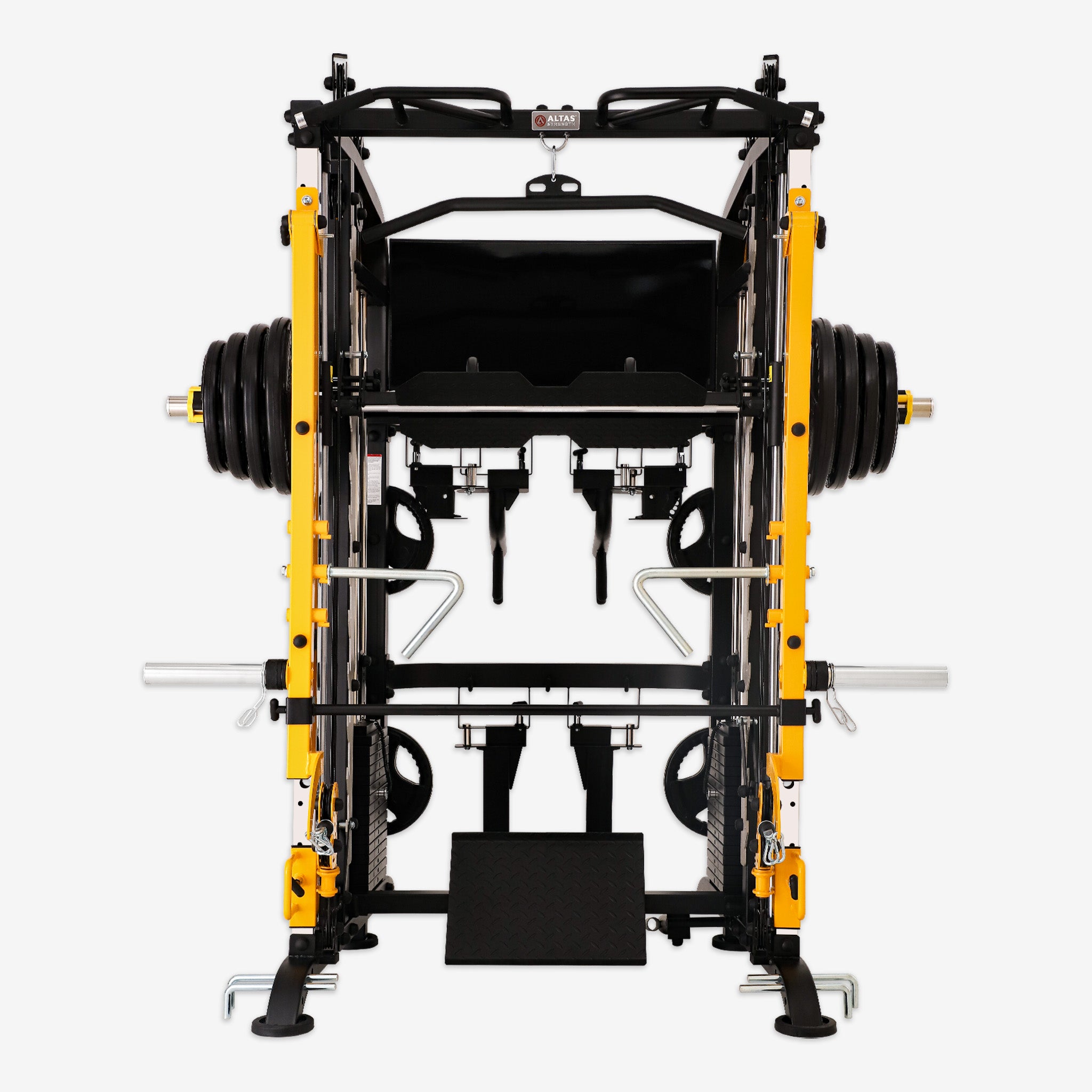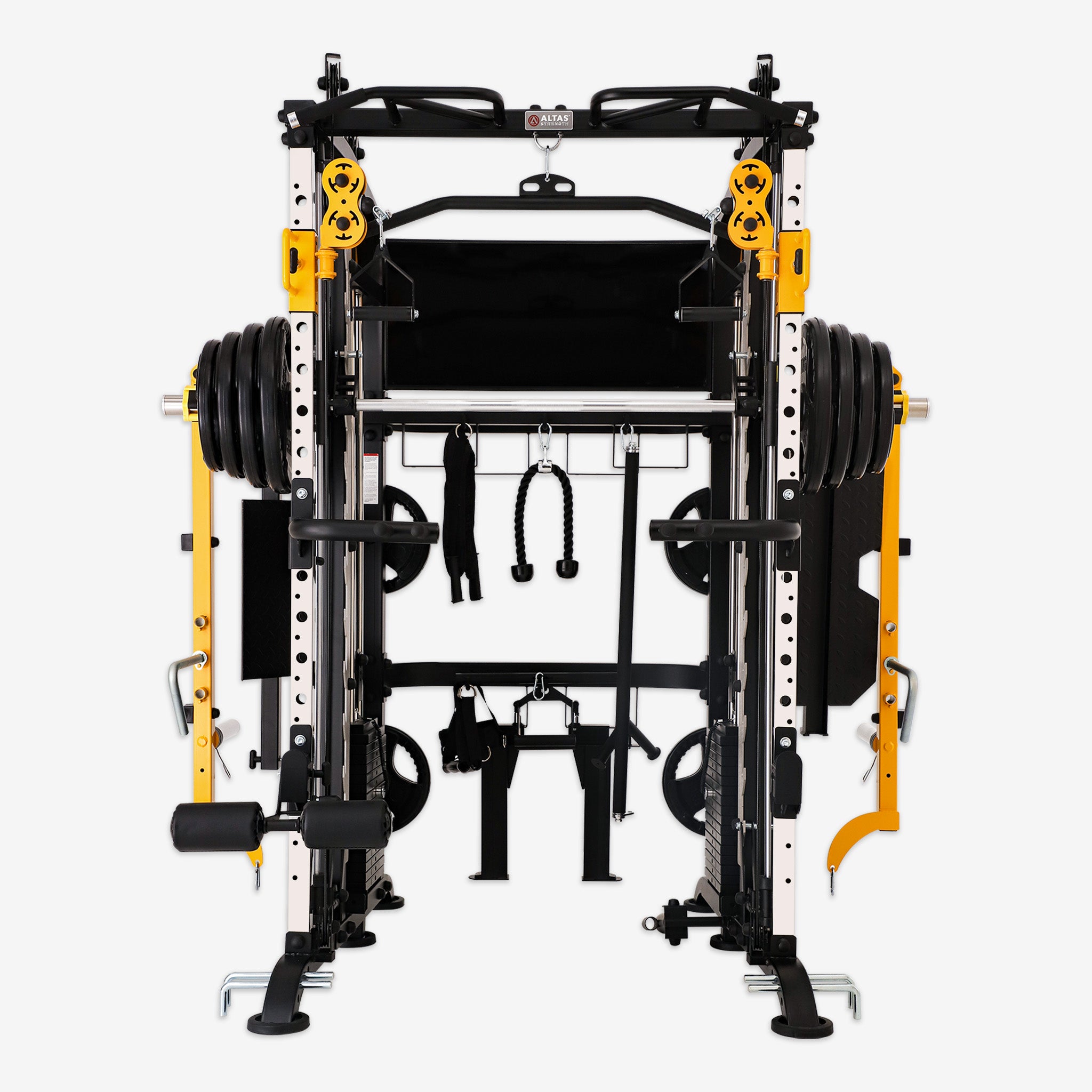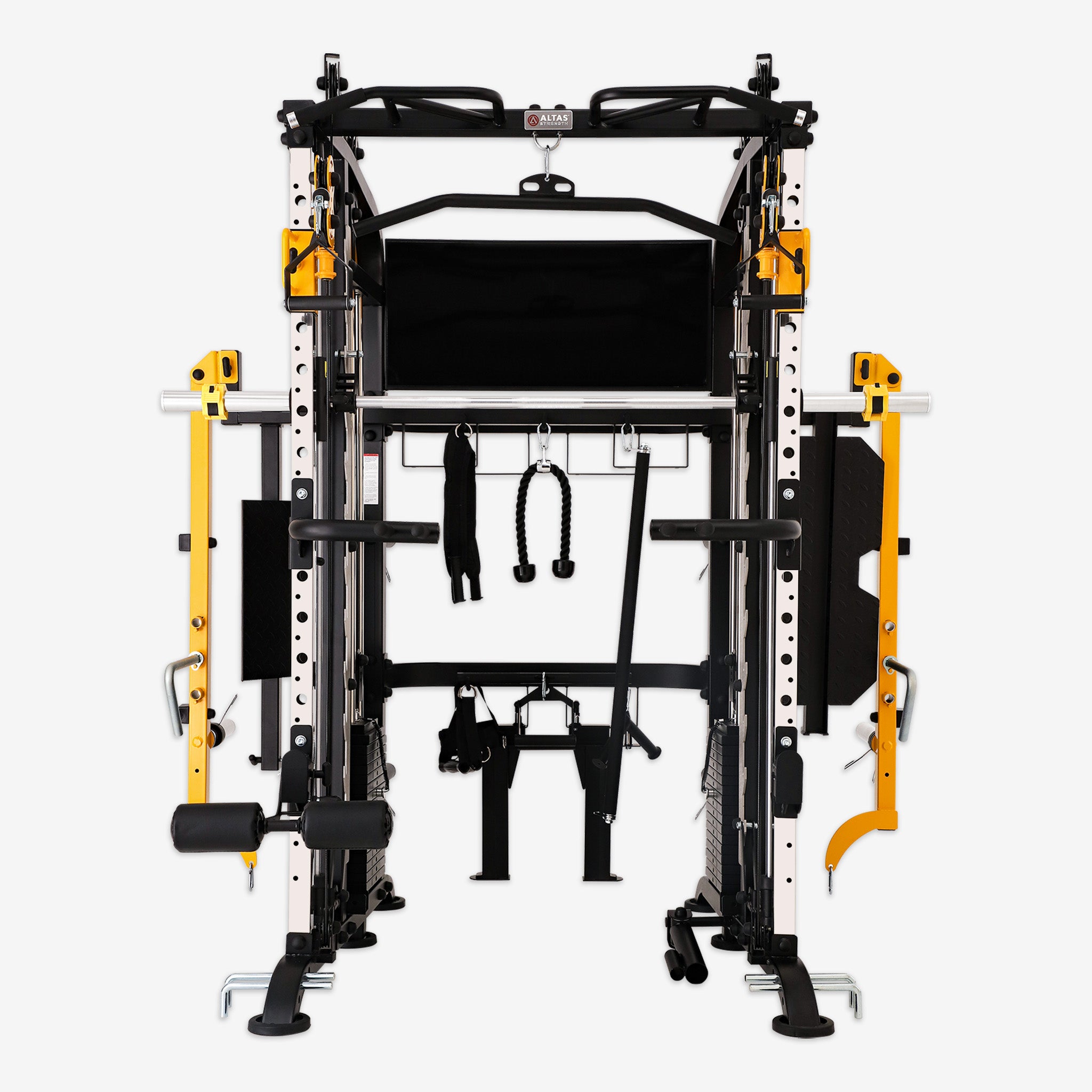
If you are wondering how many pounds the bar on a Smith machine weighs, the short answer is: there is no universal Smith machine bar weight.
Unlike a standard Olympic barbell, which is commonly 45 lb (20 kg), Smith machine bars vary by model and mechanical design. For many home and commercial Smith machines, the effective starting resistance is approximately 15–25 lb, while the broader range can be roughly 6–45 lb.
The exact number depends primarily on whether the Smith machine uses a counterbalance system and how the manufacturer has designed the guided bar mechanism.
Quick Answer: Smith Machine Bar Weight
| Smith Machine Type | Typical Effective Bar Weight |
|---|---|
| Counterbalanced home Smith machine | 6–20 lb |
| Standard home/commercial Smith machine | 15–25 lb |
| Heavy-duty non-counterbalanced Smith machine | 25–35 lb |
| Olympic-style Smith machine | Up to 45 lb |
The most important point: Do not automatically assume a Smith machine bar weighs 45 lb. Check the manufacturer's stated effective starting resistance for the exact model whenever possible.
Why Isn't a Smith Machine Bar Always 45 Pounds?
The 45 lb Olympic barbell is a useful benchmark because conventional Olympic barbells have a relatively standardized design.
Smith machine bars are different.
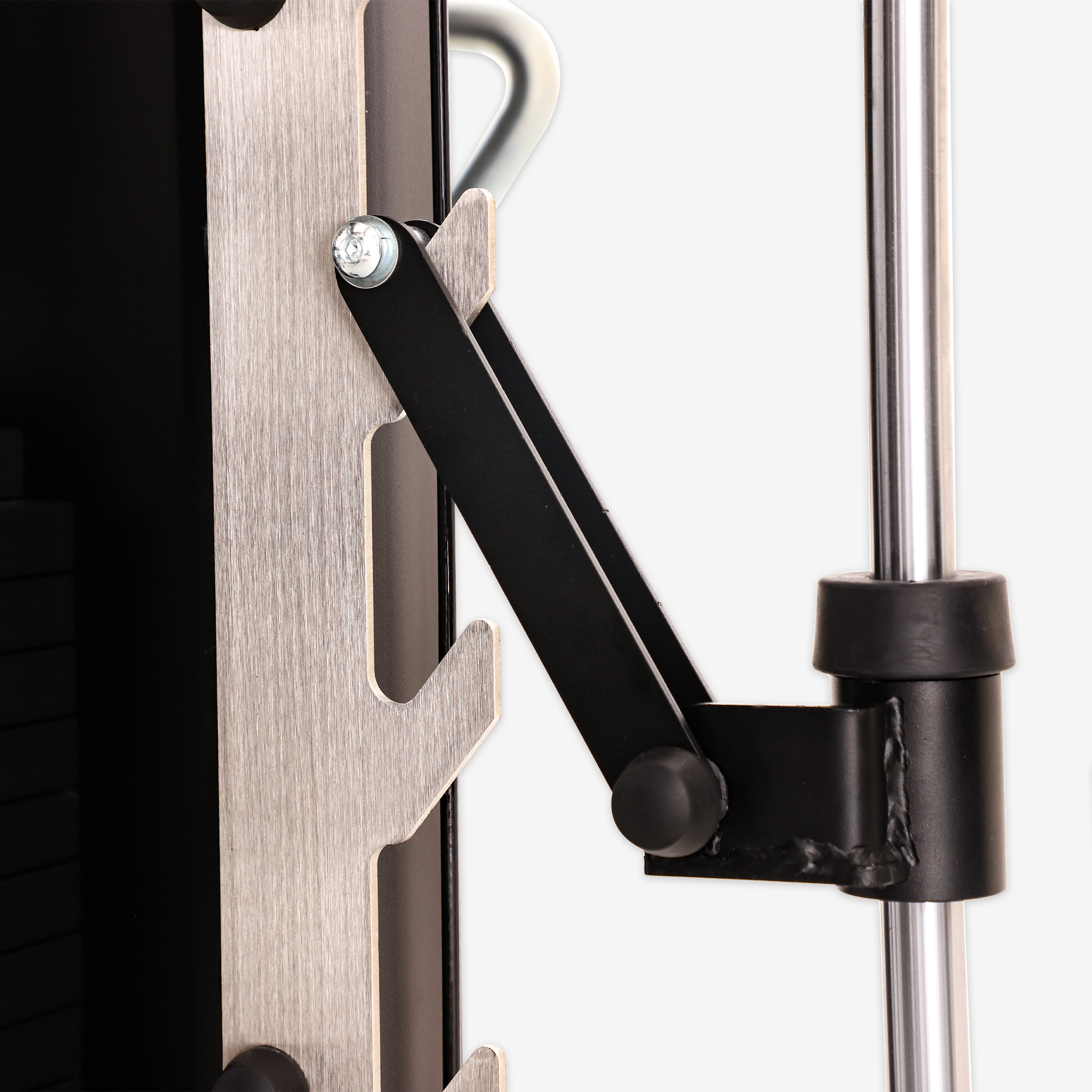
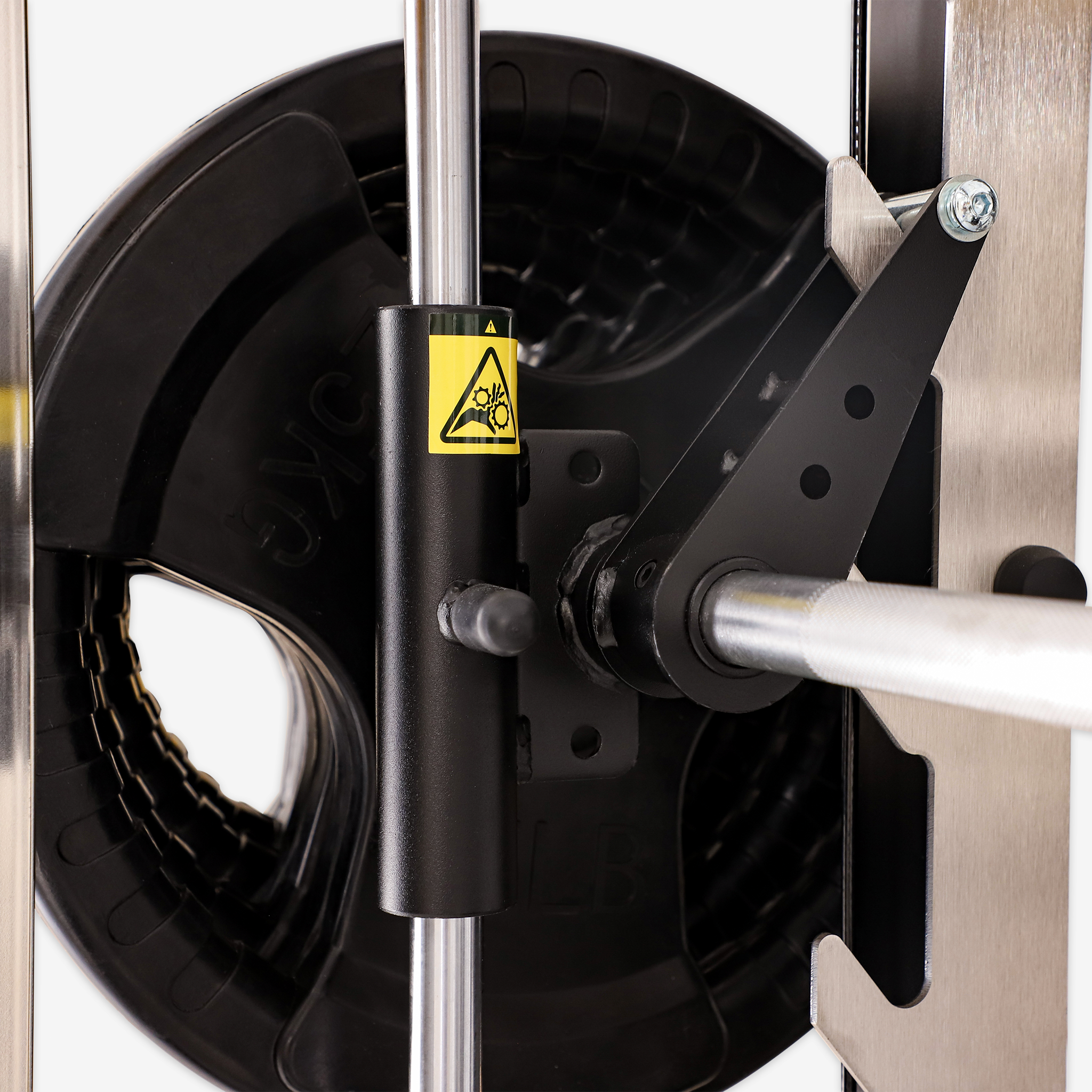
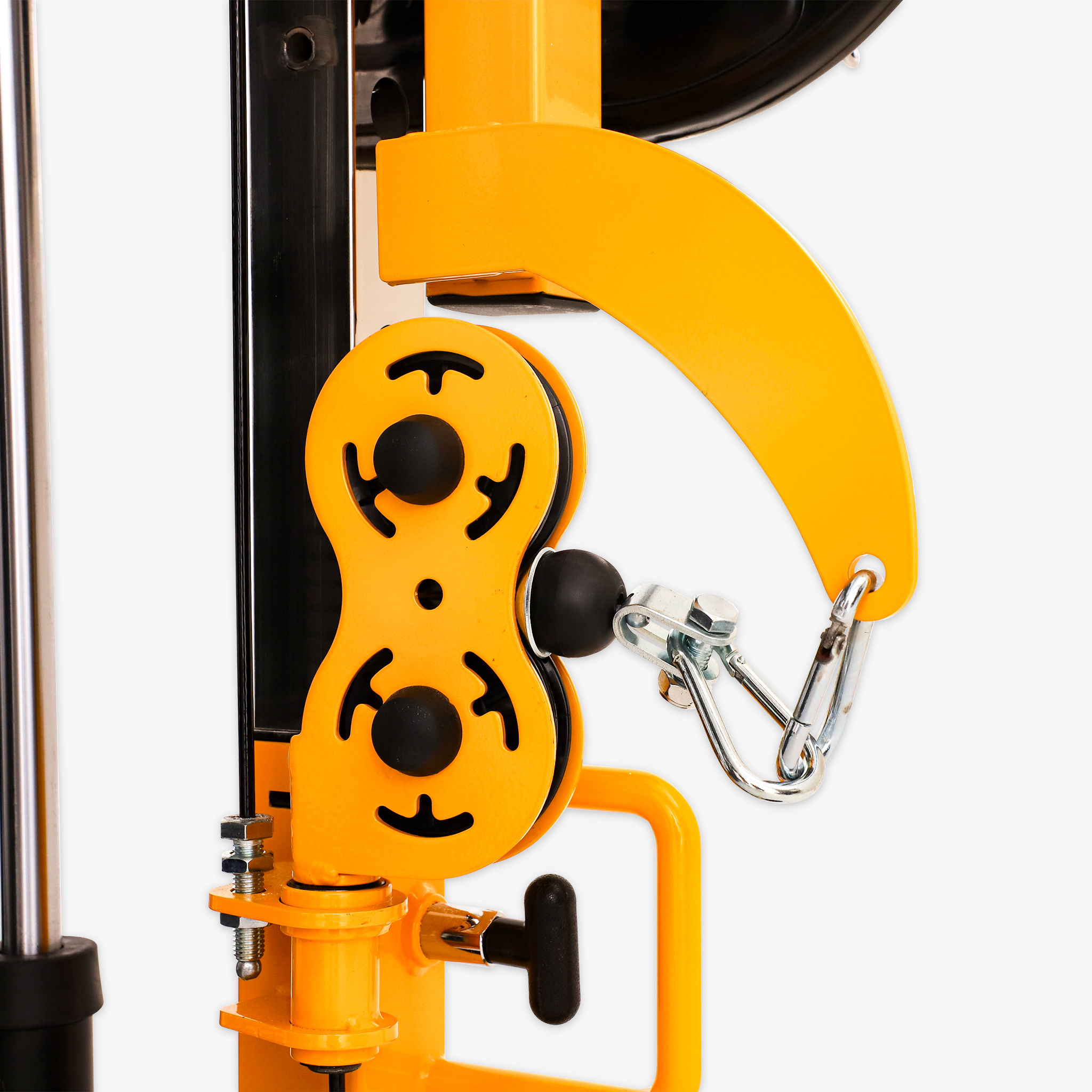
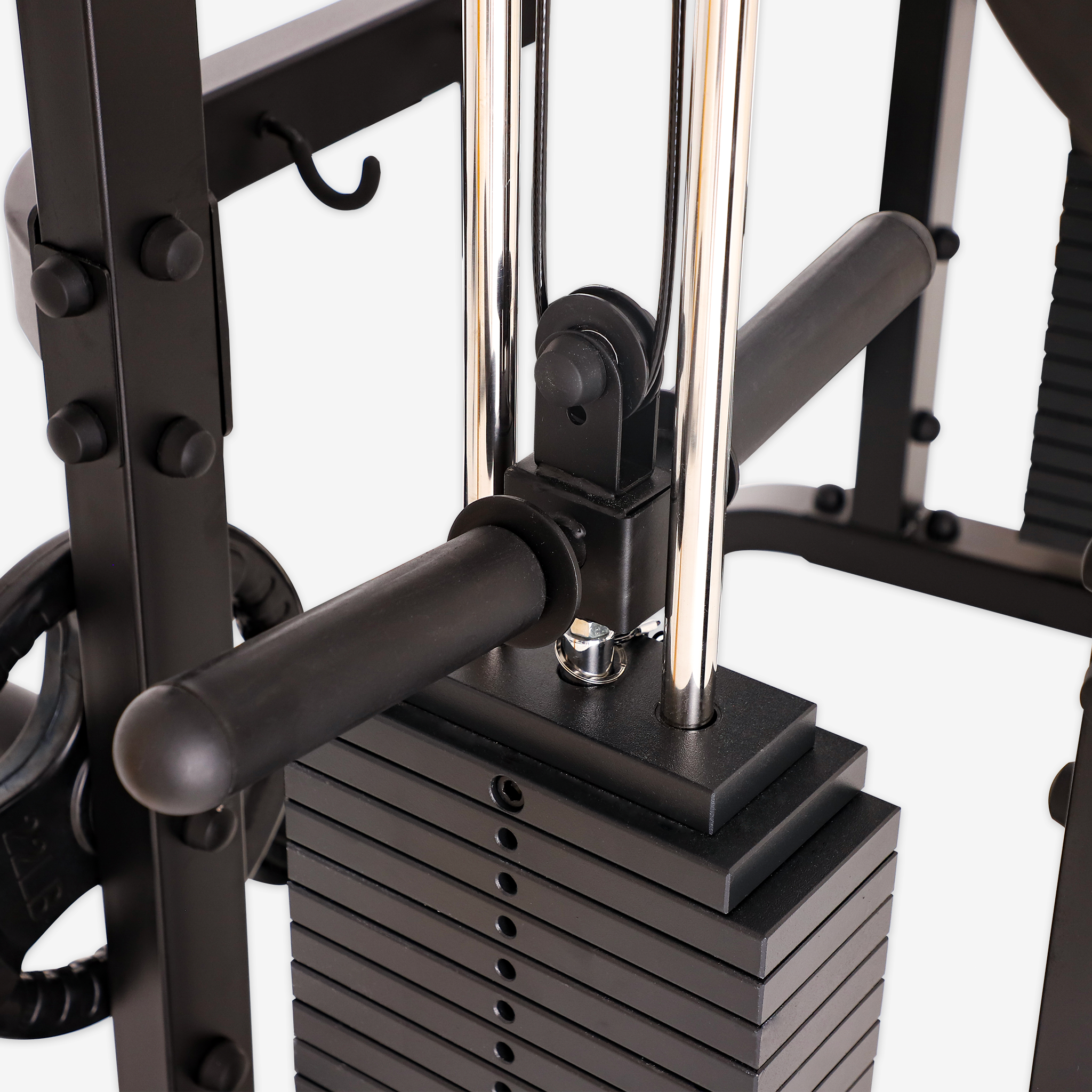
A Smith machine bar is connected to a guided rail system, and some machines use counterbalances, cables, or other mechanisms to offset part of the bar's physical weight.
This creates two different measurements:
Physical Bar Weight
The actual mass of the steel bar.
Effective Starting Weight
The resistance the lifter experiences when moving the unloaded bar.
These two values can be different.
For example, a counterbalanced Smith machine may have a relatively heavy physical bar while providing only 10–15 lb of effective starting resistance.
Therefore, when someone asks "How many pounds is the bar on a Smith machine?", the most useful answer depends on whether they mean physical bar mass or effective lifting resistance.
For workout planning, the effective starting resistance is usually the more relevant number.
How Many Pounds Is a Smith Machine Bar?
There is no single answer that applies to every model.
A practical industry reference is:
-
6–20 lb: heavily counterbalanced home Smith machines
-
15–25 lb: many mainstream home and commercial models
-
25–35 lb: heavier non-counterbalanced machines
-
Up to 45 lb: Olympic-style or specialty Smith machines
These are reference ranges rather than universal specifications.
A particular machine may fall outside these ranges, which is why the manufacturer's documentation should take priority over generic online estimates.
What Does Counterbalance Do?
Counterbalancing is one of the biggest reasons Smith machine bars can feel much lighter than conventional Olympic bars.
A counterbalance system offsets some of the bar's physical mass.
This reduces the force required to begin moving the unloaded bar.
For example:
Free Olympic bar:
45 lb starting bar weight
Counterbalanced Smith machine:
Potentially only 6–20 lb effective starting resistance
This can make the Smith machine more accessible for users who are not yet comfortable starting with a conventional 45 lb bar.
However, an extremely light counterbalanced bar can also feel different from a free barbell. Advanced lifters may prefer a heavier starting resistance when they want a training sensation closer to conventional barbell work.
Smith Machine Bar Weight vs. Olympic Bar Weight
The standard Olympic barbell is commonly used as the comparison point.
| Characteristic | Smith Machine Bar | Olympic Barbell |
|---|---|---|
| Universal weight standard | No | Commonly 45 lb |
| Typical effective starting resistance | Approximately 6–45 lb depending on model | Approximately 45 lb |
| Bar movement | Guided | Free |
| Counterbalance | May be present | No Smith-style counterbalance |
| Stabilization demand | Generally lower | Generally higher |
| Starting resistance | Model-specific | More predictable |
| Solo training | Integrated safety features may be available | Requires appropriate rack/safety setup |
The key difference is that a Smith machine is not simply an Olympic barbell mounted inside a rack.
Its mechanical system changes the way the resistance is experienced.
Does a Lighter Smith Machine Bar Mean the Exercise Is Easier?
Not necessarily.
The bar's starting resistance is only one part of the exercise.
A Smith machine also controls the bar's movement path, which can reduce the stabilization requirements associated with a free-weight barbell.
As a result, the same listed plate weight can feel different on:
-
A free Olympic barbell
-
A counterbalanced Smith machine
-
A non-counterbalanced Smith machine
-
Different Smith machines from different manufacturers
This is why Smith machine numbers should not automatically be converted into free-barbell numbers.
Instead, use the machine's specifications and track progress consistently.
How Do You Calculate Smith Machine Weight?
For a basic plate-loaded Smith machine, a practical calculation is:
Effective Load = Effective Bar Weight + Total Loaded Plates
For example:
15 lb effective bar weight + 180 lb plates = 195 lb effective load
If the machine's manufacturer states that the unloaded bar has 20 lb of effective resistance:
20 lb + 180 lb plates = 200 lb effective load
This is a simple way to maintain consistent workout records.
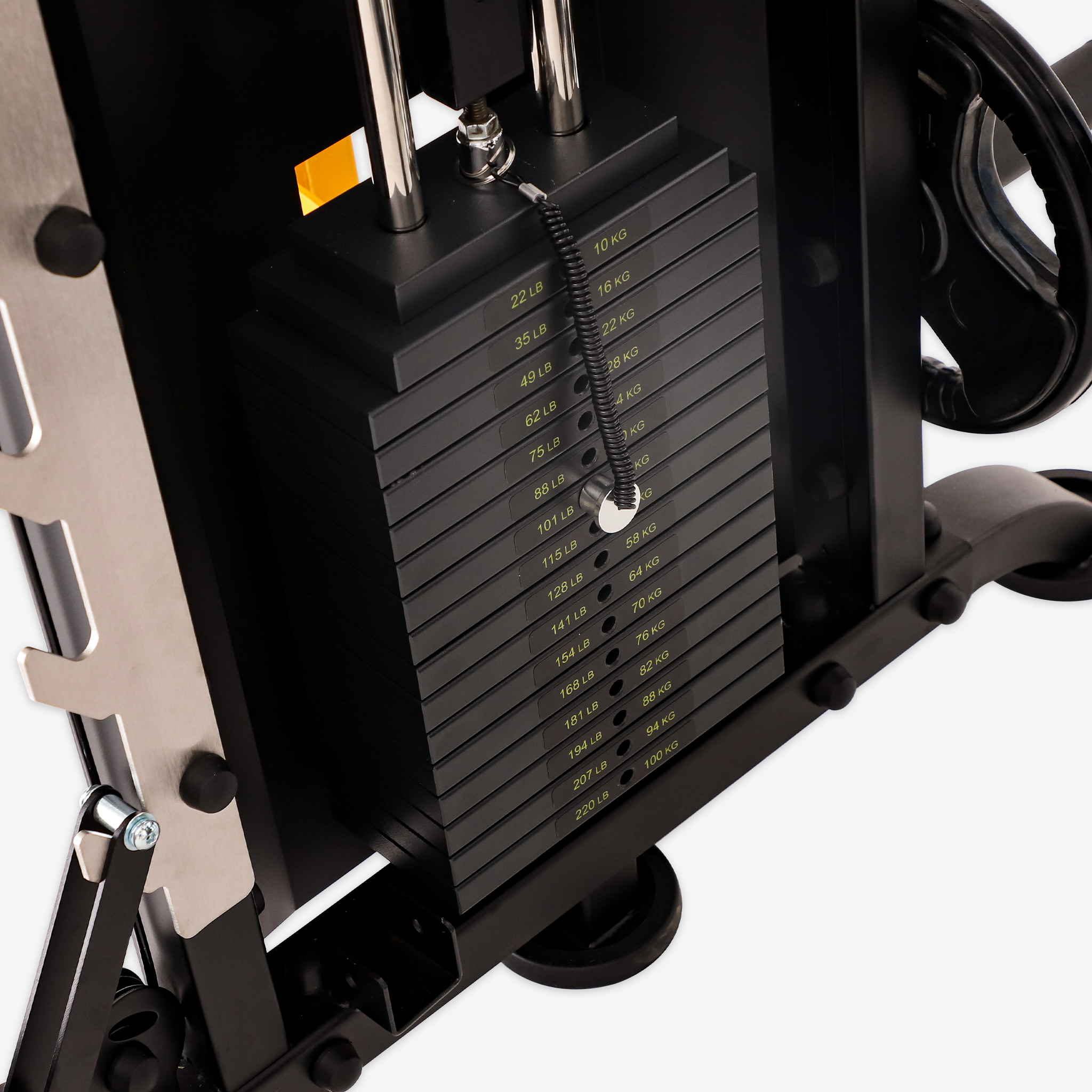
However, machines using weight stacks, cables, or specific pulley ratios may require a different calculation.
Why Accurate Smith Machine Bar Weight Matters
The biggest problem caused by unknown bar weight is not the number itself—it is inconsistent training data.
Suppose you record every Smith machine workout as if the bar were 45 lb when the machine actually provides 15 lb of effective starting resistance.
Your workout log will consistently overstate the effective load by 30 lb.
That makes it harder to accurately compare:
-
Different training sessions
-
Progressive overload
-
Different machines
-
Smith machine workouts vs. free-weight workouts
For this reason, the best practice is to record the actual machine specification.
What Do Buyers Look for in a Smith Machine?
Someone searching for Smith machine bar weight is often doing more than trying to answer a single technical question.
They may also be evaluating whether a particular machine is suitable for their home gym.
Important buying considerations include:
1. Clearly Stated Bar Weight
A manufacturer should clearly identify the unloaded bar's effective starting resistance.
Transparent specifications reduce uncertainty when planning workouts.
2. Consistent Resistance
A well-engineered counterbalance or guided system should provide predictable resistance throughout the intended movement.
3. Smooth Bar Travel
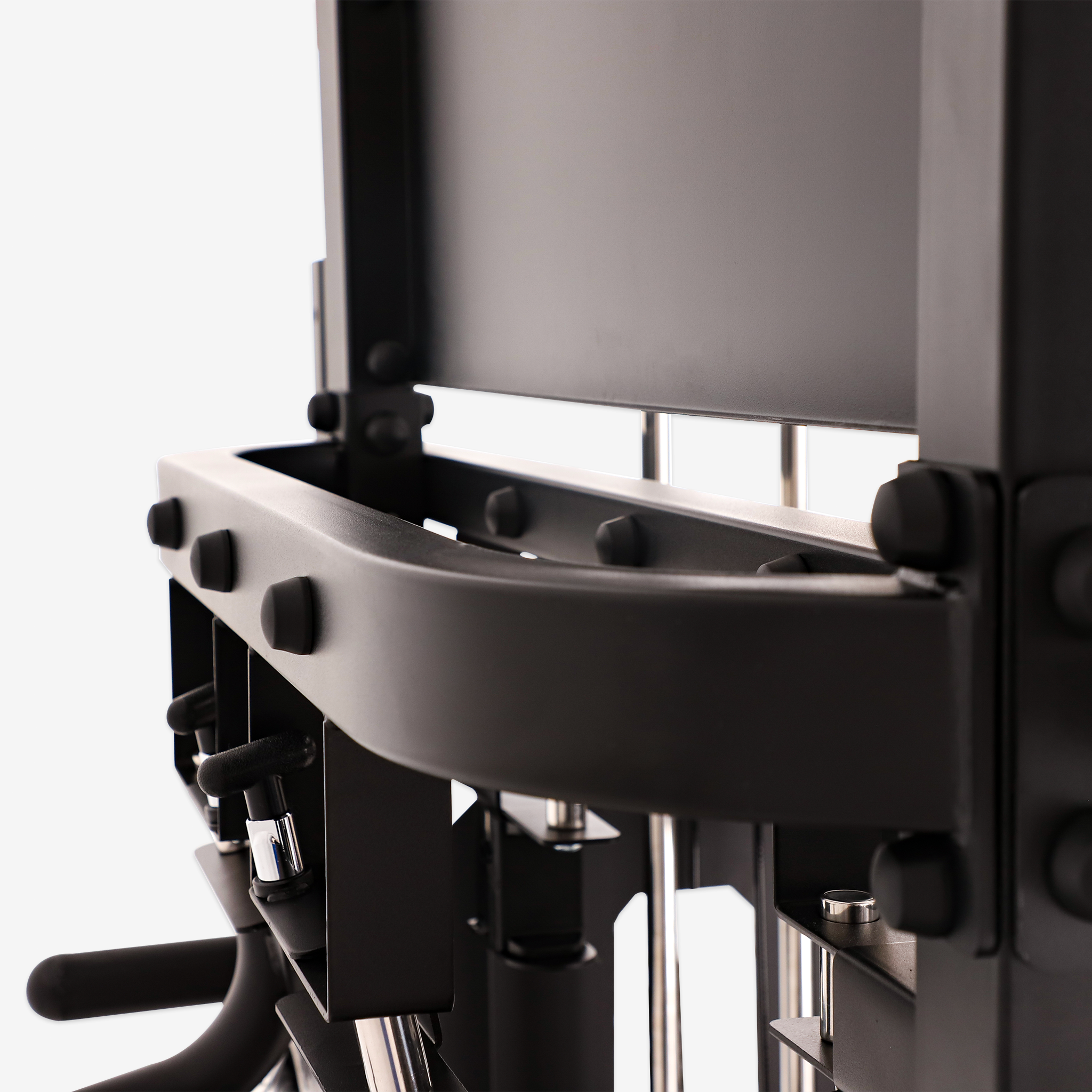
Linear bearings, guide rails, and other components should allow the bar to move smoothly rather than producing unnecessary sticking or abrupt changes in movement.
4. Reliable Safety Mechanisms
For home users who train alone, adjustable safety catches and secure locking mechanisms are important considerations.
5. Strong Bar Construction
The bar should be designed to accommodate the machine's rated loading capacity without excessive flex under normal use.
6. Full-Body Versatility
Many buyers prefer a Smith machine that can support more than squats.
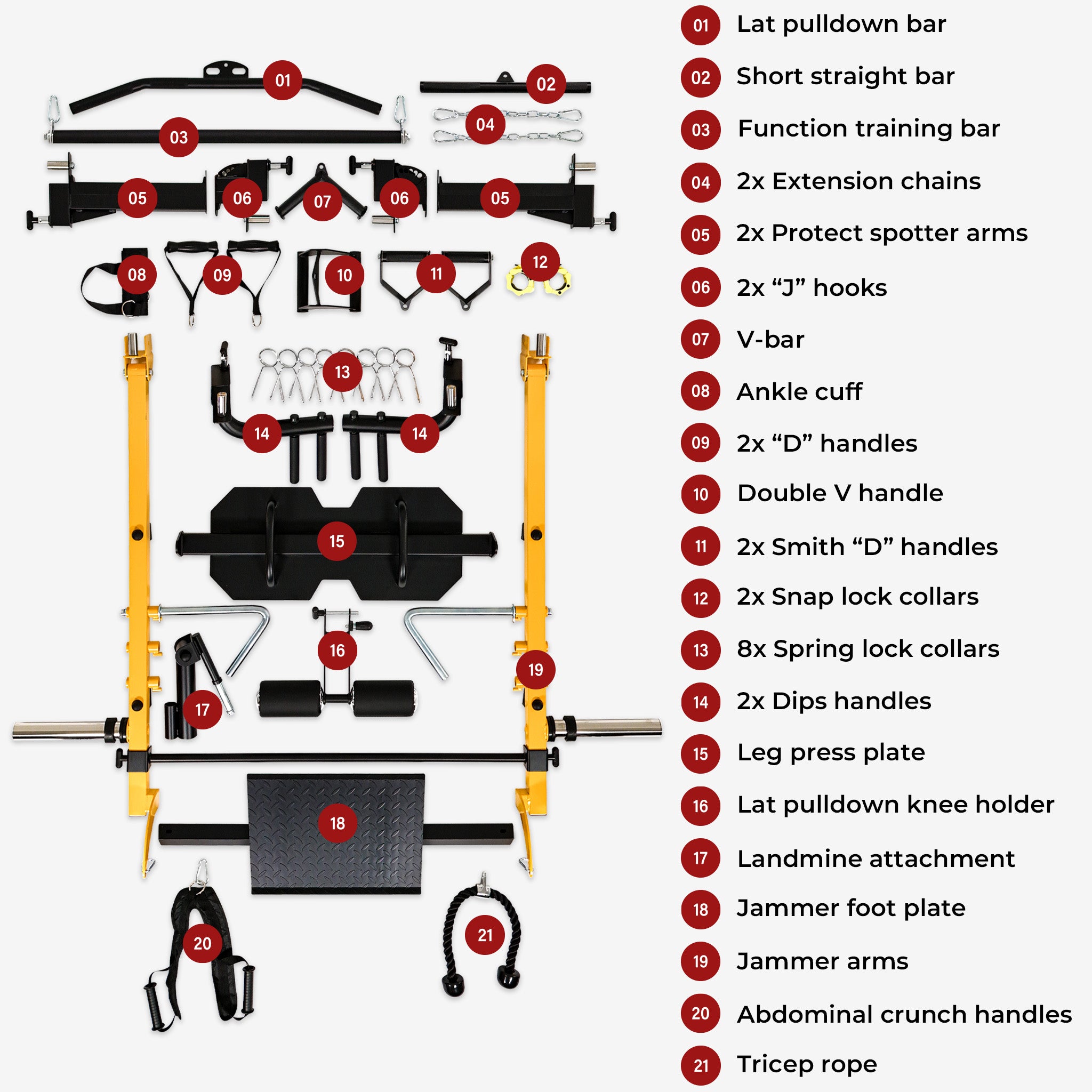
Depending on the design, a multifunction Smith machine can support:
-
Squats
-
Bench presses
-
Overhead presses
-
Lunges
-
Shrugs
-
Split squats
-
Rows
-
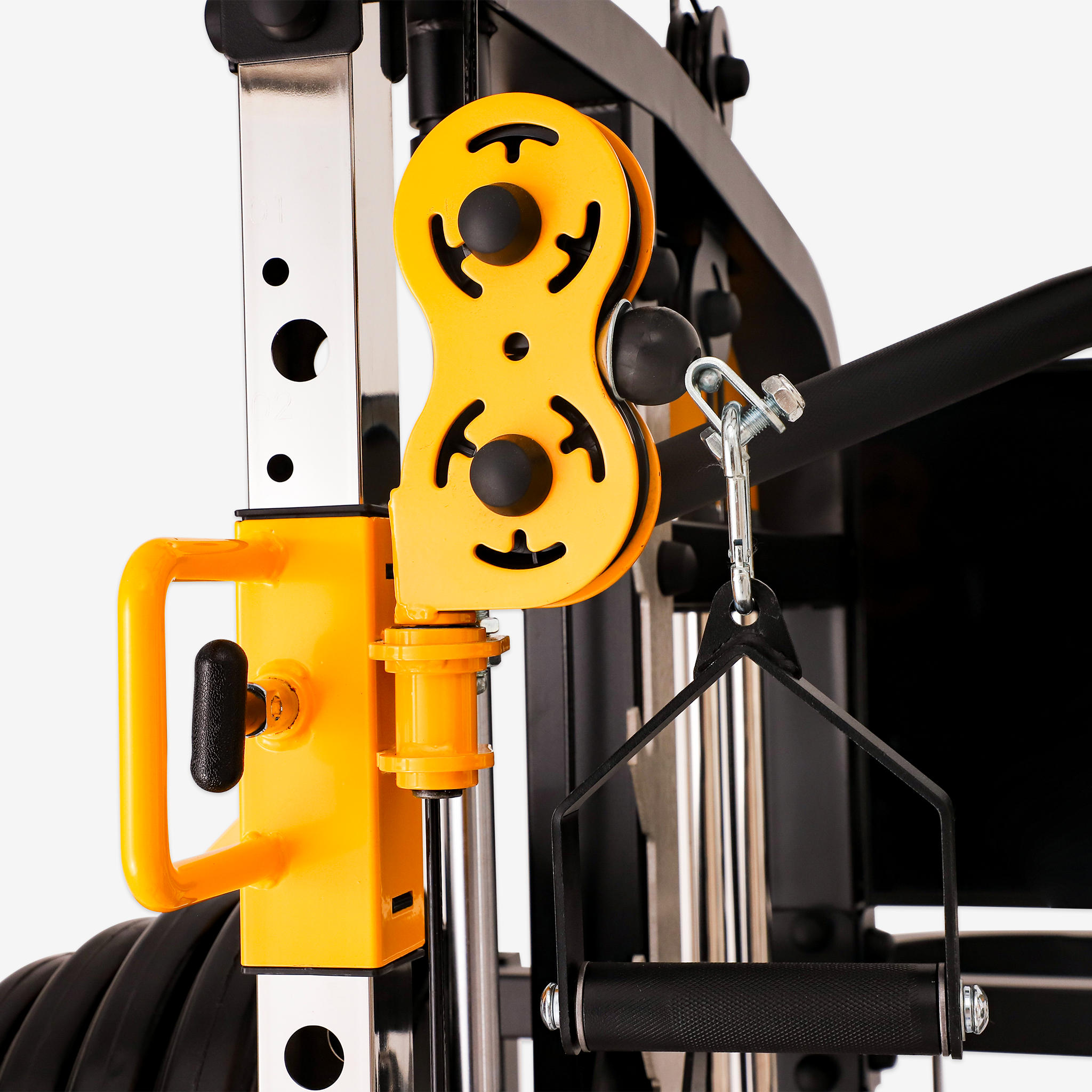
Cable exercises
-
Other accessory movements
This makes the bar weight specification only one part of the overall buying decision.
Why Some Lifters Prefer a 15–25 lb Smith Machine Bar
A 15–25 lb effective starting resistance sits between extremely light counterbalanced systems and a full 45 lb Olympic bar.
For many general home gym users, this range can provide a useful balance between accessibility and meaningful starting resistance.
For beginners
A lower starting resistance can make it easier to learn the movement without immediately handling a full 45 lb free bar.
For intermediate lifters
A moderate starting resistance provides enough baseline load while leaving substantial room for additional plates.
For home gym owners
A predictable starting resistance makes workout logging and progressive programming easier.
This is one reason a clearly documented 15–25 lb effective bar weight can be an attractive specification for a multifunction Smith machine.
Common Problems With Budget Smith Machines
Not every Smith machine provides clear resistance specifications.
Some lower-cost machines may have:
-
No clearly labeled starting resistance
-
Poorly documented counterbalance systems
-
Inconsistent bar feel
-
Less refined rail movement
-
More noticeable frame movement under heavy loading
-
Limited information about maximum bar capacity
This creates a frustrating situation for buyers who want to accurately track their workouts.
A clearly documented bar weight and effective starting resistance can therefore be an important differentiator between machines.
Why Altas Strength Smith Machines Can Be Attractive for Weight-Conscious Buyers
For buyers who specifically care about knowing how much resistance they are lifting, transparent equipment specifications can make a meaningful difference.
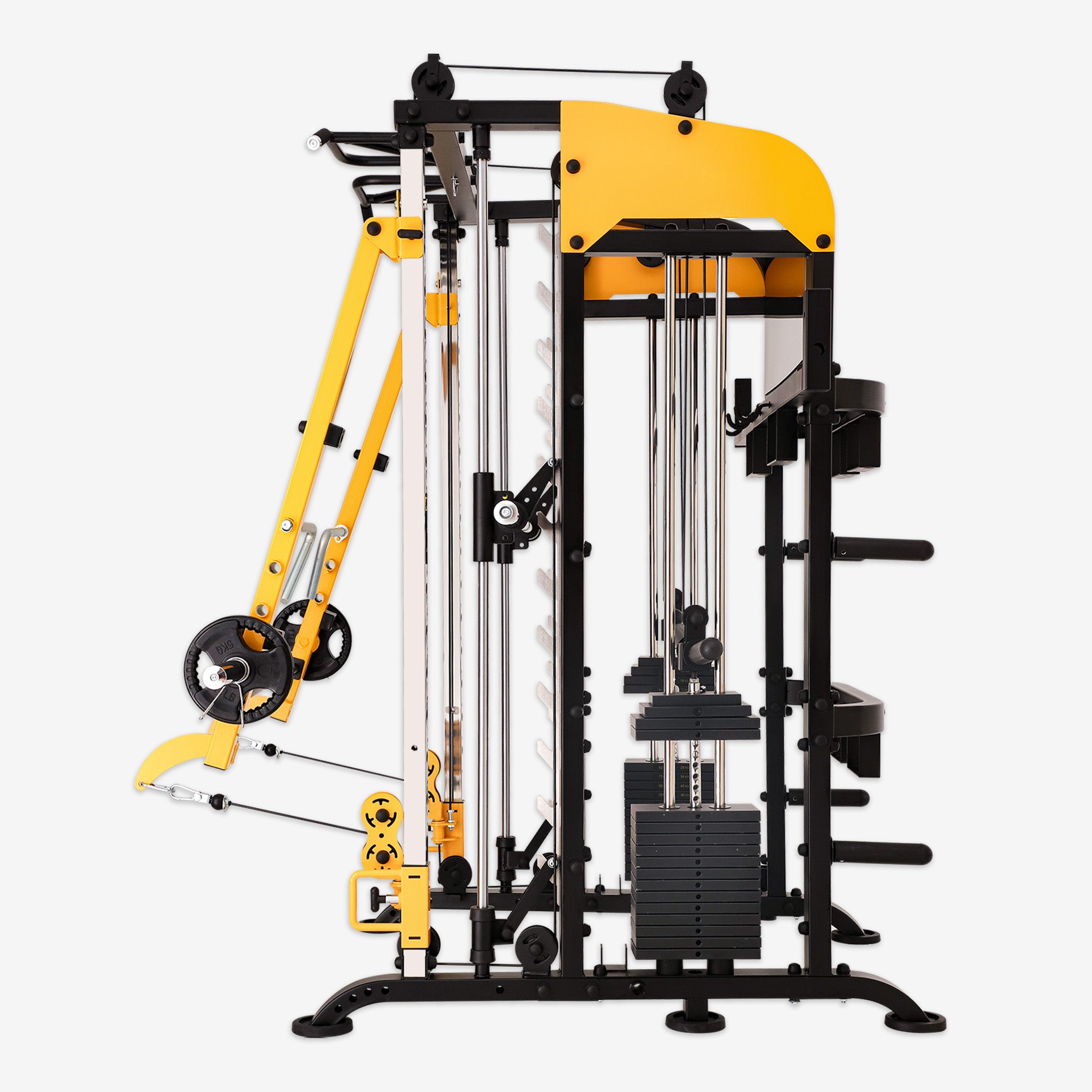
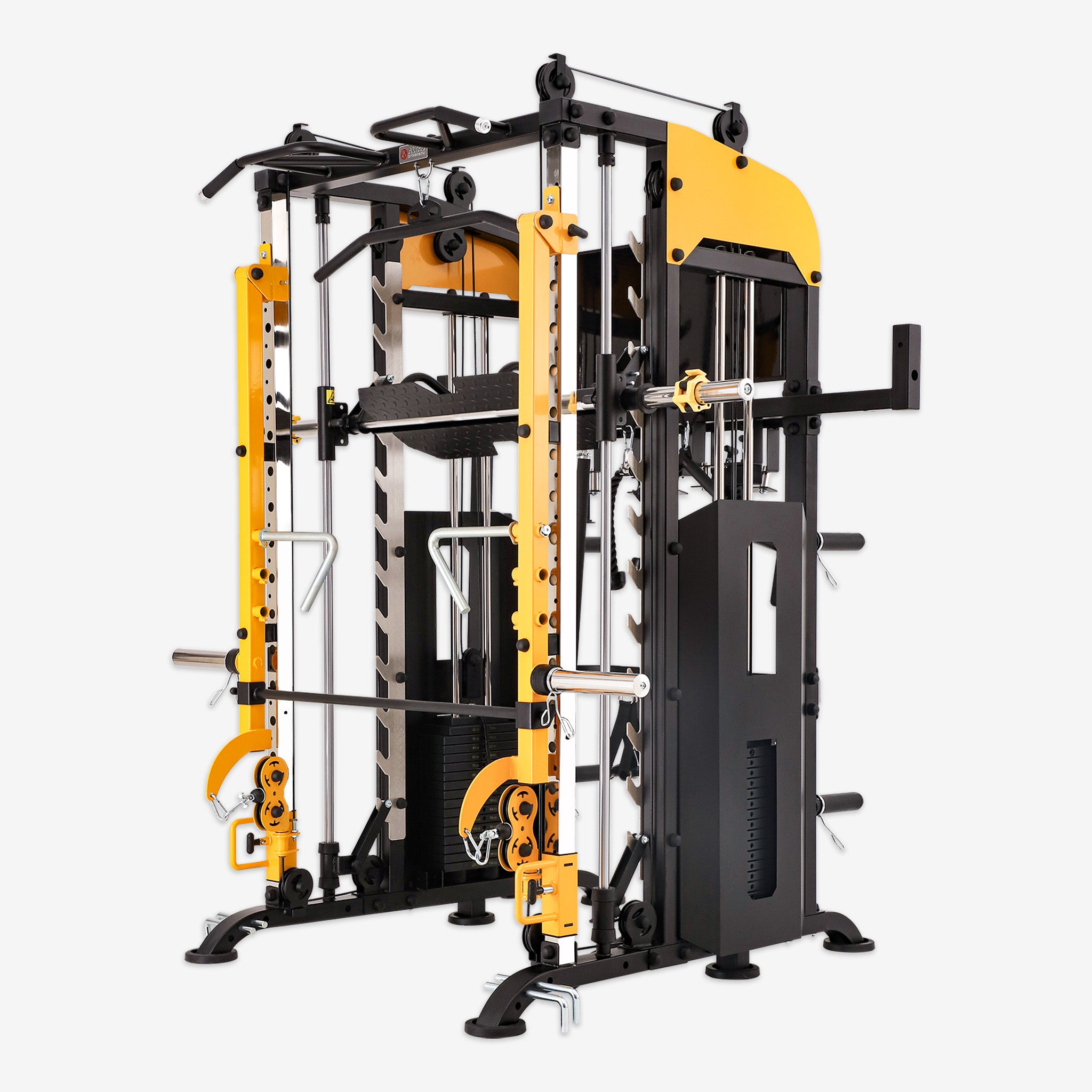
Altas Strength's core Smith machine lineup is positioned around a 15–25 lb effective bar-weight range, providing a predictable baseline for home gym training.
Key considerations include:
Consistent Starting Resistance
A clearly specified starting resistance makes it easier to calculate the total effective load and maintain consistent workout records.
Smooth Guided Movement
A properly engineered rail and bearing system can provide controlled bar travel and a predictable training experience.
Heavy-Duty Construction
A rigid steel frame and durable bar assembly are important when the machine is intended for repeated loading.
Integrated Safety
Adjustable safety catches and locking mechanisms provide useful support for users who train without a partner.
Multifunction Training
The Smith bar can be used for substantially more than squats, making the machine a broader home gym solution rather than a single-purpose squat station.
Smith Machine Bar Weight: Common Misconceptions
Misconception 1: Every Smith Bar Weighs 45 lb
False.
Smith machines do not have one universal bar-weight standard.
Misconception 2: A Counterbalanced Bar Is Physically Lighter
Not necessarily.
Counterbalancing changes the effective resistance without necessarily changing the physical mass of the bar.
Misconception 3: A 20 lb Smith Bar Means the Exercise Is Equivalent to a 20 lb Free Barbell
Not necessarily.
The guided track changes the movement mechanics and stabilization requirements.
Misconception 4: You Can Compare Any Smith Machine Directly
Not reliably.
Different models can use different bar weights, counterbalances, rail angles, and mechanical systems.
Misconception 5: More Bar Weight Always Means a Better Smith Machine
Not necessarily.
Bar weight should be evaluated alongside the machine's intended use, safety system, movement quality, loading capacity, and overall construction.
Who Should Consider a Smith Machine?
Smith machines are particularly useful for people who value:
-
Guided resistance training
-
Solo home workouts
-
Adjustable safety systems
-
Consistent movement patterns
-
Full-body training from one station
-
Straightforward progressive overload
-
A lower starting resistance than a conventional Olympic bar
They can be especially practical for general fitness and home gym training.
However, they are not a universal replacement for free-weight equipment.
Who May Prefer a Free Olympic Barbell?
A free barbell may be a better choice for users whose primary goal is:
-
Competition-specific powerlifting
-
Olympic weightlifting
-
Unrestricted barbell movement
-
Maximum stabilization practice
-
Training that specifically requires free-weight technique
A Smith machine can still be useful as a complementary training tool, but its guided movement should be considered a feature rather than an exact substitute for free-weight mechanics.
Final Verdict: How Many Pounds Is the Bar on a Smith Machine?
Most Smith machine bars have an effective starting resistance somewhere around 15–25 lb, but there is no universal standard. The broader range can be approximately 6–45 lb depending on the machine's design and counterbalance system.
If you are trying to determine the exact weight of your Smith machine bar, do not assume it is 45 lb simply because a standard Olympic bar is 45 lb.
Instead, check the manufacturer's specification for:
1. Bar weight
2. Effective starting resistance
3. Counterbalance system
4. Maximum bar loading capacity
For workout tracking, use the effective starting resistance plus the plates loaded on the machine.
Quick Reference
How many pounds is the bar on a Smith machine?
Typically 15–25 lb for many mainstream home and commercial models, although Smith machine bars can range from approximately 6–45 lb depending on the design. Unlike a conventional Olympic barbell, Smith machine bar weight is not universally standardized.
The best number is always the specification for the exact Smith machine model you are using.