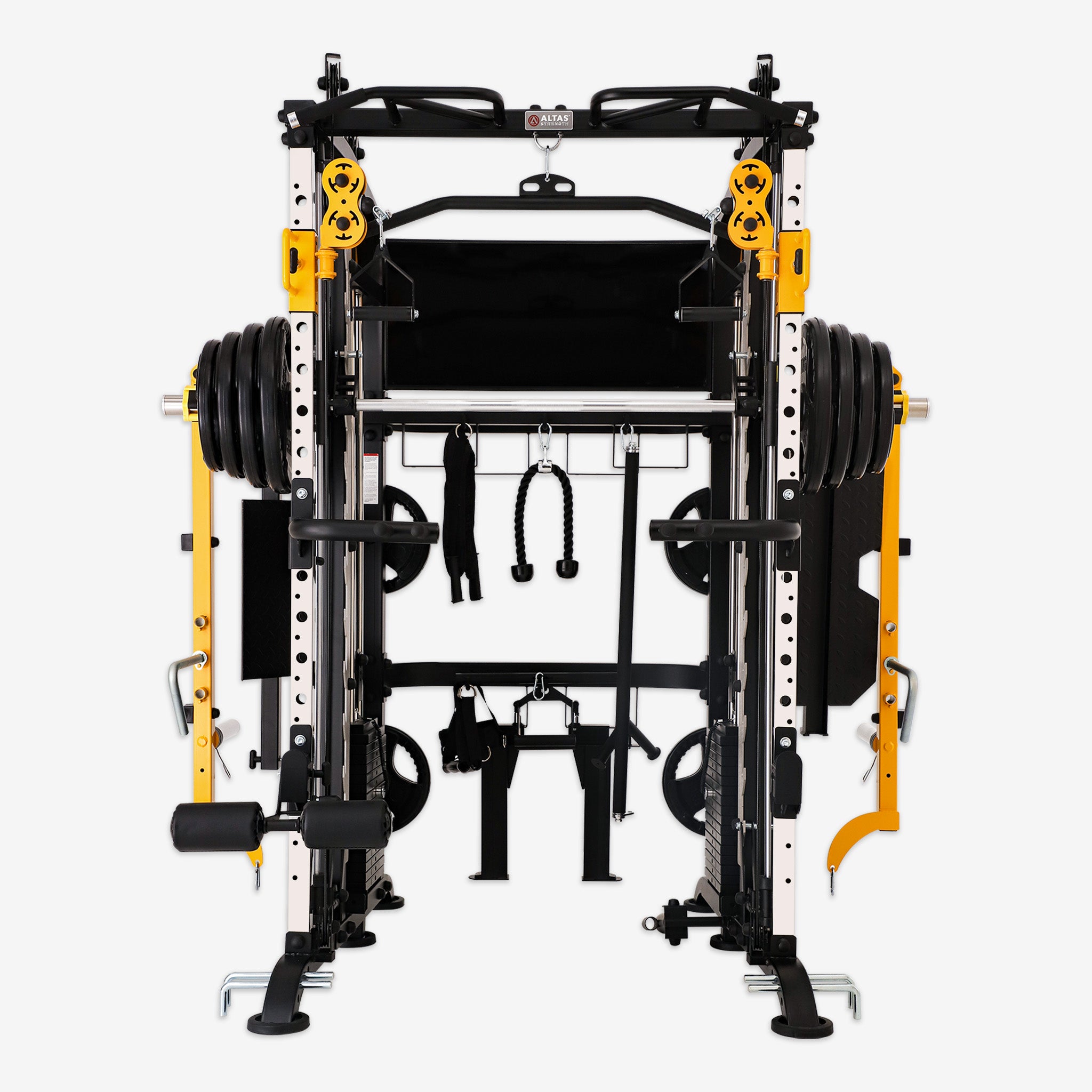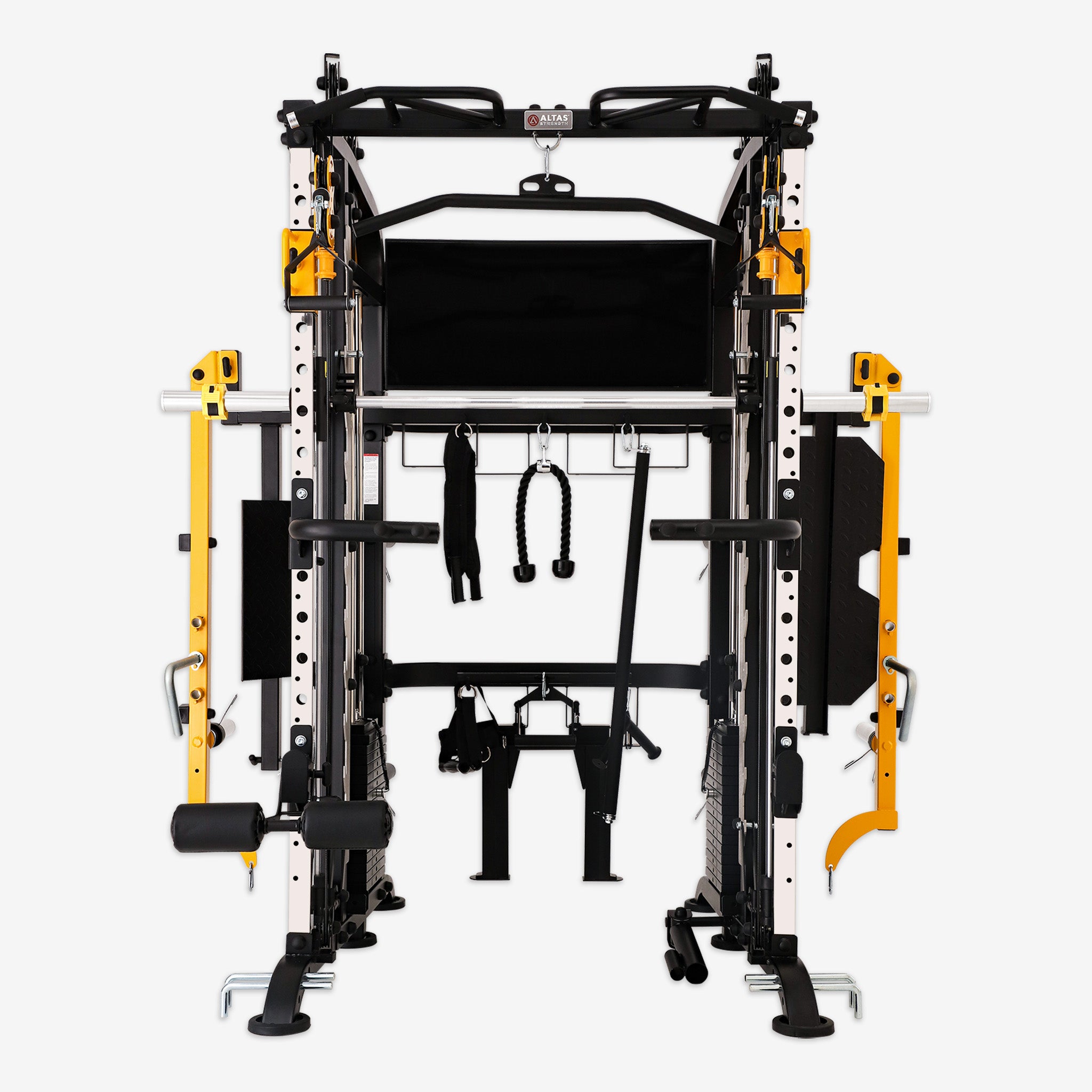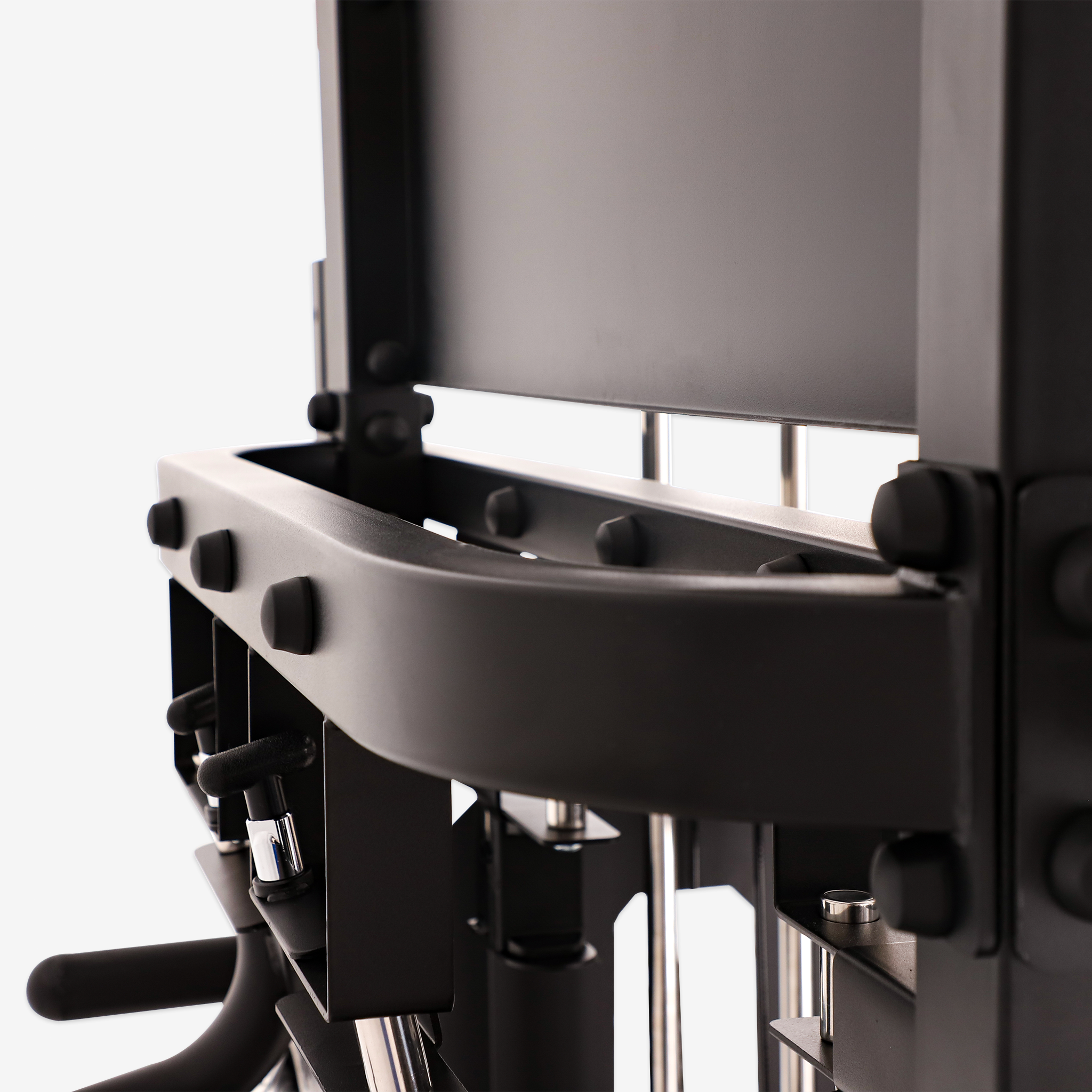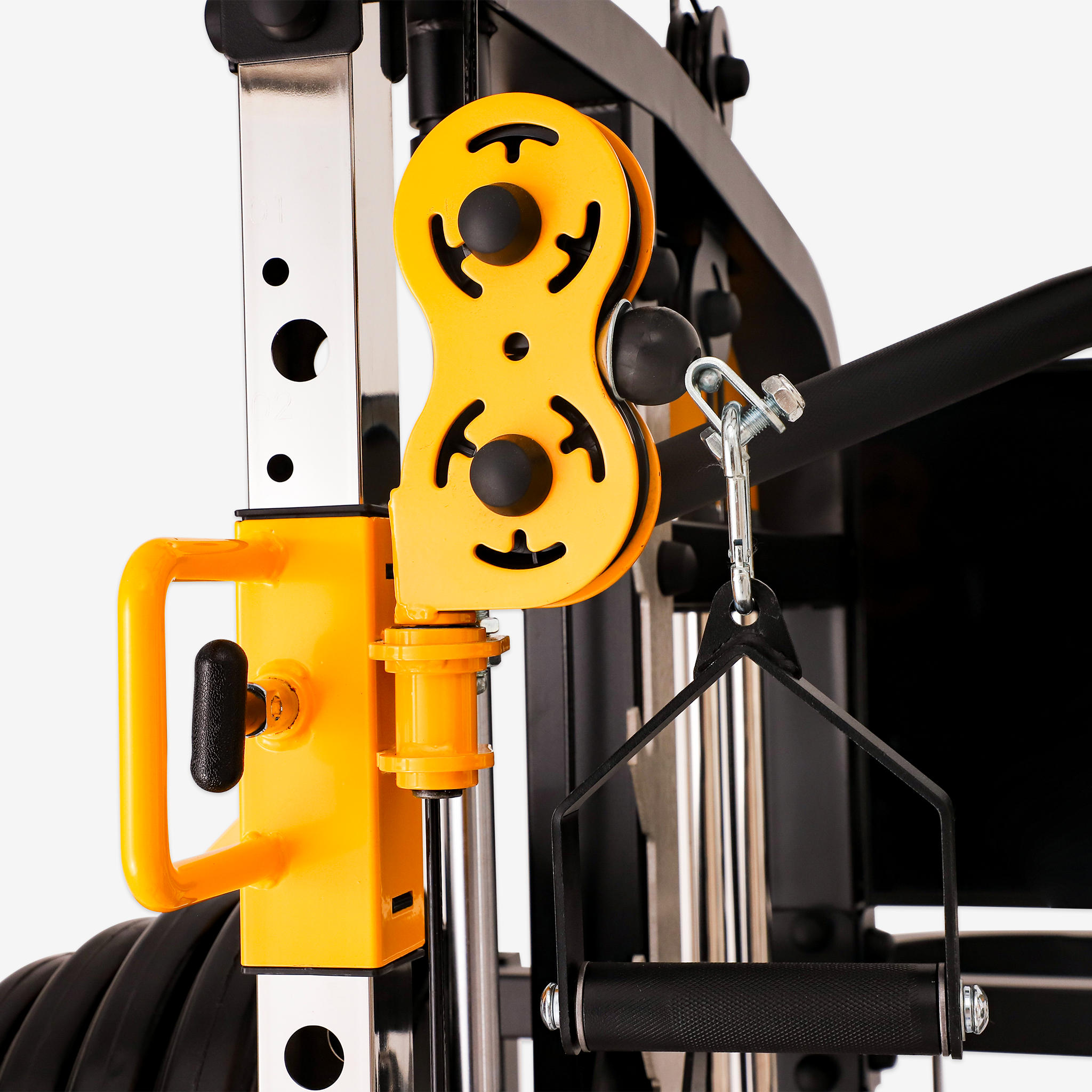
If you have ever stepped up to a Smith machine and wondered how much the bar weighs without plates, you are not alone. One of the most common assumptions is that every Smith machine bar weighs the same as a standard 45 lb Olympic barbell.
That assumption is usually incorrect.
A Smith machine bar can have a different effective starting resistance depending on the machine's design, counterbalance system, rail configuration, and manufacturer specifications.
As a general reference, Smith machine bars commonly have an effective starting resistance of approximately 6–45 lb (3–20 kg), although the exact value varies considerably by model. Many home and commercial Smith machines fall somewhere around 15–25 lb (6.8–11.3 kg) of effective resistance.
The most important rule is simple:
Always use the manufacturer's stated Smith machine bar weight or starting resistance when that specification is available.
How Much Does a Smith Machine Bar Weigh?
There is no universal Smith machine bar weight.
| Smith Machine Type | Typical Effective Starting Resistance |
|---|---|
| Counterbalanced home Smith machine | 6–20 lb (3–9 kg) |
| Non-counterbalanced home Smith machine | 15–25 lb (6.8–11.3 kg) |
| Non-counterbalanced commercial Smith machine | 20–25 lb (9–11.3 kg) |
| Heavy-duty specialty Smith machine | Up to approximately 33–45 lb (15–20 kg) |
These ranges are useful for understanding the market, but they should not be treated as a universal specification.
Two Smith machines can have bars with similar physical construction but produce different starting resistance because their mechanical systems are different.
Why Doesn't Every Smith Machine Bar Weigh 45 Pounds?
A standard Olympic barbell commonly weighs 45 lb (20 kg).
A Smith machine is different because its bar is attached to a guided mechanism. The bar travels along rails instead of moving freely through space.
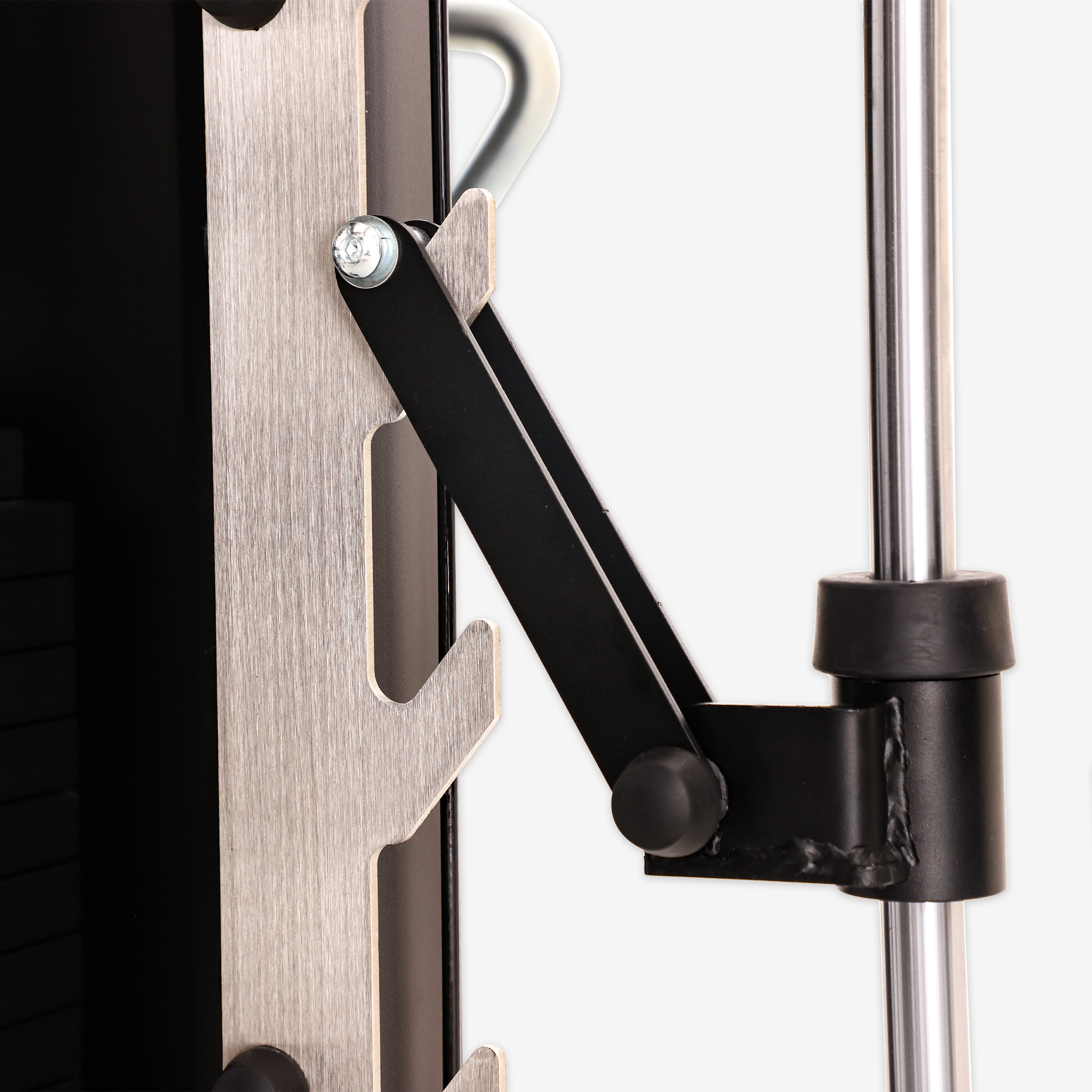
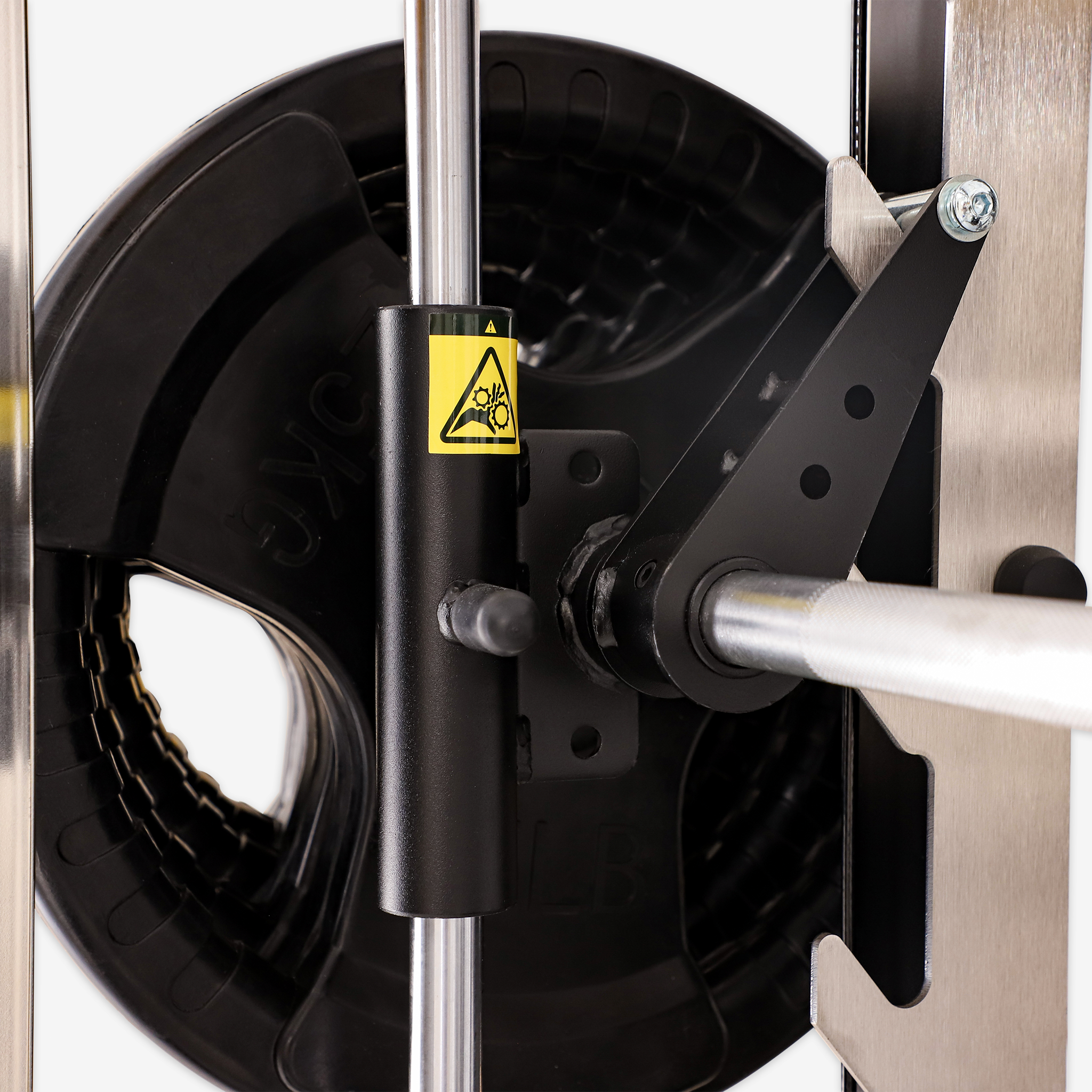
Some Smith machines also use counterbalance systems.
Counterbalancing can offset part of the bar's physical mass, reducing the resistance that the lifter actually feels when moving the unloaded bar.
This creates an important distinction:
Physical Bar Weight
This refers to the actual mass of the bar itself.
A counterbalance system does not make the steel bar physically lighter.
Effective Starting Resistance
This refers to how much resistance the lifter experiences when moving the unloaded Smith machine bar.
For training and workout logging, this is often the more useful number.
For example, a Smith machine could have a physically substantial bar but use counterbalancing to produce a much lower effective starting resistance.
Smith Machine Bar Weight vs. Effective Weight
This distinction is one of the most important concepts to understand when comparing Smith machines.
Imagine two machines:
Machine A:
Physical bar mass = higher
Counterbalance = substantial
Effective starting resistance = 10 lb
Machine B:
Physical bar mass = higher
Counterbalance = minimal
Effective starting resistance = 25 lb
Both machines may contain heavy bars, but the unloaded bars will feel very different.
This is why simply asking "How heavy is the Smith machine bar?" can produce an incomplete answer.
When comparing machines, ask:
"What is the effective starting resistance of the Smith machine bar?"
How to Calculate Weight on a Smith Machine
For a basic plate-loaded Smith machine, a practical training calculation is:
Effective Load = Effective Bar Resistance + Total Loaded Plates
For example:
-
Effective Smith bar resistance = 15 lb
-
Plates loaded = 180 lb
Effective training load = 195 lb
This provides a useful way to record your training consistently.
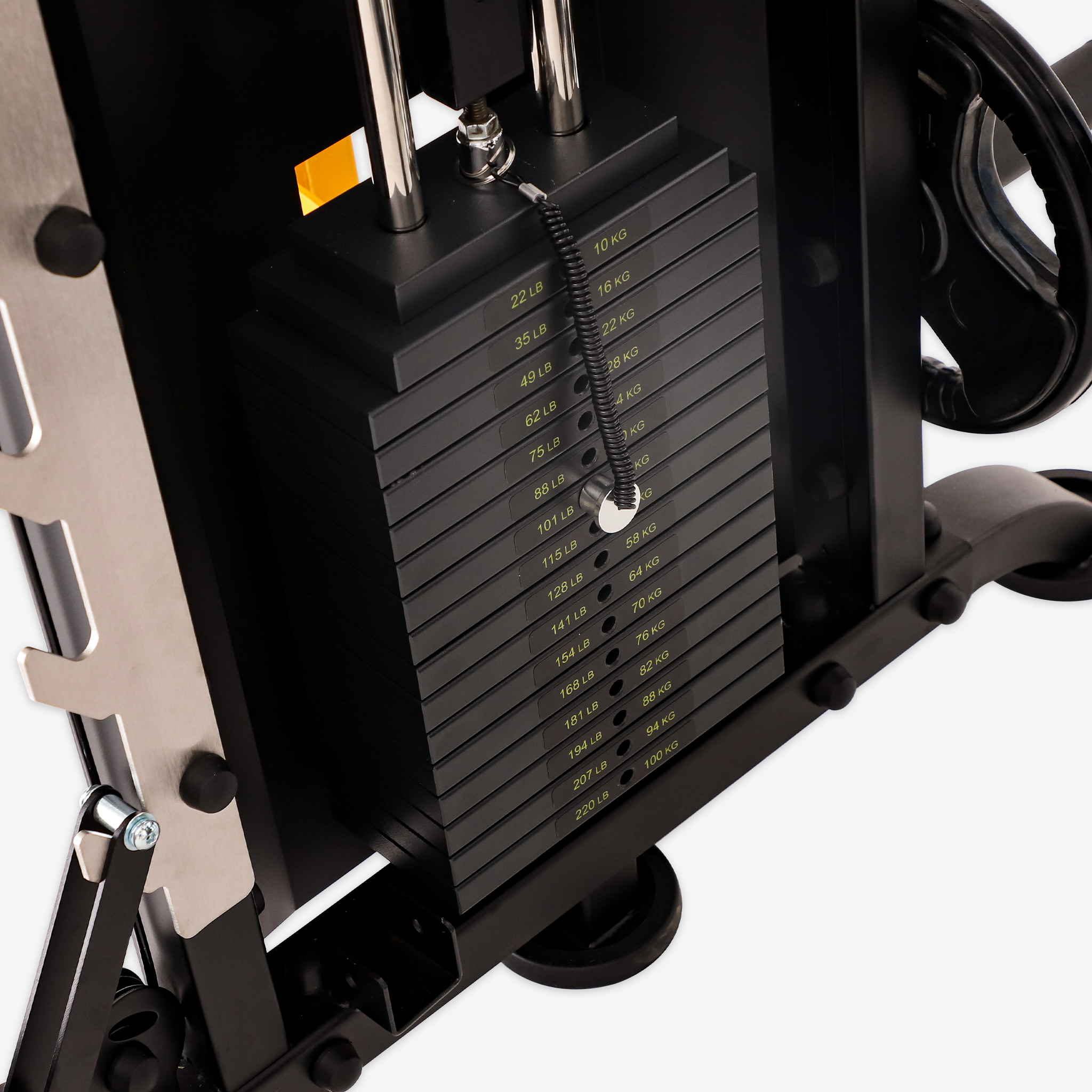
However, if the machine uses cables, weight stacks, or a specific pulley ratio, the resistance calculation can be different. In those cases, the manufacturer's specifications should take priority.
Does a Smith Machine Bar Weigh Less Because It Is on Rails?
Not necessarily.
The rails themselves do not determine the physical mass of the bar.
Instead, the guided system changes how the bar moves and, in some machines, counterbalancing changes the effective resistance.
This is why these two questions should be separated:
How much does the bar physically weigh?
versus
How much resistance does the unloaded bar provide?
For workout tracking, the second question is often more relevant.
Why Smith Machine Bar Weight Varies Between Brands
There is no single industry-wide Smith machine bar standard equivalent to the 45 lb Olympic barbell standard.
Manufacturers can use different:
-
Bar designs
-
Rail systems
-
Bearing systems
-
Counterbalance mechanisms
-
Cable configurations
-
Safety mechanisms
-
Machine geometries
As a result, the unloaded resistance can vary significantly between models.
This becomes especially noticeable when switching between gyms.
A lifter might use a Smith machine at one gym where the starting resistance is 15 lb and then move to another machine where the starting resistance is 25 lb.
Even with the same plates loaded, the two workouts may not feel identical.
Why Counterbalanced Smith Machines Feel So Light
Counterbalancing is designed to offset part of the bar's weight.
This can produce a very low starting resistance, which can be useful for:
-
Beginners
-
Technique practice
-
Controlled resistance training
-
Users who prefer lower starting loads
-
Gradual progression
However, a heavily counterbalanced bar can also feel very different from a free Olympic barbell.
The bar may feel unusually light when unloaded, and the movement feedback can be different from a conventional free-weight squat or press.
For this reason, the effective bar weight should be treated as a machine-specific characteristic rather than compared directly with a 45 lb Olympic bar.
Why You Shouldn't Assume a Smith Machine Bar Is 45 lb
The 45 lb assumption can create problems when tracking progress.
For example, suppose a lifter records:
45 lb bar + 180 lb plates = 225 lb
If the actual effective starting resistance of the Smith machine is 15 lb, the recorded training load would overstate the machine's effective resistance by 30 lb.
That does not necessarily mean the workout was ineffective. It simply means the training log is using the wrong baseline.
For consistent progression, it is better to record the actual machine's stated starting resistance.
Can You Compare Smith Machine Weight Directly With Barbell Weight?
Not perfectly.
A Smith machine and a free barbell differ mechanically.
A free barbell requires the lifter to control the bar's movement in multiple directions. A Smith machine constrains the bar to its guided track.
Because the movement mechanics are different, a lifter may be able to use more total weight on a Smith machine than with a free barbell for the same exercise.
Therefore:
Smith machine weight should not automatically be treated as equivalent to free-barbell weight.
Instead, use Smith machine numbers primarily to measure progress on the same machine and exercise.
Does the Smith Machine Rail Angle Change the Weight?
The rail configuration can influence how the machine feels, but users generally do not need to manually calculate a mathematical conversion for everyday workout logging.
Some Smith machines use vertical rails, while others use angled tracks.
Rather than trying to convert every Smith machine into a theoretical free-weight equivalent, the more practical approach is to use the manufacturer's stated starting resistance and then track your performance consistently on that machine.
This avoids creating a false sense of precision when comparing fundamentally different pieces of equipment.
What Happens When You Switch Smith Machines?
Your numbers may change even if your actual strength has not.
For example:
Smith Machine A
15 lb effective bar + 180 lb plates = 195 lb
Smith Machine B
25 lb effective bar + 180 lb plates = 205 lb
The second machine has 10 lb more effective starting resistance before considering other mechanical differences.
This is why Smith machine training logs are most useful when they include:
-
Machine/model
-
Exercise
-
Effective starting resistance
-
Plate weight or selected resistance
-
Repetitions
-
Sets
This creates a more meaningful record of your progression.
What Should You Look for When Buying a Smith Machine?
If Smith machine bar weight is important to your buying decision, do not rely only on phrases such as "Olympic bar" or "heavy-duty bar."
Look for a clearly stated:
1. Effective Starting Resistance
The manufacturer should clearly explain how much resistance the unloaded bar provides.
2. Counterbalance Information
If the machine is counterbalanced, understand how the counterbalance affects starting resistance.
3. Safety System
For home users who train alone, adjustable safety catches and secure locking mechanisms are important equipment considerations.
4. Smooth Guided Travel
A well-engineered rail and bearing system should provide consistent bar movement throughout the usable range.
5. Weight Capacity
The bar's starting resistance is only one specification. The machine's overall rated load capacity is also important when evaluating a Smith machine for long-term use.
6. Plate Compatibility
If the machine is plate-loaded, verify whether it is designed for standard Olympic plates and how much loading capacity is available.
Smith Machine vs. Power Rack and Olympic Barbell
Buyers often compare a Smith machine with a conventional power rack and free Olympic barbell.
| Feature | Smith Machine | Power Rack + Olympic Bar |
|---|---|---|
| Bar path | Guided | Free |
| Starting bar resistance | Machine-specific | Usually standardized bar weight |
| Stabilization demand | Lower | Higher |
| Solo training | Safety catches + guided bar | Requires proper rack/safety setup |
| Movement freedom | Limited by track | High |
| Sport-specific barbell practice | More limited | Better |
| Full-body versatility | High on multifunction models | High with accessories |
| Learning curve | Generally lower | Generally higher |
The better option depends on the training objective.
A Smith machine is attractive for controlled, repeatable resistance training and convenient home use. A power rack and free barbell are better suited to lifters who specifically want unrestricted barbell mechanics.
Common Smith Machine Bar Weight Mistakes
Mistake 1: Assuming Every Smith Bar Is 45 lb
There is no universal 45 lb Smith machine standard.
Mistake 2: Confusing Physical Mass With Effective Resistance
A counterbalanced bar can have a higher physical mass than the resistance you actually feel.
Mistake 3: Comparing Smith Numbers Directly With Free-Bar Numbers
The machines use different movement mechanics, so the same listed load does not necessarily represent the same training demand.
Mistake 4: Ignoring Machine Differences
Changing gyms or Smith machine models can change the starting resistance and overall feel.
Mistake 5: Using Generic Internet Estimates Instead of Manufacturer Specifications
A range can provide context, but the manufacturer's specification for the exact model should be the primary reference.
Who Benefits From a Smith Machine?
Smith machines can be particularly useful for:
-
Home gym users
-
People who train without a partner
-
Beginners learning resistance exercises
-
Lifters who prefer guided movement
-
Hypertrophy-focused training
-
Users who want multiple exercises from one machine
-
People who value consistent and repeatable resistance
They are not necessarily the ideal primary tool for every athlete.
Lifters training specifically for powerlifting competition, Olympic weightlifting, or unrestricted barbell stabilization may still need dedicated free-weight training.
Final Verdict: How Much Does a Smith Machine Barbell Weigh?
A Smith machine barbell does not have one universal weight.
Depending on the design, a Smith machine's effective starting resistance can range from roughly 6 to 45 lb (3–20 kg), with many home and commercial models falling around 15–25 lb (6.8–11.3 kg).
The most important distinction is between physical bar weight and effective starting resistance. Counterbalanced Smith machines can make a relatively heavy physical bar feel much lighter without changing the bar's actual mass.
For accurate workout tracking, use the manufacturer's stated effective bar weight or starting resistance whenever available.
And when comparing your Smith machine performance with free-barbell numbers, remember that the two exercises use different mechanical systems. The most reliable measure of progress is to consistently track your performance on the same machine, same exercise, and same resistance system.
Quick answer:
How much does a Smith machine bar weigh? Usually somewhere around 6–45 lb of effective starting resistance, but there is no universal standard. Many machines are approximately 15–25 lb. Always check the exact model's manufacturer specification.