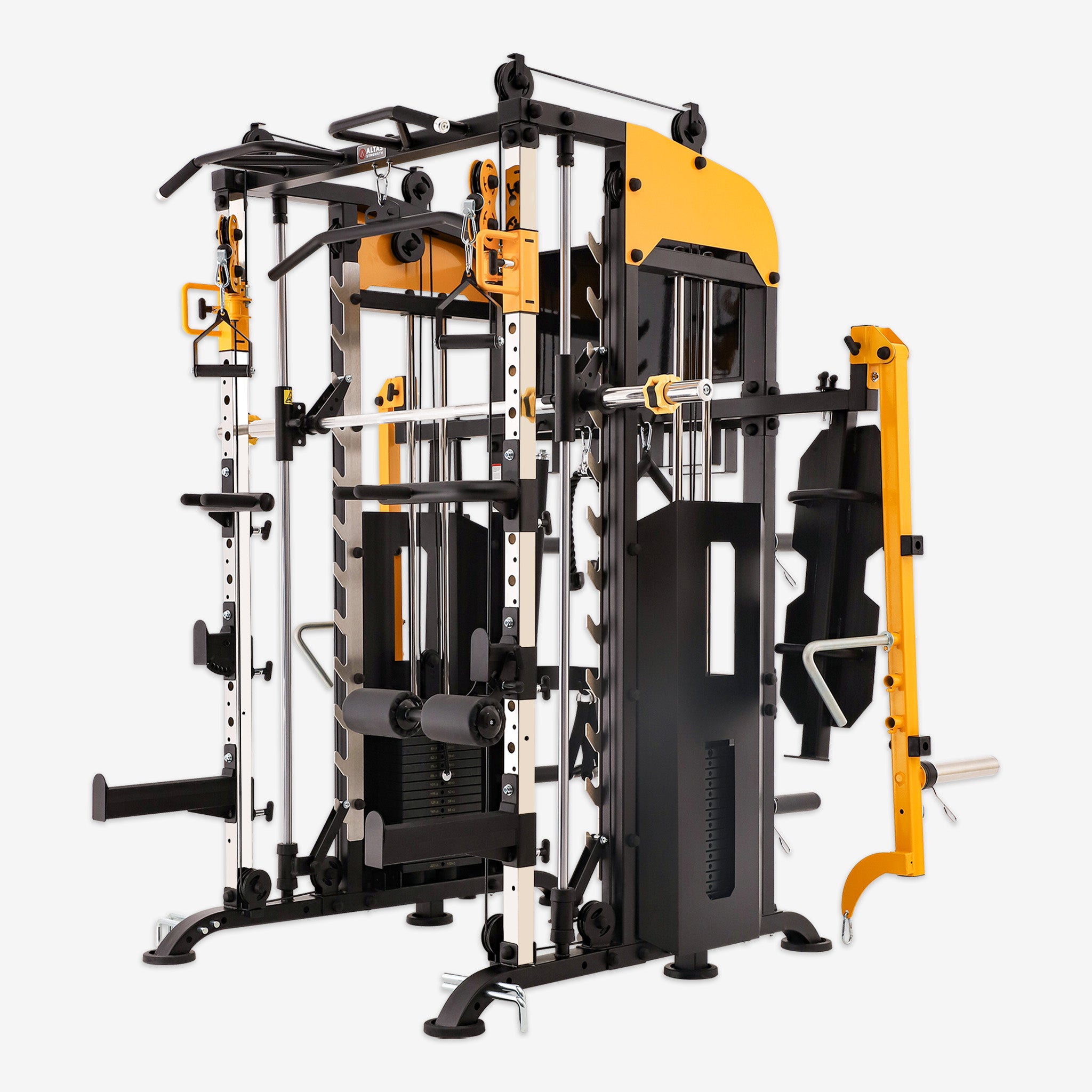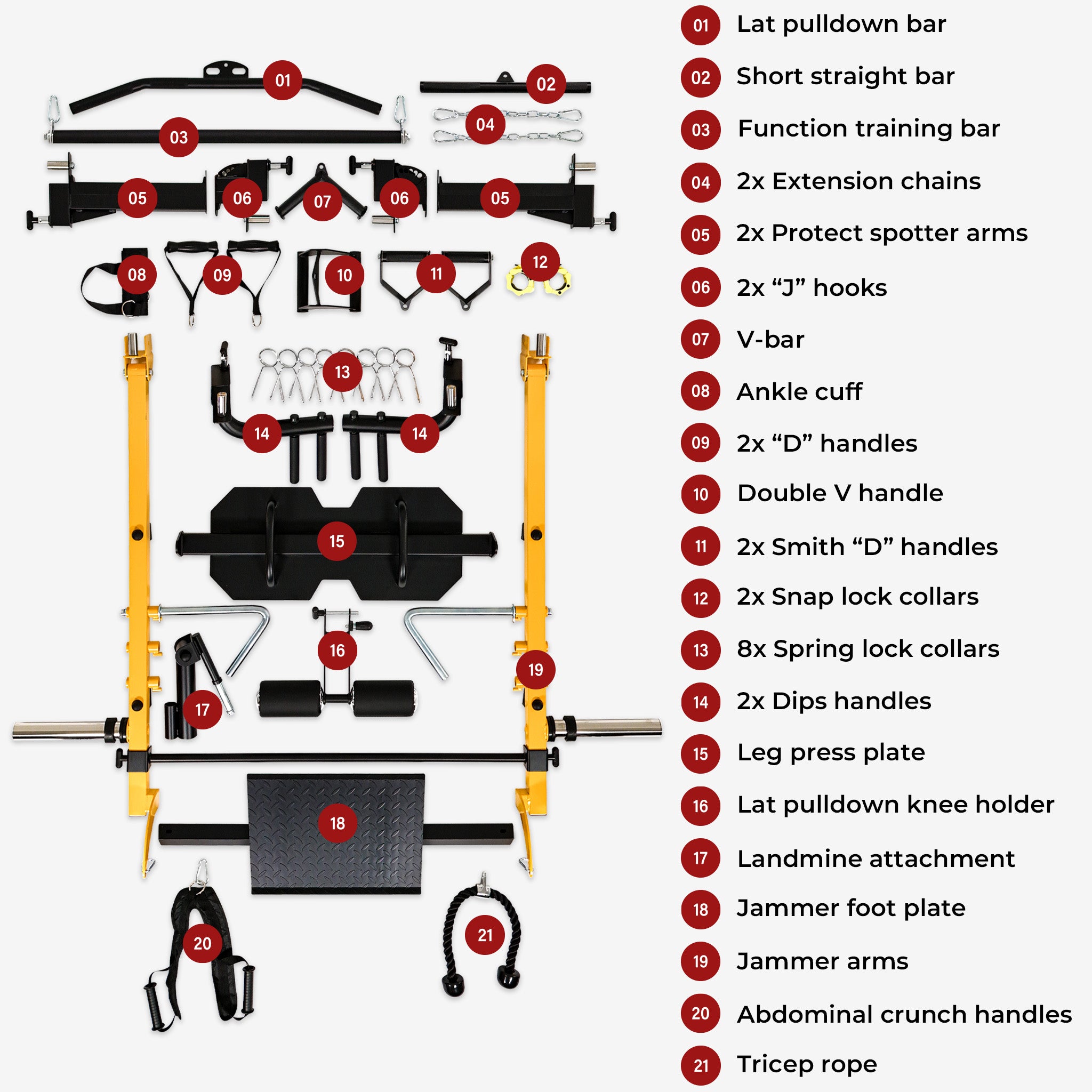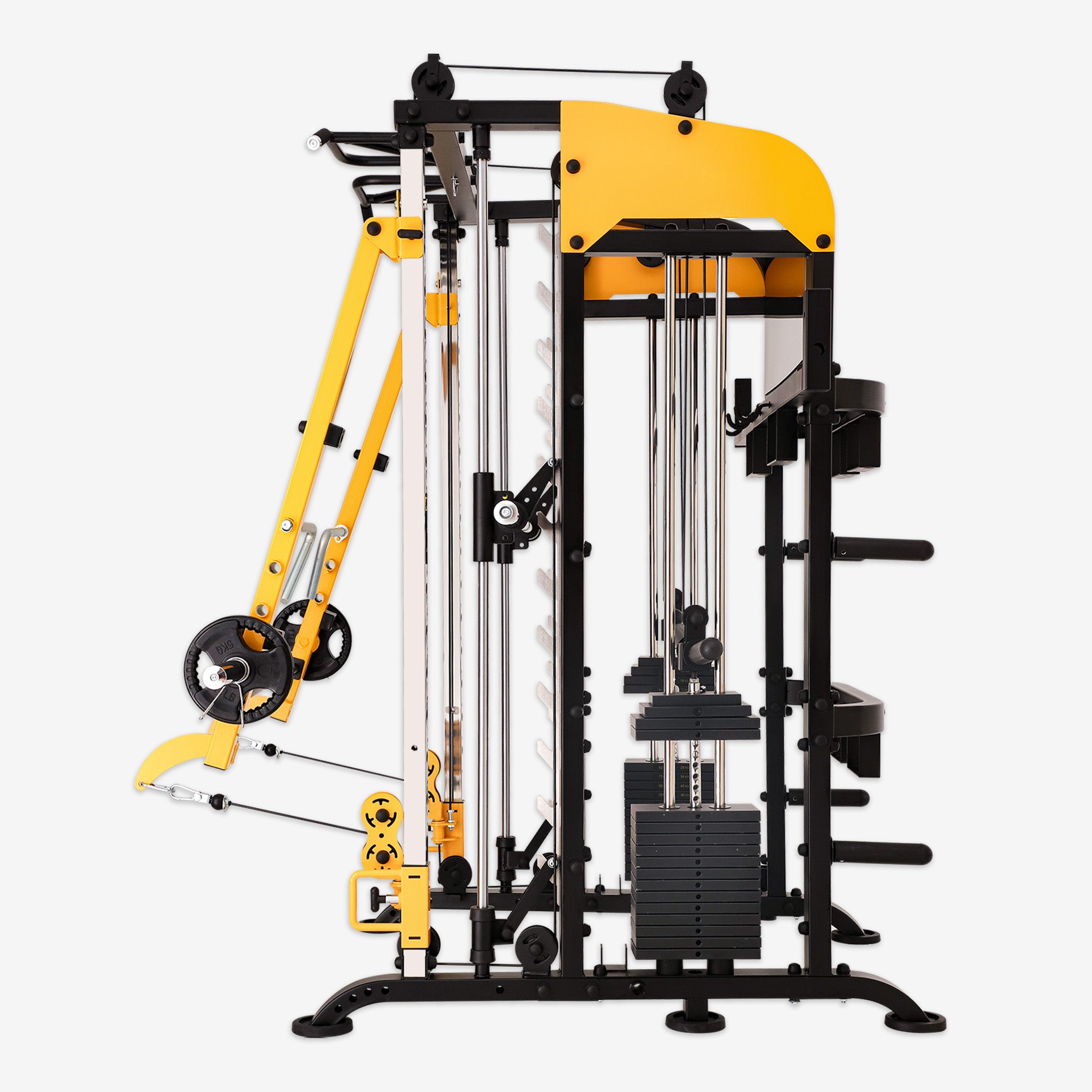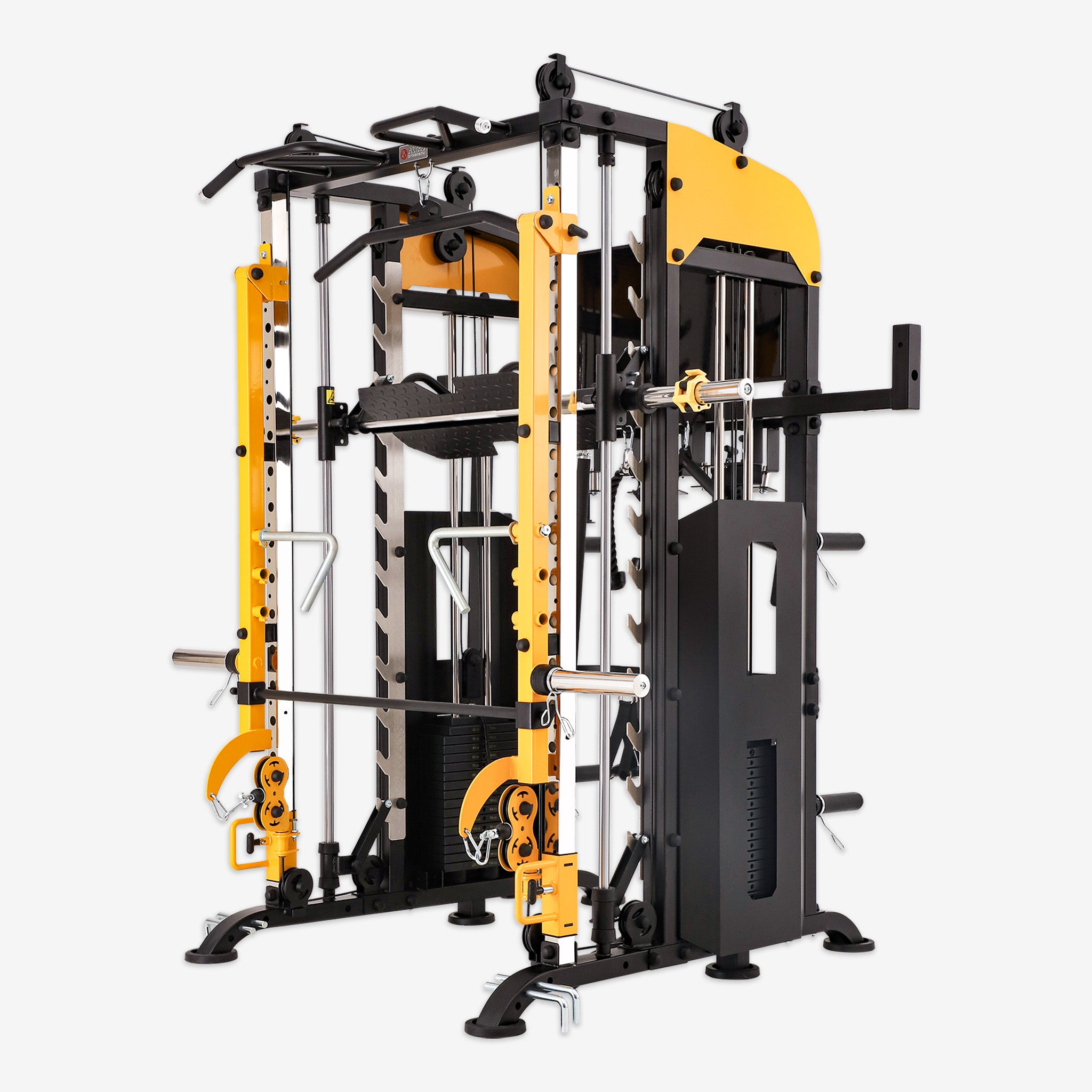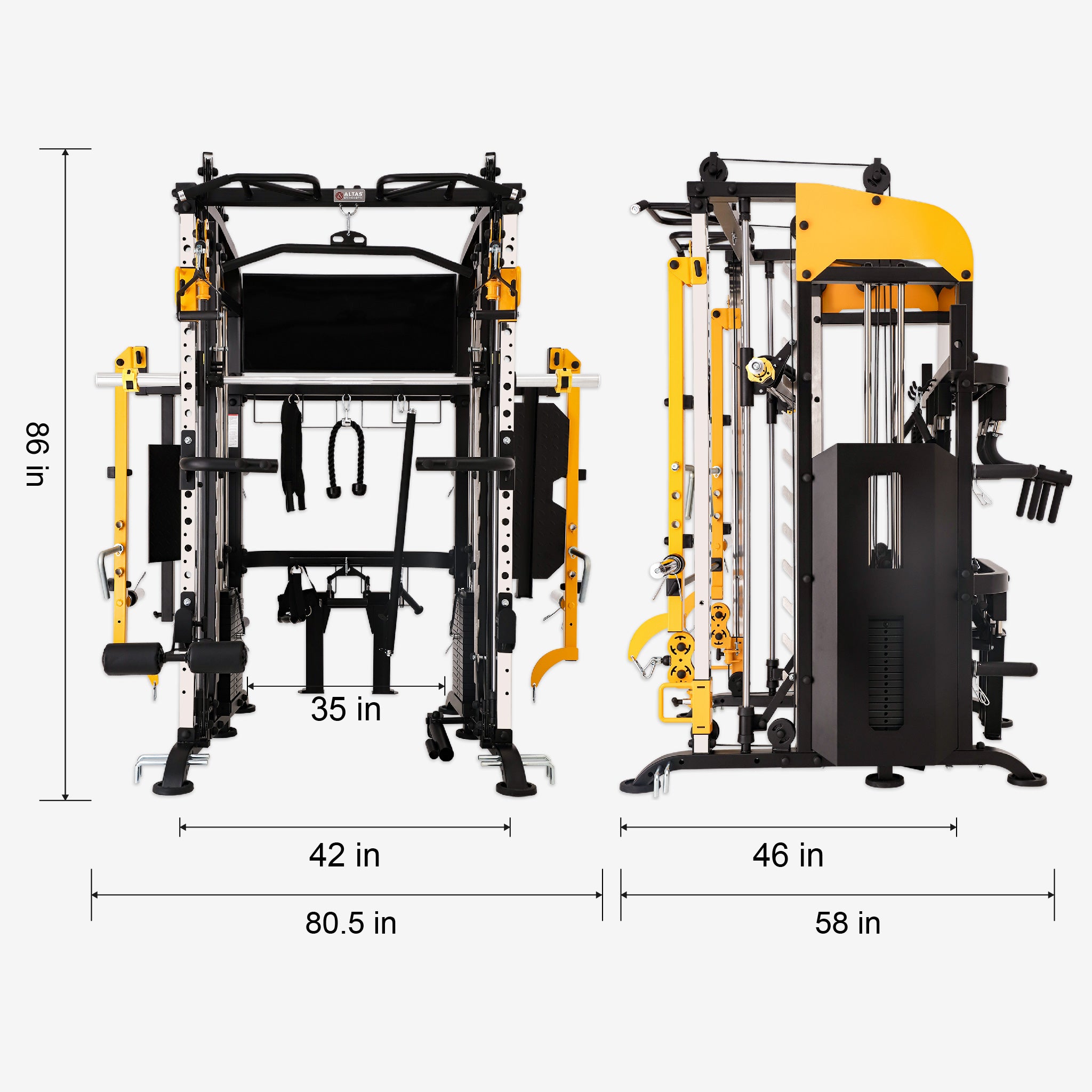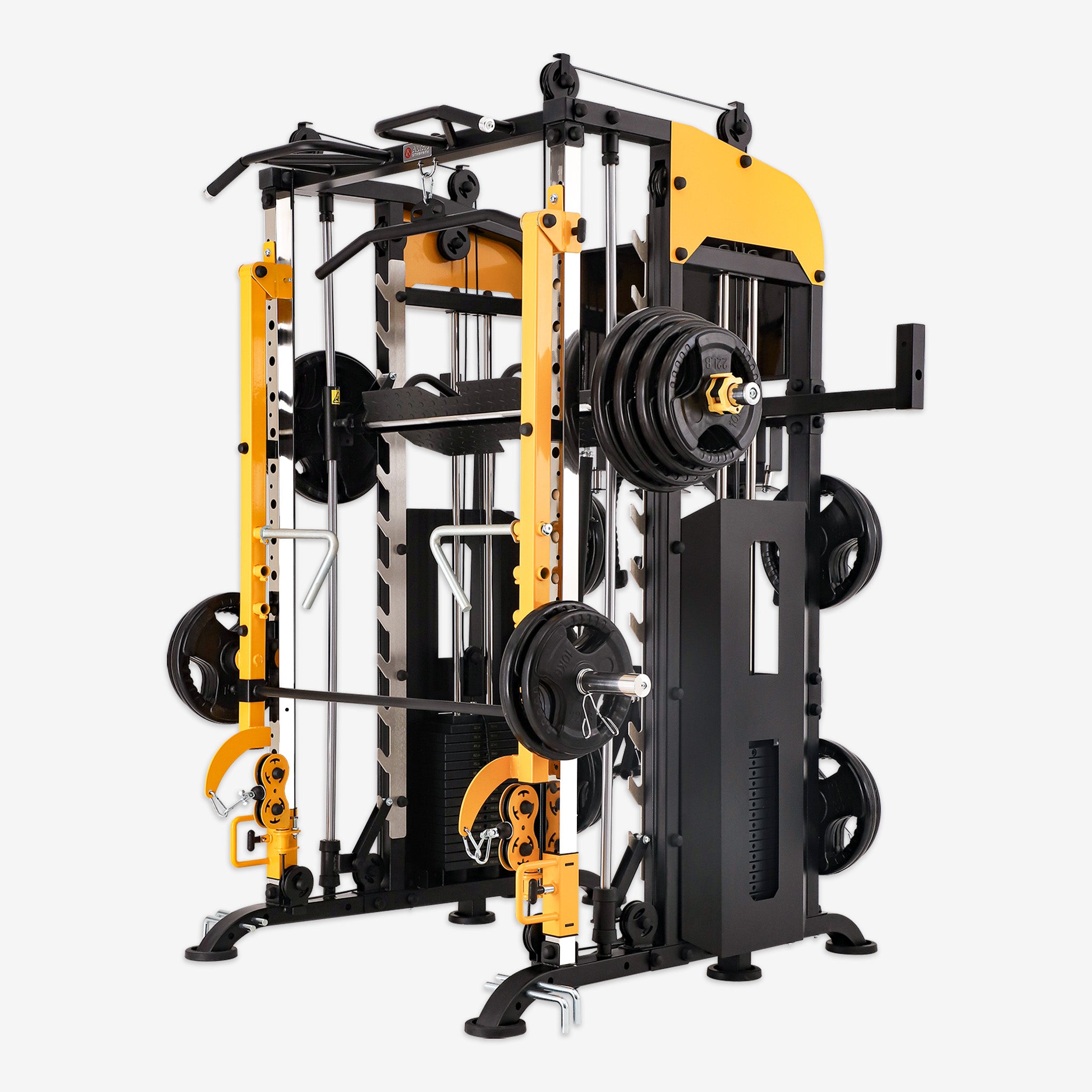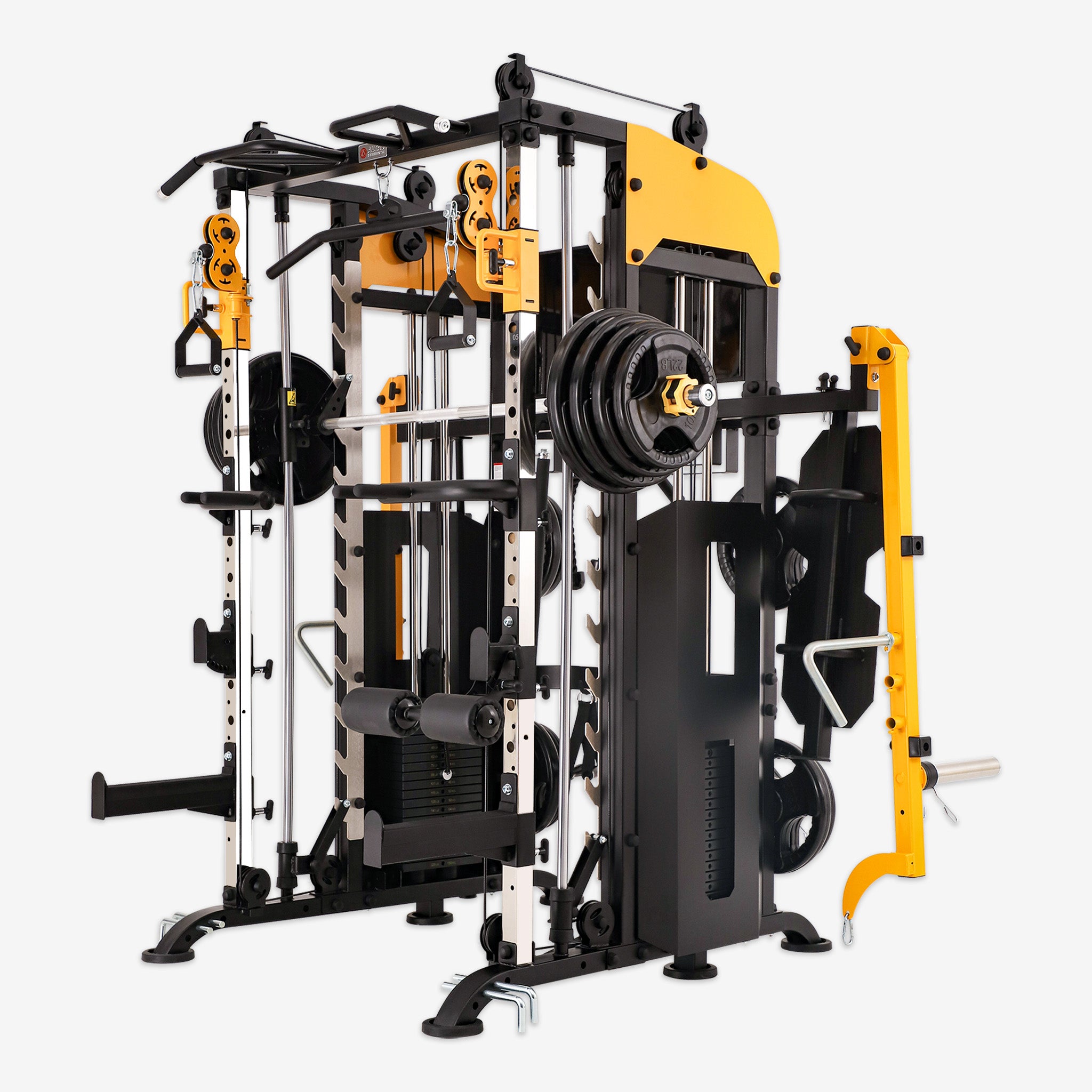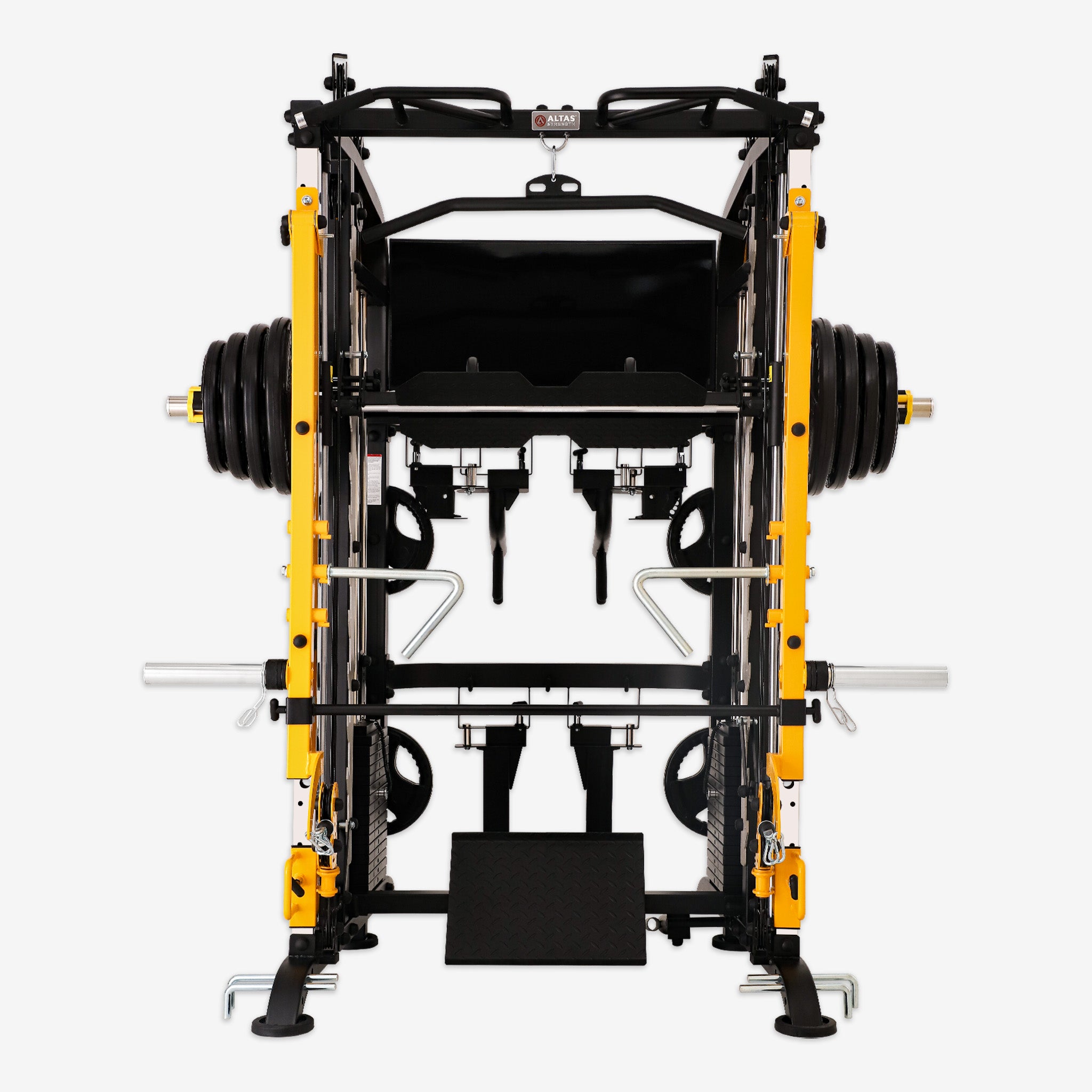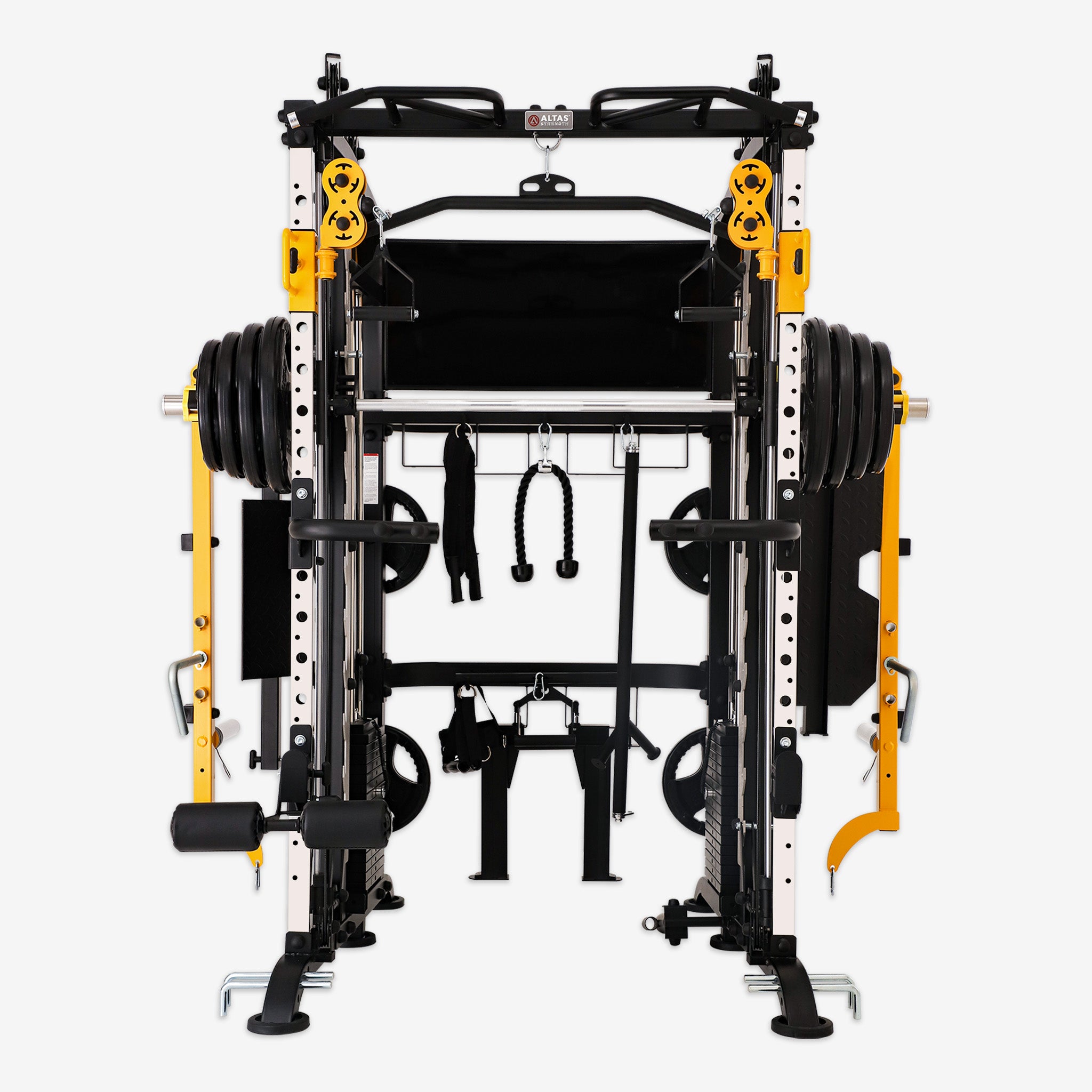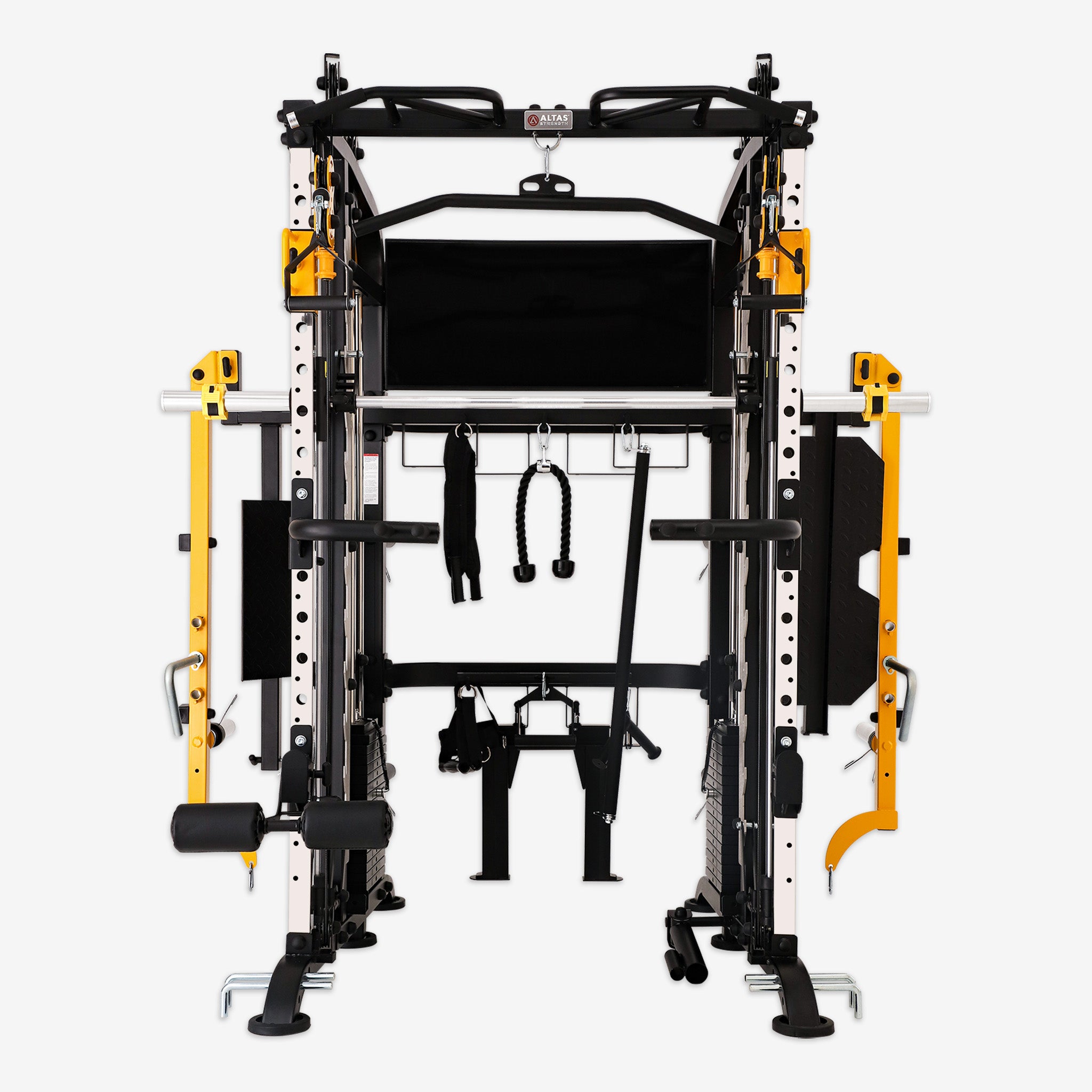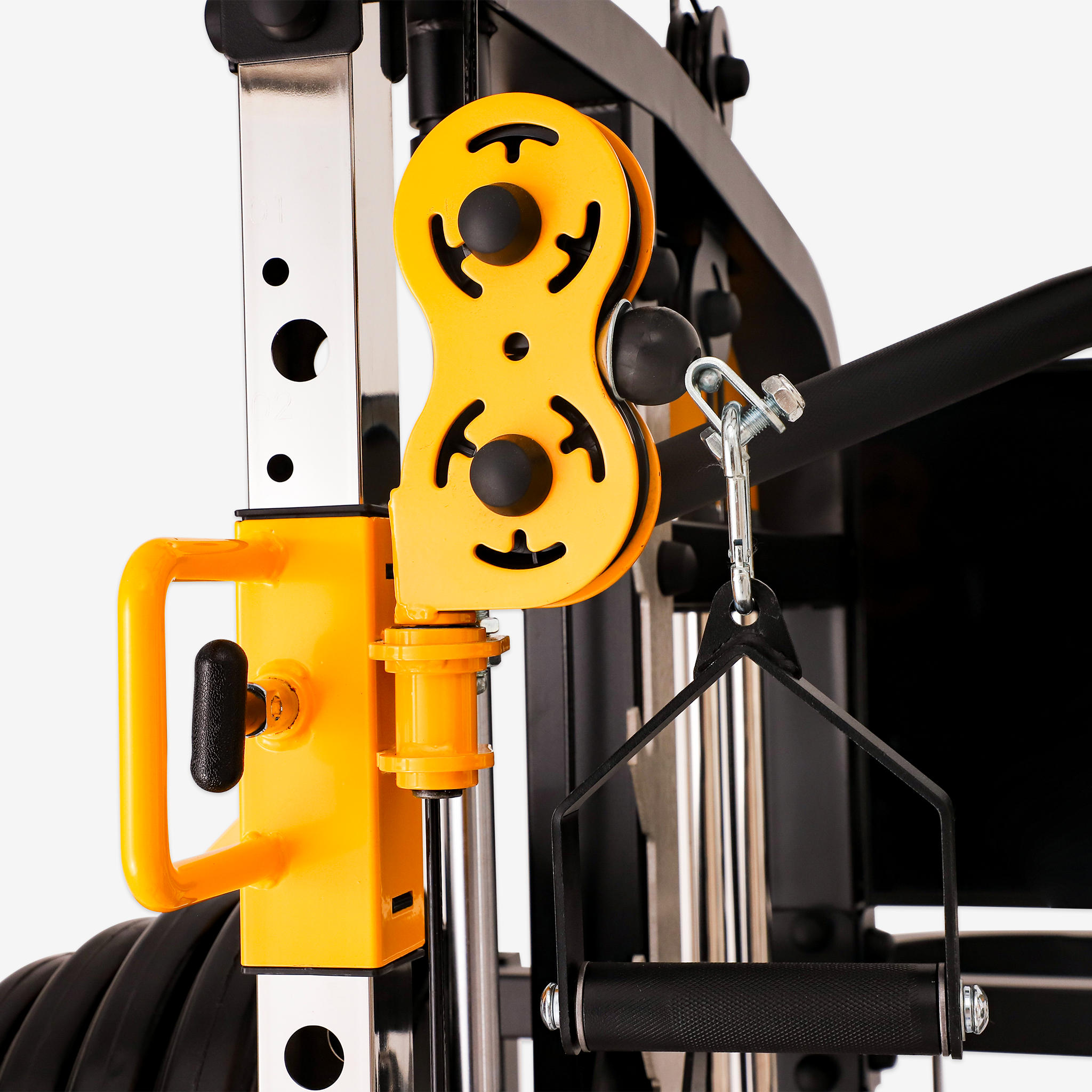
When shopping for home gym equipment, one of the simplest questions can also be one of the most important:
How much does the bar weigh?
The answer depends on what type of bar you are using.
A standard standalone Olympic barbell has a very different starting weight from an integrated Smith machine bar. Cable machine bars and specialty bars can also have their own specifications.
Understanding the difference matters because the bar itself contributes to your total training load.
Whether you are building a garage gym, comparing a Smith machine, or selecting a multi-functional home gym, knowing the bar's starting weight helps you understand how much resistance you are actually using.
How Much Does a Bar Weigh?
There is no single answer because different types of bars have different designs.
For a standard full-size Olympic barbell, 45 lb (20 kg) is a common specification.
However, an integrated Smith machine bar is not necessarily 45 lb.
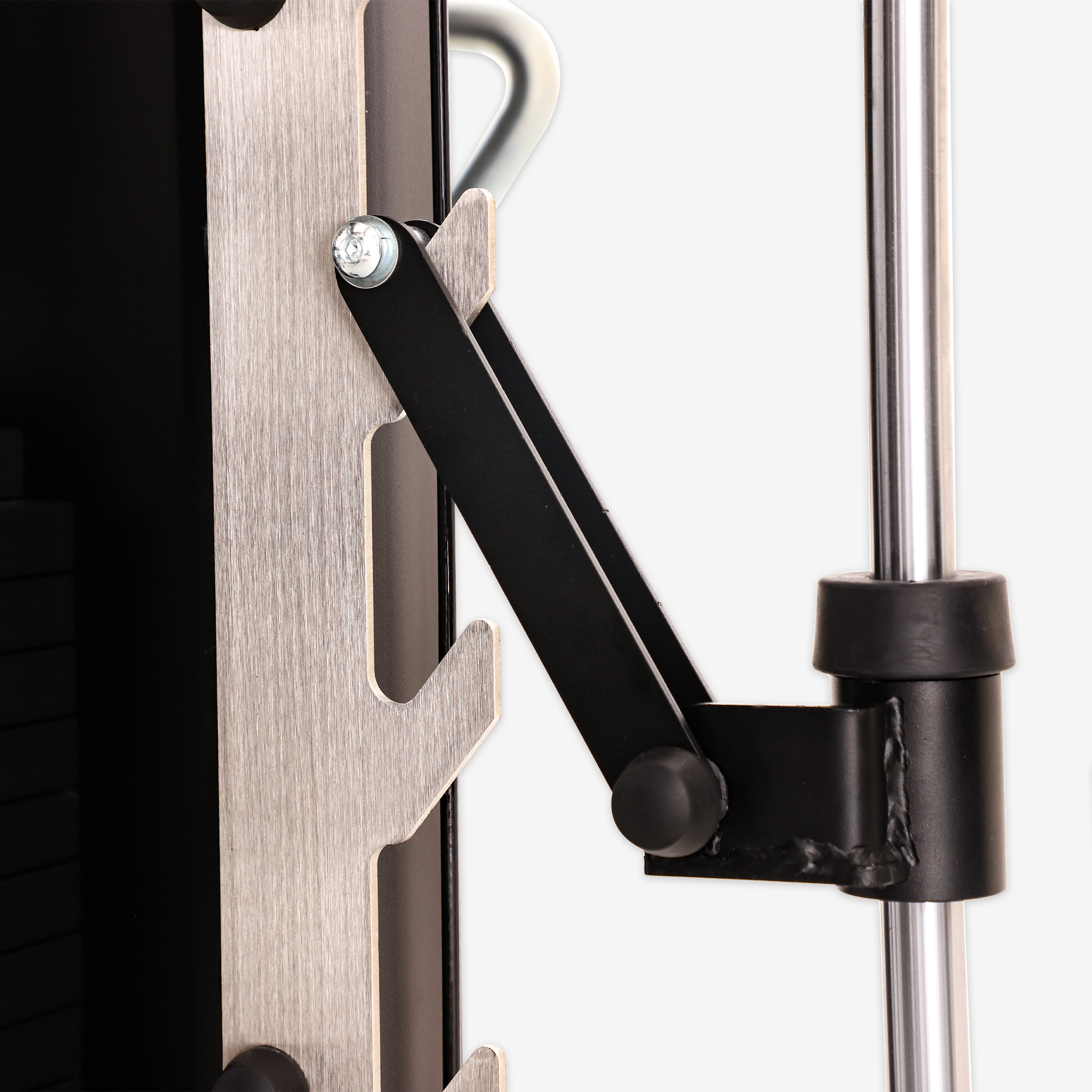
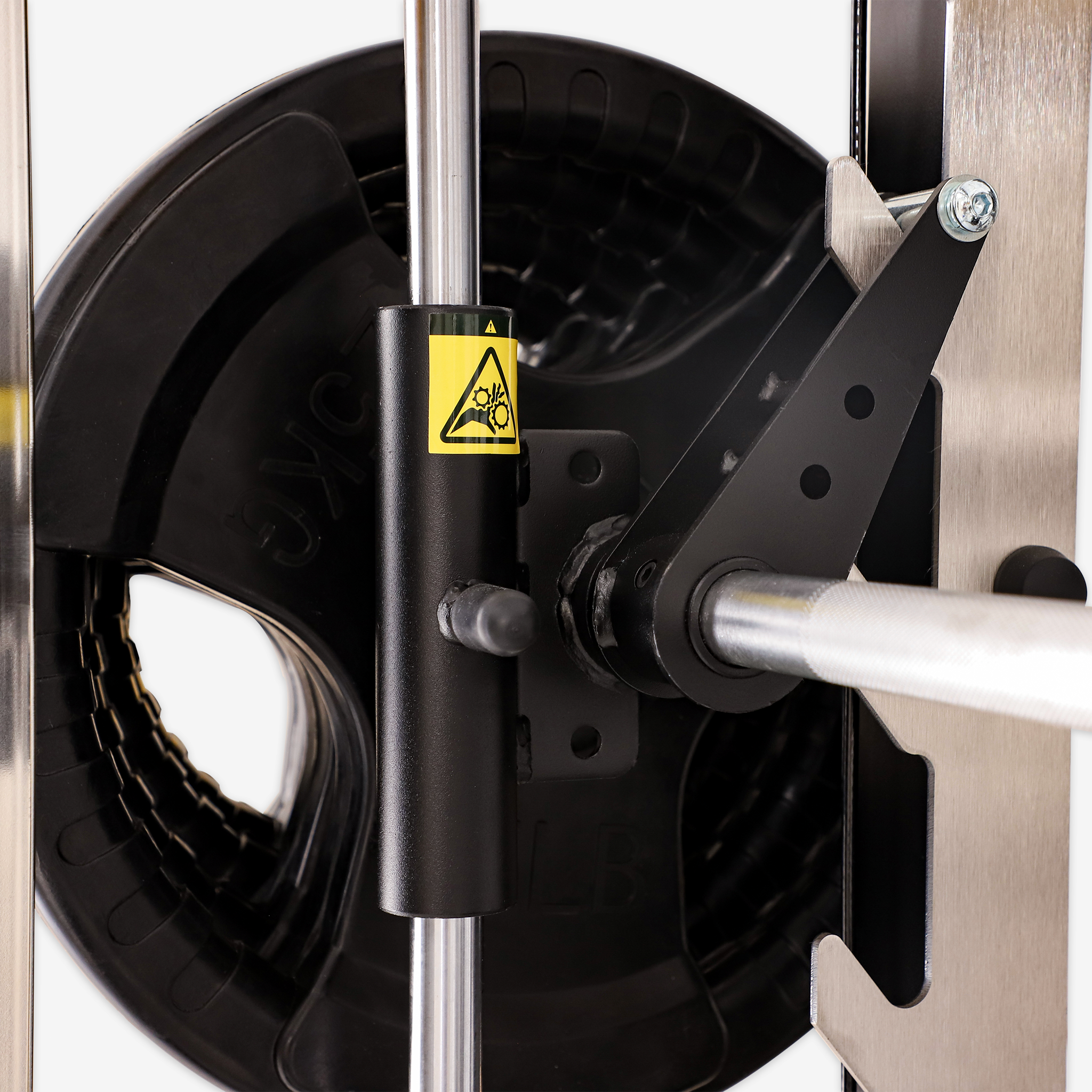
Smith machine bars are designed as part of the machine and may be counterbalanced or otherwise configured to provide a different starting resistance.
That means you should not automatically assume:
Smith machine bar = 45 lb
Instead, check the manufacturer's stated bar weight or starting resistance for the specific machine.
Bar Weight vs Effective Starting Resistance
One of the most important distinctions is the difference between the physical weight of the bar and the effective resistance you feel when starting an exercise.
With a conventional free barbell, the relationship is relatively straightforward:
Total loaded weight = bar weight + weight of the plates
For example, if a bar weighs 45 lb and you load 90 lb of plates:
45 lb + 90 lb = 135 lb total loaded weight
Smith machines can be different.
A Smith machine may use a counterbalance system that reduces the effective starting resistance of the bar.
Therefore, a machine can contain a physically substantial bar while providing a lower effective starting resistance.
This is one reason why buyers should look for the manufacturer's stated specification instead of assuming every Smith machine uses a 45 lb starting bar.
Standard Olympic Barbell Weight
A standard full-size Olympic barbell is commonly specified as:
45 lb / 20 kg
This type of bar is commonly used for exercises such as:
-
Back squats
-
Bench press
-
Deadlifts
-
Overhead press
-
Barbell rows
The advantage of a standalone barbell is that the bar can be used independently with a rack, bench, and weight plates.
For buyers building a traditional garage gym, the barbell's weight becomes part of the total load calculation for every exercise.
Smith Machine Bar Weight
A Smith machine bar should be treated differently from a standalone Olympic barbell.
The bar is integrated into the machine's guided movement system.
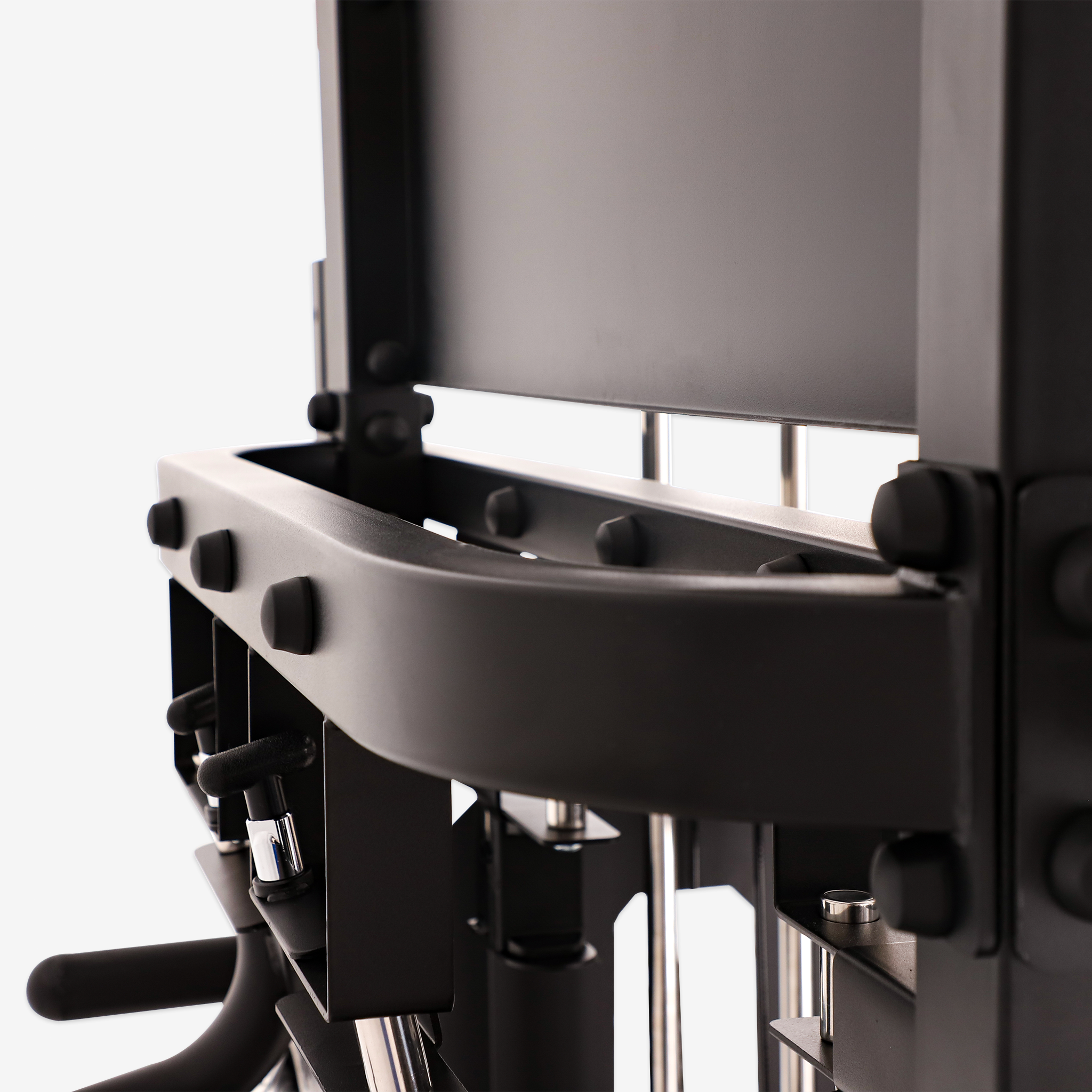
Depending on the machine design, the starting resistance may be affected by:
-
Counterbalancing
-
Bar construction
-
Guide system
-
Machine geometry
-
Manufacturer specifications
As a result, there is no universal Smith machine bar weight that applies to every model.
For example, two Smith machines may both use Olympic-sized plate sleeves but have different effective starting resistances.
This is why comparing only the plate capacity is not enough when evaluating a Smith machine.
Why Does Smith Machine Bar Weight Matter?
The starting resistance affects how an exercise feels before any additional plates are loaded.
Consider two machines:
Machine A: 15 lb effective starting resistance
Machine B: 25 lb effective starting resistance
With the same 100 lb of loaded plates, the effective load would be different.
Machine A:
15 + 100 = 115 lb
Machine B:
25 + 100 = 125 lb
The example demonstrates why the bar's starting resistance should be included when comparing training loads.
For consistent progress tracking, it is useful to record the machine and its stated starting resistance along with the plates used.
How to Calculate Your Total Barbell Load
For a conventional free barbell, the calculation is straightforward:
Total Load = Bar Weight + Total Plate Weight
For example:
-
Bar = 45 lb
-
Left side plates = 45 lb
-
Right side plates = 45 lb
Total:
45 + 45 + 45 = 135 lb
The same basic concept applies to a machine when the manufacturer provides an effective starting resistance.
Effective Load = Effective Starting Resistance + Loaded Plates
The important point is to use the appropriate starting-resistance specification for the equipment you are using.
Why Some Home Gym Buyers Get Confused
Bar weight can be confusing because manufacturers do not always describe equipment in the same way.
Physical Bar Weight
This describes the actual mass of the bar.
Effective Starting Resistance
This describes the resistance experienced at the beginning of the movement.
Plate Capacity
This describes how much additional weight the machine or bar is designed to accommodate.
Machine Weight
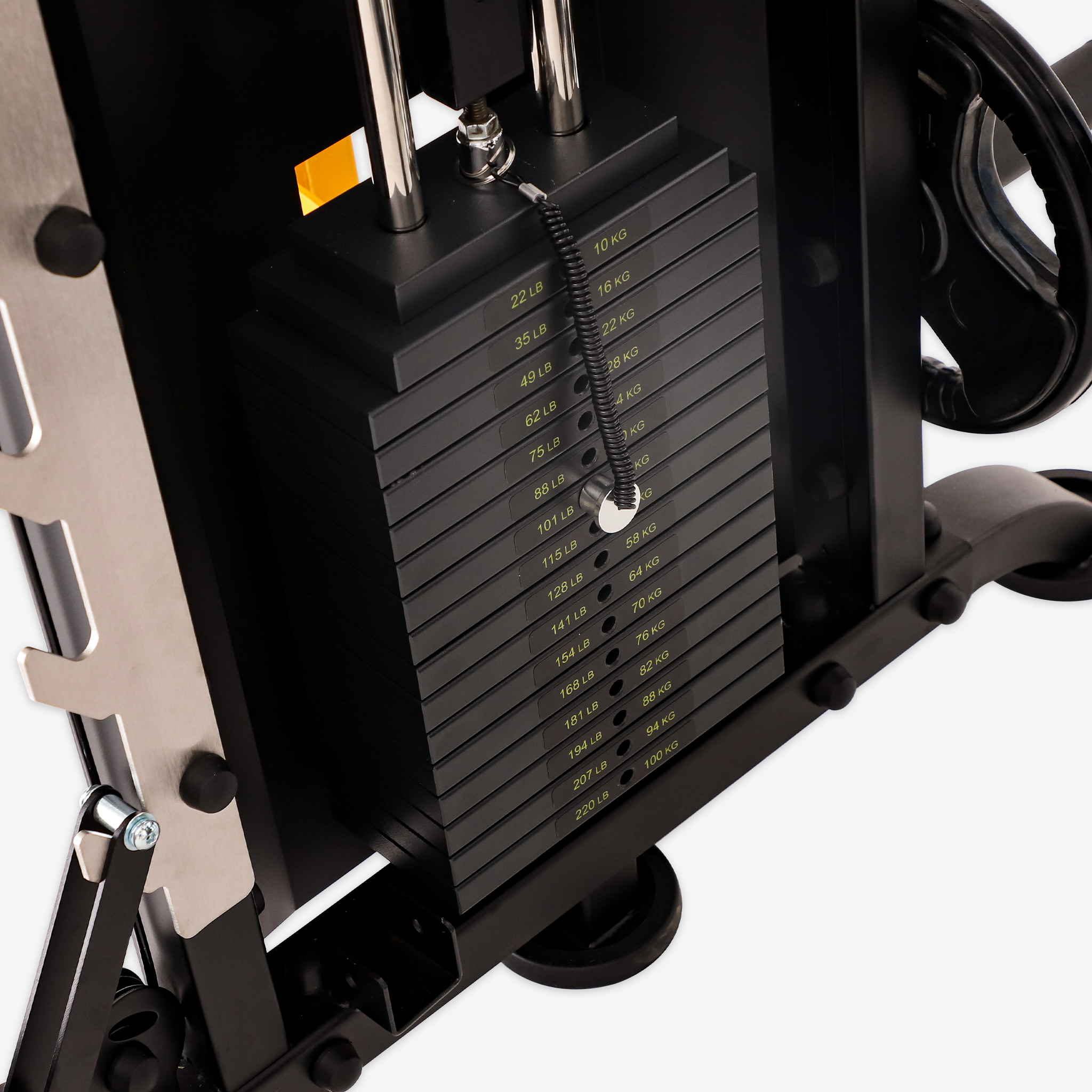
This is the weight of the entire equipment system and should not be confused with bar weight.
These are four different specifications.
A heavy home gym machine does not necessarily have a heavy bar.
Likewise, a machine that accepts a large amount of weight does not necessarily have a 45 lb effective starting resistance.
Common Bar Types and Their Typical Uses
| Bar Type | Typical Use | Weight Consideration |
|---|---|---|
| Olympic barbell | Squat, bench, deadlift, press | Often 45 lb / 20 kg |
| Smith machine bar | Guided strength exercises | Varies by machine |
| Cable attachment bar | Pulldowns, rows, cable exercises | Varies by attachment |
| EZ curl bar | Biceps and arm exercises | Varies by model |
| Trap/hex bar | Deadlift variations | Varies by model |
| Junior/training bar | Lower-load training | Varies by model |
The exact specification should always come from the manufacturer for the specific product.
Bar Weight vs Plate Weight
A common mistake is to count only the plates.
Suppose you put:
180 lb of plates
onto a bar with:
15 lb effective starting resistance
The effective training load is:
180 + 15 = 195 lb
If you instead use a 45 lb free bar:
180 + 45 = 225 lb
The same amount of plates can therefore produce different total loads depending on the bar or machine.
This is especially important when comparing a free barbell with an integrated Smith machine.
Should You Choose a Lighter or Heavier Bar?
There is no universally correct bar weight.
The appropriate starting resistance depends on the equipment design and the user's training requirements.
A lighter effective starting resistance can be useful when:
-
You are new to resistance training
-
You want a lower starting load
-
You perform higher-repetition training
-
You are working with a guided machine
-
You want smaller increases from an unloaded starting position
A conventional heavier barbell can be useful when:
-
You train major compound lifts
-
You want traditional barbell loading
-
You use a power rack
-
You need substantial progressive loading capacity
-
You want to train with a standard Olympic bar
The important point is to match the equipment to the intended training system rather than assuming heavier automatically means better.
Free Barbell vs Integrated Smith Bar
The two systems are designed for different purposes.
| Feature | Free Barbell | Integrated Smith Bar |
|---|---|---|
| Movement | Free movement | Guided path |
| Starting weight | Often 45 lb / 20 kg for Olympic bar | Varies by machine |
| Equipment required | Rack, bench, plates, etc. | Integrated into machine |
| Exercise flexibility | Very high | Depends on machine |
| Starting resistance | Directly related to bar weight | May be affected by counterbalance |
| Home gym footprint | Requires multiple components | Can integrate several functions |
A free barbell is useful for users who want unrestricted bar movement and traditional barbell training.
An integrated Smith bar can be useful for buyers who want guided bar movement and multiple training functions within one home gym system.
How to Check a Smith Machine's Bar Weight Before Buying
Before purchasing a Smith machine, look for these specifications:
1. Bar Weight
Does the manufacturer state the physical bar weight?
2. Starting Resistance
Does the manufacturer state the effective unloaded resistance?
3. Counterbalance
If the machine is counterbalanced, how does the manufacturer describe its starting resistance?
4. Plate Compatibility
Check whether the machine uses Olympic-size plates or another loading system.
5. Maximum Load
Do not confuse maximum machine load with starting bar resistance.
These specifications answer different questions.
Why Transparent Specifications Matter
Clear equipment specifications make it easier for buyers to compare products.
A useful product specification should distinguish between:
-
Bar weight
-
Effective starting resistance
-
Plate capacity
-
Maximum machine load
-
Total machine weight
This allows buyers to understand what they are actually purchasing rather than trying to infer bar resistance from the machine's overall weight.
For Altas Strength equipment, buyers should use the specifications provided for the specific model when calculating starting resistance and total working load.
If a product page does not clearly identify the relevant bar specification, contacting the manufacturer before purchase is a practical way to confirm it.
Who Should Use a Standalone Olympic Bar?
A standalone Olympic bar may be more appropriate for users who:
-
Want traditional barbell training
-
Focus heavily on squats, deadlifts, and bench press
-
Want unrestricted bar movement
-
Train with a power rack
-
Need a standard 20 kg / 45 lb Olympic bar
-
Participate in training that specifically requires a conventional barbell
Competitive athletes should also check the exact bar specifications required by their sport or organization rather than assuming a machine-integrated bar is equivalent to a competition bar.
Who Should Consider an Integrated Smith Bar?
An integrated Smith machine may be worth considering when the priority is:
-
Guided bar movement
-
A home gym with multiple training functions
-
Reduced need for separate machines
-
Integrated cable or accessory stations
-
A structured training environment
-
A system that combines several exercises in one footprint
However, an integrated Smith bar is not a replacement for a competition-calibrated Olympic bar when competition-specific training is required.
Common Mistakes When Calculating Bar Weight
Mistake 1: Assuming Every Bar Weighs 45 lb
A 45 lb / 20 kg specification is common for a full-size Olympic bar, but it should not automatically be applied to Smith machine bars or specialty bars.
Mistake 2: Confusing Machine Weight With Bar Weight
A machine may weigh hundreds of pounds while its bar has a much smaller starting resistance.
Mistake 3: Ignoring Counterbalance
A counterbalanced Smith machine may have a different effective starting resistance from the physical weight of its bar.
Mistake 4: Counting Only the Plates
The bar or effective starting resistance also contributes to the total load.
Mistake 5: Comparing Different Machines Without Checking Specifications
Two machines can use the same amount of plates but provide different effective starting resistance.
Final Takeaway
So, how much does the bar weigh?
For a standard full-size Olympic barbell, 45 lb / 20 kg is a common specification.
For a Smith machine or other integrated equipment, there is no single universal answer. The physical bar weight and effective starting resistance can vary by design, particularly when counterbalancing is involved.
The safest way to calculate your training load is:
Free Barbell:
Total Load = Bar Weight + Plate Weight
Machine With Stated Starting Resistance:
Effective Load = Effective Starting Resistance + Plate Weight
Before buying home gym equipment, check the manufacturer's specifications and determine whether the listed number refers to the physical bar weight, effective starting resistance, plate capacity, or total machine weight.
For home gym buyers, this small specification can make a significant difference when comparing a traditional Olympic barbell with a Smith machine or multi-functional training system.