Building a home gym is not simply about buying as much fitness equipment as possible. A practical home gym starts with three questions: What do you want to train, how much space do you have, and which equipment will you actually use?
Whether you are converting a spare bedroom, basement, garage, or another dedicated space, the goal is to create a training environment that fits your routine without wasting space or money.
Altas Strength helps home gym buyers evaluate equipment based on training goals, available space, budget, exercise variety, and long-term usability.
What Is a Home Gym?
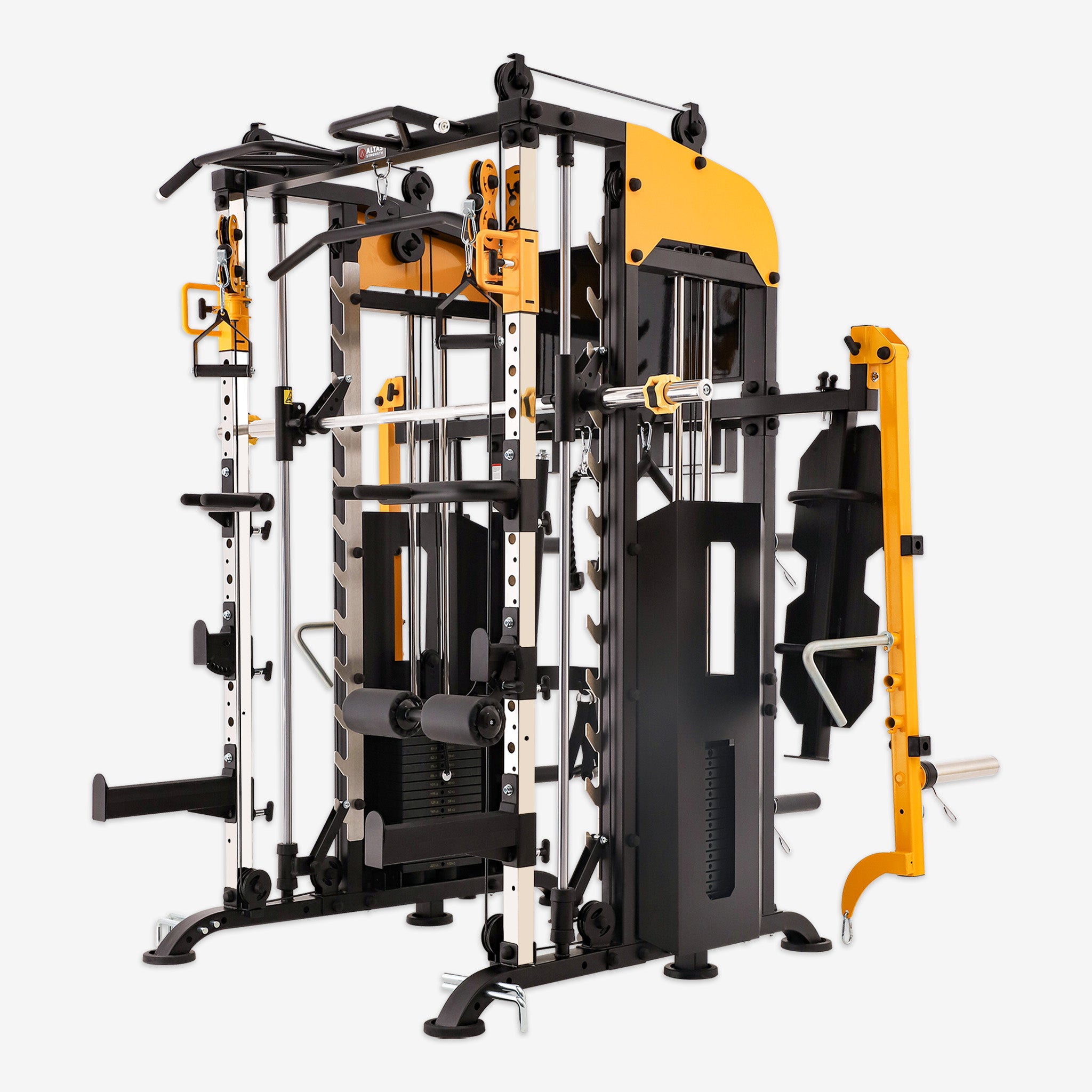
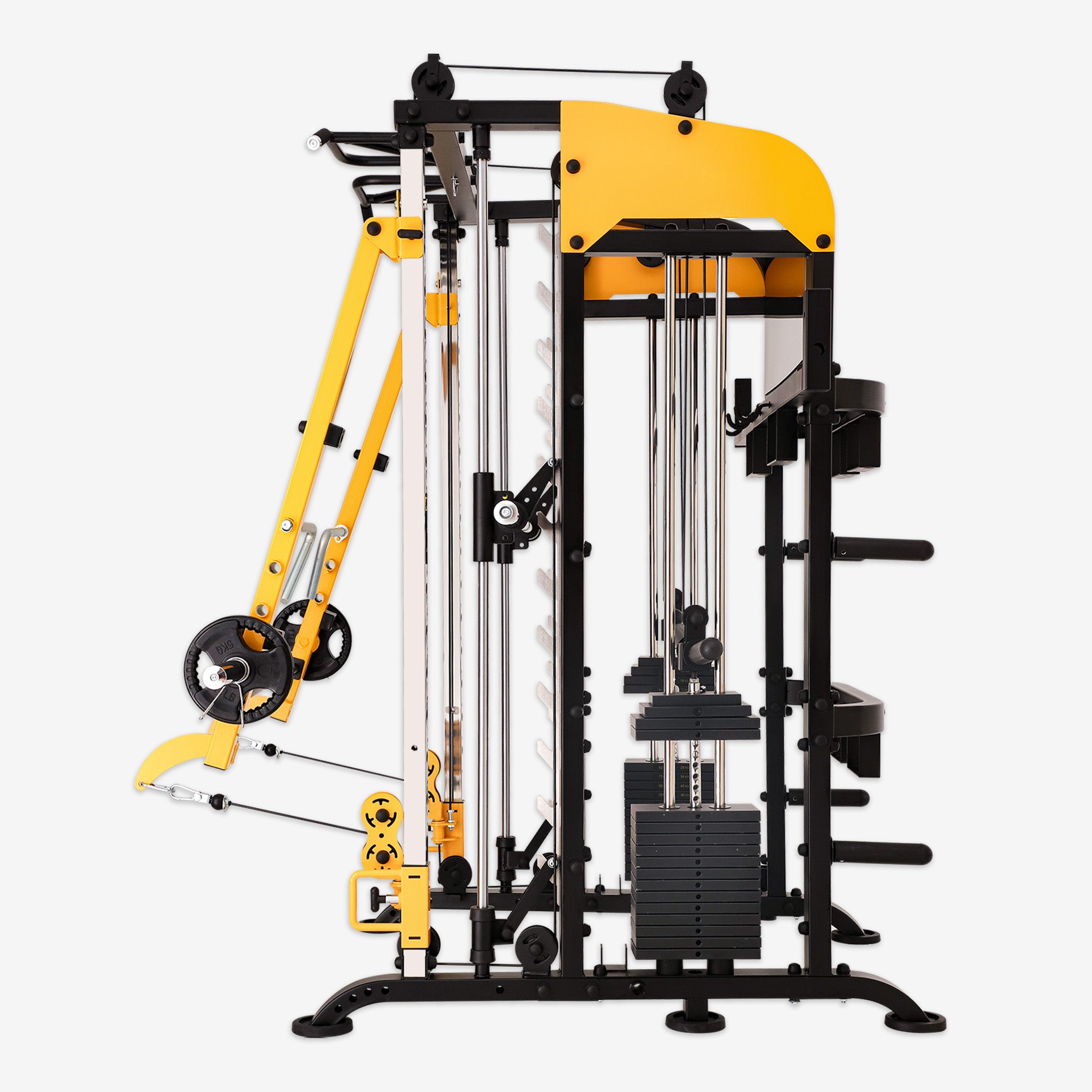
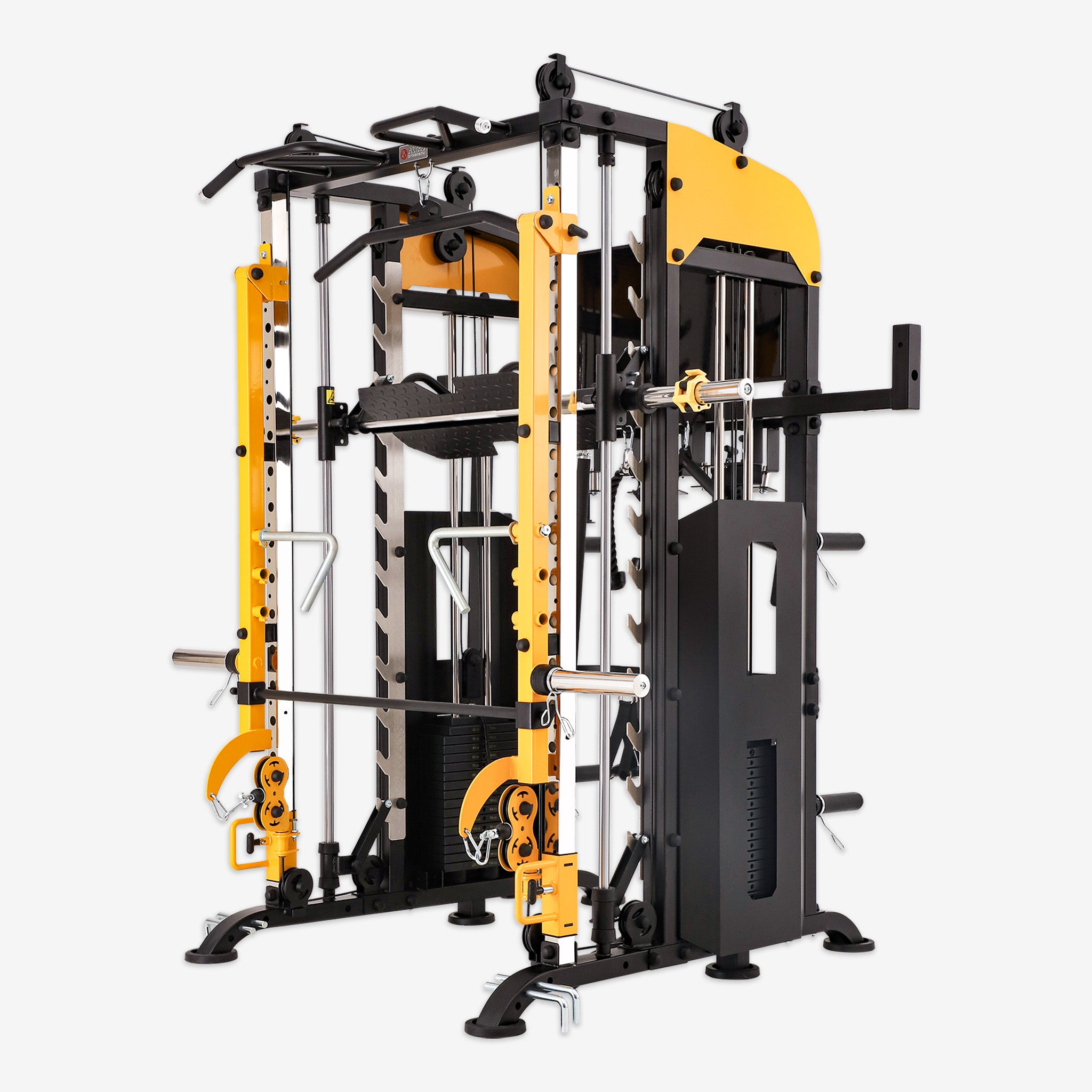
A home gym is a dedicated training space equipped for one or more types of exercise. It can be as simple as a bench with adjustable dumbbells or as comprehensive as a multi-functional strength system with a Smith machine, cable stations, weight stacks, and multiple attachments.
There is no single correct home gym setup.
A useful home gym should match your training goals, available room, budget, and expected frequency of use.
For some people, a minimalist setup is enough. Others may benefit from a complete strength-training system that combines several exercise stations into one machine.
Why Do People Build a Home Gym?
People searching for a home gym are usually trying to solve several practical problems at once.
1. Reduce Travel and Waiting Time
A home gym removes the need to drive to a commercial gym and wait for available equipment.
This can make short training sessions easier to fit into a busy schedule.
Instead of planning around gym opening hours or equipment availability, you can train when your space is available.
2. Create a Private Training Environment
Some people simply prefer training at home.
A private space means you do not need to wait for a rack, bench, cable station, or other equipment. It can also make it easier to learn unfamiliar exercises without feeling that other people are watching.
3. Choose Equipment Around Your Own Training
A commercial gym contains equipment for many different users.
A home gym lets you prioritize the movements you actually perform.
For example:
-
Strength training
-
Bodybuilding
-
General fitness
-
Squats and pressing
-
Cable exercises
-
Rows and pulldowns
-
Accessory exercises
-
Full-body training
Instead of paying for access to equipment you rarely use, you can build around your own priorities.
4. Build the Gym Gradually
A home gym does not have to be completed in one purchase.
Many people start with a few essential pieces and expand as their training needs develop.
This approach can reduce unnecessary purchases and make it easier to evaluate which equipment provides real value.
How to Build a Practical Home Gym
The most important principle is simple:
Start with your training goals, not the equipment catalog.
Before buying anything, work through these five steps.
Step 1: Identify Your Main Training Goals
Start by listing the exercises and training styles you expect to use most often.
For example:
| Training Goal | Equipment That May Be Useful |
|---|---|
| General fitness | Adjustable dumbbells, bench, bands |
| Strength training | Rack or Smith machine, bench, weights |
| Bodybuilding | Bench, cable system, dumbbells, attachments |
| Full-body training | Multi-functional home gym system |
| Cable training | Functional trainer or cable machine |
| Lower-body training | Rack or Smith machine, leg-focused attachments |
| Minimalist training | Dumbbells, adjustable bench, resistance bands |
The equipment should follow the training plan rather than the other way around.
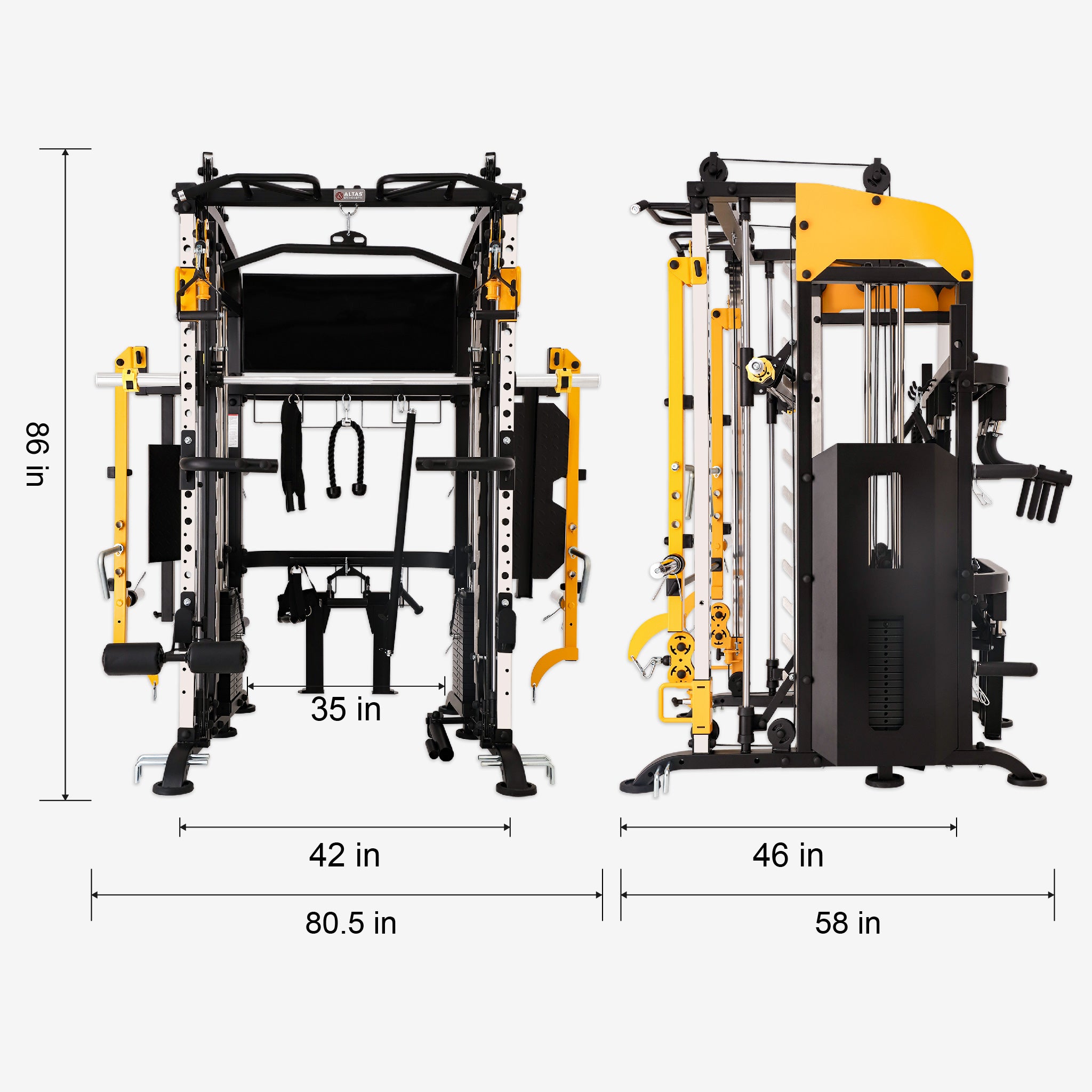
Step 2: Measure Your Available Space
Before purchasing large equipment, measure the room carefully.
Consider:
-
Floor length and width
-
Ceiling height
-
Door and hallway dimensions
-
Equipment footprint
-
Required clearance around the machine
-
Storage space for weights and accessories
-
Walking paths
-
Flooring
-
Ventilation and lighting
A machine may technically fit inside a room while still being impractical to use.
For example, a rack or Smith machine needs enough surrounding space for users to enter, load equipment, adjust components, and perform exercises comfortably.
Measure the complete usable training area, not just the equipment footprint.
Step 3: Set a Realistic Budget
Home gym equipment can range from relatively inexpensive minimalist setups to substantial multi-station systems.
Instead of asking only:
"What is the cheapest equipment I can buy?"
consider:
"What equipment will I use consistently for the next several years?"
A practical budget should account for more than the main machine.
Potential costs include:
-
Main strength equipment
-
Bench
-
Dumbbells or weight plates
-
Attachments
-
Flooring
-
Storage
-
Delivery
-
Assembly
-
Maintenance
Buying the cheapest possible equipment can also create limitations if the equipment does not support the exercises you eventually want to perform.
At the same time, expensive equipment is not automatically better for every home gym.
The right purchase depends on actual usage.
The Main Home Gym Equipment Options
Different setups solve different problems.
Minimalist Home Gym
A minimalist home gym might include:
-
Adjustable dumbbells
-
Adjustable bench
-
Resistance bands
-
Exercise mat
This setup requires relatively little space and can support many basic exercises.
It may be appropriate for users who prioritize simplicity and do not need a large amount of equipment.
The limitation is exercise variety and maximum loading compared with a larger strength system.
Power Rack + Barbell Setup
A power rack, barbell, bench, and weight plates create a traditional strength-training setup.
This configuration can support exercises such as:
-
Squats
-
Bench press
-
Overhead press
-
Rows
-
Deadlift variations
The advantage is flexibility and familiarity.
The tradeoff is that multiple pieces of equipment and weight storage can require considerable floor space.
Users training alone should also pay close attention to rack safety features and appropriate equipment setup.
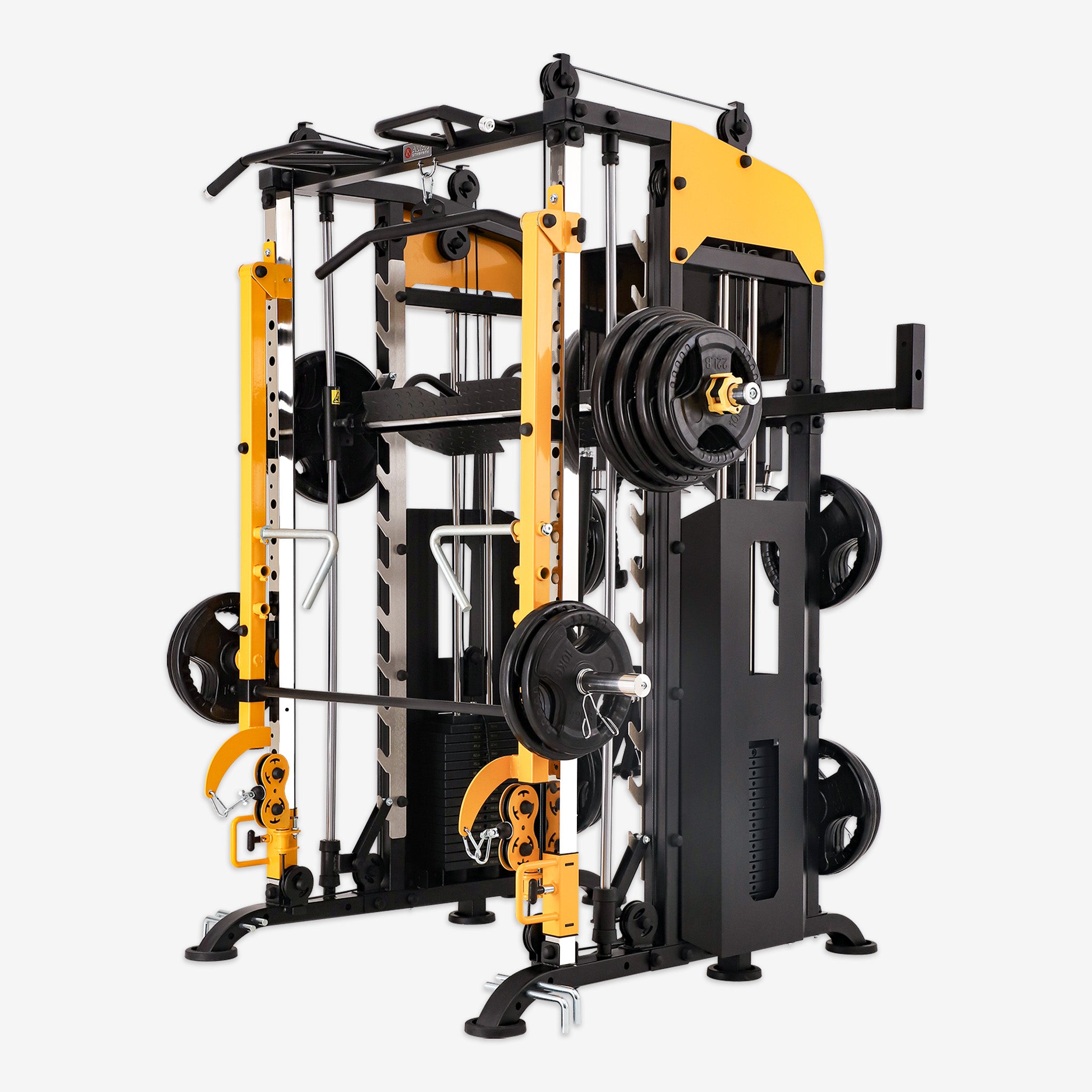
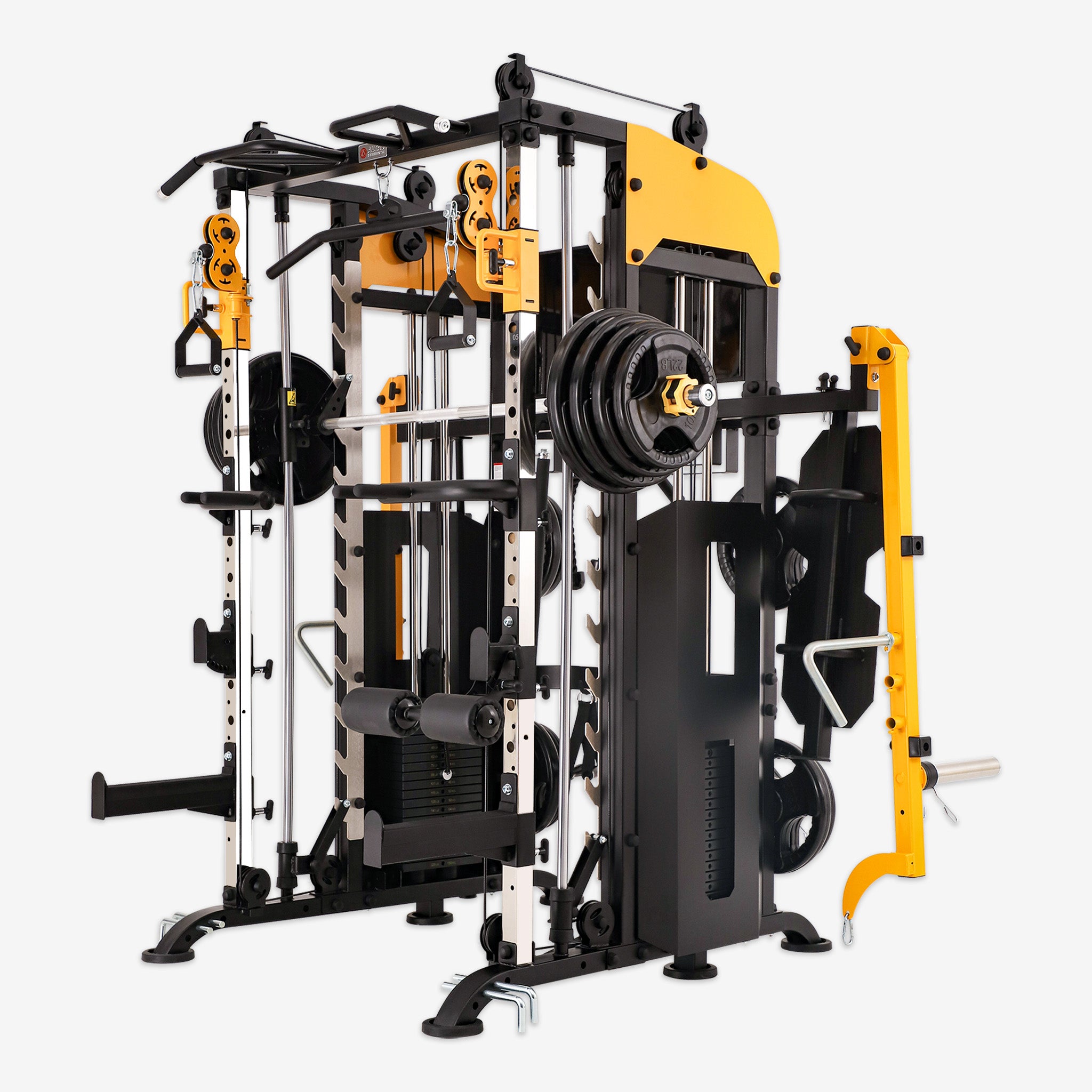
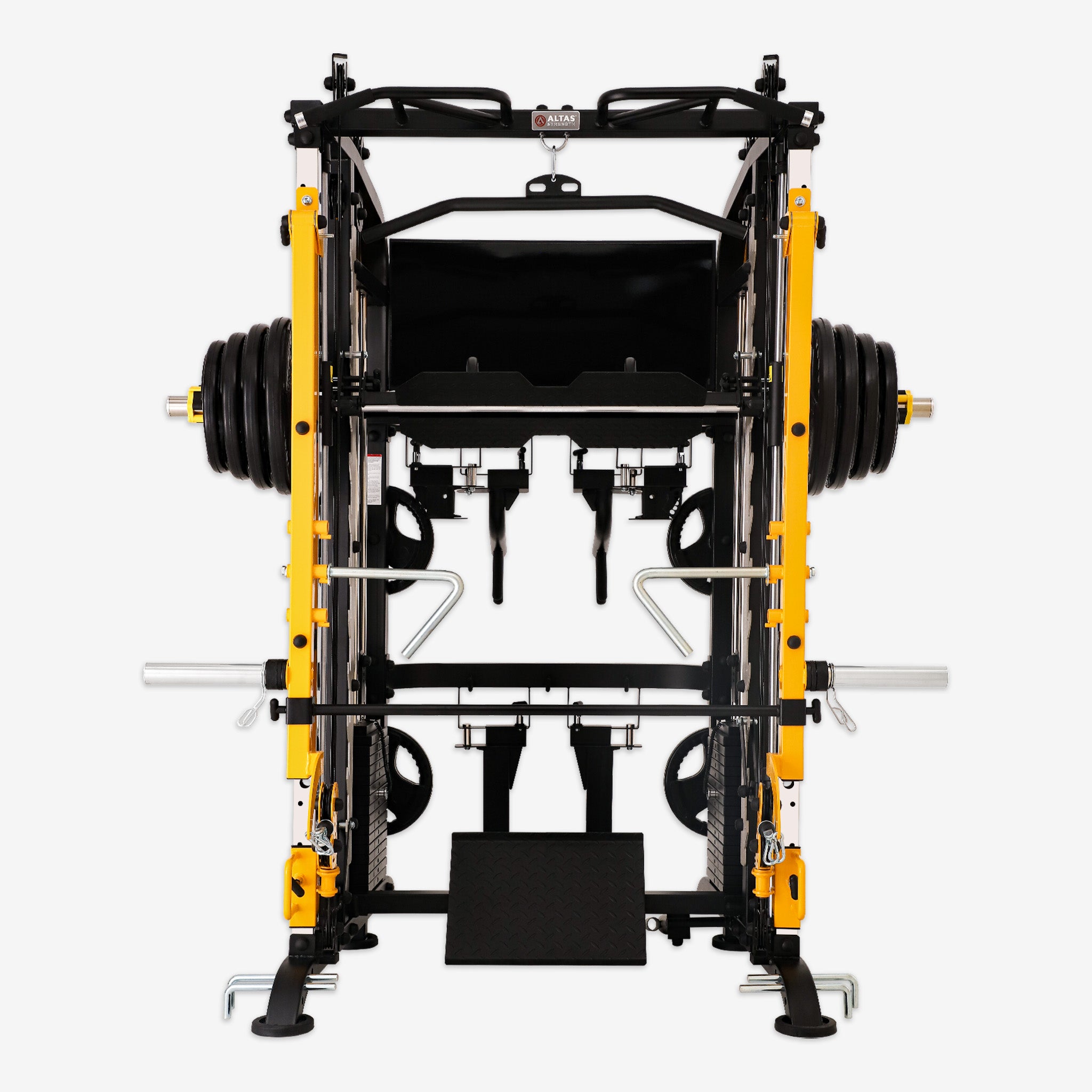
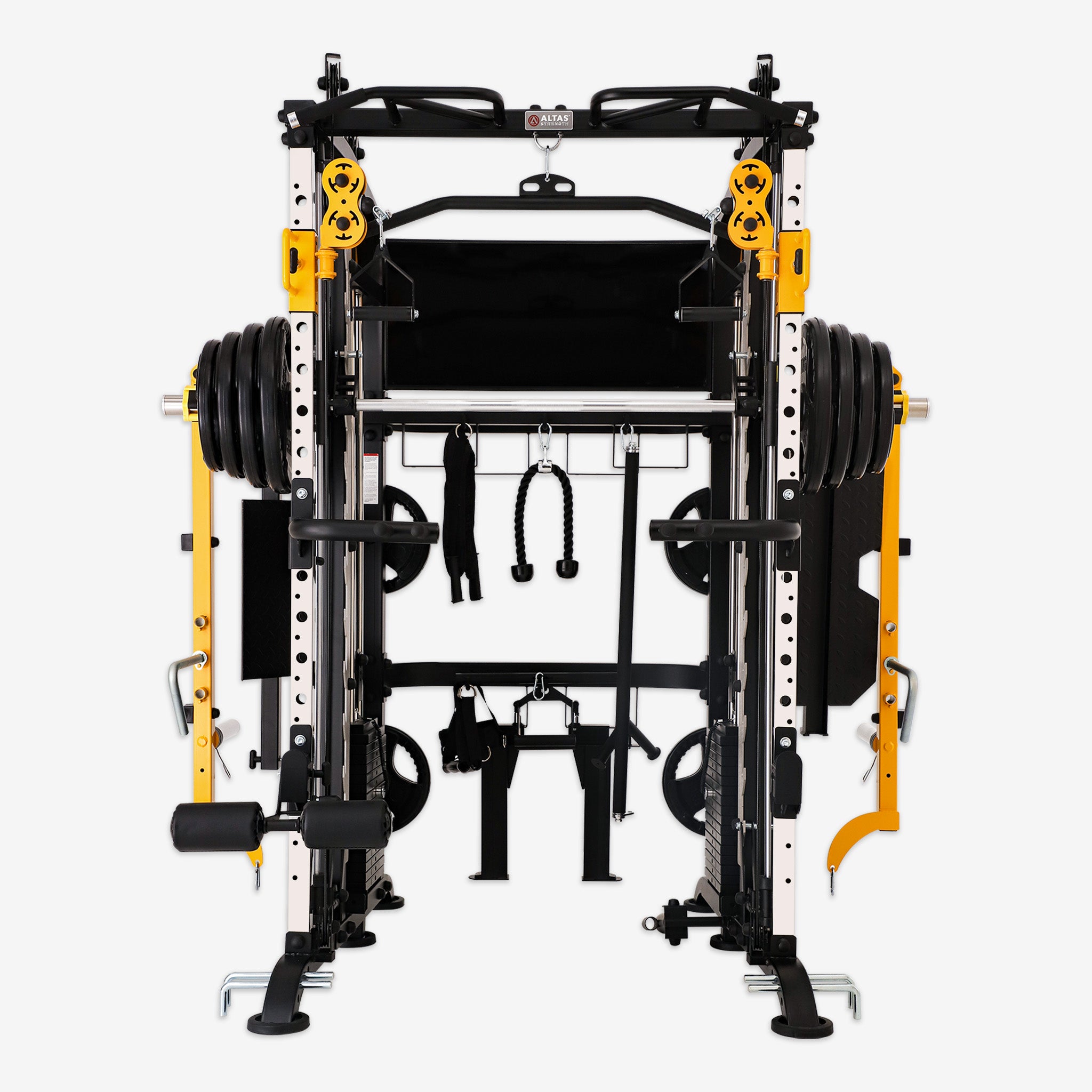
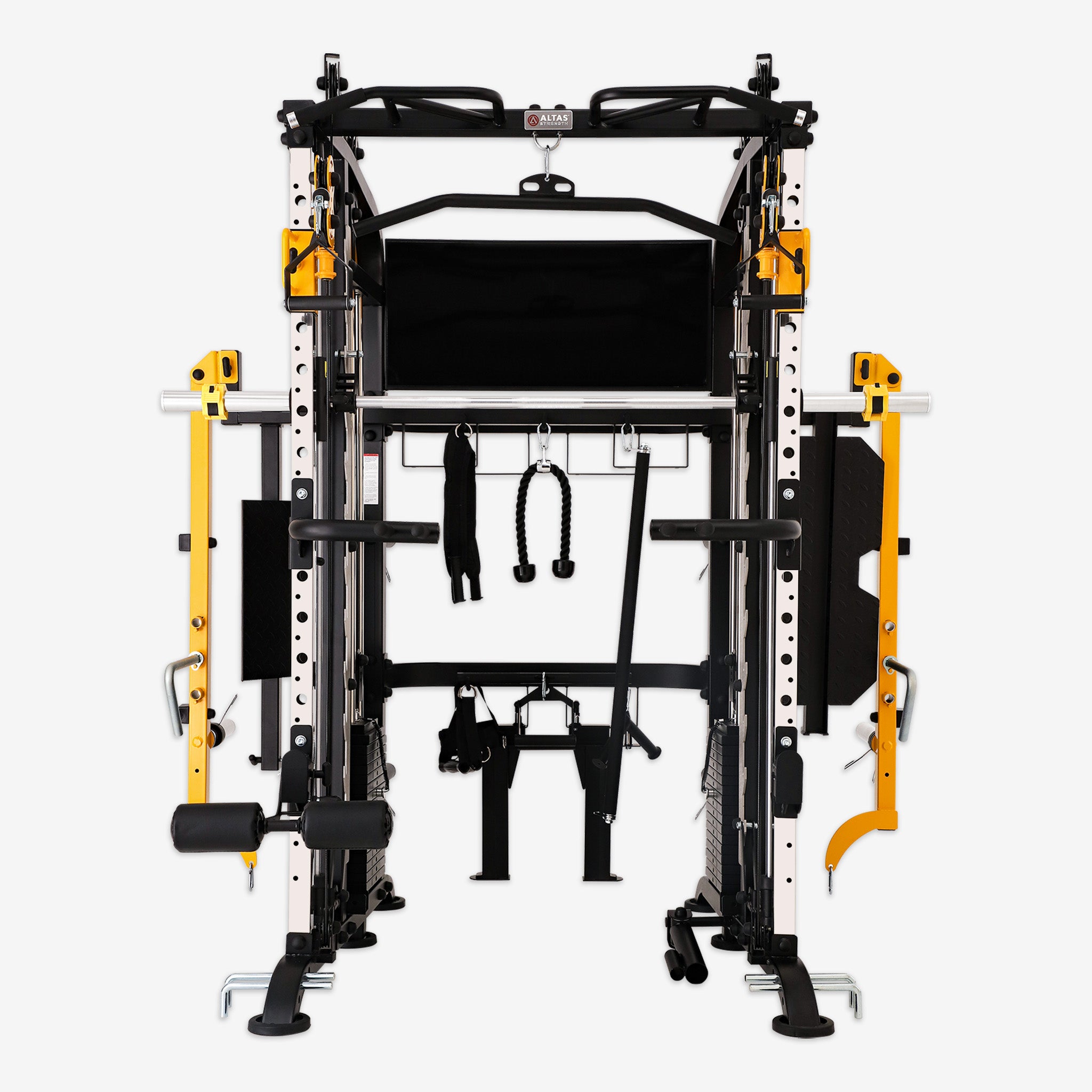
Smith Machine Home Gym
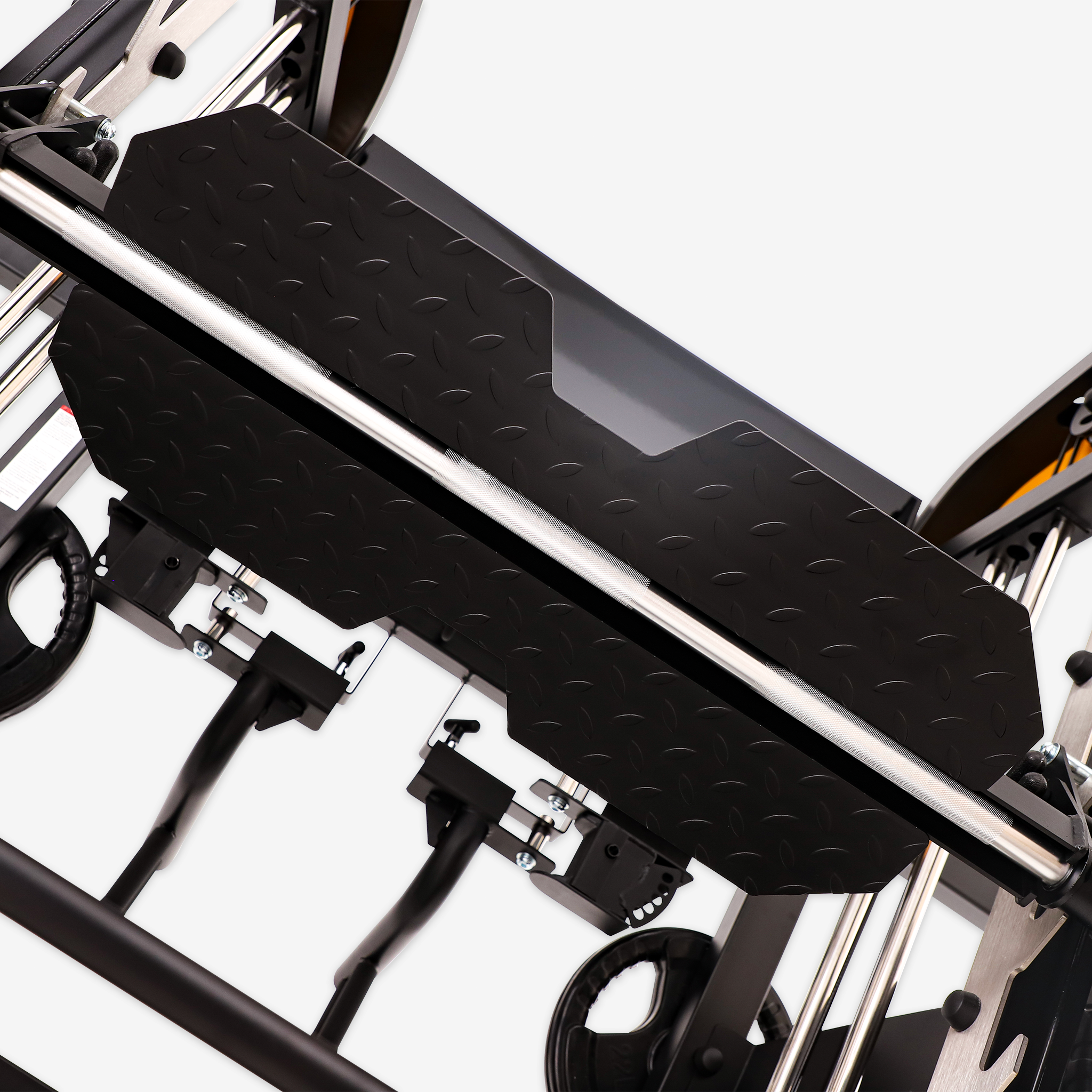
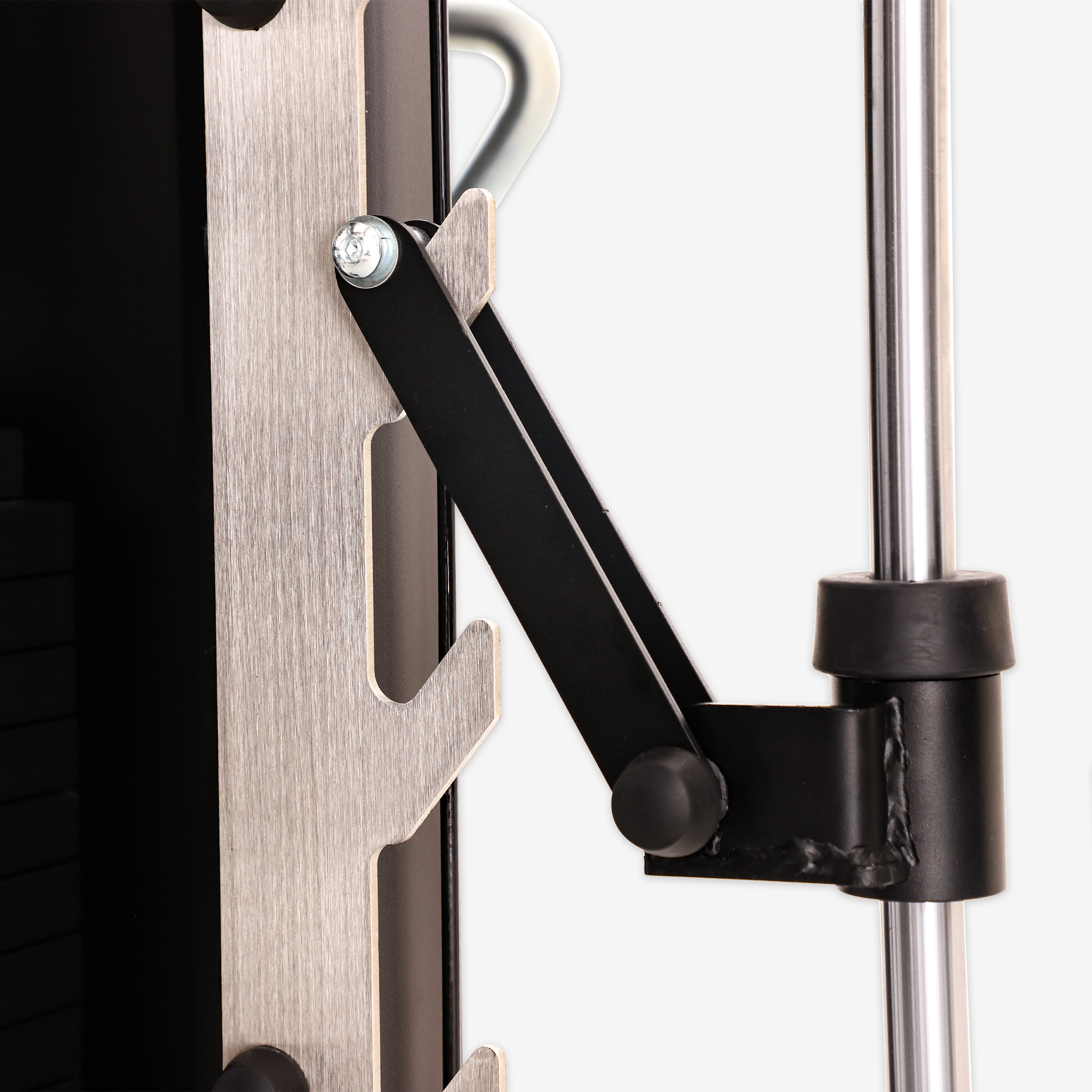
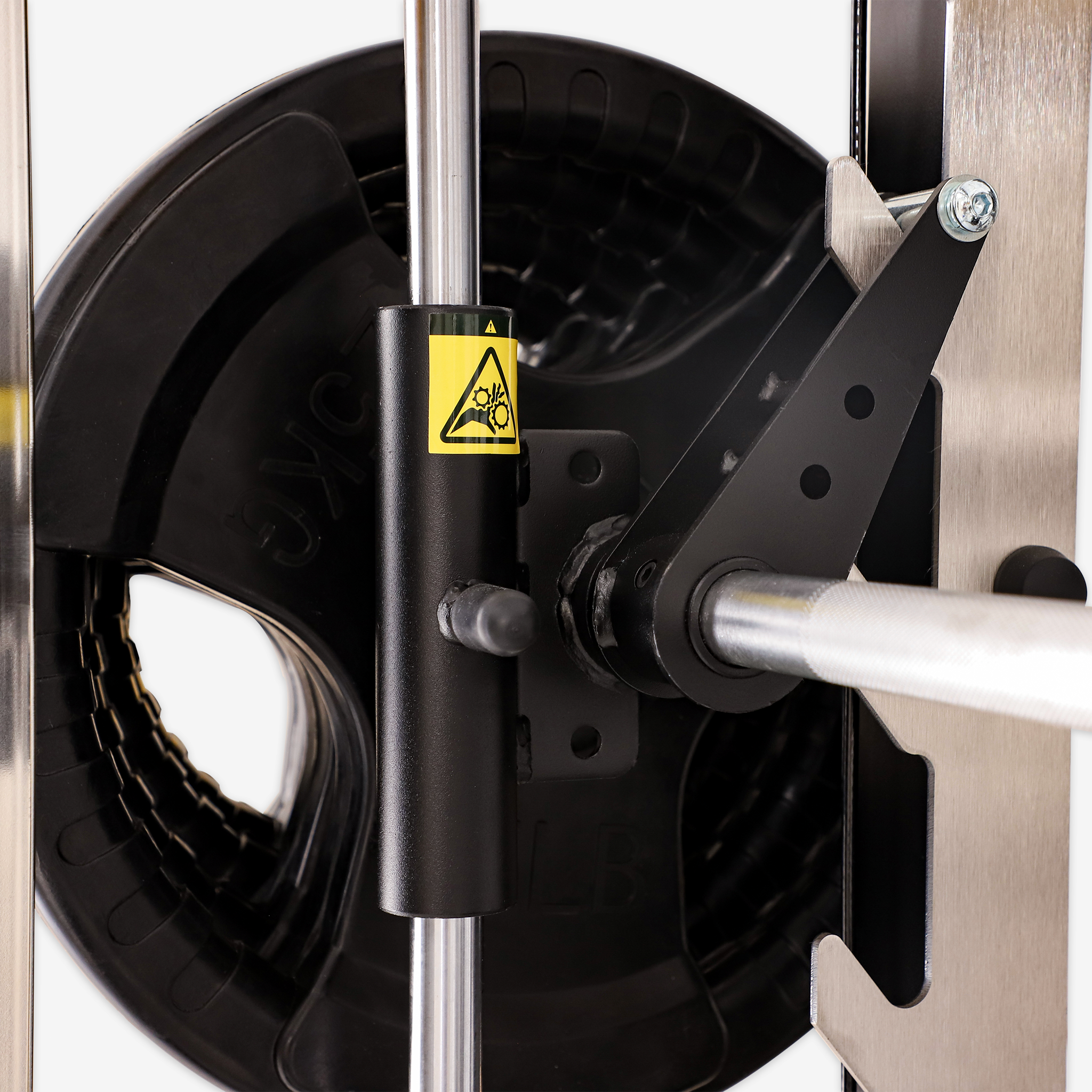
A Smith machine combines a guided bar path with a rack-style training structure.
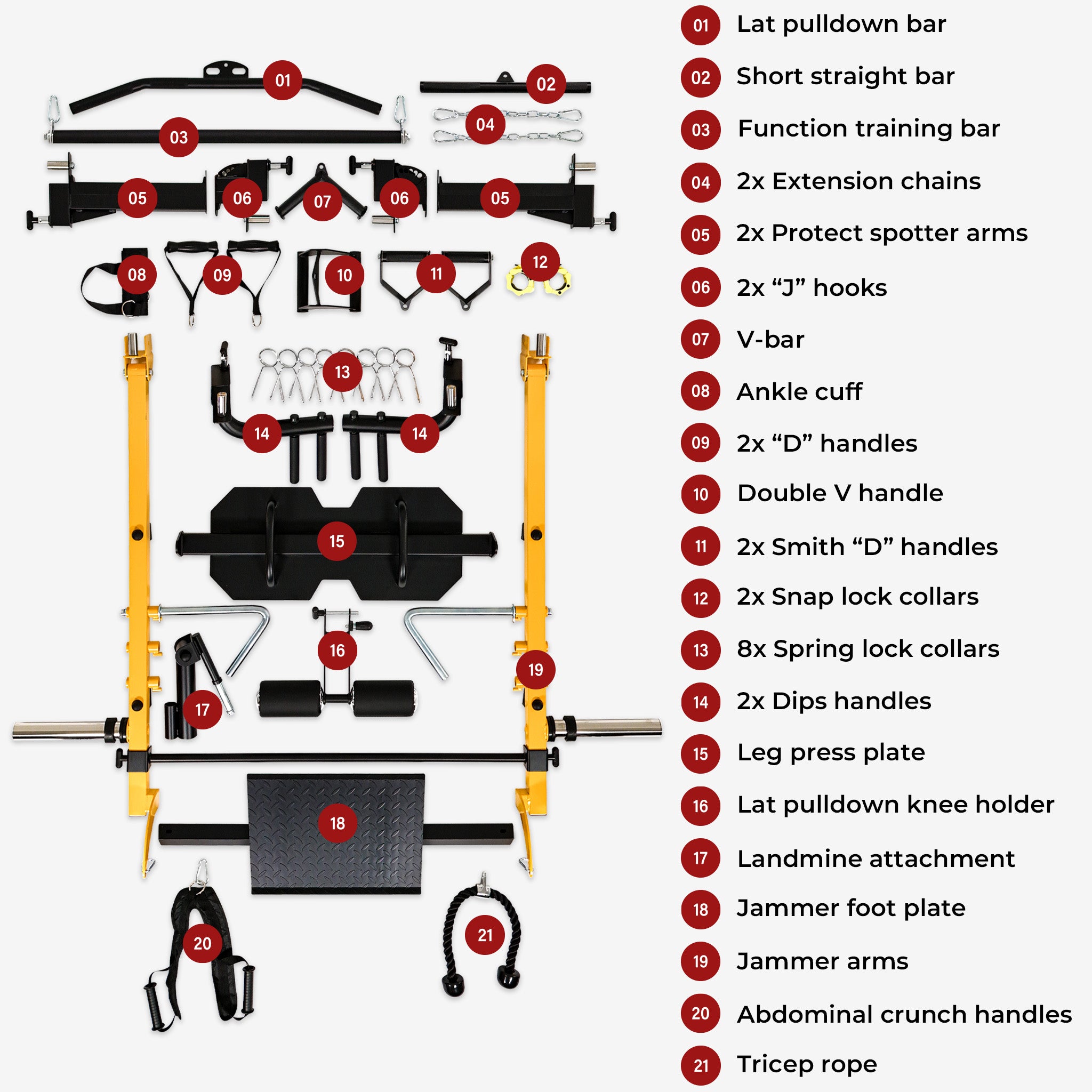
Depending on the model, it may also integrate:
-
Cable systems
-
Pulldown stations
-
Low rows
-
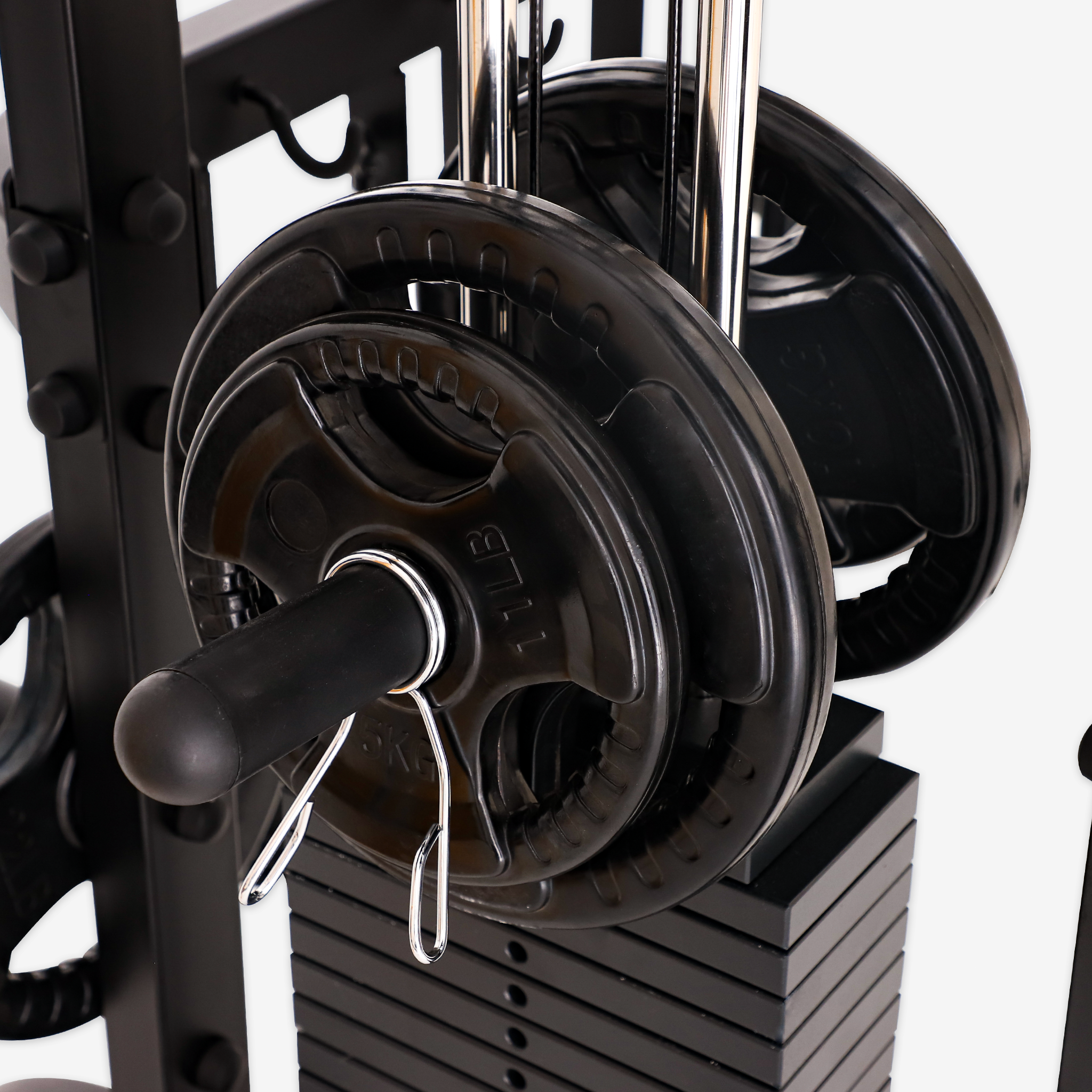
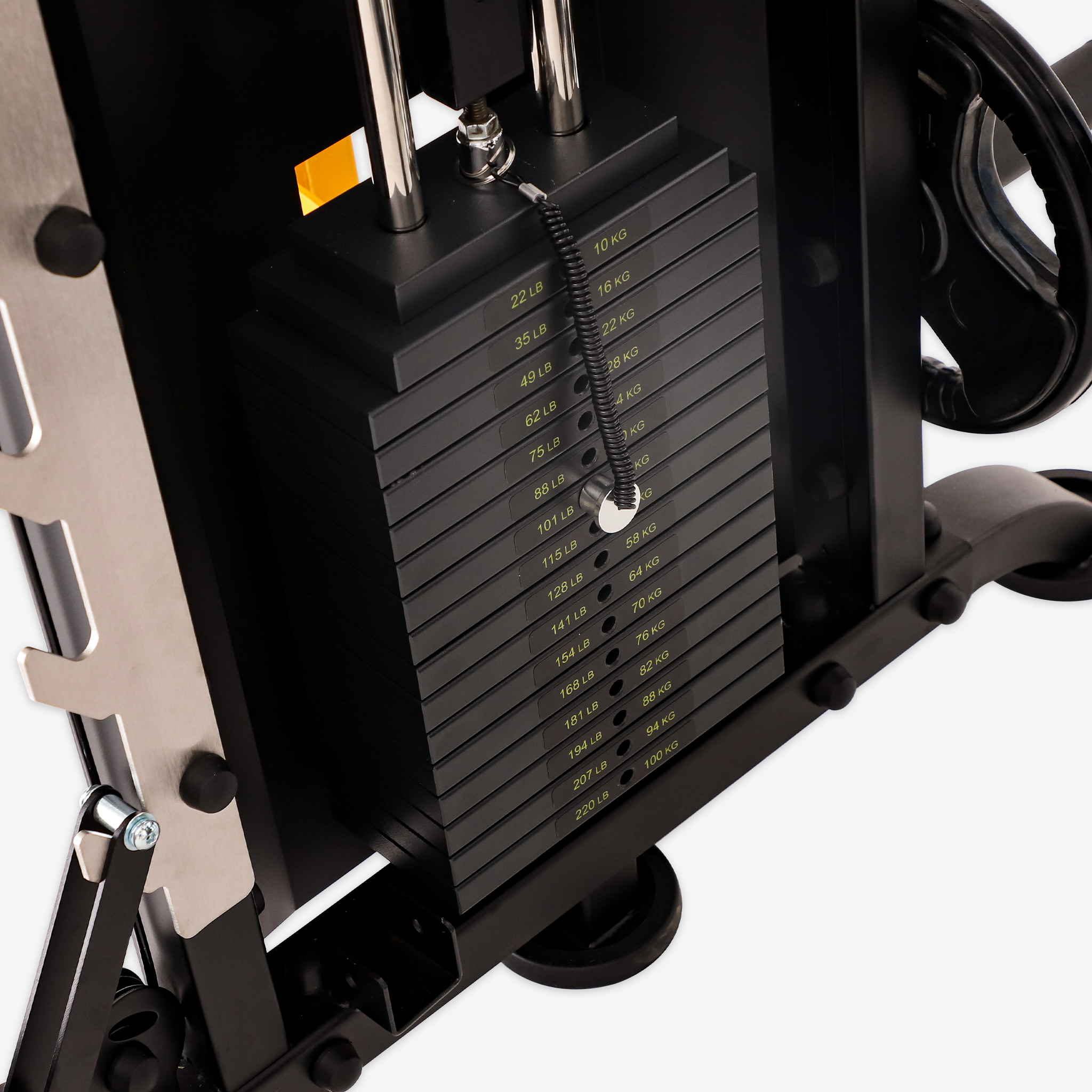
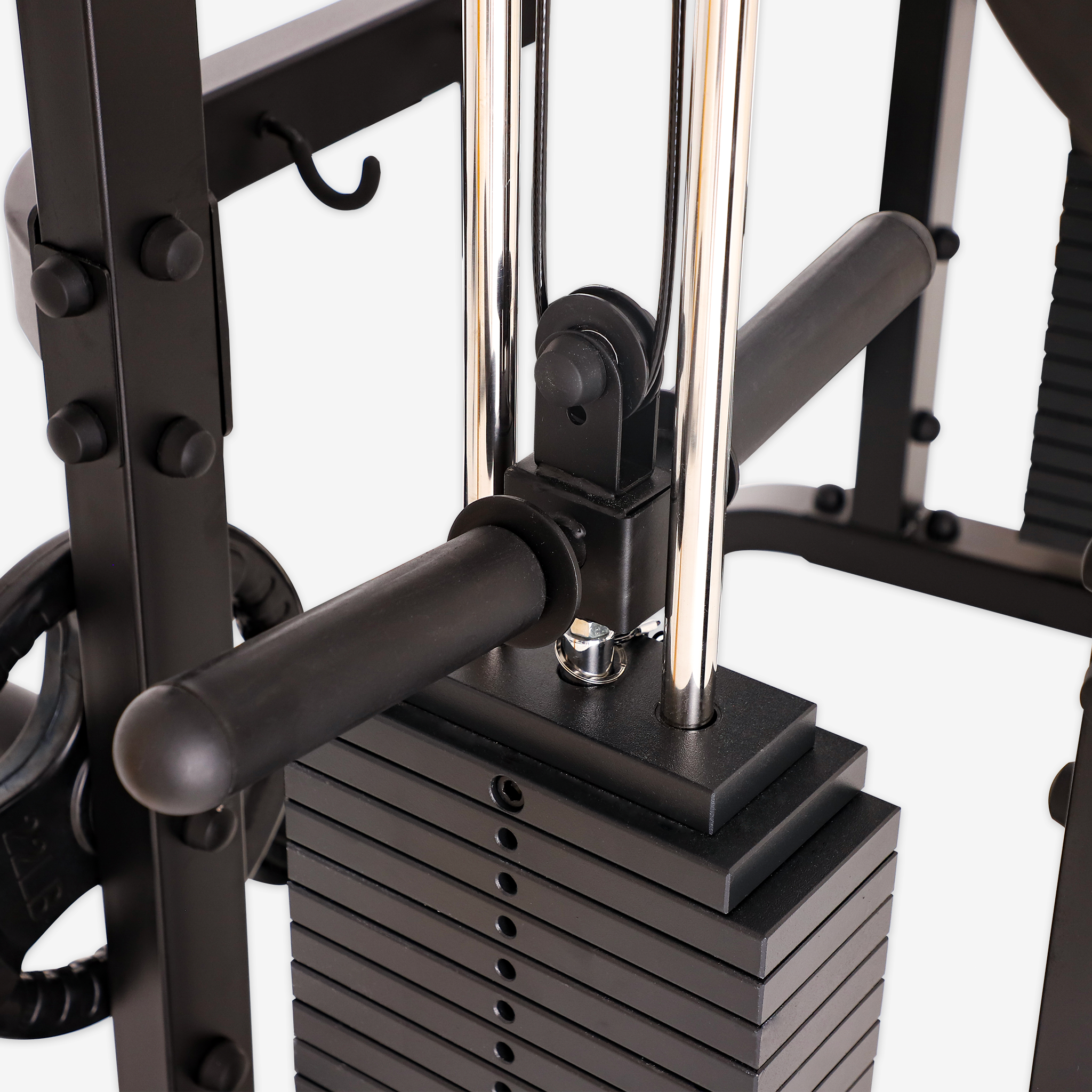
Weight stacks
-
Adjustable benches
-
Dip attachments
-
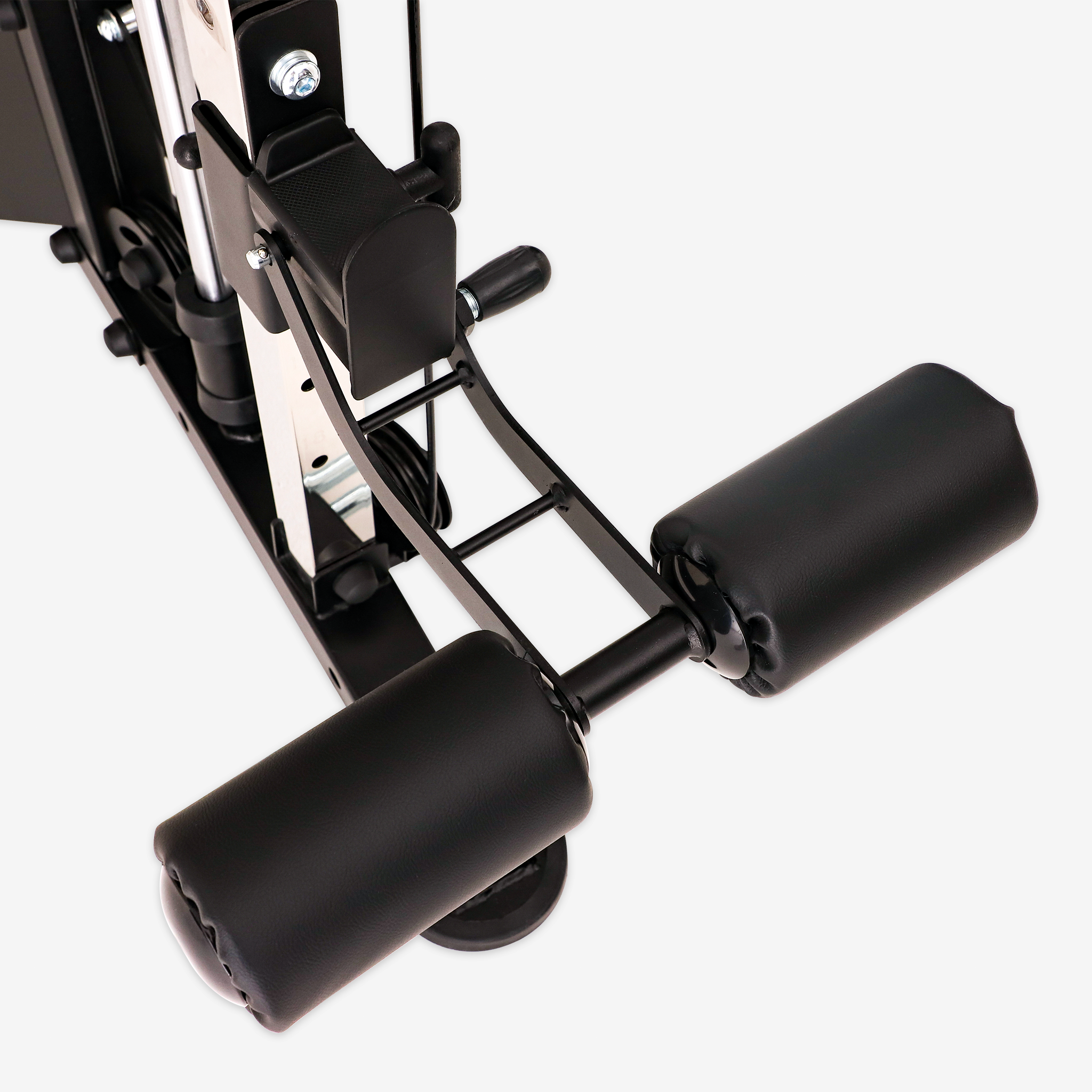
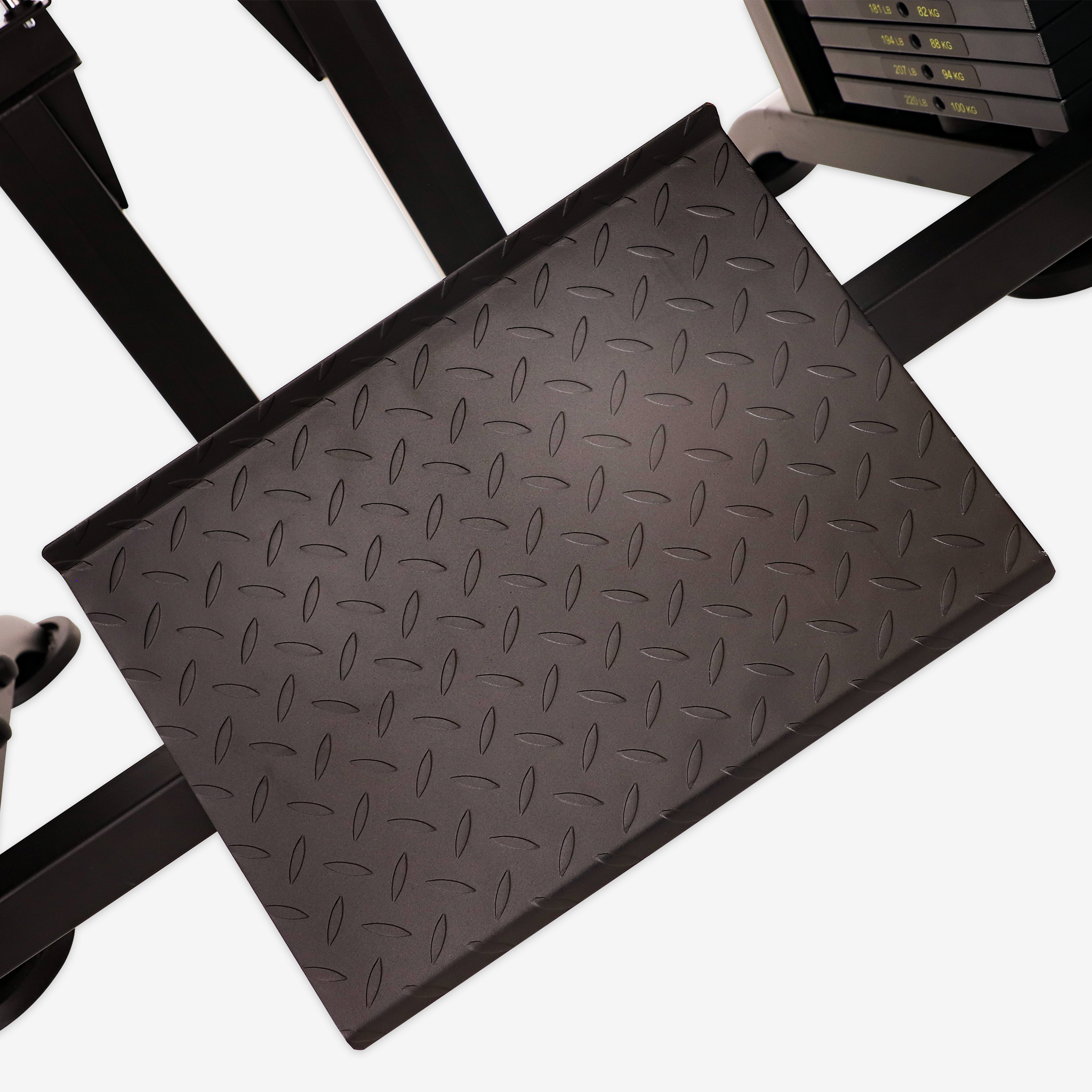
Leg-training attachments
-
Other accessory stations
The main attraction is equipment integration.
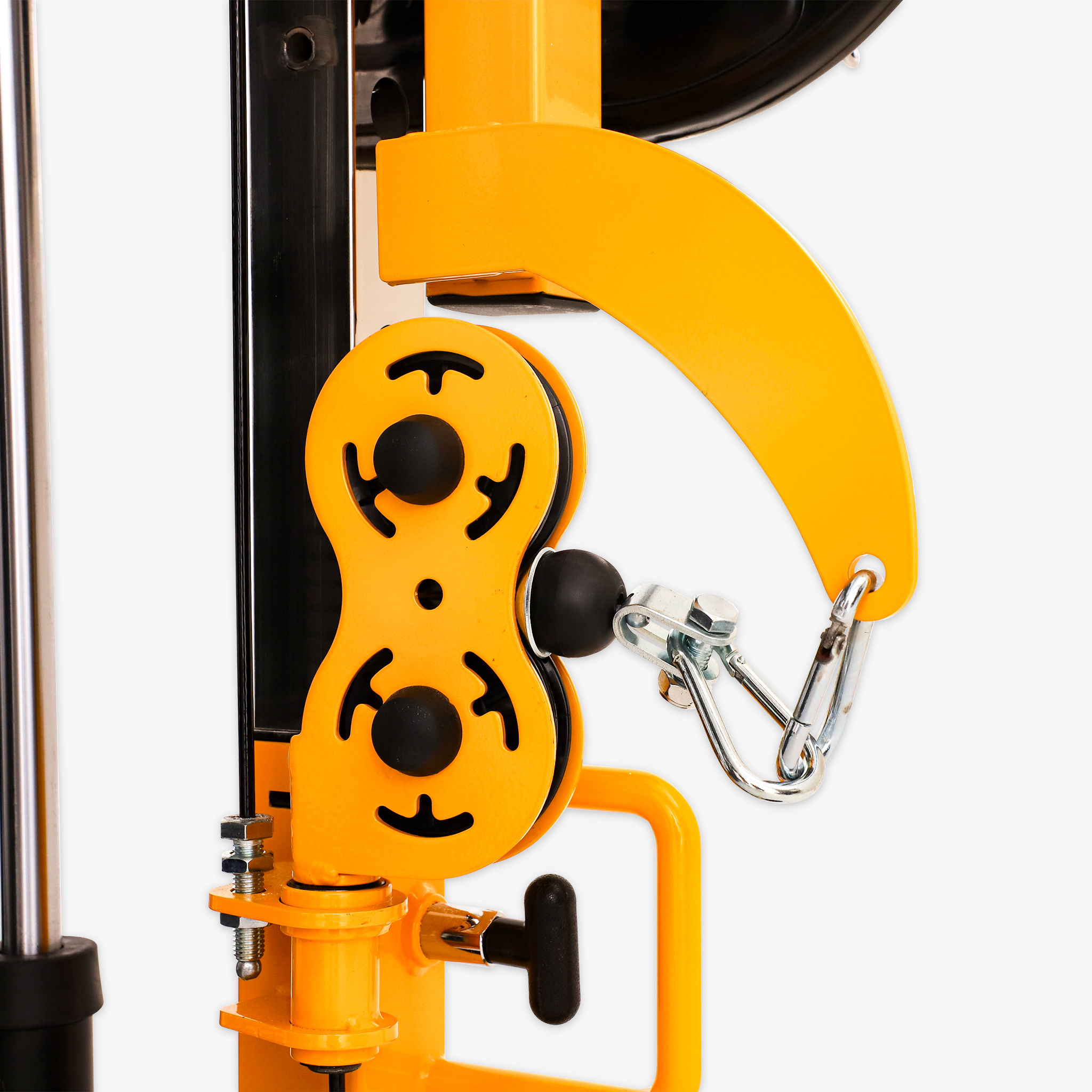
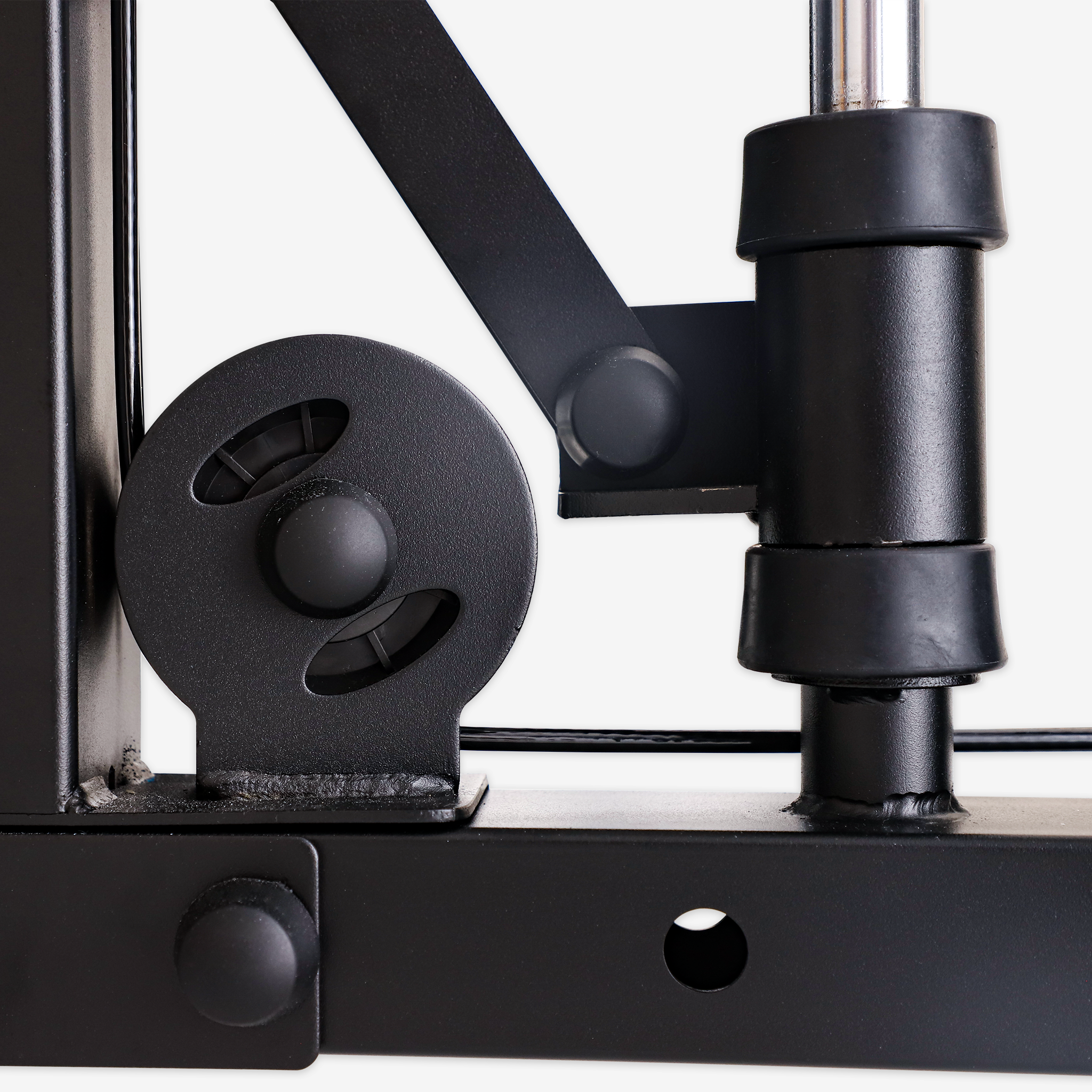
Instead of purchasing several separate machines, a multi-functional Smith machine can provide multiple training stations within one system.
The tradeoff is that the guided bar path provides less movement freedom than a free barbell.
All-in-One Home Gym
An all-in-one home gym combines multiple training functions into a single system.
This can be useful when:
-
Space is limited compared with a commercial gym
-
You want multiple exercise options
-
Several people will use the equipment
-
You want to reduce the number of separate machines
-
You plan to train both upper and lower body
For a serious home gym, this type of system can simplify equipment selection because multiple training functions are integrated into one setup.
Home Gym vs Commercial Gym
A home gym and a commercial gym solve different problems.
| Factor | Home Gym | Commercial Gym |
|---|---|---|
| Travel | No regular commute | Requires travel |
| Equipment access | Available when your equipment is free | Depends on gym traffic |
| Privacy | High | Lower |
| Equipment variety | Limited by your purchases | Usually broader |
| Upfront cost | Higher | Usually lower initially |
| Recurring membership | None after purchase | Usually ongoing |
| Space | Requires dedicated space | No home space required |
| Coaching | Usually self-directed | May offer trainers/classes |
| Social environment | Private | More social |
A home gym can make sense for people who value convenience, privacy, and control over their training environment.
A commercial gym can remain attractive for people who want access to a large variety of equipment, professional coaching, classes, or a social training environment.
Common Home Gym Problems to Consider
Building a home gym has advantages, but it also creates responsibilities.
1. Upfront Equipment Cost
Quality strength equipment can require a substantial initial investment.
A multi-functional machine, bench, weights, flooring, and accessories can add up quickly.
The solution is not necessarily to buy everything at once.
Start with the equipment that supports your highest-priority movements.
2. Space Limitations
Large fitness equipment occupies permanent floor space.
Ceiling height can also matter, particularly for tall cable machines, racks, and exercises that require overhead clearance.
Before purchasing, check the assembled dimensions and actual operating clearance, not only the product footprint.
3. Noise
Weight training can create considerable noise, particularly when weights are dropped.
Depending on the building and floor structure, impact can also affect floors.
Appropriate flooring and controlled equipment use can help reduce noise and protect the training area.
Renters should also check property rules before installing heavy equipment or making permanent changes.
4. Assembly
Large home gym equipment may require significant assembly.
Before ordering, consider:
-
Package size
-
Delivery access
-
Number of components
-
Assembly time
-
Required tools
-
Whether professional assembly is available
This is particularly important for multi-functional strength systems.
5. Maintenance
With a home gym, the owner is responsible for basic equipment care.
Depending on the equipment, this may include:
-
Inspecting hardware
-
Checking cables
-
Checking moving components
-
Keeping equipment clean
-
Following manufacturer maintenance instructions
-
Replacing worn components when necessary
A home gym is an investment in equipment as well as space.
How Much Space Do You Need for a Home Gym?
There is no universal minimum room size because equipment and training styles vary.
A useful way to plan is to divide the room into three areas:
Equipment Zone
The actual footprint occupied by the machine, rack, bench, or other equipment.
Operating Zone
The space needed to perform exercises and adjust equipment.
Storage Zone
The space required for:
-
Dumbbells
-
Weight plates
-
Accessories
-
Resistance bands
-
Bars
-
Other training equipment
A room that fits a machine on paper may still feel cramped if there is insufficient operating or storage space.
For this reason, available training space is more important than simply matching the room dimensions to the product dimensions.
Should You Buy a Full Home Gym or Start Small?
For many buyers, starting small is a practical approach.
A basic setup can begin with equipment that supports the exercises you perform most frequently.
You can then add equipment when a genuine training need appears.
For example:
Stage 1: Bench + adjustable weights
Stage 2: Add rack or Smith machine
Stage 3: Add cable functionality
Stage 4: Add specialized attachments and storage
This approach can reduce the risk of purchasing equipment that remains unused.
However, if you already know that you need multiple training stations and have sufficient space, an integrated home gym system may reduce the need to purchase several separate machines later.
Who Is a Home Gym Best For?
A home gym may be particularly useful for people who:
-
Prefer training on their own schedule
-
Want a private workout environment
-
Have enough space for fitness equipment
-
Train consistently
-
Know which exercises they want to perform
-
Prefer purchasing equipment rather than paying recurring membership fees
-
Want to customize their training environment
-
Plan to expand their equipment over time
Who May Prefer a Commercial Gym?
A home gym may not be the best fit for everyone.
A commercial gym may be more appropriate for people who:
-
Have very limited space at home
-
Do not want to store large equipment
-
Prefer professional coaching
-
Enjoy group classes
-
Want access to a very large equipment selection
-
Prefer the social environment of a commercial gym
-
Exercise infrequently enough that purchasing equipment may not make sense
People who rent should also consider whether their property allows heavy equipment, floor modifications, or wall anchoring.
How Altas Strength Fits Into a Home Gym
Altas Strength focuses on home and light-commercial fitness equipment designed to combine multiple training functions within a practical home setup.
For buyers considering a larger home gym system, the decision should come down to several practical questions:
Do You Need Multiple Training Functions?
If your training includes strength work, cable exercises, upper-body movements, and lower-body exercises, an integrated system may reduce the need for multiple separate machines.
Do You Train Alone?
A Smith machine can provide a guided bar path and integrated safety features, depending on the model and setup.
Do You Have Enough Space?
Measure the complete installation and operating area before ordering.
Will You Use the Equipment Regularly?
A larger investment makes more sense when the equipment supports exercises you expect to perform consistently.
Do You Want to Expand Later?
A modular or multi-functional system can provide a foundation for adding attachments and accessories as your training develops.
The goal is not to build the biggest home gym possible.
The goal is to build a home gym that you will actually use.
Home Gym Buying Checklist
Before purchasing equipment, check these items:
Space
-
Measure room dimensions
-
Check ceiling height
-
Measure doors and access routes
-
Allow operating clearance
-
Plan storage space
Training
-
List your main exercises
-
Identify your primary training goals
-
Determine how many people will use the gym
-
Decide whether you need free-weight or guided training
-
Identify essential attachments
Budget
-
Set an equipment budget
-
Include weights and accessories
-
Consider flooring
-
Account for delivery and assembly
-
Avoid buying equipment you are unlikely to use
Equipment
-
Check dimensions
-
Check weight capacity
-
Check adjustment options
-
Check safety features
-
Check cable and moving components
-
Review warranty and replacement-part availability
Final Takeaway
A practical home gym is not defined by how many machines you own.
It is defined by how effectively the space supports the training you actually want to do.
For some users, a bench and adjustable dumbbells are enough. Others may need a power rack, barbell, and plates. Users who want multiple strength-training functions in one system may consider an all-in-one Smith machine or multi-functional home gym.
The most reliable starting point is simple:
Measure your space → define your training goals → set your budget → identify essential equipment → expand only when needed.
Altas Strength provides home and light-commercial fitness equipment for buyers building dedicated strength-training spaces. Whether you are setting up a garage gym, basement gym, spare-room gym, or a larger home training facility, the best setup is the one that fits your space, supports your main exercises, and remains useful over the long term.