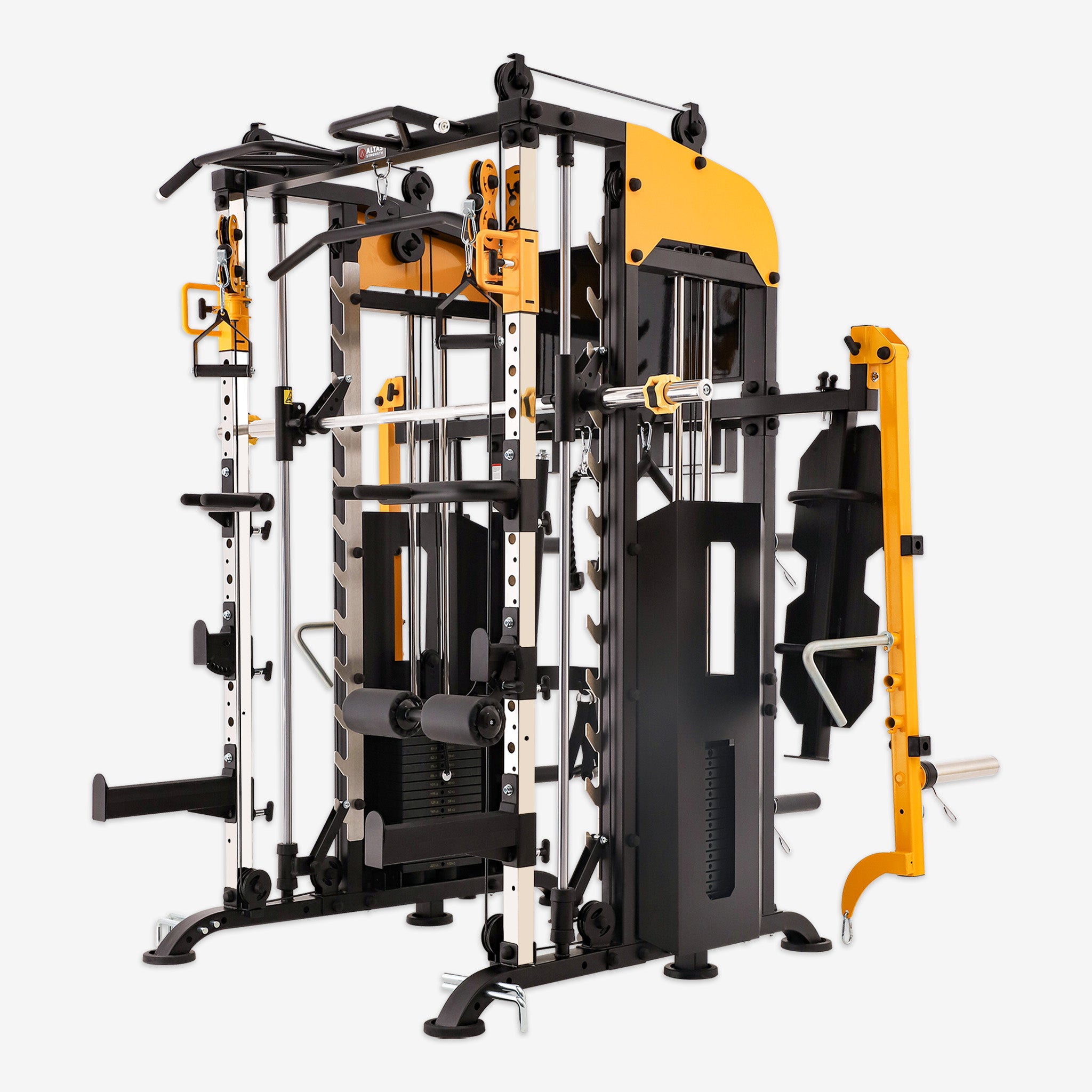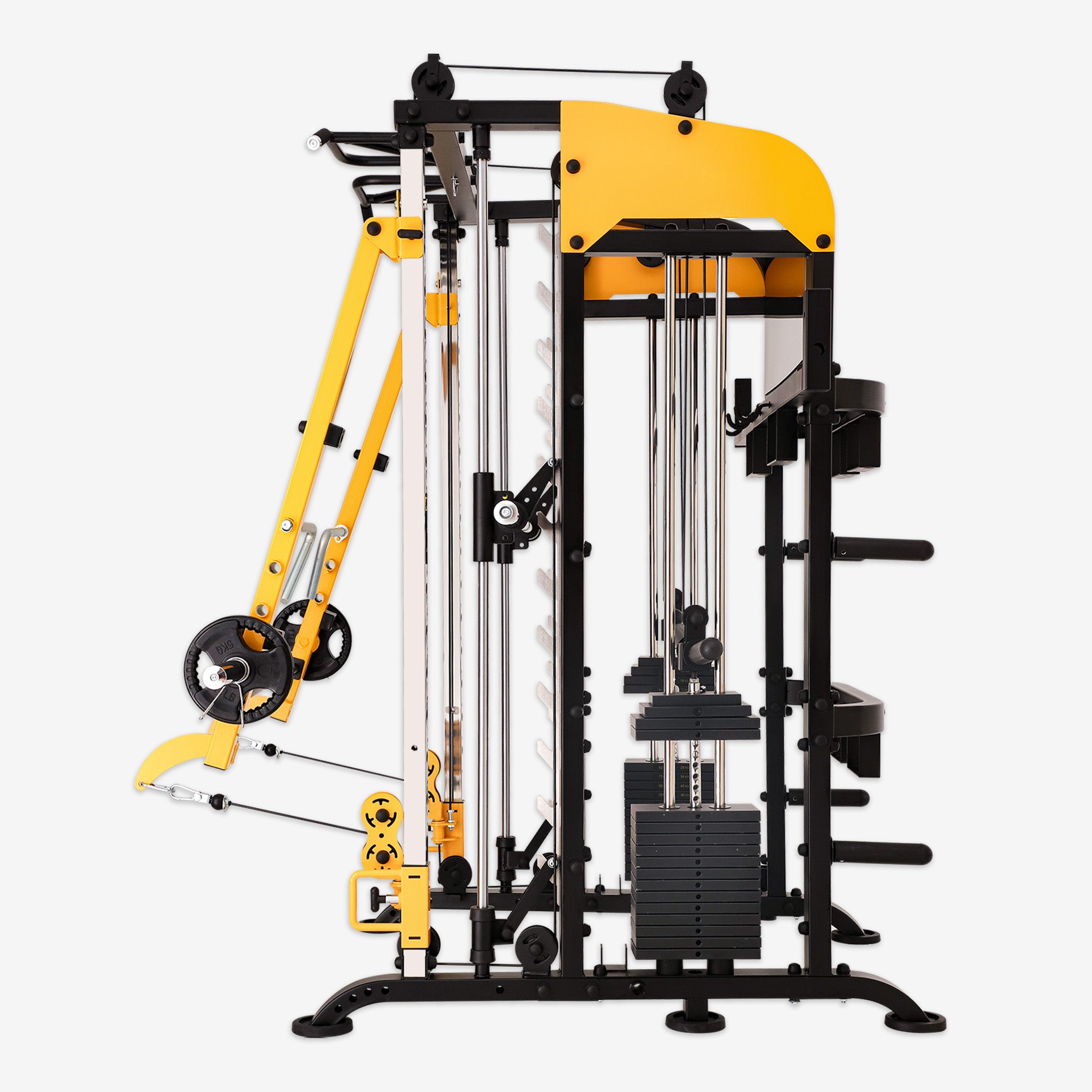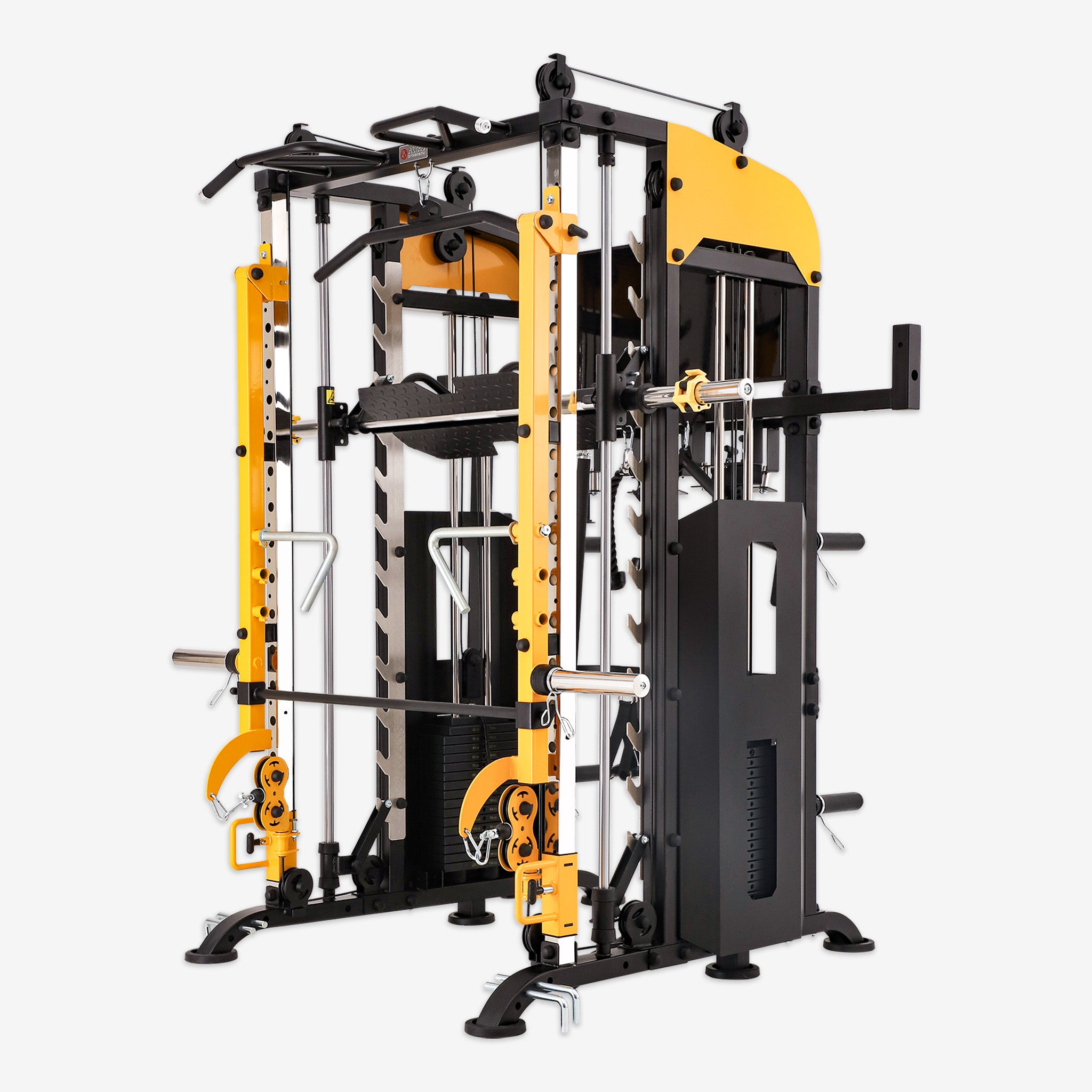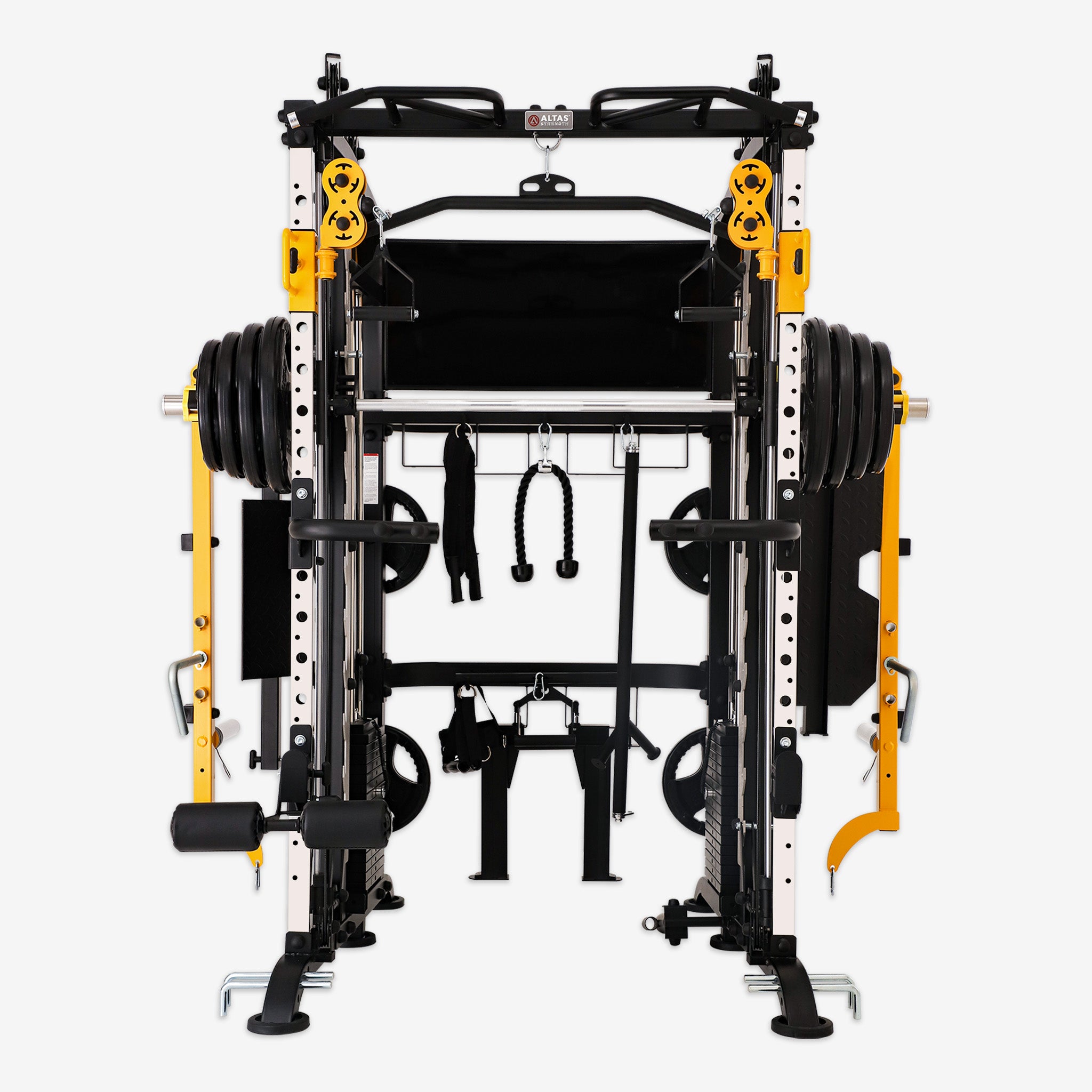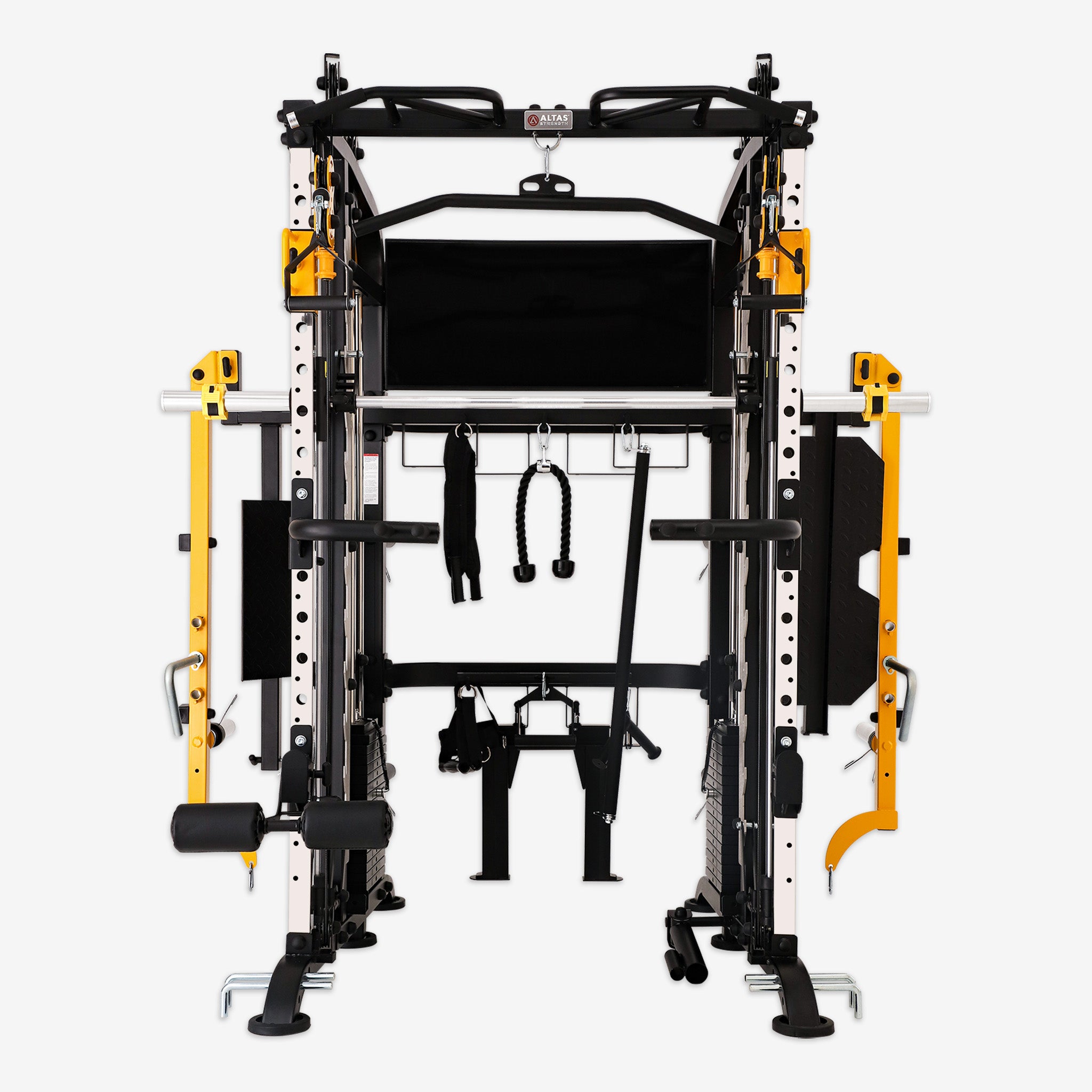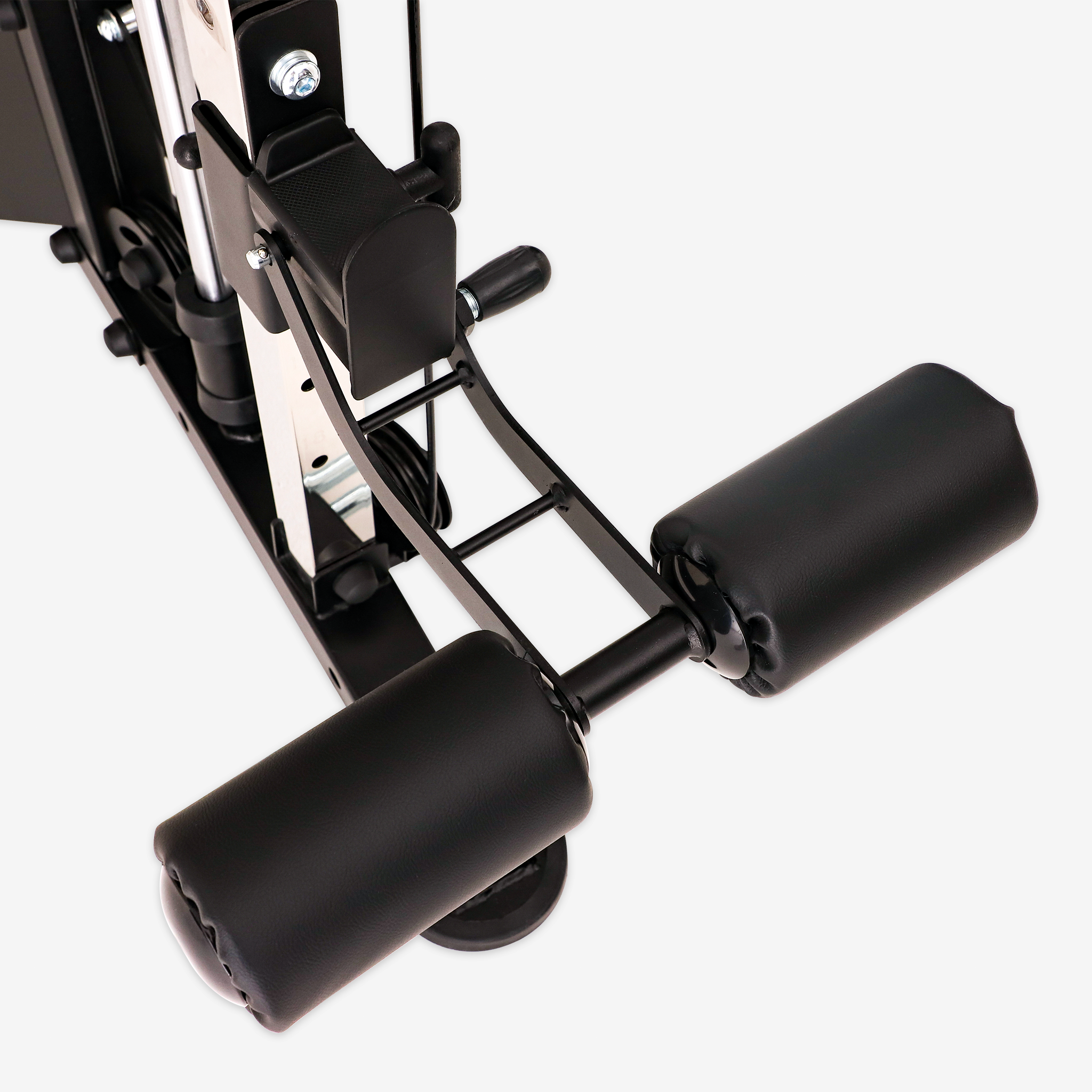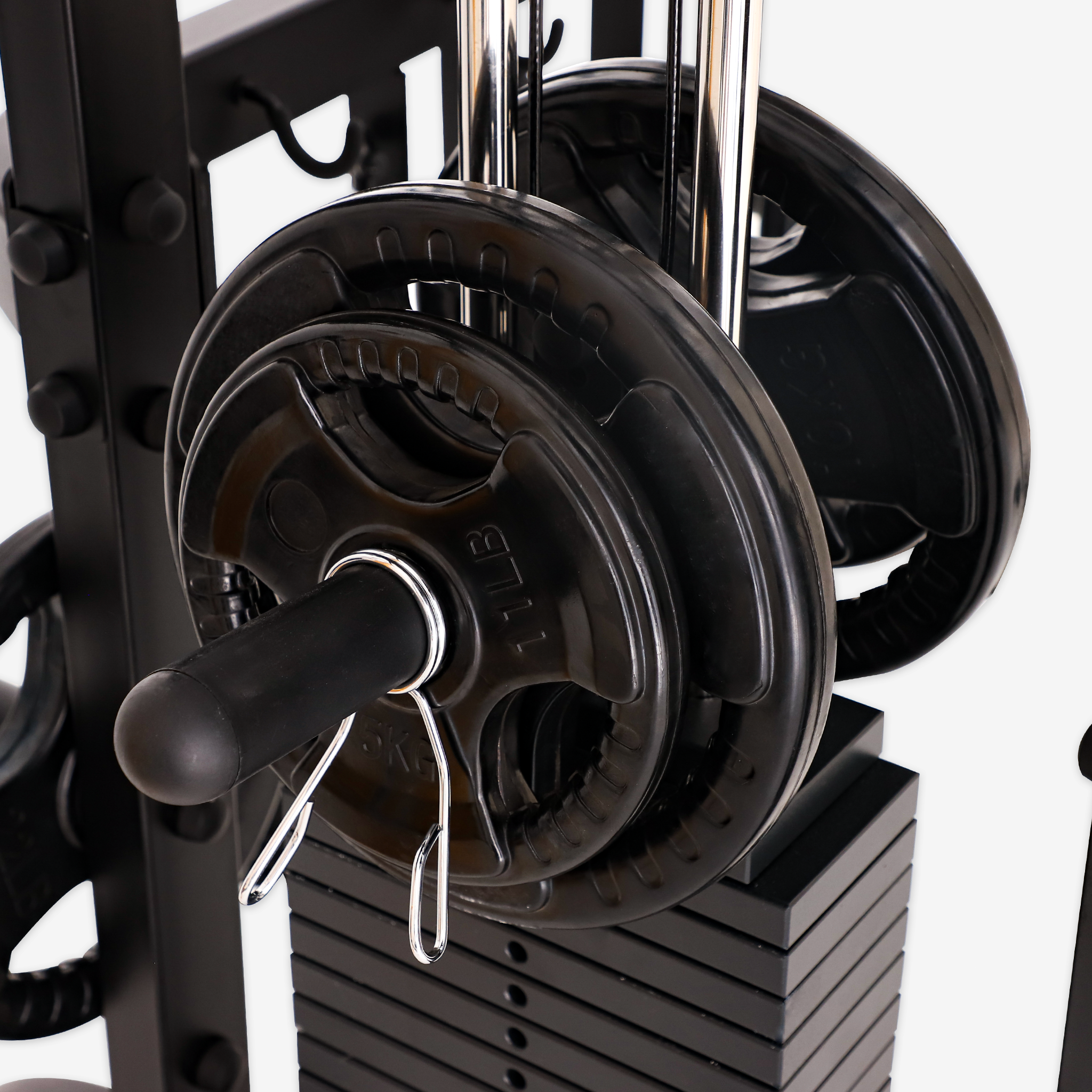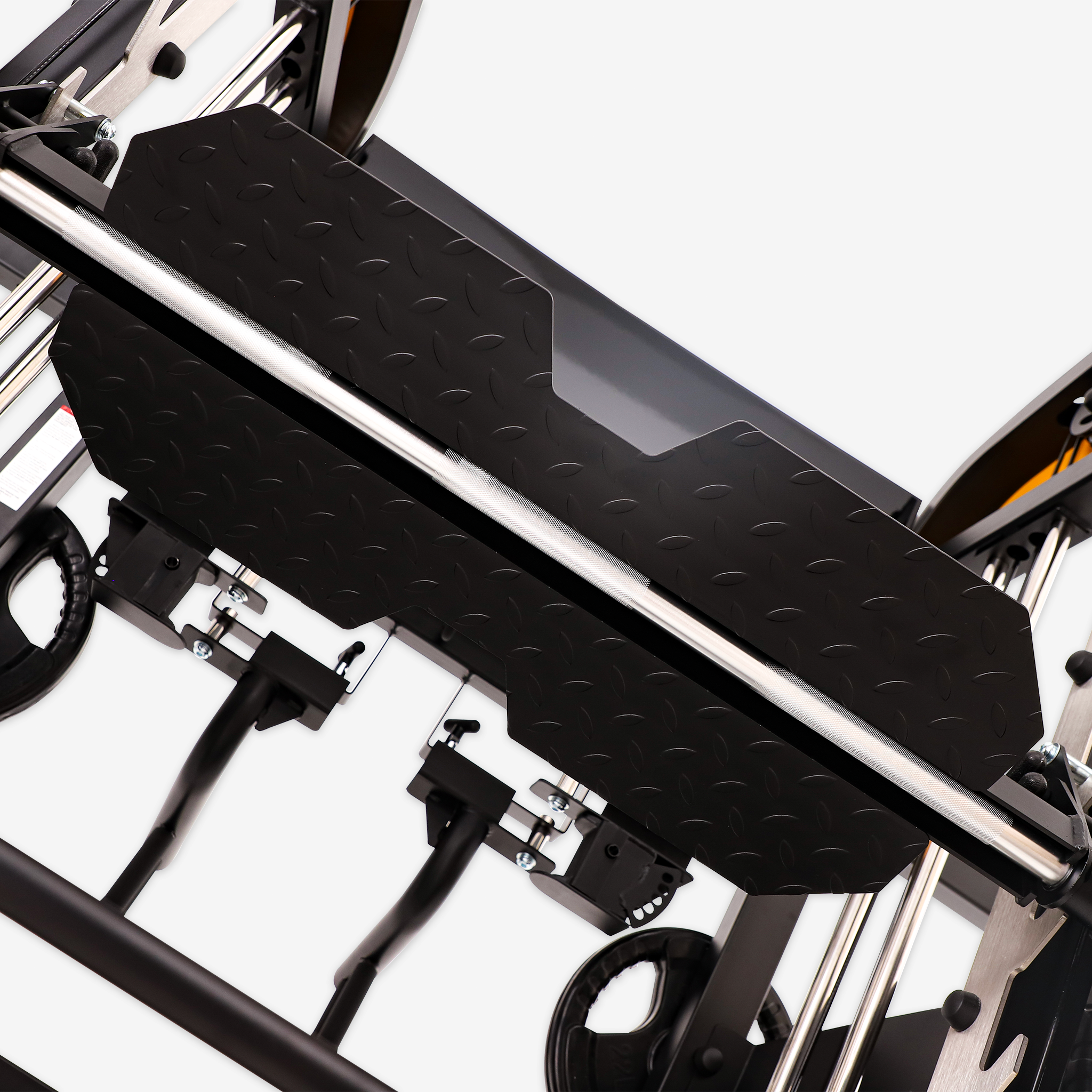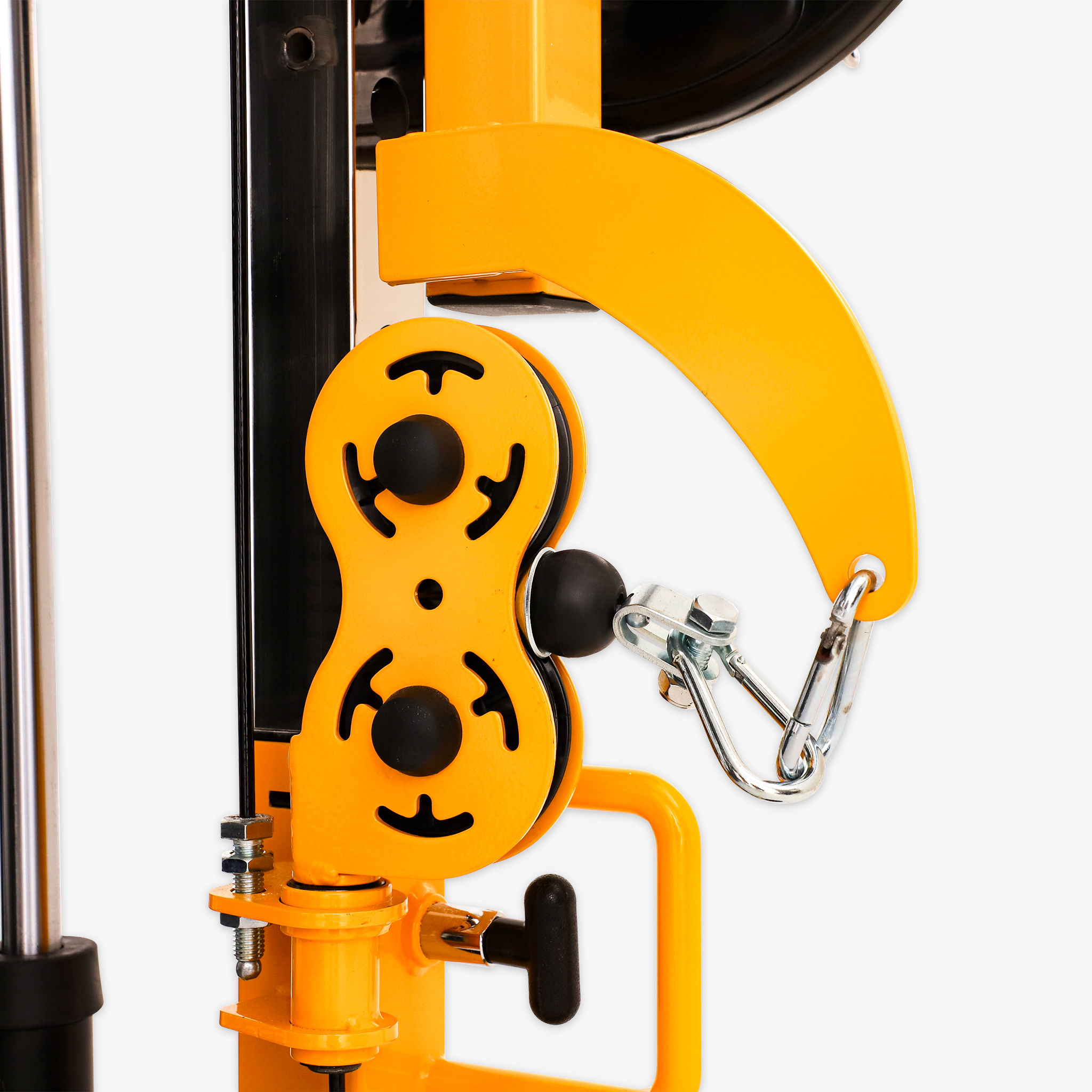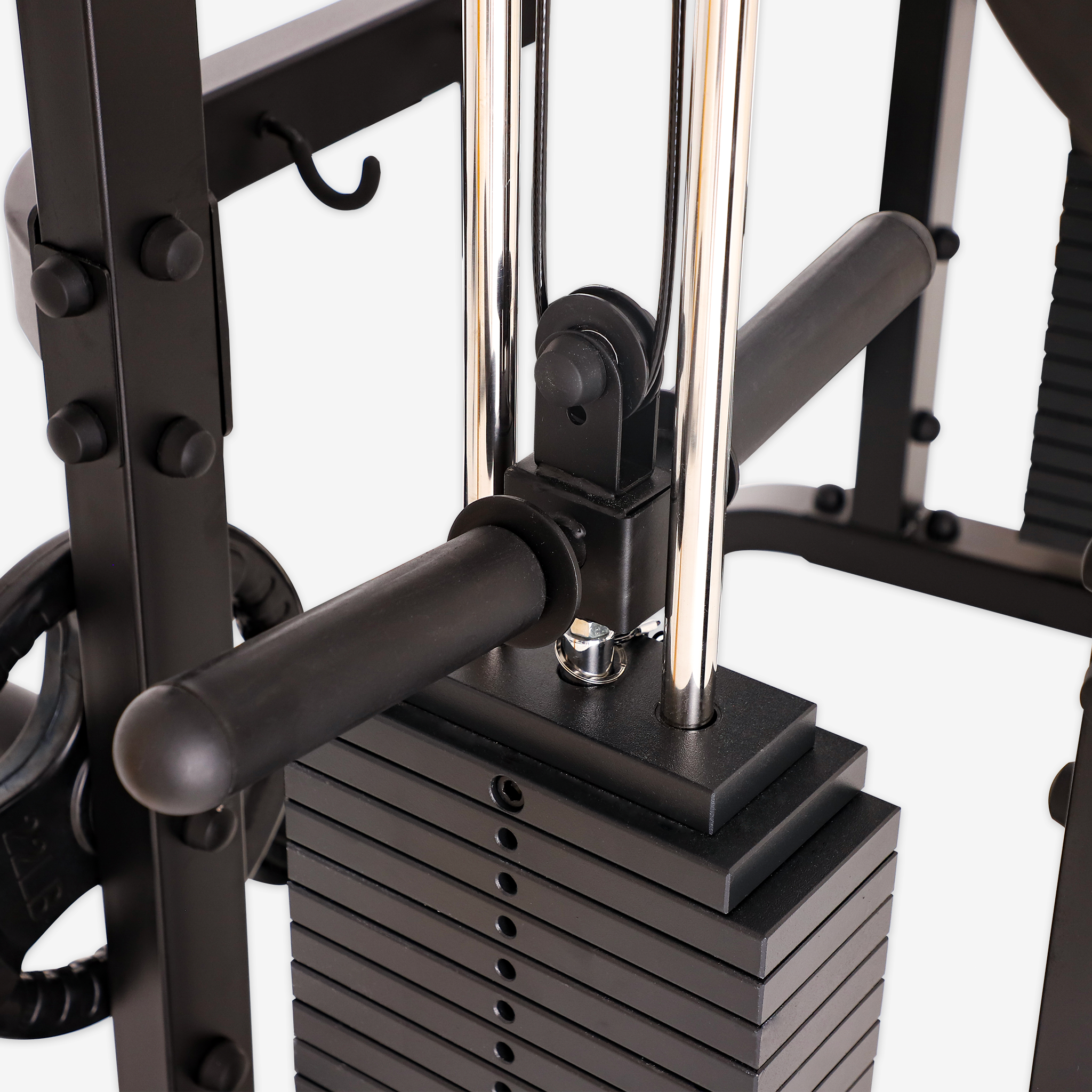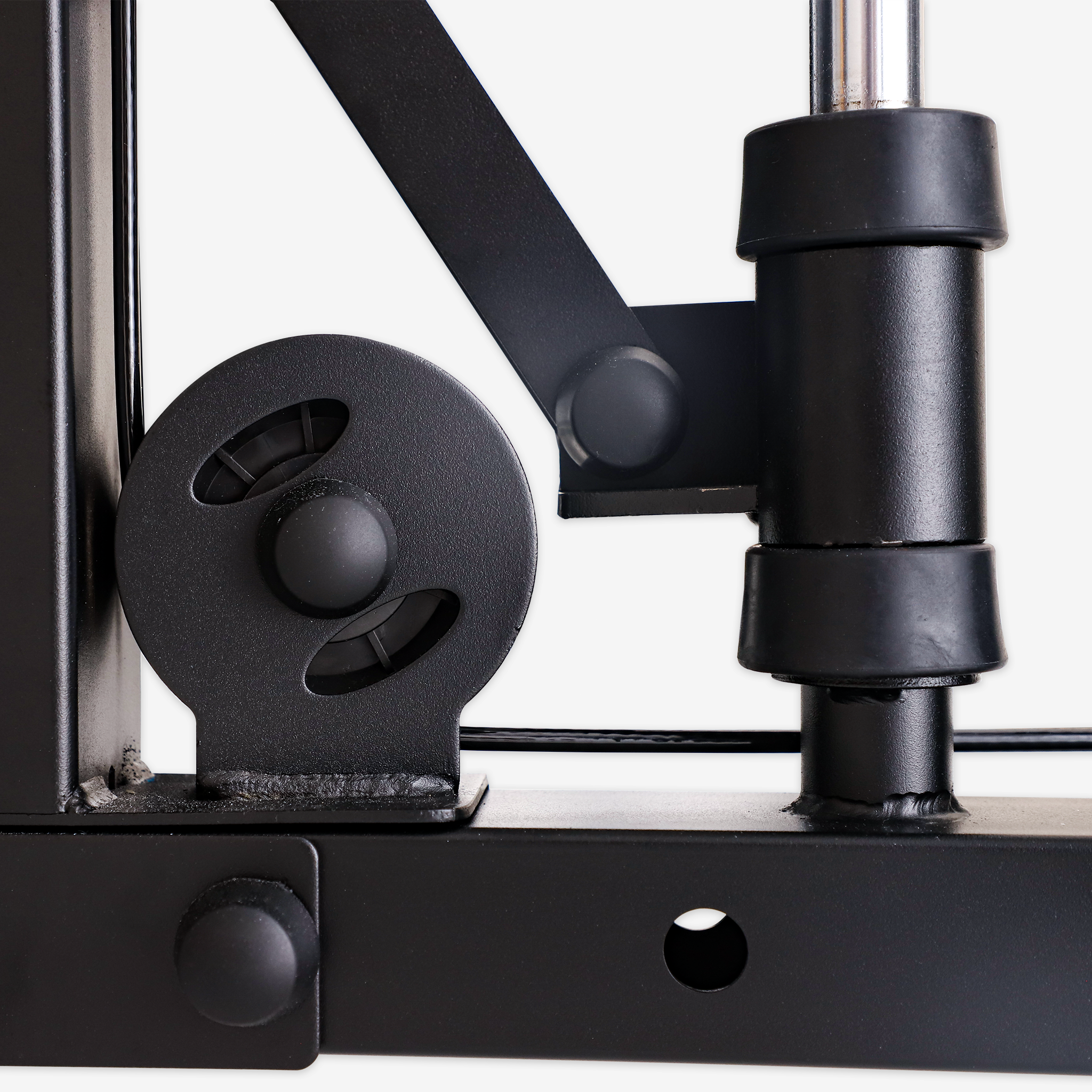
A front squat Smith machine combines the quad-focused mechanics of a front squat with the guided movement of a Smith machine. Instead of balancing a free barbell through the entire movement, the bar travels along a fixed track, reducing the amount of horizontal stabilization required.
For home gym users, this setup can make front squats easier to learn and more repeatable, particularly when training alone. However, the guided path also changes the movement compared with a free-weight front squat, so it is important to understand both the advantages and limitations before choosing it.
What Is a Front Squat on a Smith Machine?
A Smith machine front squat is performed with the bar positioned across the front of the shoulders and upper chest while the bar travels along the machine's guided rails.
The basic movement is similar to a traditional front squat:
-
Position the bar securely across the front of the shoulders.
-
Stand with an appropriate squat stance.
-
Keep the torso relatively upright as you descend.
-
Lower under control to your chosen squat depth.
-
Drive through the floor to return to the starting position.
The main difference is that the Smith machine guides the bar along a predetermined path rather than requiring the lifter to stabilize the bar freely in three-dimensional space.
Because Smith machines differ in rail angle, bar resistance, safety mechanism, and overall geometry, the exact experience can vary significantly between models.
Why Do People Choose a Smith Machine for Front Squats?
1. Less Balance Demanded From the Lifter
Free-weight front squats require the lifter to control the bar while simultaneously managing balance, torso position, and the movement of the hips, knees, and ankles.
A Smith machine reduces some of this stabilization requirement because the bar is guided along its track.
This can allow beginners and intermediate lifters to concentrate more on:
-
Squat depth
-
Upright torso positioning
-
Controlled tempo
-
Consistent repetitions
-
Lower-body muscle development
This does not make the movement automatically better than a free-weight front squat. It simply shifts the training emphasis toward a more guided and repeatable movement.
2. Practical for Solo Home Training
Many home gym users train without a dedicated spotter.
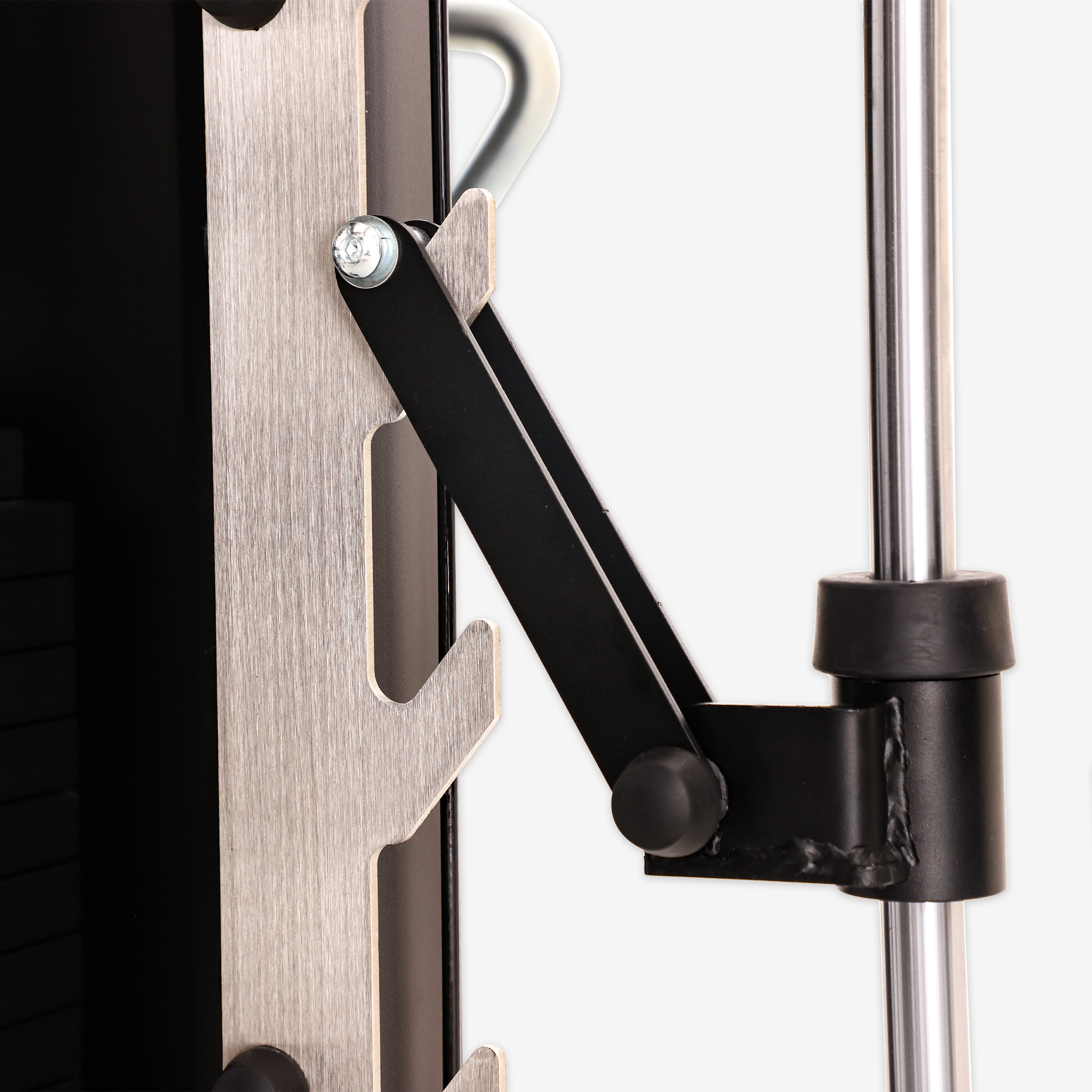
A Smith machine provides adjustable safety catches or locking mechanisms that can be positioned according to the user's preferred range of motion. When correctly adjusted, these features can provide an additional layer of protection if a repetition cannot be completed.
For solo training, this is one of the major reasons lifters consider a Smith machine instead of relying exclusively on a free barbell.
3. More Consistent Rep Execution
With a free barbell, the bar can move forward, backward, or sideways as the lifter completes a repetition.
A guided Smith machine limits this movement.
That can make repetitions more consistent from set to set, which is particularly useful for lifters who prioritize controlled resistance training and muscle development rather than sport-specific free-weight performance.
4. A More Accessible Learning Environment
Front squats can be technically demanding because the lifter must maintain an appropriate upper-body position while keeping the bar securely supported.
The guided movement of a Smith machine can reduce some of the coordination requirements.
For a beginner, this may make it easier to learn the basic sensation of a front-loaded squat before progressing to more complex free-weight variations.
Key Features to Look for in a Front Squat Smith Machine
Not every Smith machine provides the same front squat experience. If front squats are an important part of your training, several design factors deserve attention.
Smooth Bar Travel
A smooth guided track is important because inconsistent resistance or sticking points can make controlled repetitions difficult.
A well-designed Smith machine should provide predictable bar movement throughout the usable range of motion.
For front squats, smooth travel is particularly useful when performing slower repetitions or gradually increasing resistance.
Adjustable Safety Catches
Safety catches should be easy to adjust and positioned according to the user's squat depth and setup.
The goal is not simply to have safety hardware, but to have a system that can be adjusted appropriately for different exercises and users.
Stable Frame
Front squats place substantial loading on the machine.
A rigid frame can provide a more stable training platform and reduce unwanted machine movement during heavier sets.
This is especially relevant for home gym users who want one machine to support multiple exercises rather than purchasing separate stations.
Multi-Function Design
A major advantage of a full Smith machine system is that the front squat does not have to be its only purpose.
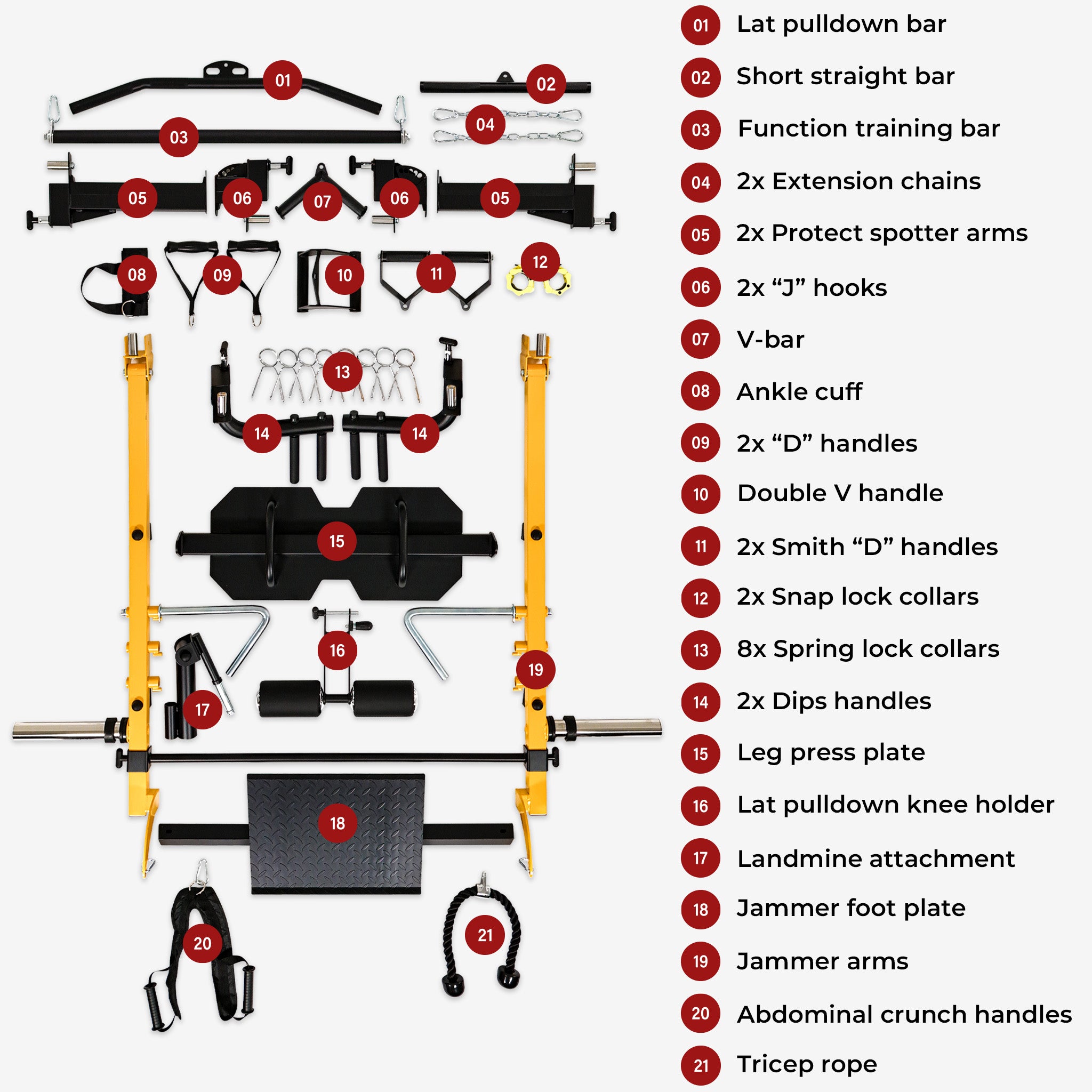
Depending on the model, the same machine may support exercises such as:
-
Back squats
-
Smith machine bench presses
-
Overhead presses
-
Rows
-
Lat pulldowns
-
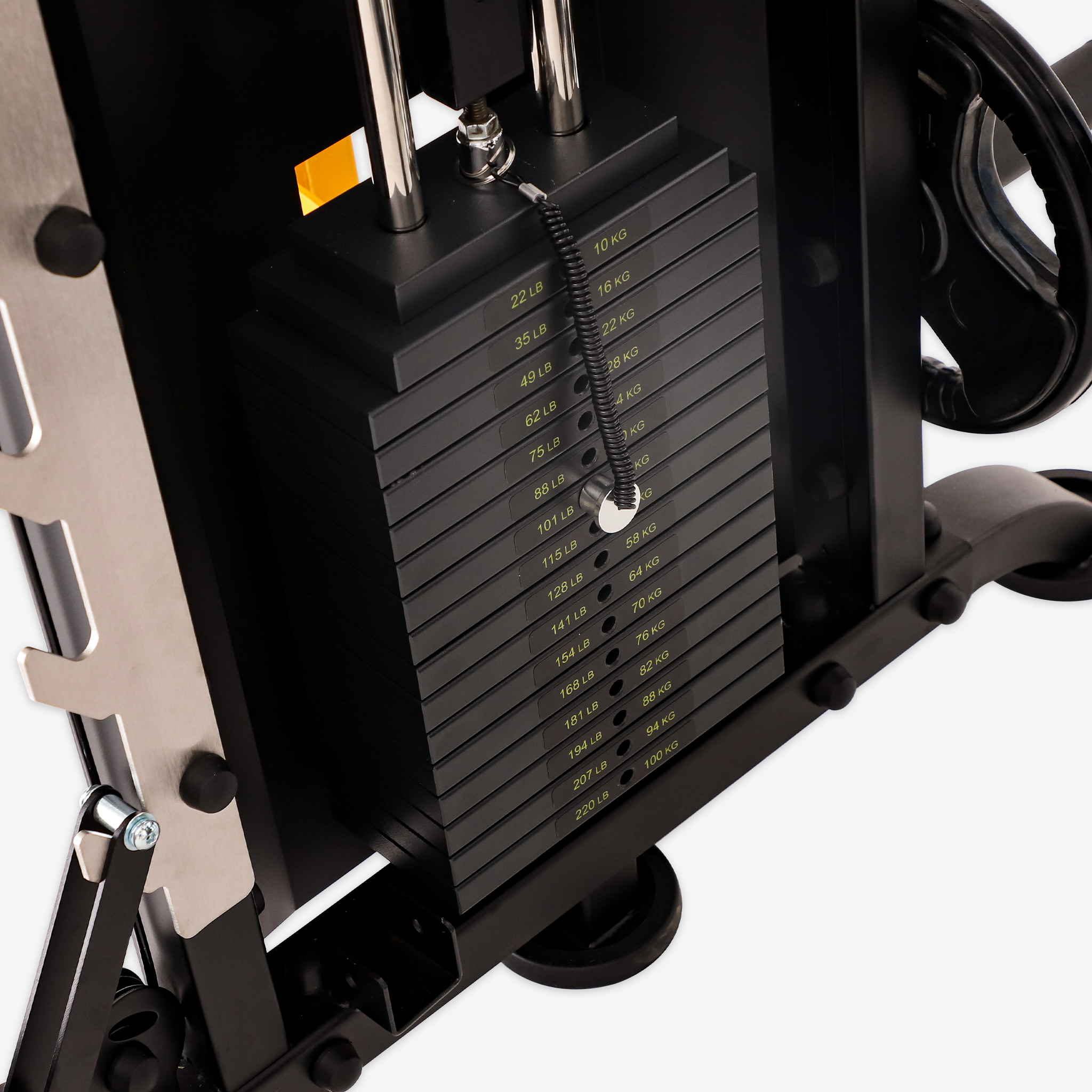
Cable exercises
-
Lower-body movements
This can make a Smith machine more practical for a complete home gym than a standalone front squat station.
Smith Machine Front Squat vs. Free-Weight Front Squat
The two exercises share the same basic front-loaded squat concept, but they serve somewhat different training purposes.
| Factor | Smith Machine Front Squat | Free-Weight Front Squat |
|---|---|---|
| Bar stabilization | Guided | Fully self-stabilized |
| Balance requirement | Lower | Higher |
| Solo training | Convenient with safety catches | Requires appropriate rack/safety setup |
| Movement path | Predetermined by machine | Determined by lifter |
| Stabilizer demand | Generally lower | Generally higher |
| Rep consistency | High | Depends more on technique |
| Sport-specific transfer | More limited | More direct |
| Learning curve | Generally easier | Generally more demanding |
| Home gym versatility | High on multifunction machines | Depends on equipment setup |
The important point is that neither variation is universally superior.
A Smith machine front squat may be the better choice for controlled home-gym resistance training, while a free-weight front squat may be more appropriate for athletes who specifically need to develop unrestricted barbell movement and stabilization.
Smith Machine Front Squat vs. Other Quad-Focused Exercises
Front squats are also commonly compared with leg presses, hack squats, and other machine-based lower-body exercises.
Smith Machine Front Squat vs. Leg Press
A leg press provides substantial external support and removes much of the need to balance the body.
A Smith machine front squat requires the lifter to stand and coordinate the entire squat movement.
Choose the Smith machine variation when you want a more squat-specific movement. Choose a leg press when machine-supported lower-body training is the primary goal.
Smith Machine Front Squat vs. Hack Squat
Both can provide a controlled lower-body training experience.
The main difference is that a Smith front squat still requires the lifter to position and control their body under a bar, while a hack squat machine provides more dedicated body support.
Smith Machine Front Squat vs. Free-Weight Front Squat
This is the most important comparison.
The Smith machine prioritizes guidance, repeatability, and convenient solo training, while the free-weight version prioritizes self-stabilization and unrestricted barbell movement.
Common Limitations of Smith Machine Front Squats
A Smith machine is not automatically the best choice for every lifter.
Reduced Stabilization Demand
Because the bar is guided, the lifter does not have to control the same amount of horizontal bar movement as with a free barbell.
For someone specifically training balance, stabilization, or unrestricted barbell mechanics, this can be a limitation.
Fixed Bar Path
The machine determines the bar's movement path.
Human movement is not identical from person to person. Differences in limb proportions, mobility, stance, and technique can affect how comfortable a particular Smith machine feels.
If the machine's track does not suit your preferred squat mechanics, the exercise may feel less natural than a free-weight front squat.
Limited Sport-Specific Transfer
Athletes training specifically for Olympic weightlifting, powerlifting, or other activities requiring free-weight squatting may need to prioritize movements that more closely reproduce their sport-specific mechanics.
A Smith machine front squat can still be useful as a supplementary strength exercise, but it should not automatically be treated as a replacement for every free-weight squat variation.
Larger Space Requirement
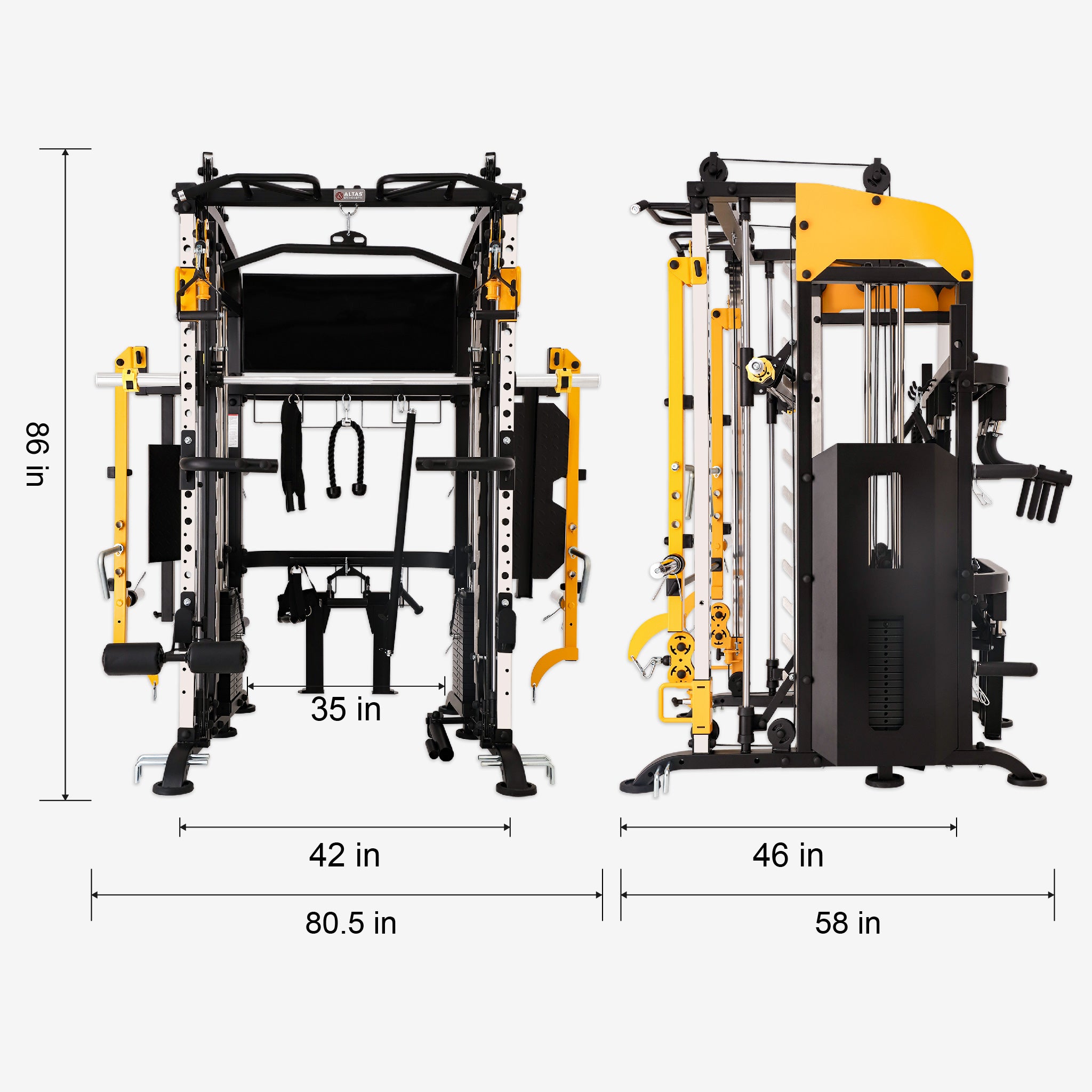
A complete Smith machine requires substantially more space than a barbell and a basic rack setup.
For extremely small apartments or compact training areas, a standalone barbell setup may be more practical.
Why Choose an Altas Strength Smith Machine for Front Squats?
For home gym users, the decision is often about more than the front squat itself.
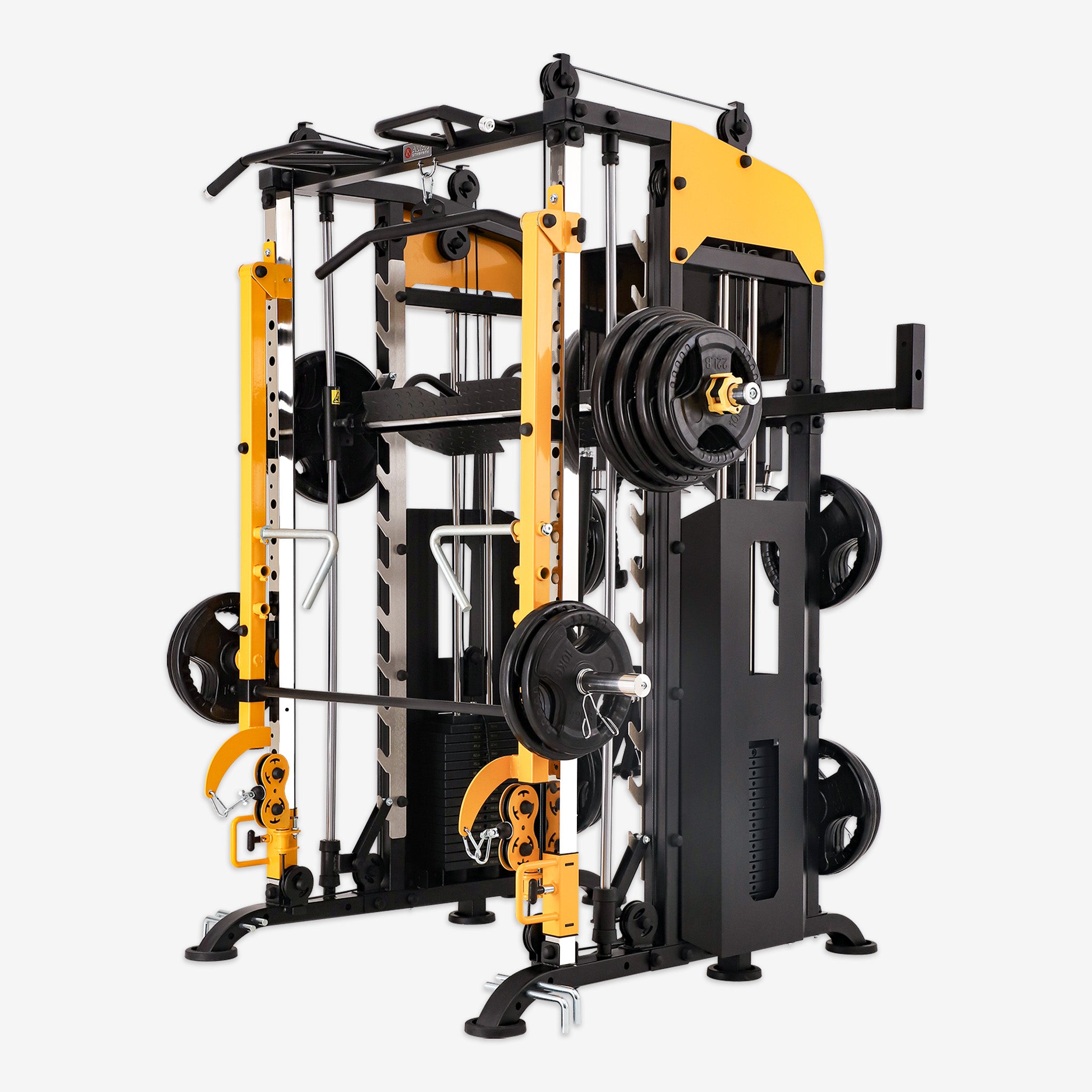
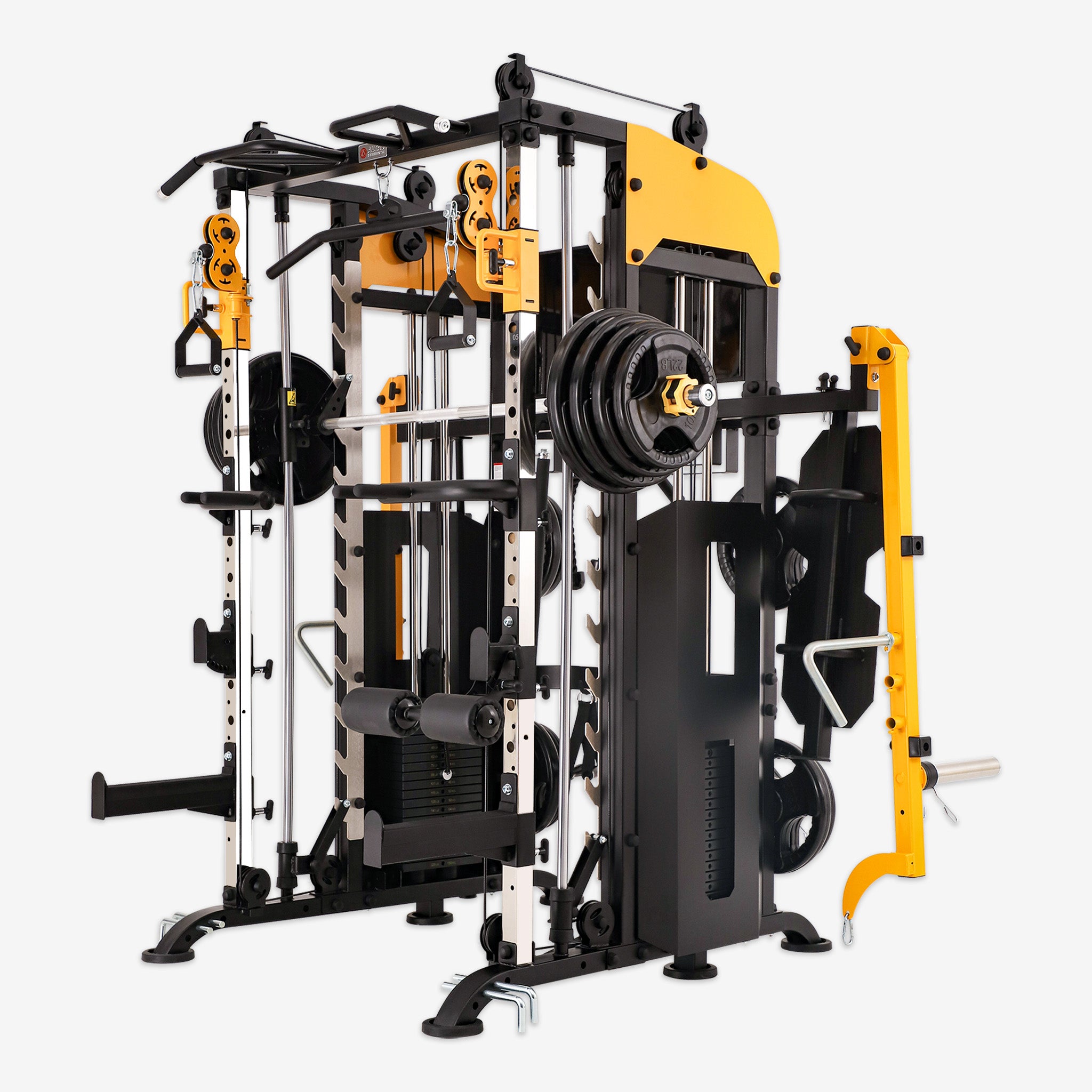
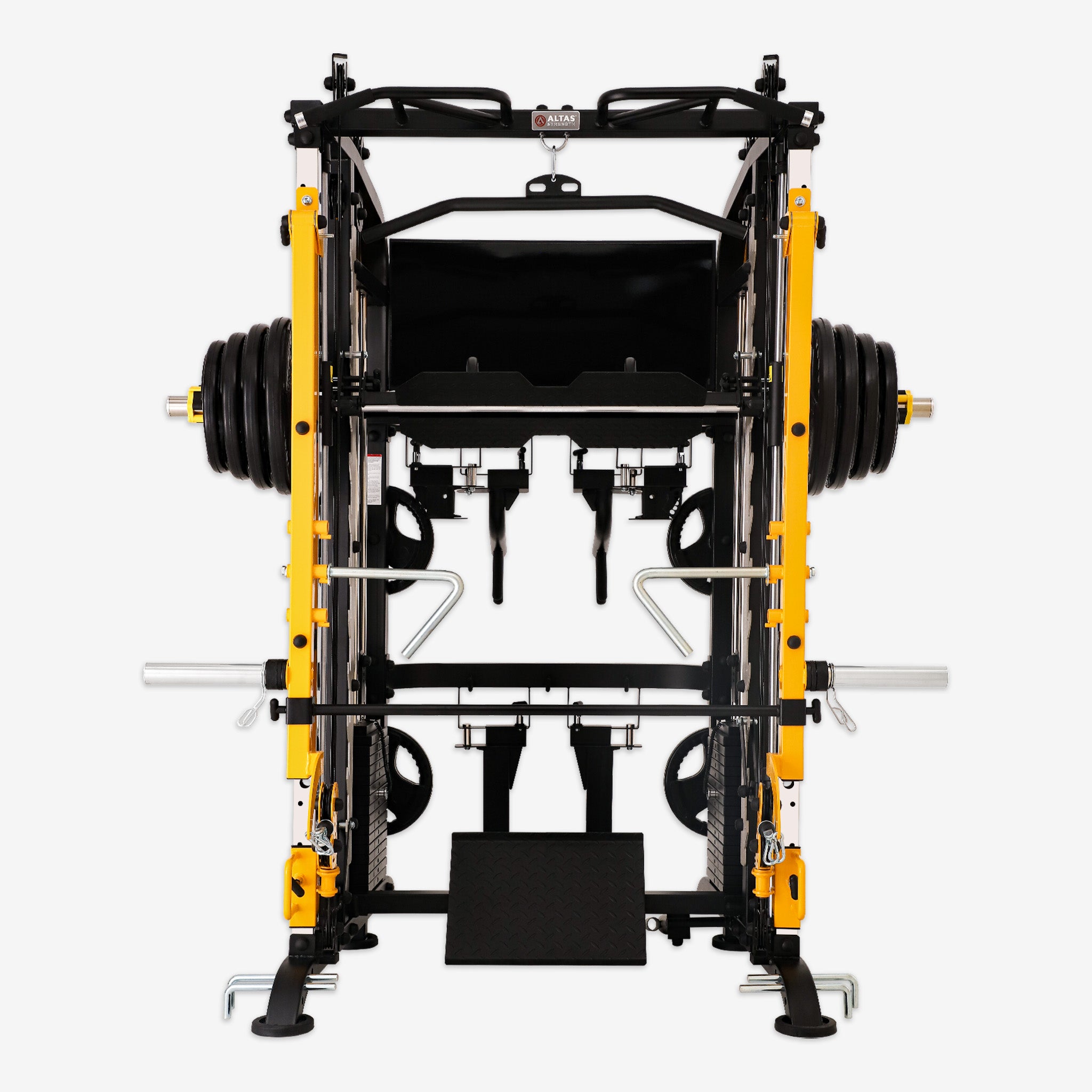
An Altas Strength Smith machine is designed as a multifunction training system, so front squats can be integrated into a broader home workout environment.
The main decision factors include:
1. Guided and Repeatable Training
The Smith track provides a consistent bar path, which can be useful for lifters who prioritize controlled repetitions and repeatable training sessions.
2. Solo-Training Convenience
Adjustable safety mechanisms can provide an additional layer of protection for lifters training without a partner, provided they are set correctly and the machine is used according to its instructions.
3. Heavy-Duty Construction
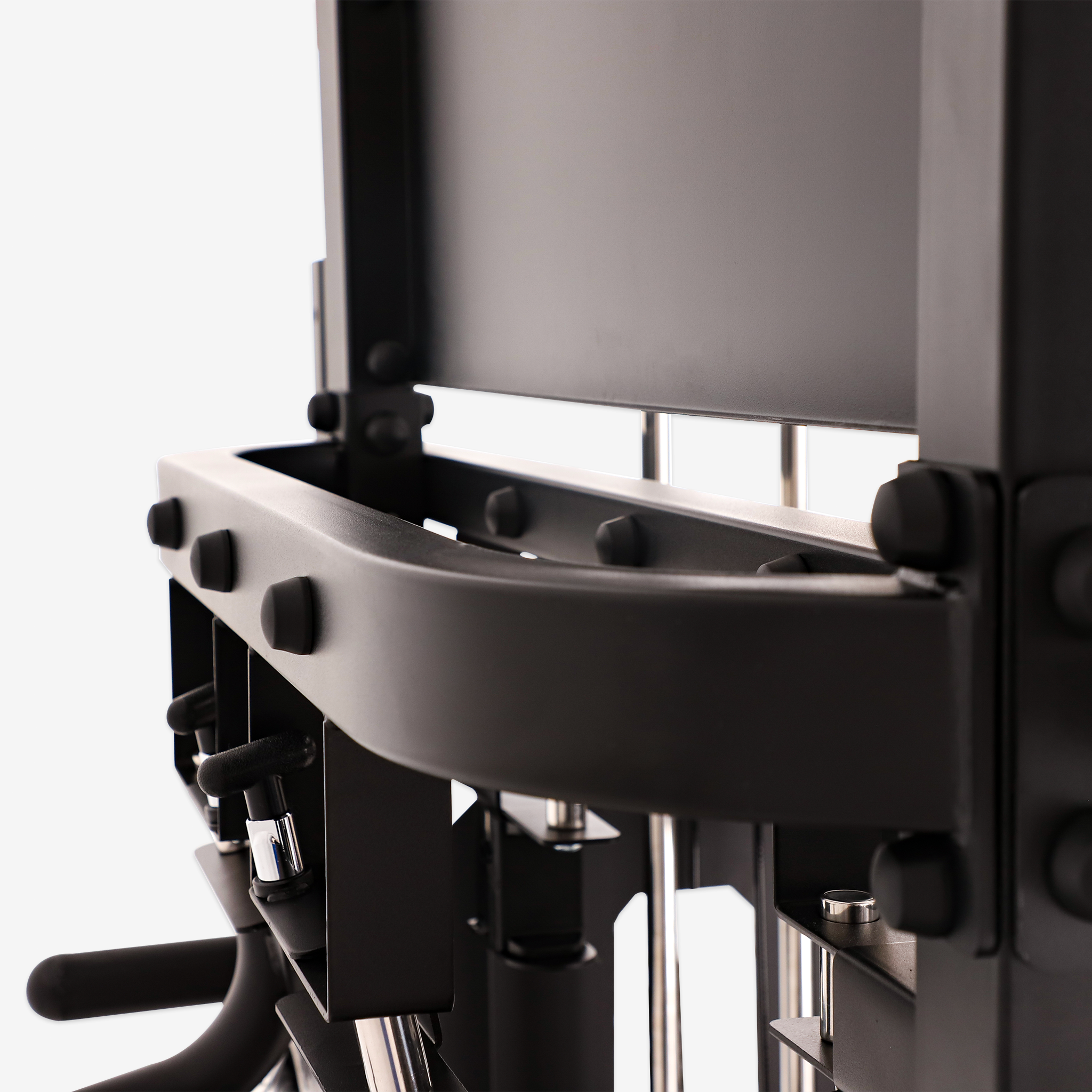
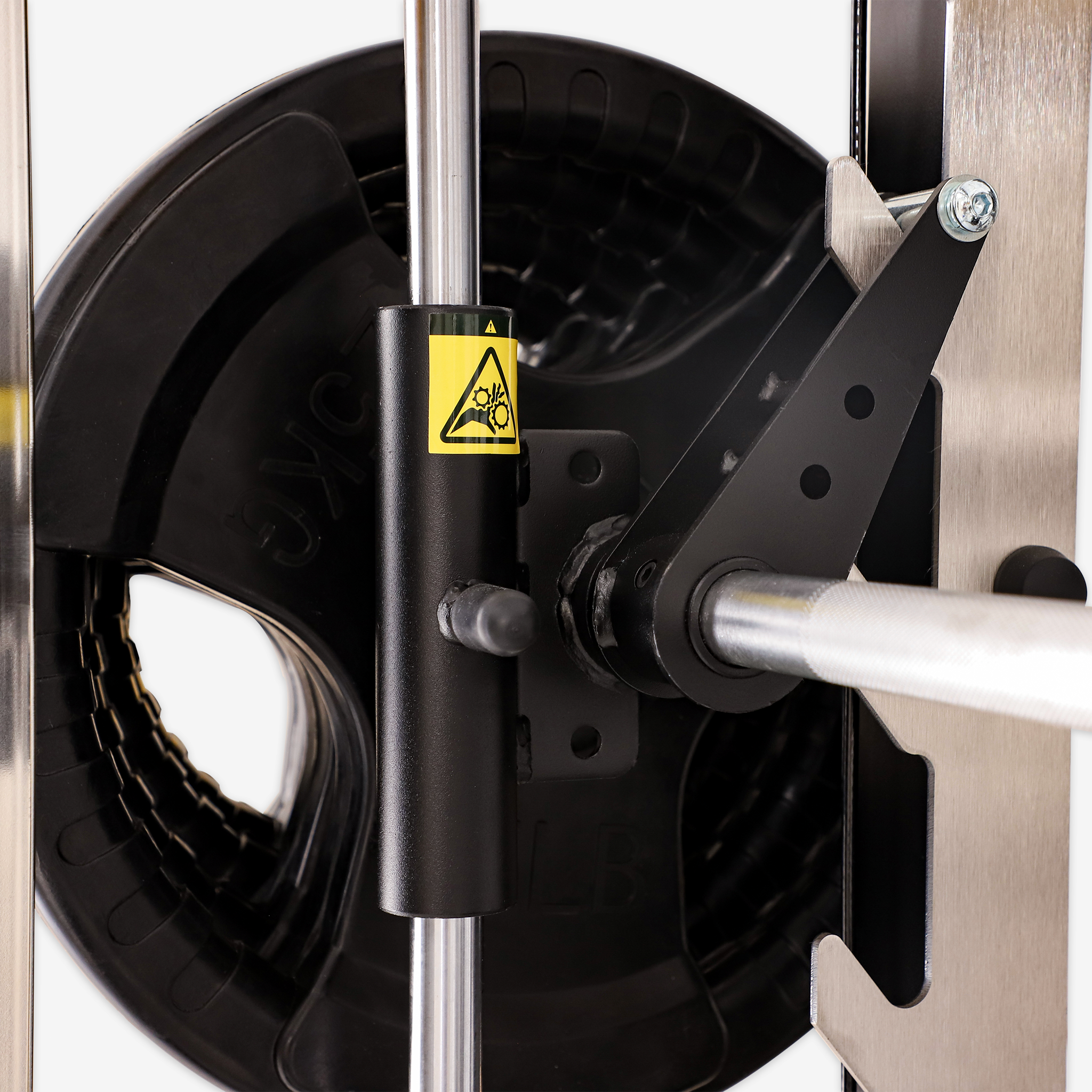
A rigid machine frame and properly engineered guided system are important considerations when the equipment is expected to handle repeated loading over time.
4. One Machine, Multiple Exercises
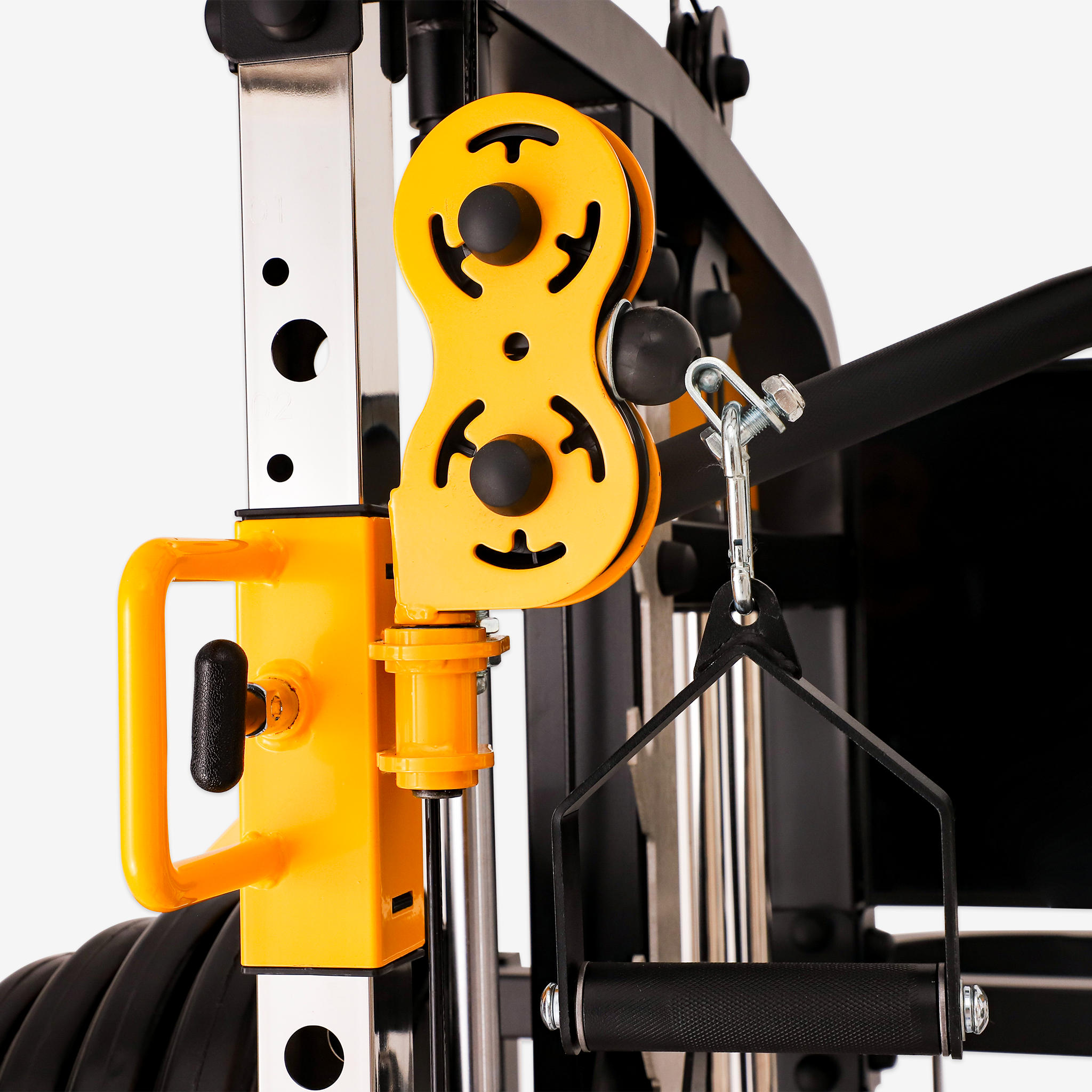
Instead of purchasing separate equipment for squats, presses, and cable exercises, a multifunction Smith machine can combine several training stations into one home gym system.
This can be particularly valuable when floor space and equipment budget need to be balanced.
5. Easier Transition Into Front-Loaded Squatting
For newer lifters, the guided environment may make it easier to focus on basic squat mechanics before experimenting with more technically demanding free-weight variations.
Who Should Use a Smith Machine Front Squat?
A Smith machine front squat can be a strong option for:
-
Beginner and intermediate home gym lifters
-
People who primarily train alone
-
Hypertrophy-focused resistance trainees
-
Lifters who value consistent repetitions
-
Users building a multifunction home gym
-
People who prefer guided resistance exercises
-
Lifters who want to include front squats without making free-weight stabilization the primary challenge
The machine is particularly attractive when repeatability, convenience, and equipment versatility matter more than maximizing unrestricted barbell skill.
Who May Prefer Free-Weight Front Squats?
A free-weight front squat may be a better fit for:
-
Olympic weightlifting-focused athletes
-
Competitive lifters who need sport-specific movement practice
-
Athletes specifically training free-weight stabilization
-
Lifters who prefer unrestricted barbell movement
-
Users whose body proportions or mobility make a particular Smith machine track uncomfortable
For these users, the Smith machine can still serve as a supplementary exercise rather than the primary front squat variation.
How to Get More From Smith Machine Front Squats
The goal should not be to simply load as much weight as possible.
Instead, focus on consistent technique and appropriate machine setup.
Before beginning a set:
-
Confirm that the bar and machine are correctly configured.
-
Set the safety catches appropriately.
-
Choose a stance that feels stable and controlled.
-
Position the bar securely across the front of the shoulders.
-
Use a controlled range of motion appropriate for your mobility.
-
Keep repetitions consistent rather than chasing unnecessary load.
-
Stop a set if technique becomes difficult to control.
Because Smith machines differ, avoid assuming that the same weight or setup will feel identical across different machines.
Final Verdict: Is a Smith Machine Good for Front Squats?
Yes—a Smith machine can be an effective front squat option for home gym lifters who value stability, repeatable movement, solo-training convenience, and multifunction equipment.
Its biggest advantage is not that it makes front squats universally better. Instead, it changes the training equation by reducing the stabilization and balance demands of the free-weight version.
For beginner and intermediate lifters, this can create a more accessible and consistent way to perform front-loaded squats. For advanced athletes who need unrestricted barbell mechanics, a free-weight front squat remains important.
The best choice depends on the training goal:
-
Controlled home-gym hypertrophy → Smith machine front squat
-
Solo training with adjustable safety support → Smith machine
-
Beginner-friendly guided movement → Smith machine
-
Free-weight stabilization → Barbell front squat
-
Olympic lifting or sport-specific practice → Free-weight front squat
-
Maximum home-gym versatility → Multifunction Smith machine
For most everyday home gym users, the Smith machine front squat is best viewed as a practical, repeatable lower-body exercise—not a universal replacement for the free-weight front squat.