If you are searching for how to calculate weight on a Smith machine, the most important thing to understand is that the number of plates on the bar is not always the same as the resistance you are actually moving.
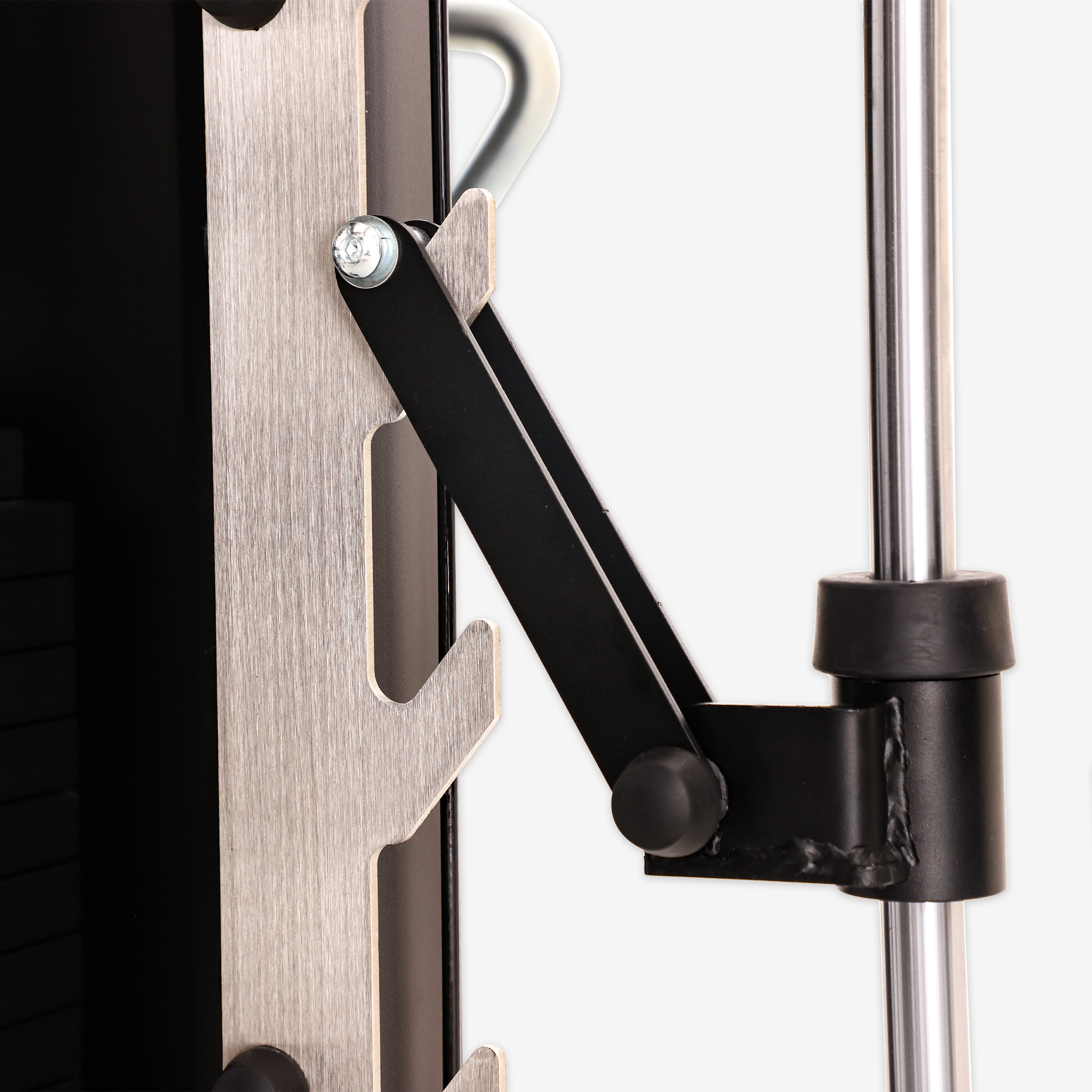
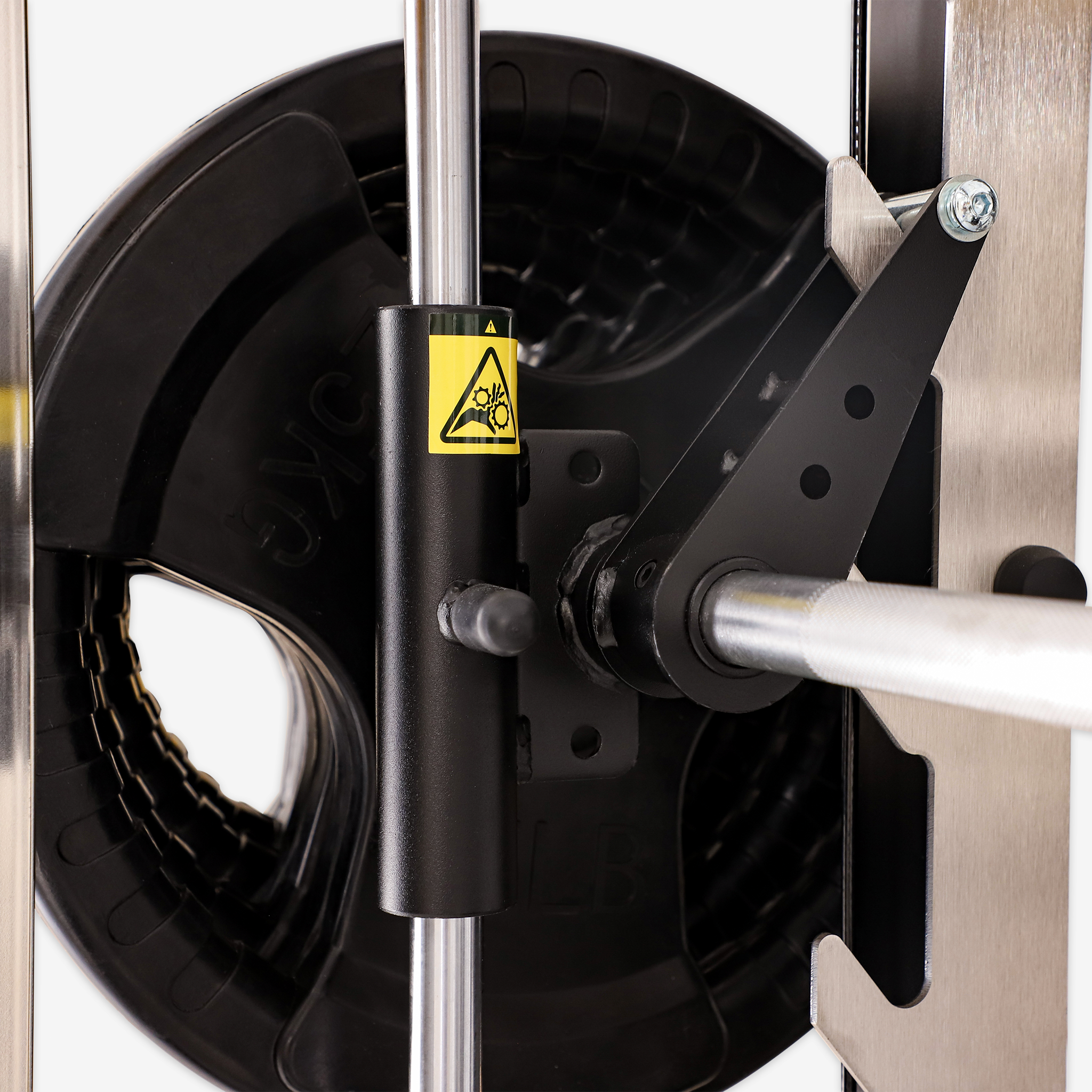
Unlike a standard Olympic barbell, a Smith machine may use a counterbalance system, guided rails, pulleys, or other mechanical components that change the bar's effective starting resistance.
The simplest calculation is:
Effective Smith Machine Load = Plate Weight + Effective Bar Weight
For example, if you load two 45 lb plates on each side and the machine has a 15 lb effective bar weight:
45 + 45 + 45 + 45 + 15 = 195 lb
Your effective Smith machine load would be approximately 195 lb.
However, the exact calculation depends on the specific Smith machine. Some manufacturers publish an effective bar weight or starting resistance, while others do not. Therefore, there is no single Smith machine weight formula that applies to every machine.
What Is the Effective Weight of a Smith Machine Bar?
The physical bar itself may weigh considerably more or less than the resistance you actually feel.
This distinction exists because some Smith machines use counterbalancing.
For example, a machine may have a physically heavy bar connected to a counterweight system. The counterbalance offsets part of the bar's gravitational load, resulting in a much lower starting resistance.
That means you should not automatically use the physical weight of the bar when calculating your workout load.
The manufacturer's effective bar weight, starting resistance, or equivalent specification is the better number to use.
The Basic Smith Machine Weight Formula
For a standard plate-loaded Smith machine, use:
Total Effective Load = Effective Bar Weight + Total Plates Loaded
If the machine uses the same resistance on both sides, calculate the plates first.
Example 1: 20 lb Effective Bar
Suppose:
-
Effective bar weight = 20 lb
-
Plate on each side = 45 lb
-
Two sides = 90 lb total plates
Then:
20 + 90 = 110 lb
Your effective starting load is approximately 110 lb.
Example 2: 15 lb Effective Bar
Suppose you load:
-
45 lb + 45 lb on one side
-
45 lb + 45 lb on the other side
-
Effective bar weight = 15 lb
Total plate weight:
180 lb
Effective load:
180 + 15 = 195 lb
The important point is that the calculation uses the machine's effective bar resistance, not necessarily the physical bar weight.
What If the Smith Machine Has a Counterbalance?
This is where Smith machine calculations become more complicated.
A counterbalanced Smith machine is designed to offset part of the bar's weight.
Therefore:
Effective Bar Weight ≠ Physical Bar Weight
If the manufacturer states that the machine has a 15 lb starting resistance, use 15 lb in your calculation even if the physical bar assembly weighs considerably more.
For example:
180 lb plates + 15 lb effective resistance = 195 lb effective load
Do not add the full physical bar weight on top of the plates unless the manufacturer specifically defines the system that way.
Do You Need to Calculate the Smith Machine Rail Angle?
Usually, no.
This is an important distinction.
Some Smith machines use angled rails, while others use vertical or differently configured guide systems.
For normal workout tracking, you generally do not need to calculate a cosine adjustment simply because the rails are angled.
The machine's actual resistance is determined by its mechanical design, including the bar, counterbalance, pulleys, friction, and track configuration.
If the manufacturer provides a measured starting resistance or effective bar weight, that number is normally more useful for workout tracking than attempting to calculate resistance from the rail angle alone.
The practical rule is:
Use the manufacturer's effective resistance specification whenever it is available.
How Do You Calculate Smith Machine Weight When the Manufacturer Does Not List It?
This is one of the most common problems with budget Smith machines.
If there is no effective bar-weight specification, you may need to determine the machine's starting resistance experimentally.
A practical approach is to check:
-
The product manual
-
The manufacturer's specification sheet
-
The product listing
-
The machine's identification label
-
The manufacturer's customer support
If none provides the information, you should not assume that the bar weighs 15, 20, or 25 lb simply because another Smith machine does.
Different machines can have substantially different mechanical designs.
Why Smith Machine Numbers Are Difficult to Compare Between Gyms
A 200 lb Smith machine lift at one gym may not feel identical to a 200 lb Smith machine lift at another gym.
This happens because machines can differ in:
-
Effective bar weight
-
Counterbalance ratio
-
Pulley configuration
-
Rail design
-
Friction
-
Maintenance condition
-
Mechanical resistance
Therefore, Smith machine weight numbers should primarily be used to track progress on the same machine.
If you move from a commercial gym Smith machine to a home Smith machine, treat the first workout as a new equipment baseline.
Do not assume that 200 lb on one Smith machine is mechanically equivalent to 200 lb on another.
Does Smith Machine Weight Equal Free-Weight Barbell Weight?
Not necessarily.
A Smith machine and a free barbell create different resistance and stabilization demands.
A free barbell must be independently controlled by the lifter.
A Smith machine guides the bar along a fixed path and may use counterbalancing.
Therefore, a Smith machine bench press at a particular listed weight should not automatically be interpreted as the same performance as a barbell bench press at that weight.
The numbers can still be extremely useful for progressive overload, provided you consistently train on the same machine and track the same loading method.
How Should You Track Smith Machine Progress?
For consistent training data, record more than just the plate weight.
A useful workout record includes:
Machine + Exercise + Effective Load + Repetitions + Sets
For example:
Altas Strength Smith Machine — Bench Press — 195 lb — 8 reps × 3 sets
This creates a repeatable baseline.
If you later increase the load to 205 lb while maintaining similar technique and repetitions, you have a clear indication of progressive overload on that machine.
This is more useful than trying to convert every Smith machine workout into an equivalent free-weight number.
Why Effective Load Transparency Matters
For home gym buyers, clearly documented starting resistance can make equipment easier to use and workout data easier to track.
A well-documented Smith machine should ideally provide information about:
-
Effective bar weight or starting resistance
-
Maximum bar load
-
Weight-stack capacity, if applicable
-
Plate-loading configuration
-
Safety system
-
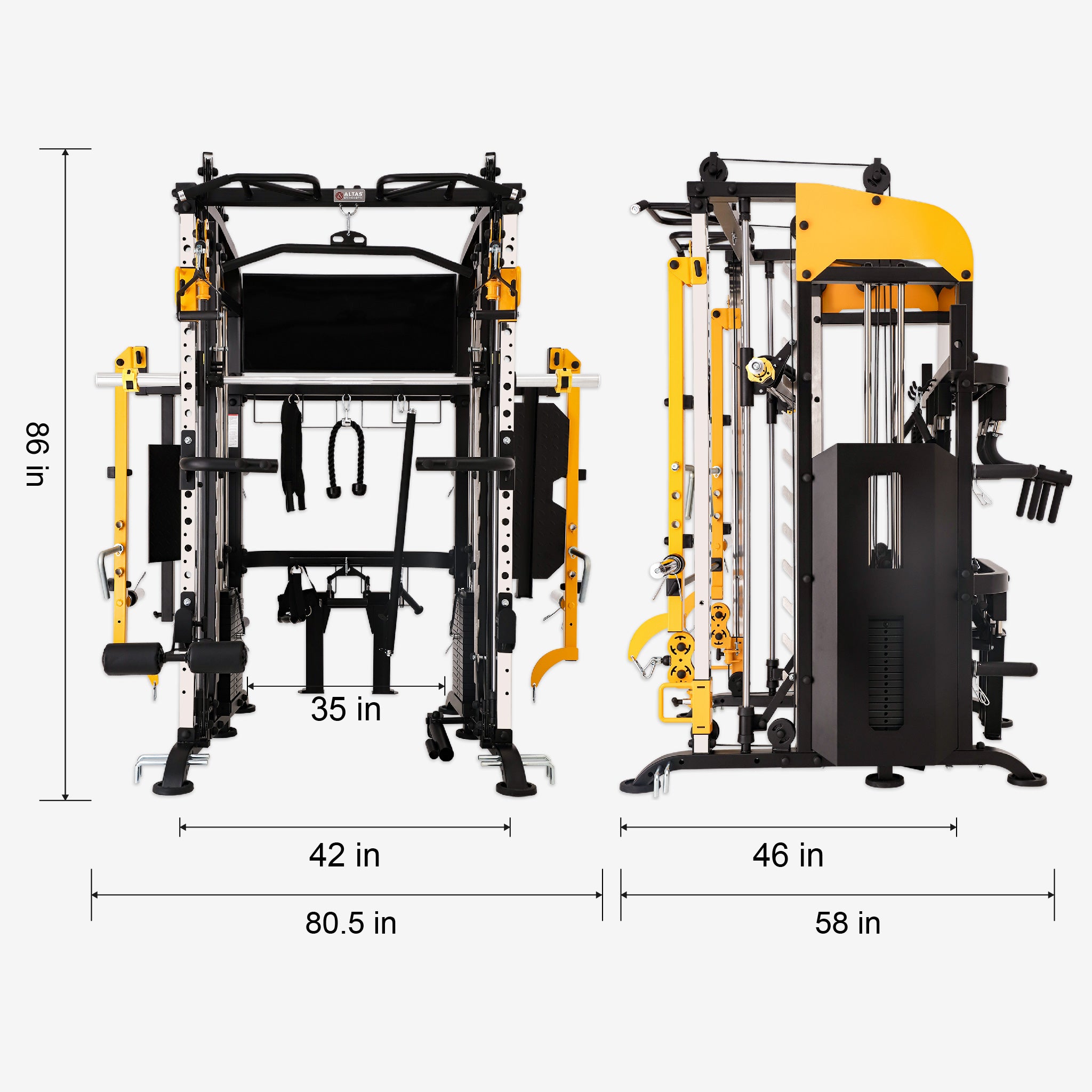
Machine dimensions
This information helps buyers understand what the numbers on the machine actually mean before they begin training.
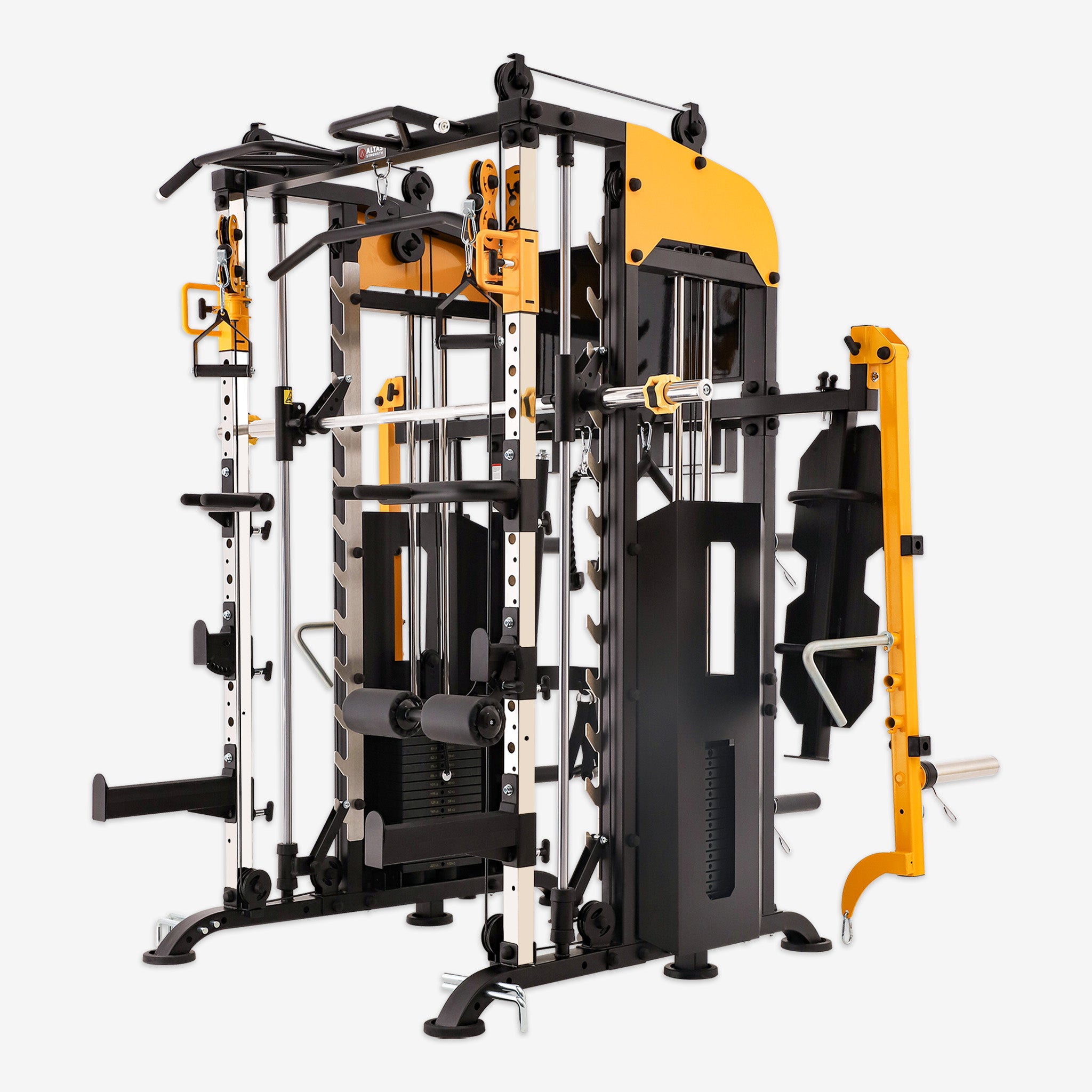
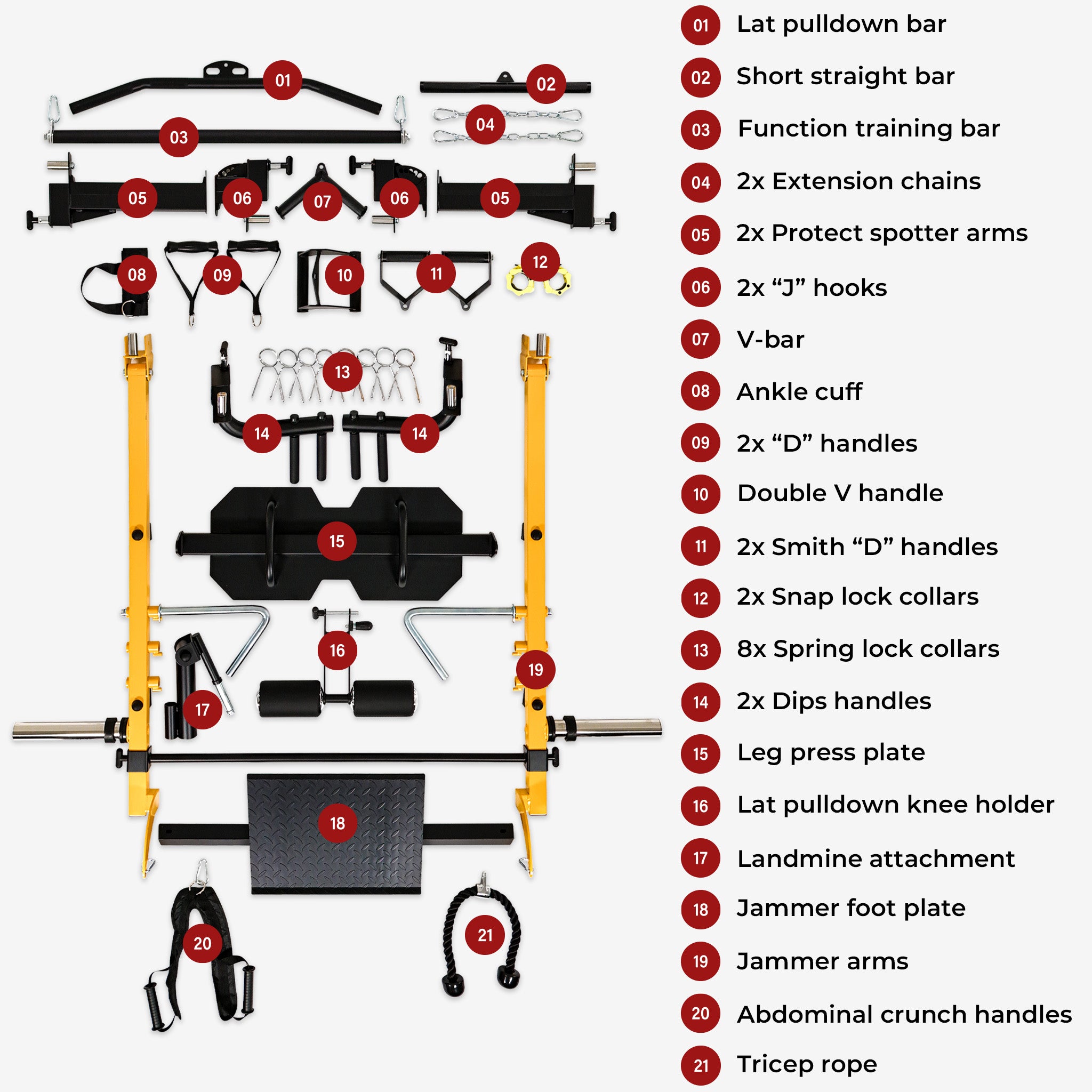
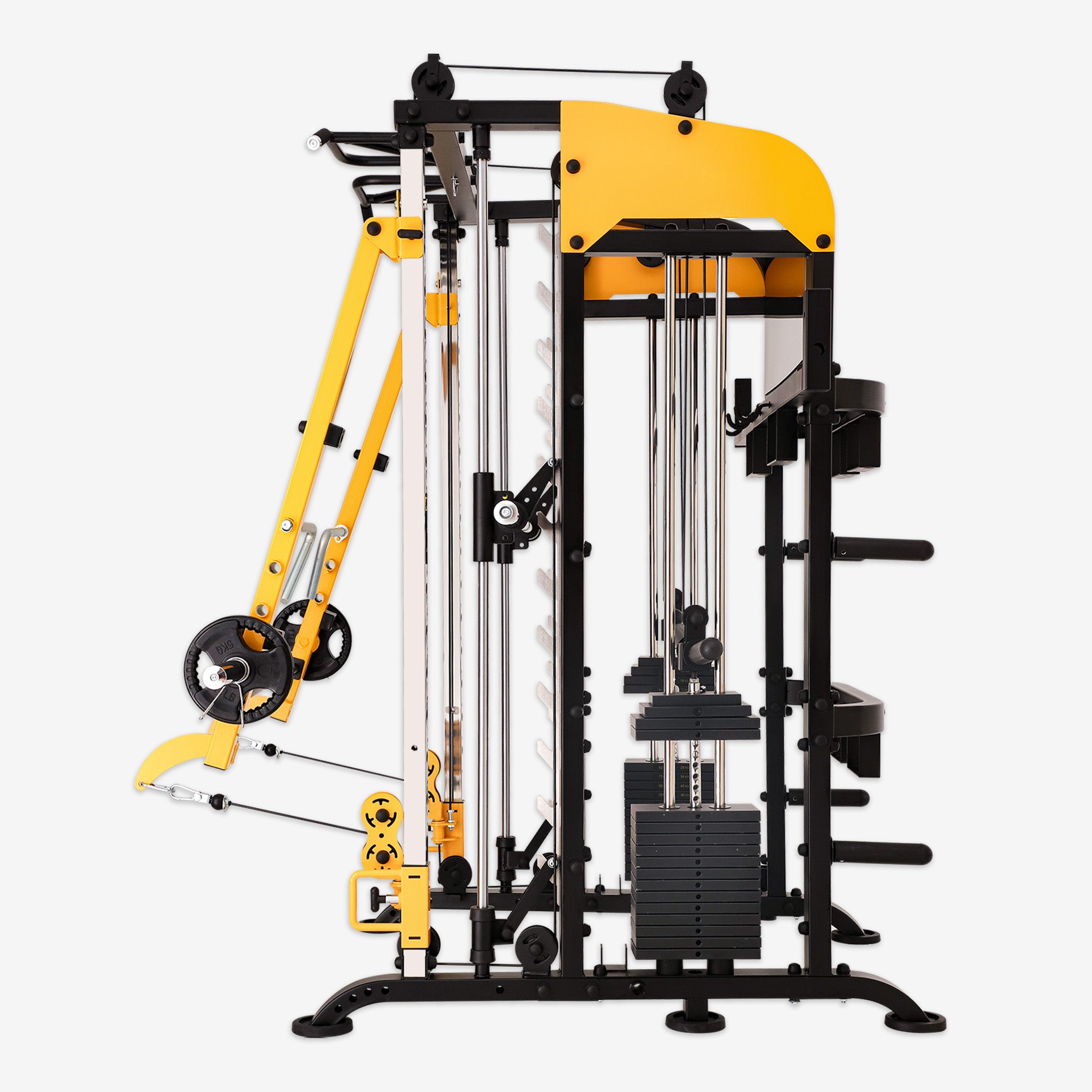
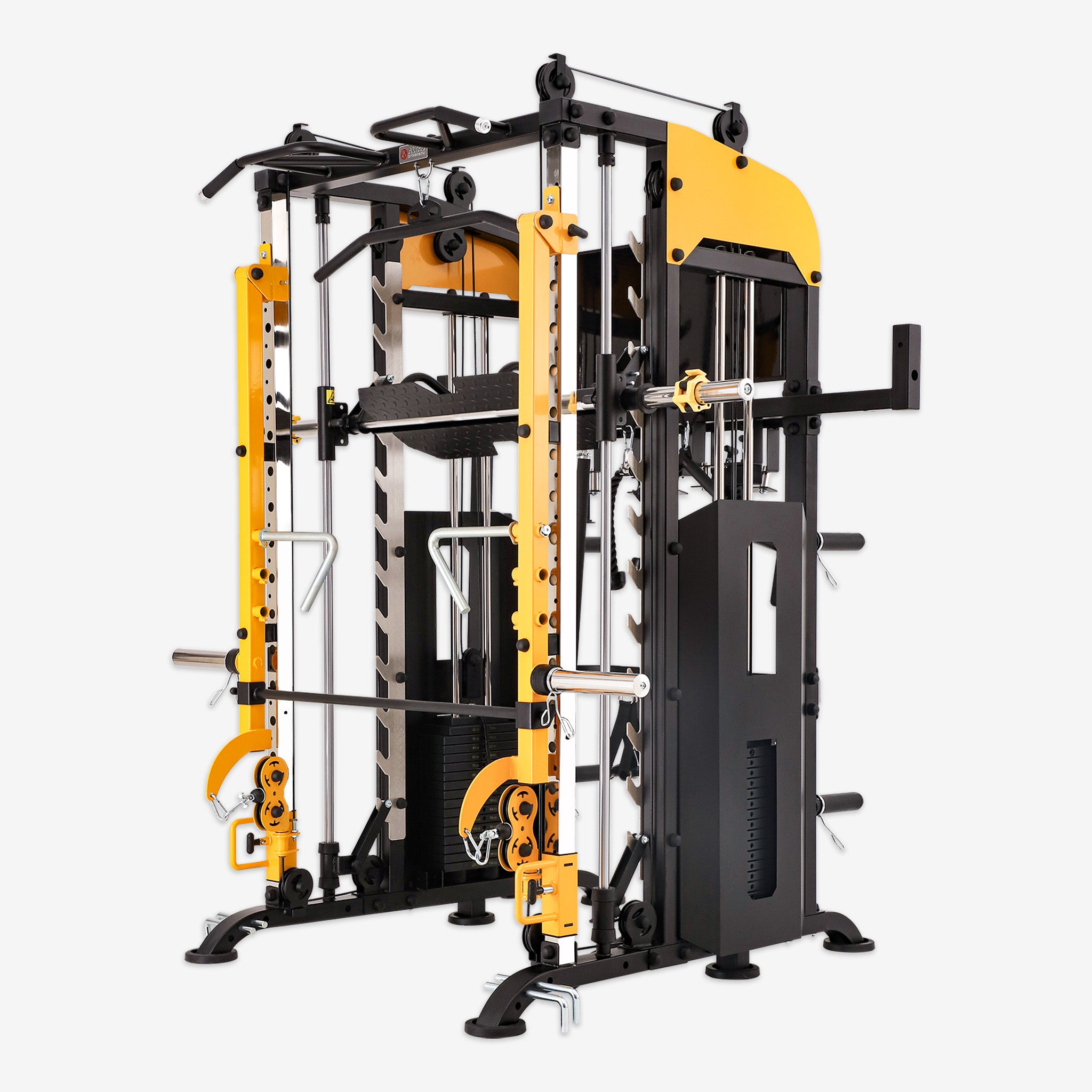
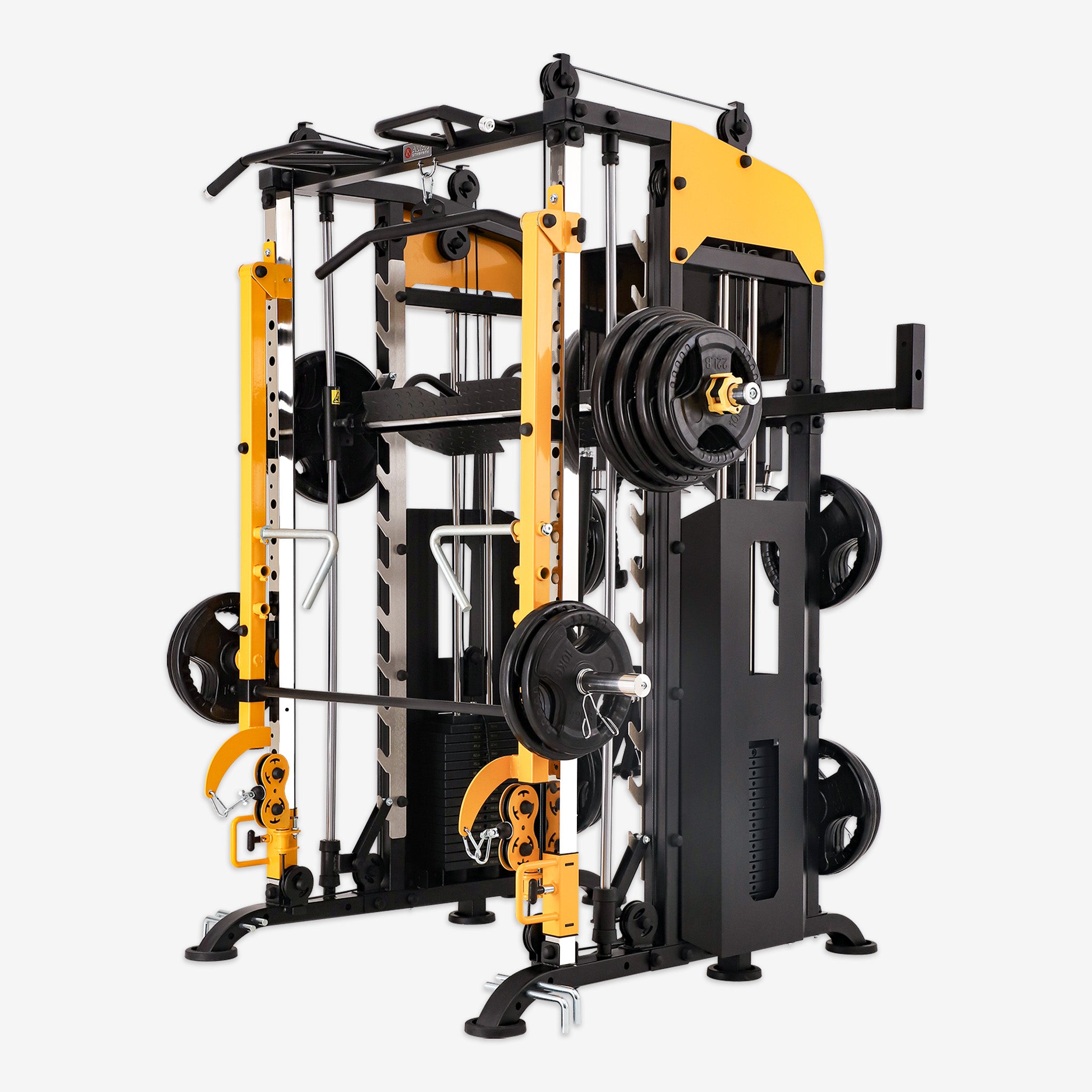
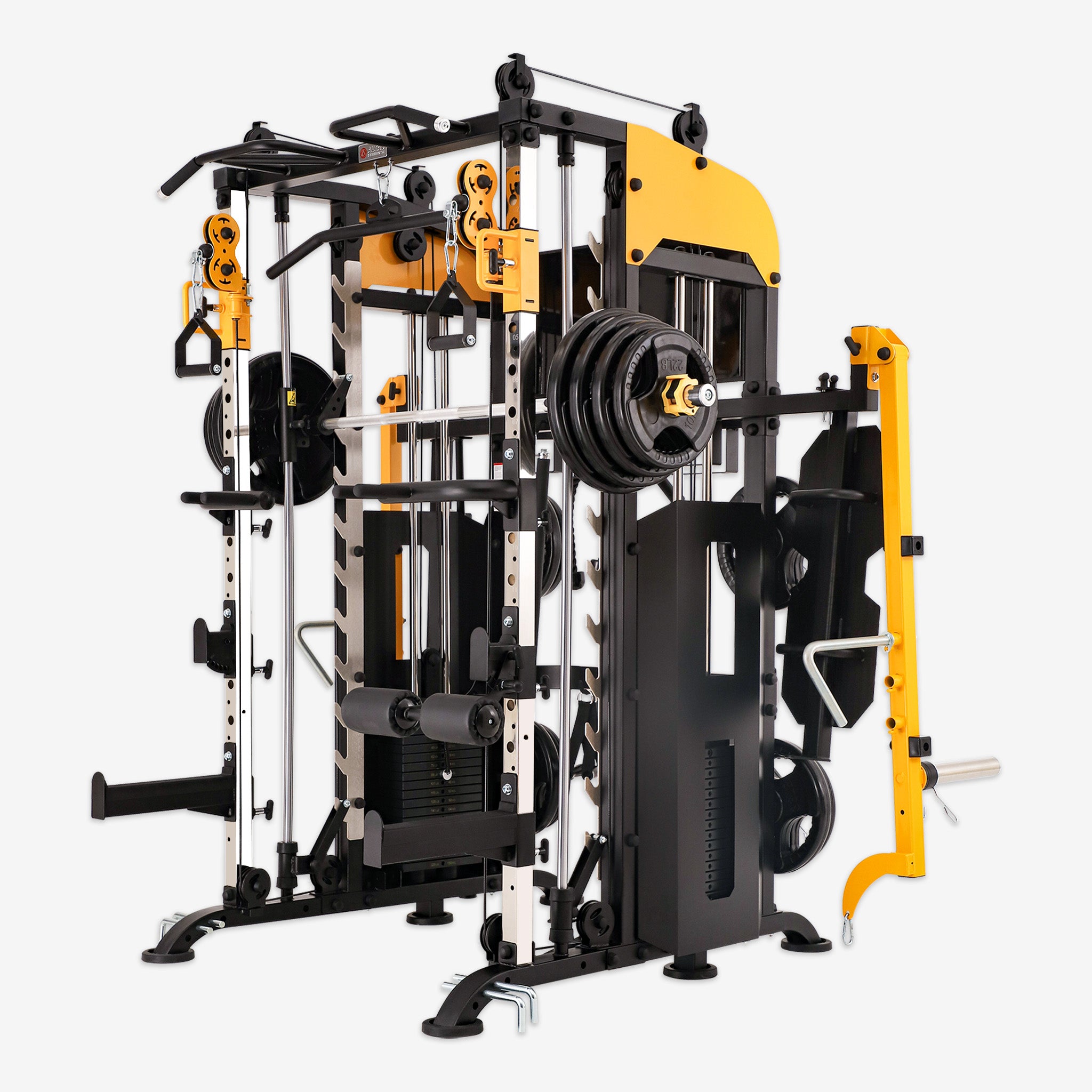
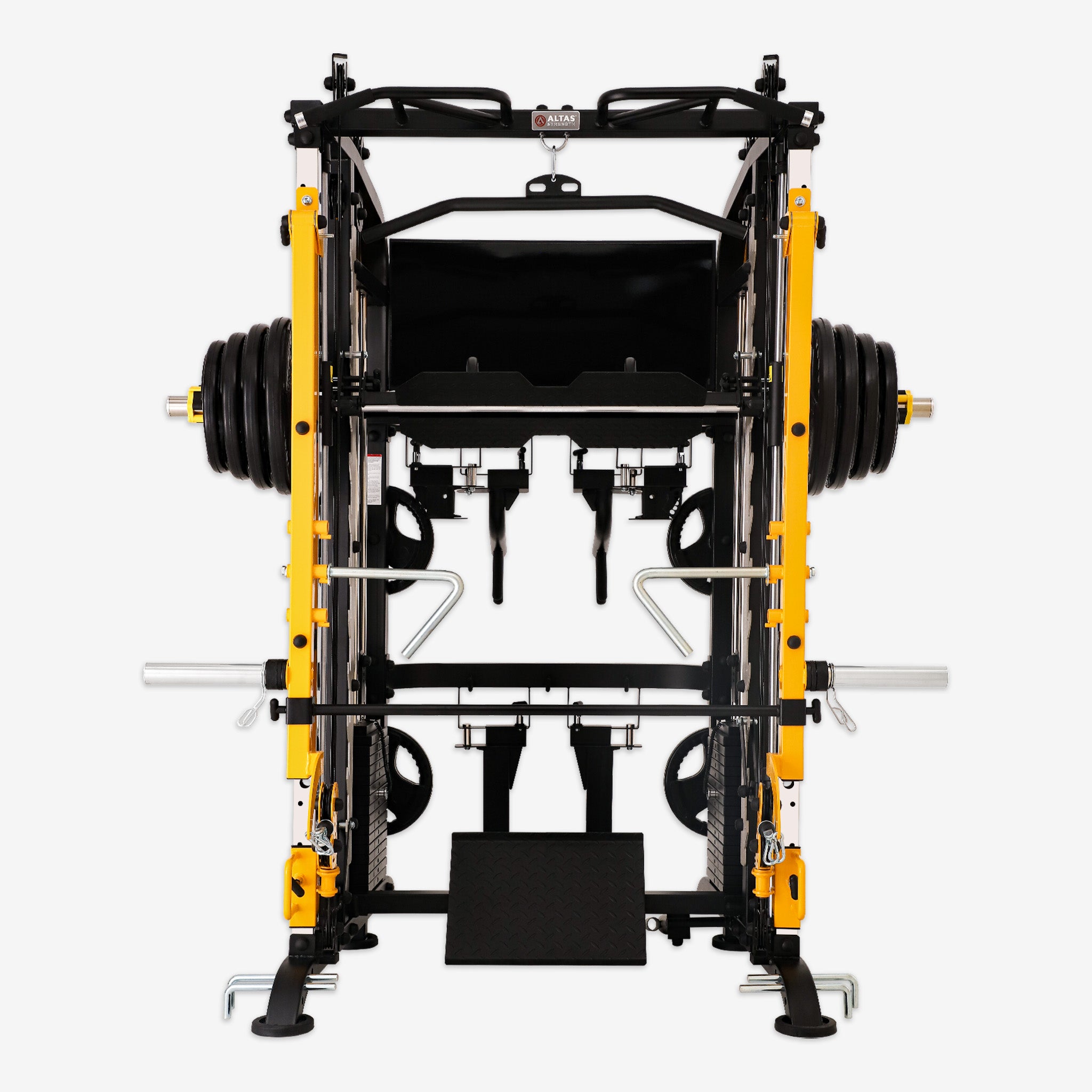
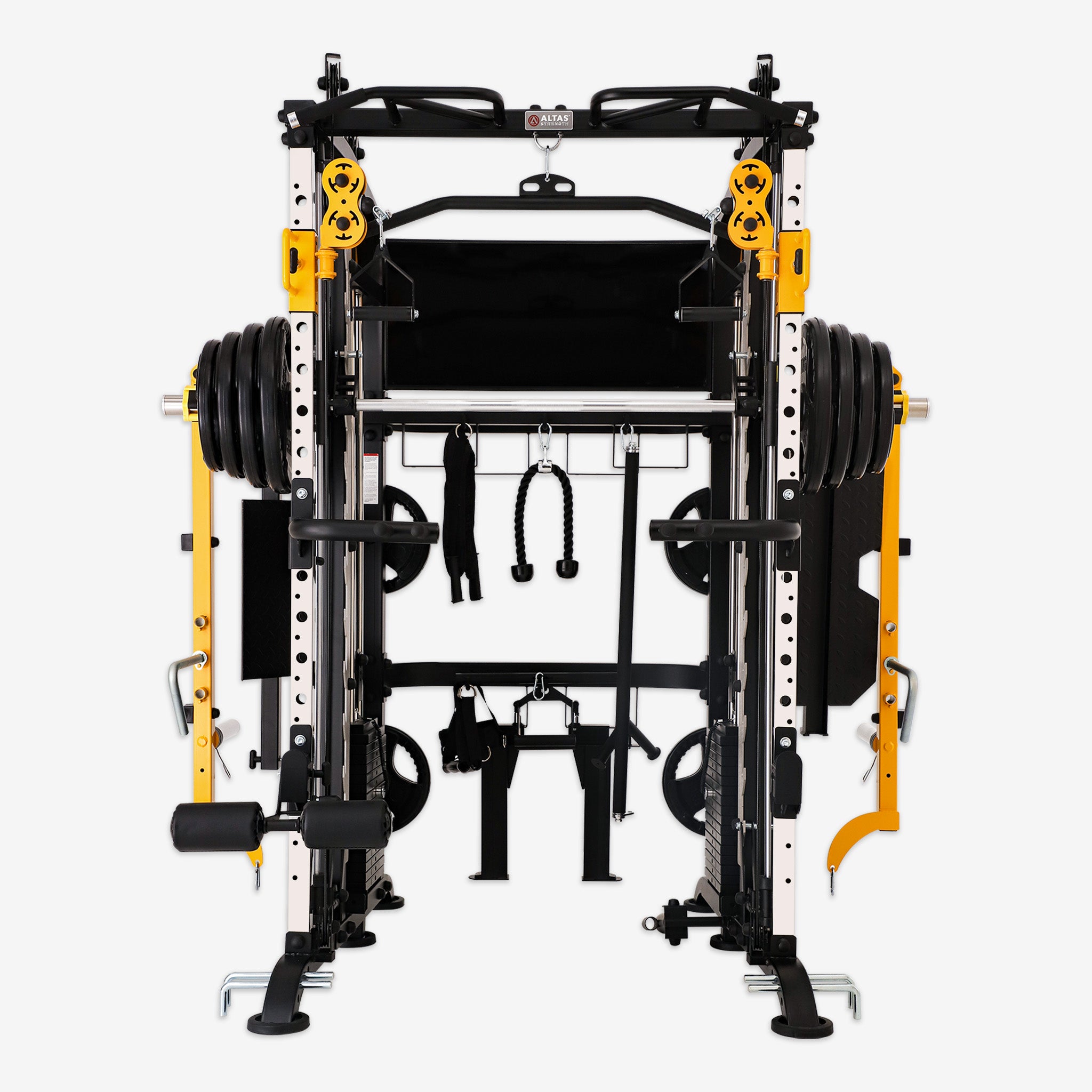
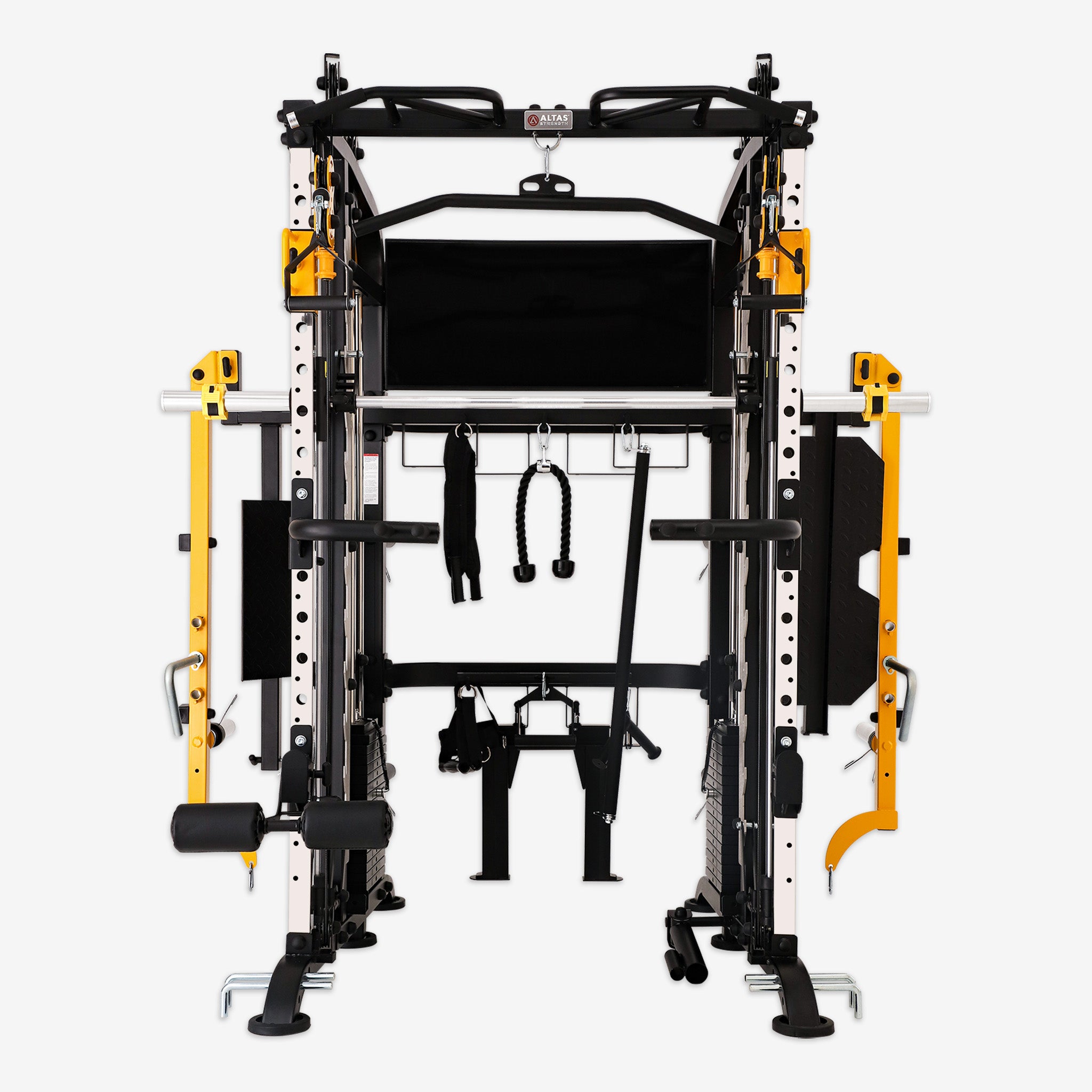
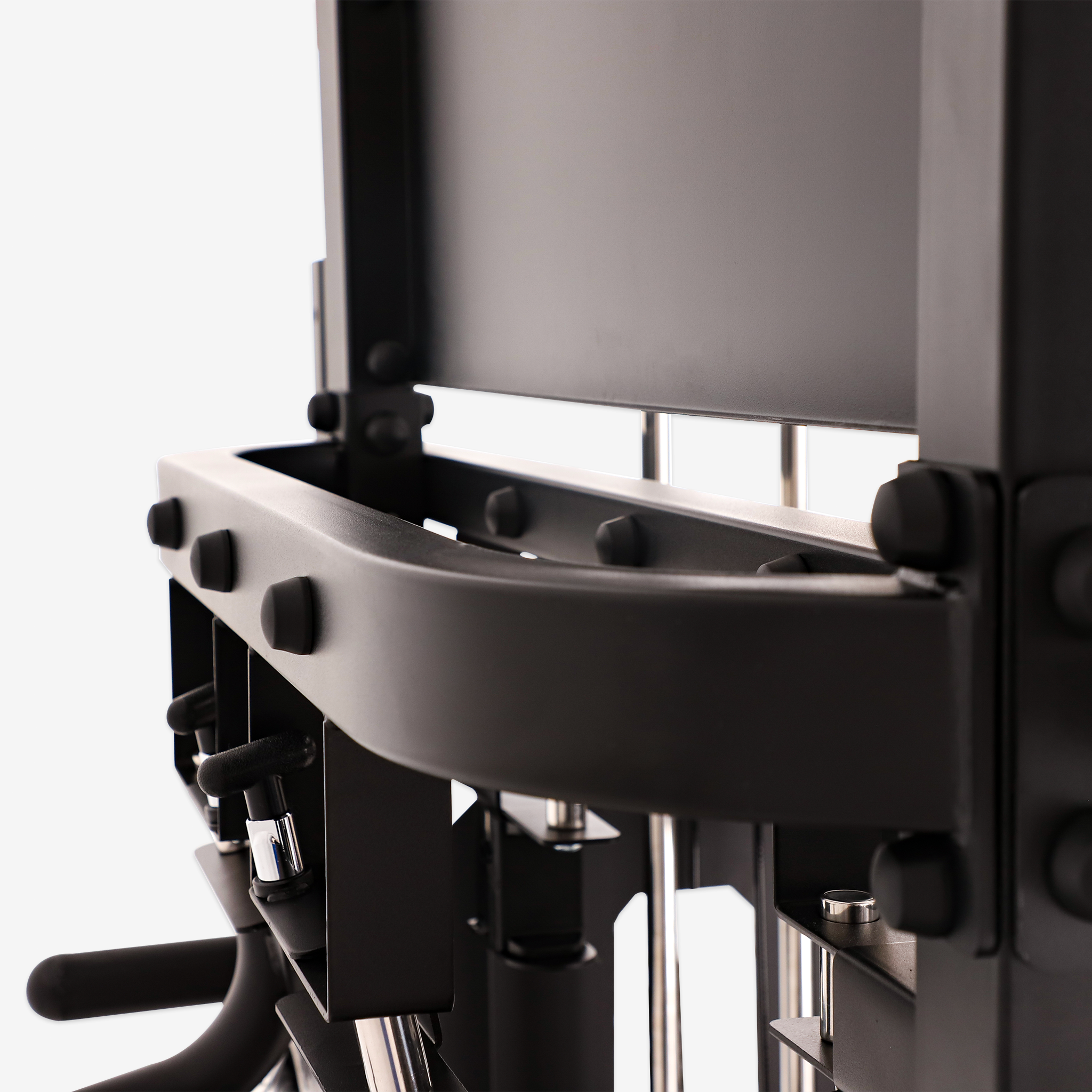
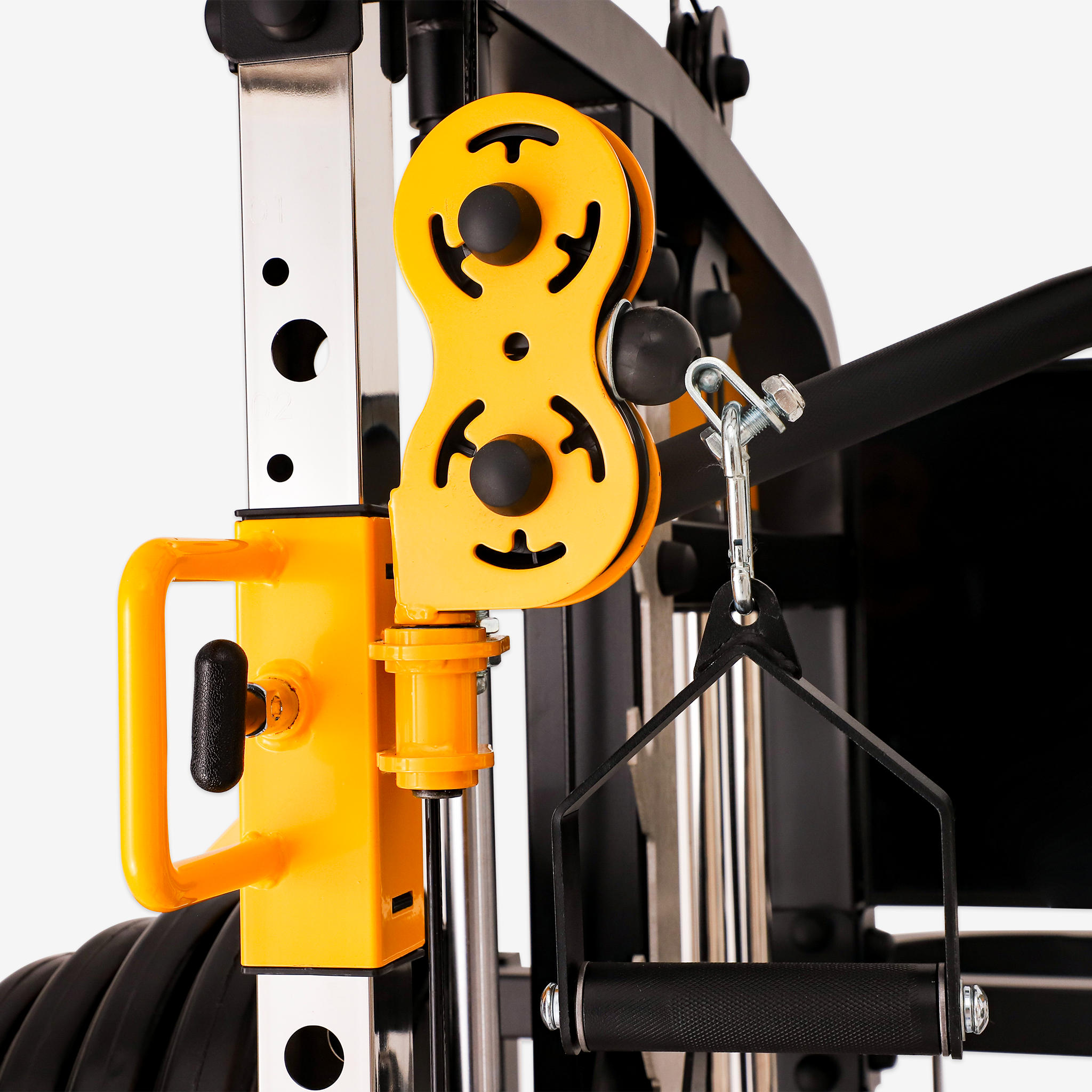
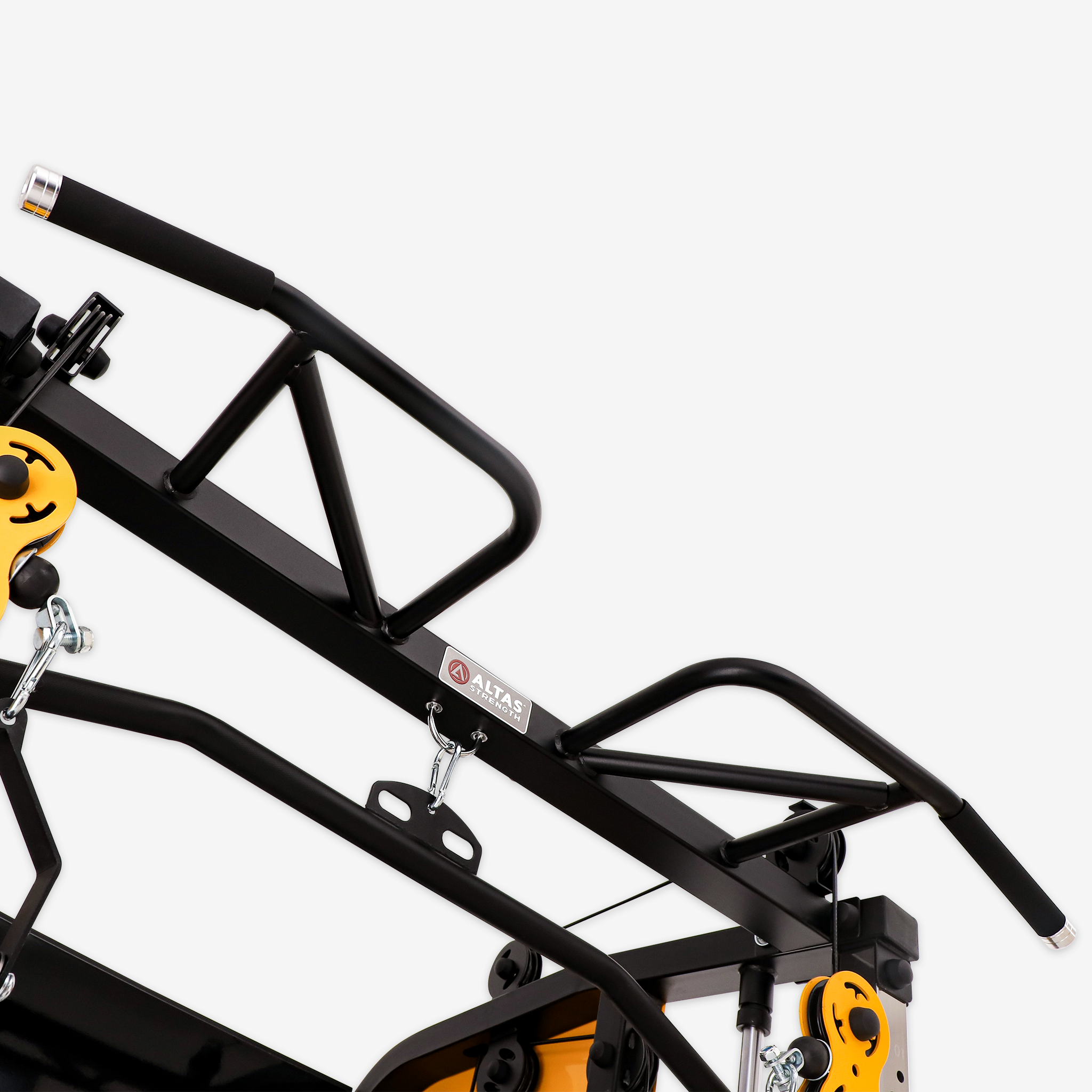
Altas Strength Smith machines are designed around heavy-duty construction, guided movement, and integrated strength-training functions. When evaluating an Altas Strength model, users should check the specifications for the exact model rather than applying a generic Smith machine bar-weight assumption.
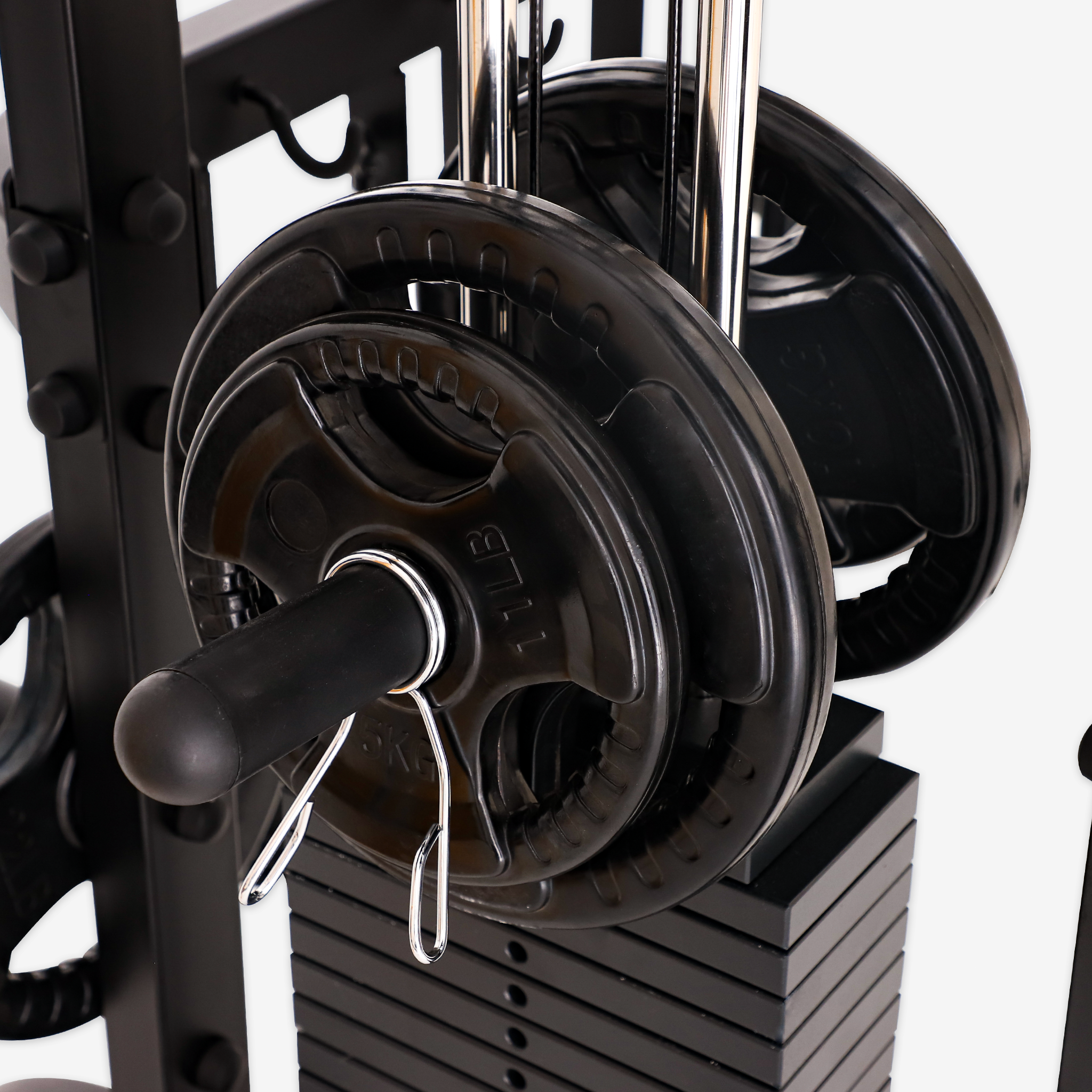
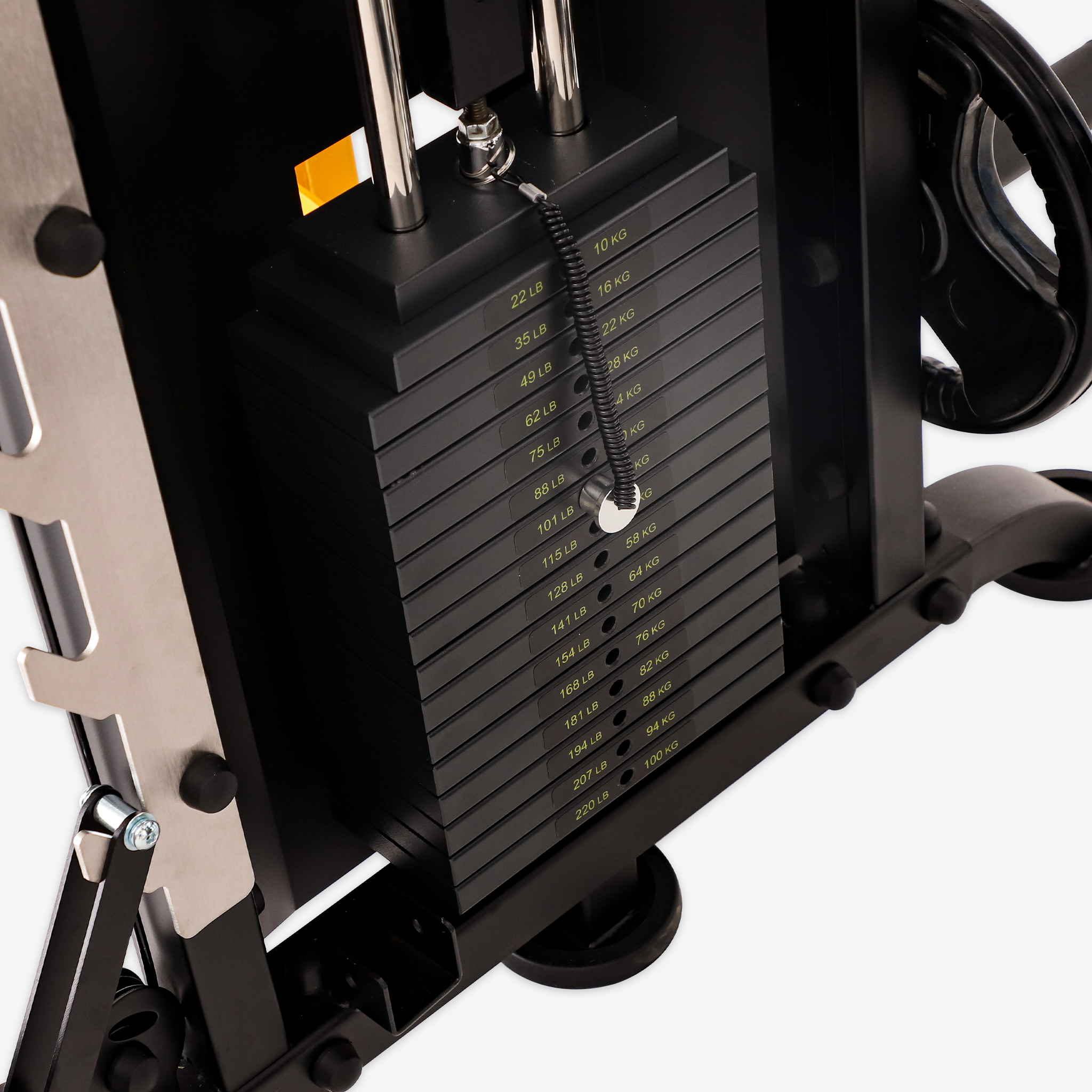
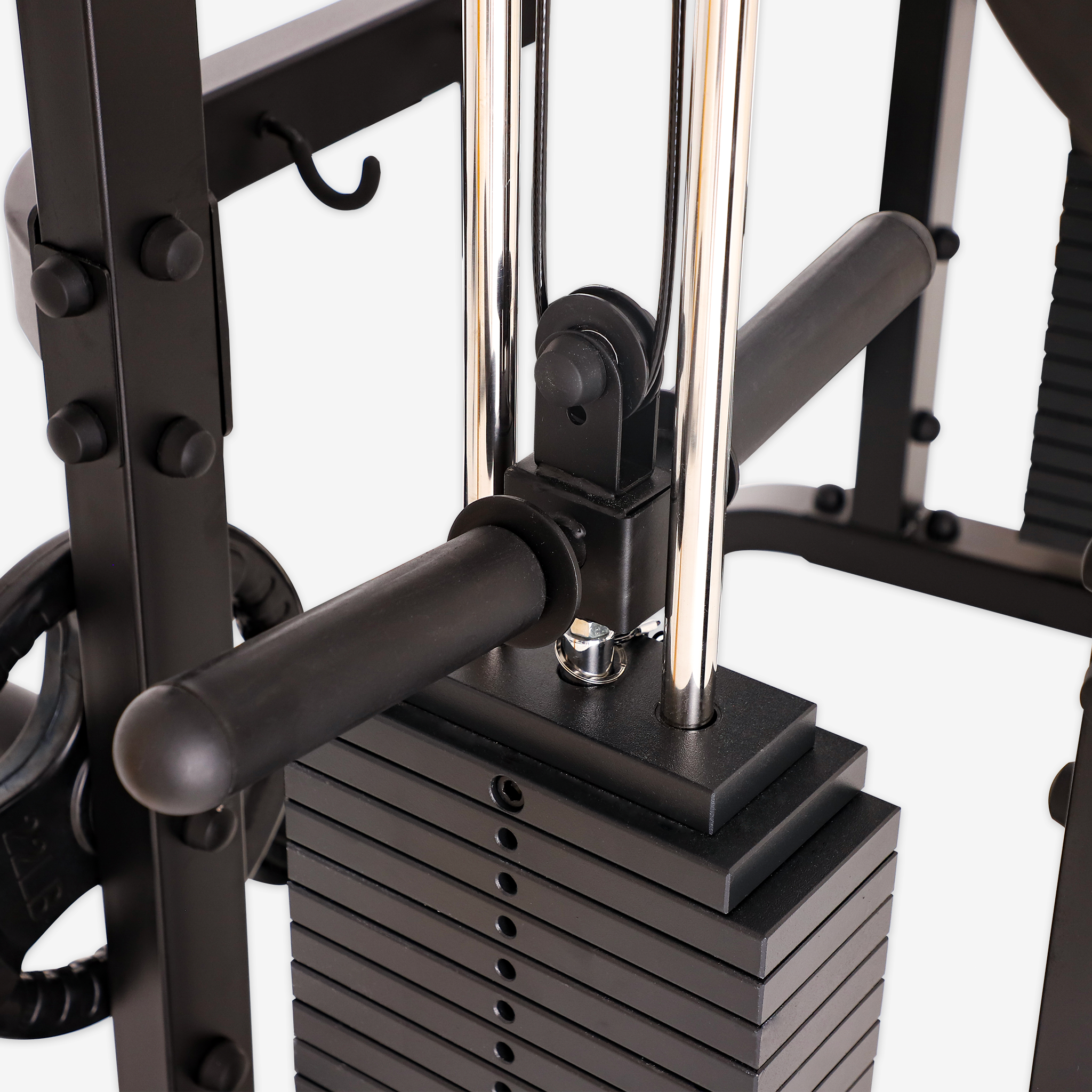
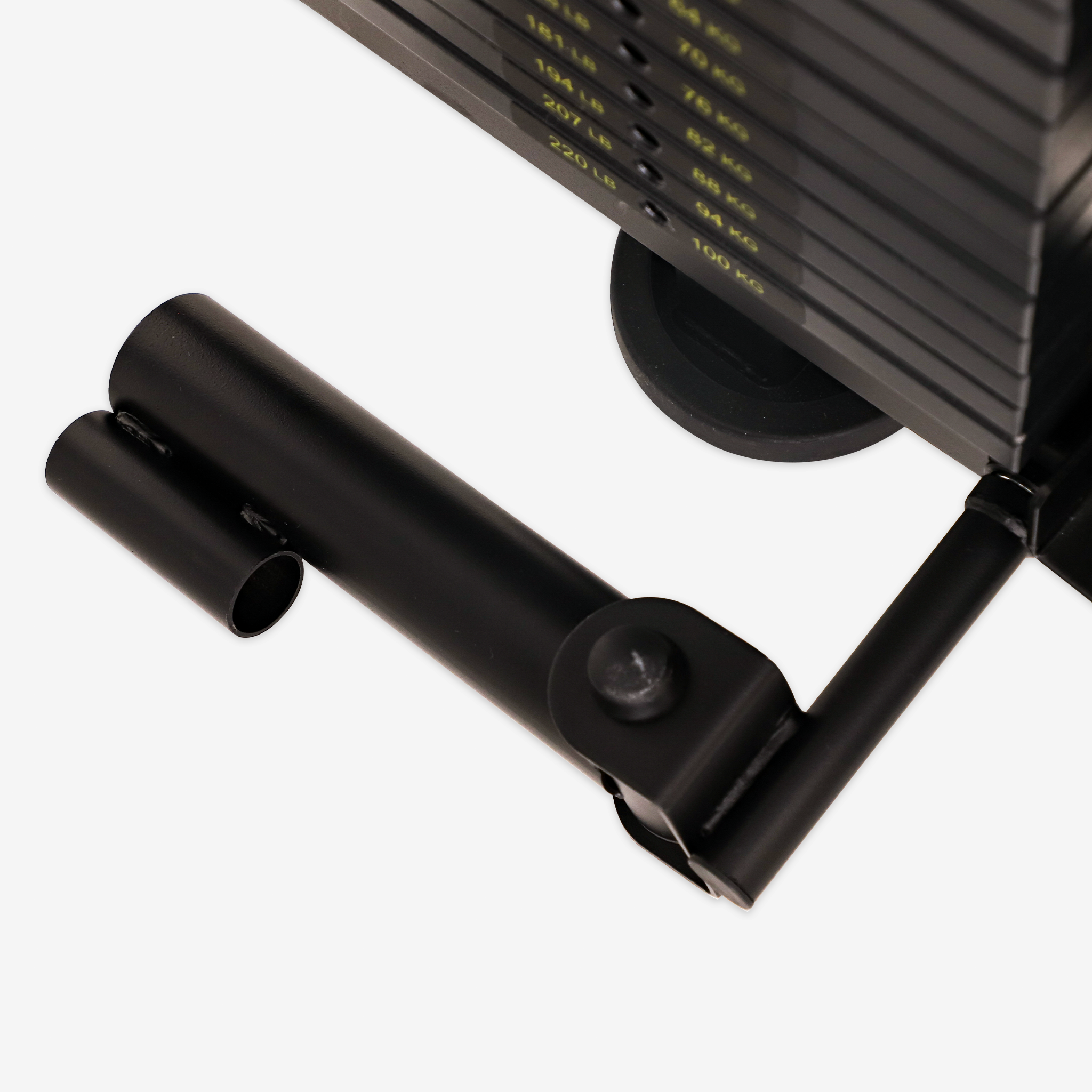
Smith Machine Weight Calculation for Weight Stacks
Not every Smith machine uses only Olympic plates.
Multifunctional systems may also include selectorized or plate-loaded cable systems.
In that situation, the Smith bar and cable resistance should be treated separately.
For the Smith bar:
Effective Smith Load = Effective Bar Resistance + Loaded Plates
For a weight stack:
Cable Resistance = Selected Stack Weight × Mechanical Ratio
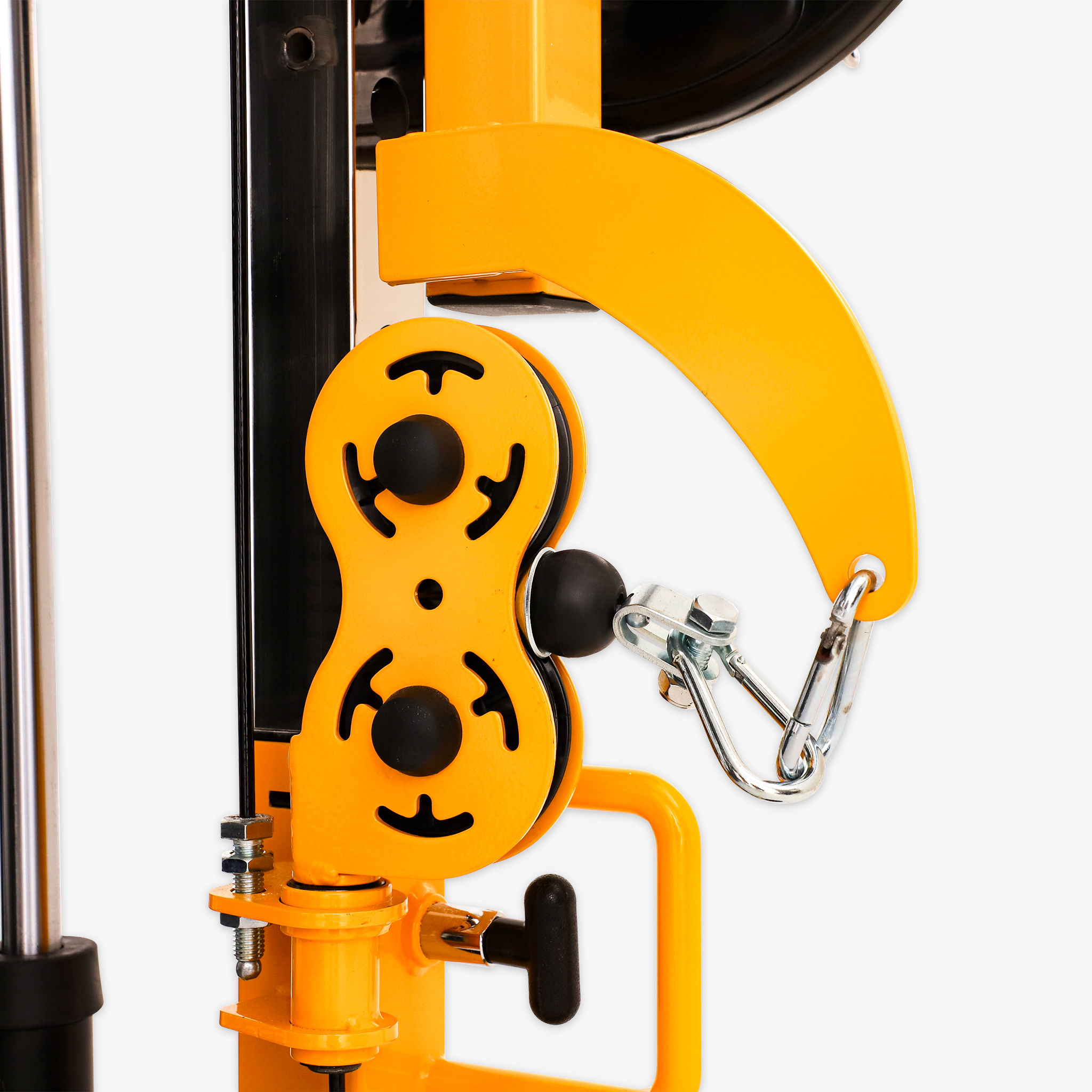
The actual resistance at the handle can depend on the machine's pulley arrangement.
For example, a 2:1 pulley system does not necessarily deliver the same handle resistance as a 1:1 system.
Therefore, always check the manufacturer's stated pulley ratio and resistance specifications before comparing cable loads.
Common Smith Machine Weight Calculation Mistakes
Mistake 1: Assuming Every Smith Bar Weighs 45 lb
A Smith machine bar is not automatically equivalent to a standard Olympic barbell.
The effective resistance can be much lower depending on the counterbalance system.
Mistake 2: Using the Physical Bar Weight
The physical weight of the bar assembly does not necessarily represent the resistance experienced during the exercise.
Use effective starting resistance when available.
Mistake 3: Comparing Different Smith Machines Directly
Two machines showing 200 lb may have different mechanical resistance.
Track progress on the same machine whenever possible.
Mistake 4: Ignoring the Counterbalance
Counterbalanced machines can significantly reduce the starting resistance.
This is one of the most important variables in Smith machine calculations.
Mistake 5: Trying to Convert Every Smith Lift to a Free-Weight Equivalent
There is no universal Smith-to-barbell conversion formula.
The machines differ too much in design for a single percentage conversion to be reliable.
How Heavy Should You Load a Smith Machine?
The correct load depends on your training experience, exercise, technique, and programming.
Do not select a weight simply because the machine has a high maximum capacity.
For most training goals, the useful question is:
Can you perform the intended repetitions with controlled technique while maintaining the appropriate training effort?
A Smith machine's high weight rating provides room for progression, but it does not mean every lifter should approach that maximum.
Who Benefits Most From Tracking Smith Machine Weight?
Precise load tracking is particularly useful for:
-
Progressive strength training
-
Hypertrophy programs
-
Intermediate and advanced lifters
-
Structured home gym programs
-
Users training consistently on the same machine
-
Lifters comparing performance over several months
Casual users who simply exercise for general fitness may not need to calculate effective resistance precisely.
Final Takeaway
The most reliable way to calculate weight on a Smith machine is straightforward:
Effective Load = Effective Bar Weight + Total Loaded Plates
The critical variable is the effective bar weight, not necessarily the physical weight of the Smith bar.
If the machine is counterbalanced, use the manufacturer's stated effective starting resistance whenever possible.
And remember:
200 lb on one Smith machine does not necessarily equal 200 lb on another Smith machine.
For meaningful progress tracking, use the same machine, the same loading method, and consistent exercise technique.
For buyers evaluating a Smith machine for a home gym, look beyond the maximum weight rating. Effective bar resistance, counterbalance design, frame stability, safety mechanisms, pulley configuration, dimensions, and overall exercise versatility all contribute to how useful the machine will be in real-world training.
That is the better way to understand Smith machine weight—and the better way to make meaningful comparisons between different Smith machines.